
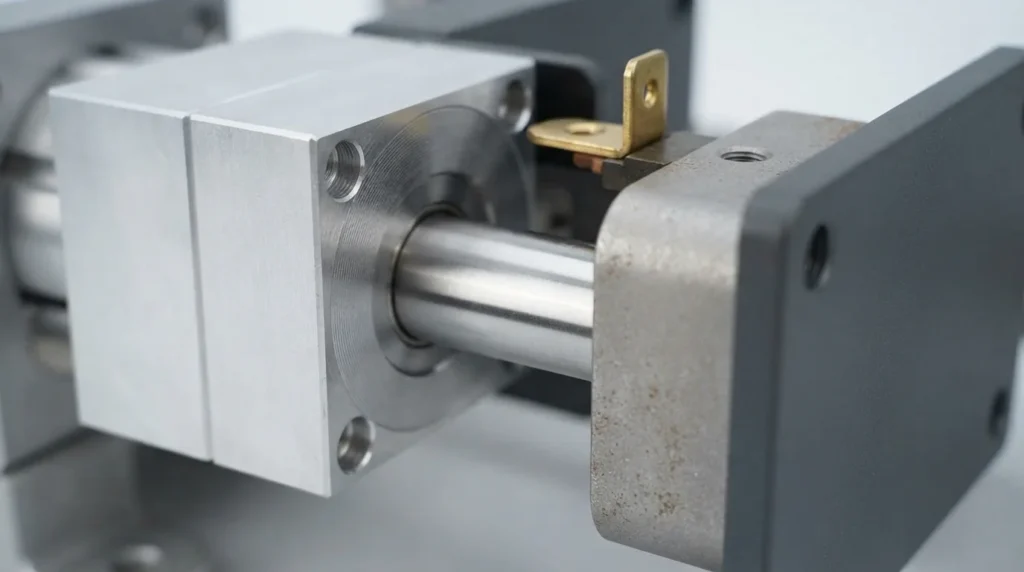
CNC部品は、機械から外れただけで完成したわけではありません。表面には、腐食への耐性、摩擦の低減、シールの支持、コーティングの受け入れ、特定の外観の付与、または重要な寸法の維持が求められる場合があります。適切な表面仕上げは、材料、機能、環境、形状、公差、数量、予算によって決まります。外観だけで選ぶと、密着不良、寸法変化、不要なコスト、または見た目は良いが使用中に故障する表面を生じさせる可能性があります。.
表面に求められる機能から始める
| 表面の目的 | 仕上げ決定のレビュー | 一般的なリスク |
|---|---|---|
| 腐食防止 | 材料適合性、コーティング被覆範囲、エッジ、穴、および使用環境 | この処理は外観を保護するが、実際の曝露条件は保護しない |
| 摩耗または摩擦の制御 | 硬度、粗さ、潤滑、相手材、およびコーティング厚さ | 表面は滑らかだが、すぐに摩耗したり嵌合が変化する |
| シールまたは流体接触 | 粗さの方向、うねり、バリ、平坦度、清浄度、および処理適合性 | 機能的な合否判定方法が指定されずに外観仕上げが指定されている |
| 外観または取扱い | テクスチャ、色、光沢、均一性、マスキング、および参照サンプル | 書面による記述が、顧客が何を受け入れるかを定義していない |
部品は面ごとに異なる仕上げ要件を使用できる。最も高価な仕上げを全面に適用するのではなく、重要なインターフェース、外観ゾーン、および隠れた表面を区別して維持すること。.
加工ままは実際のエンジニアリング上の選択肢
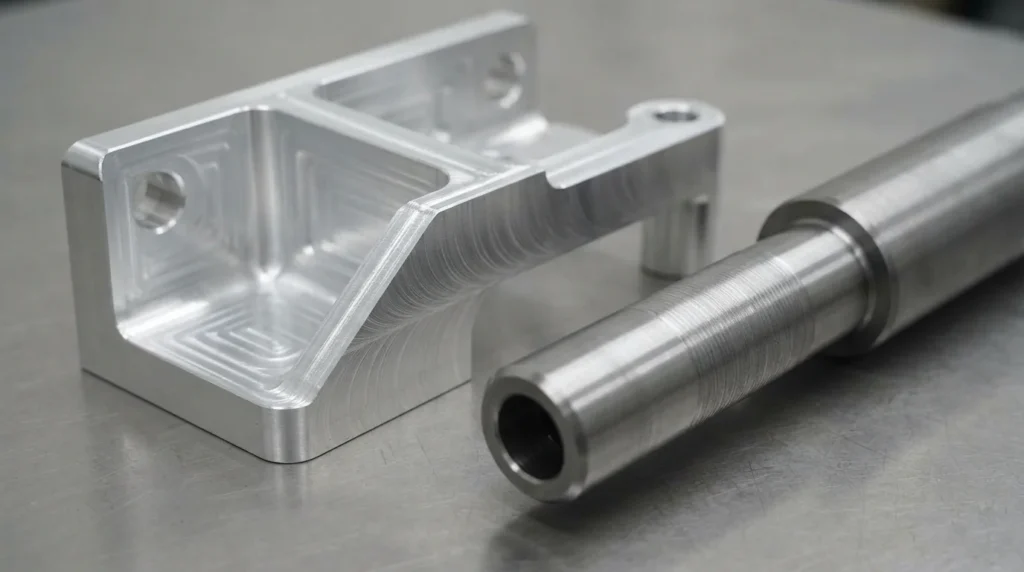
加工表面で十分な場合
- 表面が隠れている、または腐食環境に面していない。.
- 目に見える工具痕が外観や顧客の印象に影響を与えない。.
- 粗さとエッジの状態が嵌合またはシール機能に適している。.
- コーティングが意味のある性能上の利点をもたらさずに、リスクや厚みを増やすだけである。.
より滑らかな結果が必要な場合は、「可能な限り滑らか」な仕上げを求めるのではなく、機能面と許容値を指定してください。後者は見積もりや一貫した検査が困難です。.
テクスチャと外観のための機械的仕上げ
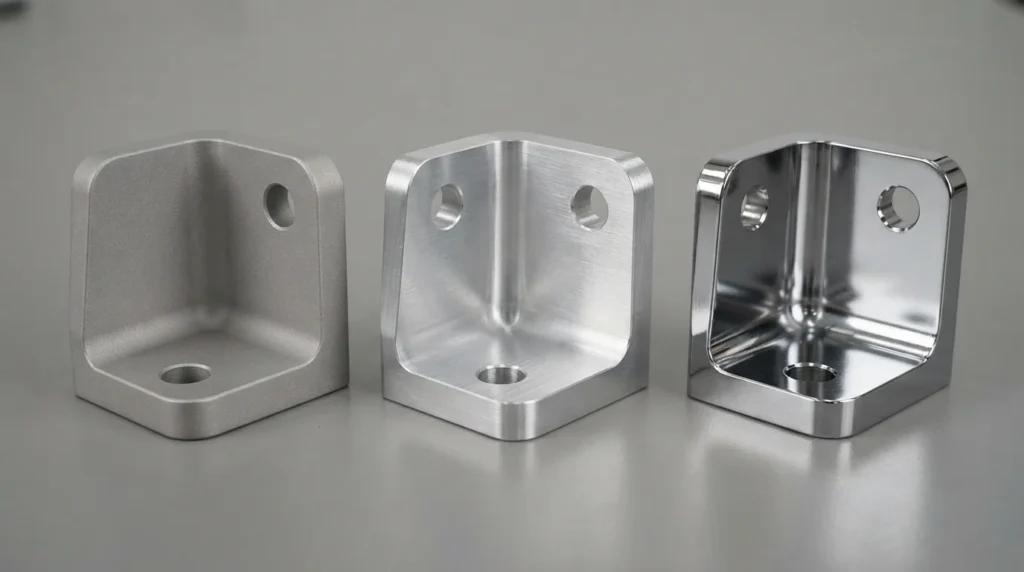
ブラスト処理は、より均一なマットまたはサテンの外観を生み出し、工具痕の視覚的な目立ち具合を軽減することができます。また、エッジを丸めたり、小さな形状を変化させたり、粗さに影響を与えたり、凹部にメディアの懸念を残す可能性があります。穴、ねじ、軸受座、またはシール面を管理された状態に保つ必要がある場合は、マスキングと保護面を定義してください。.
ブラッシングと方向性テクスチャ
ブラシ仕上げは、取り扱い痕を隠すのに役立つ方向性のある外観を生み出しますが、方向、重なり、エッジの移行、および外観の一貫性が重要です。「プレミアム」といった形容詞よりも、サンプルパネルや承認された参照品の方が有用な場合があります。“
研磨
研磨は材料を除去または平滑化し、外観、洗浄性、または接触挙動を改善することができます。エッジを丸め、局所的な寸法を変化させ、介在物を露出させ、別途の検査方法を必要とする場合があります。要件がサテン、光沢、鏡面状、または測定された粗さレベルであるかを明記してください。.
化学的および電気化学的仕上げ
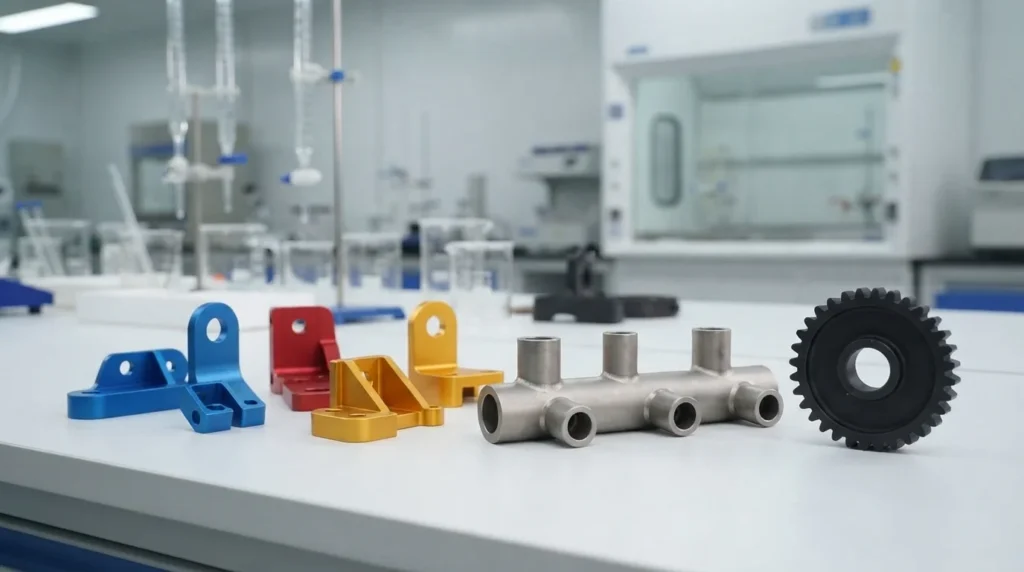
陽極酸化処理は、適切なアルミニウム合金において、腐食保護、色、硬度、および管理された外観を支えることができます。合金、表面準備、色、マスキング、および処理タイプが結果に影響を与えます。コーティングの成長または浸透は、穴、ねじ、嵌合、および電気的接触に影響を与える可能性があるため、重要な寸法は仕上がり状態に対して見直す必要があります。.
Passivation for stainless steel
Passivation is used to improve the corrosion behavior of suitable stainless steel surfaces after machining and cleaning. It is not an all-purpose appearance treatment, and the cleaning, surface condition, chemical environment, and acceptance requirement still need to be defined.
Black oxide and other chemical treatments
Chemical finishes are material-specific. A treatment that works for one alloy may be ineffective or inappropriate for another. State the base material before selecting the finish, and confirm whether an oil, sealant, topcoat, or dimensional allowance is part of the specification.
コーティング、めっき、寸法制御
| 質問 | 重要な理由 |
|---|---|
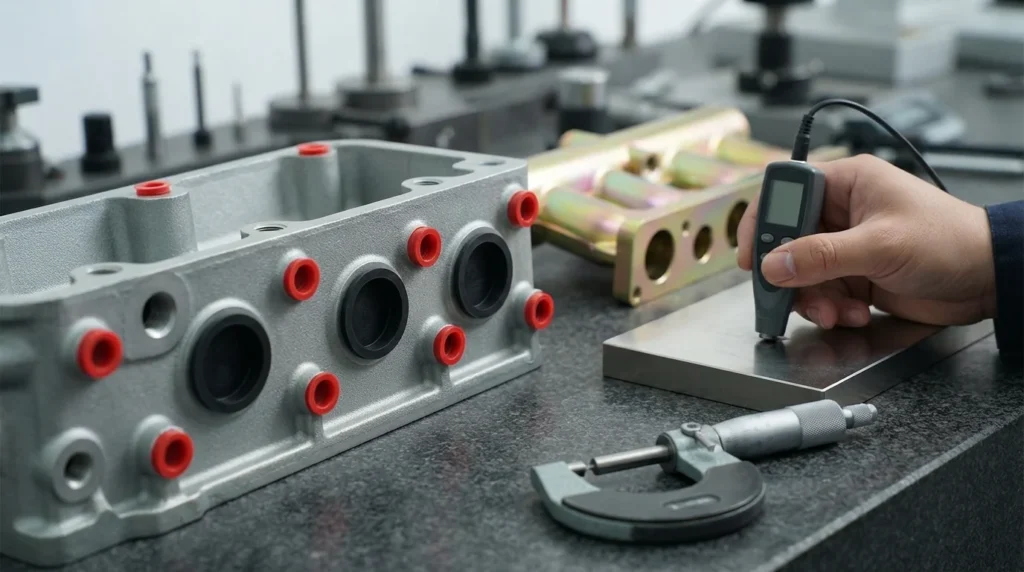
| Which surfaces are masked? | Threads, bores, electrical contacts, sealing faces, and locating surfaces may not accept the same coating |
| What is the required thickness or range? | Thickness can change fits, hole size, edge buildup, friction, and electrical behavior |
| When is the critical dimension measured? | The part may need machining allowance before treatment and verification after treatment |
| How is adhesion or appearance accepted? | A general color name does not define adhesion, gloss, texture, coverage, or acceptable variation |
Ra、Rz、そして検査の疑問
Ra is a common arithmetic-average roughness parameter, while Rz and other parameters describe the surface differently. A single roughness value does not fully describe waviness, lay direction, burrs, scratches, pores, or cosmetic uniformity. The correct parameter and measurement direction depend on the function.
Write a measurable requirement
- Identify the exact surface or zone that requires the finish.
- State the roughness parameter, unit, limit, and measurement direction when relevant.
- Define whether the value applies before or after coating, polishing, blasting, or passivation.
- Separate roughness from visual appearance, color, scratches, tool marks, and edge condition.
- Agree on the instrument, reference area, and sample or report expectation.
Surface finish and dimensional control are connected. Review the CNC tolerance guide when a finish may change a critical fit or inspection result.
材料適合性が最優先
The base material affects which finishes are available, how uniform the result will be, what color is possible, and how the surface behaves in service. Alloy, temper, hardness, reinforcement, porosity, and prior machining condition can all matter.
使用する CNC materials selection guide to connect finish decisions to the material’s environment, wear, heat, electrical, and dimensional requirements. Do not specify a finish only because it is common on another alloy.
図面への仕上げ指定方法
A useful finish callout answers four questions: what process, on which surfaces, to what result, and how will it be accepted?
- Name the base material and condition.
- Name the treatment or mechanical finish and the required class, type, color, texture, or roughness.
- Mark protected, masked, cosmetic, sealing, electrical, and fit-critical surfaces.
- State coating thickness, allowance, dimensional condition, or post-finish measurement where needed.
- Define samples, visual limits, roughness measurement, adhesion, cleanliness, and documentation.
- Identify any approved supplier, customer specification, or substitute-approval process.
A finish note should be specific enough for an estimator to quote and an inspector to accept. “Nice cosmetic finish” is neither.
仕上げ、コスト、生産リスク
Surface treatment affects more than the external processing charge. It can change masking, packaging, inspection, rework, lead time, yield, and the dimensional strategy used during machining. Over-specifying every surface can add cost without improving the product; under-specifying a functional surface can create field failure or rework.
When comparing options, consider appearance, corrosion, wear, friction, sealing, electrical behavior, cleanability, dimensional effect, material compatibility, quantity, documentation, and total route cost. The goal is a finish that solves the actual service problem.
CNC表面仕上げに関するFAQ
What is the best surface finish for a CNC part?
There is no universal best finish. Select it from the surface’s function, material, environment, appearance, tolerance, quantity, inspection method, and budget. An as-machined surface may be correct for one area while another needs a coating or polished condition.
Does anodizing change CNC part dimensions?
It can. The treatment may change the condition of edges, holes, threads, fits, and electrical contacts. Critical dimensions should identify whether they apply before or after treatment and which surfaces are masked.
What is the difference between surface finish and surface roughness?
Surface finish is a broader description of texture, appearance, treatment, and condition. Surface roughness is a measured characteristic such as Ra or Rz. A roughness number alone may not define scratches, waviness, lay, burrs, color, or visual acceptance.
Is bead blasting suitable for every CNC material?
No. The media, pressure, base material, geometry, masking, and cleanliness requirement affect the result. Confirm compatibility and protect critical surfaces, threads, bores, and cosmetic zones when needed.
How can I reduce surface finishing cost?
Apply the finish only to surfaces that need it, choose a material-compatible process, define measurable acceptance, avoid unnecessary masking, and coordinate the finish with tolerances and inspection. A supplier DFM review can identify a simpler finish that still meets function.