
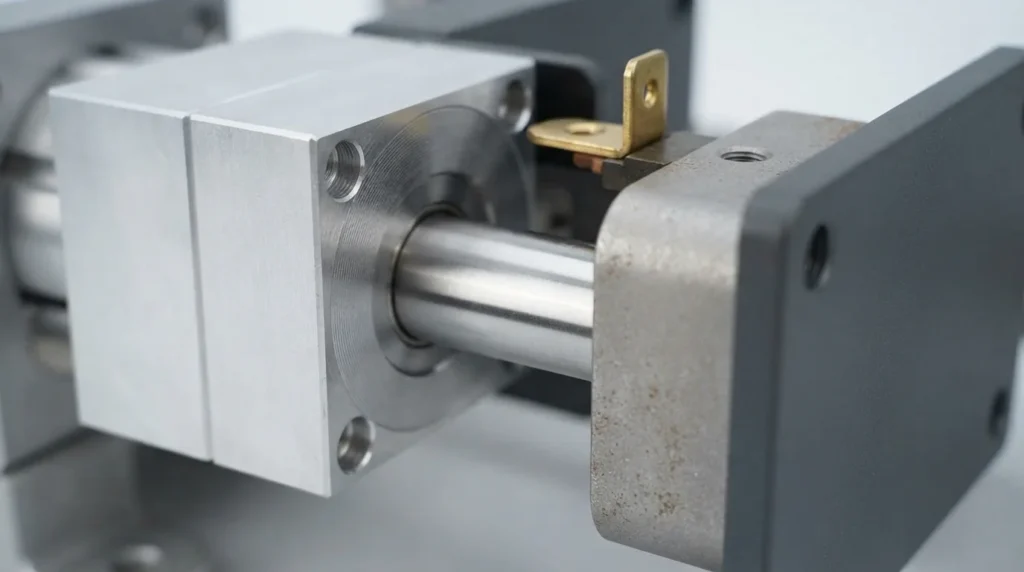
لا يُعتبر جزء التصنيع باستخدام الحاسب الآلي منتهيًا بمجرد خروجه من الآلة. قد يحتاج السطح إلى مقاومة التآكل، أو تقليل الاحتكاك، أو دعم الإحكام، أو قبول طلاء، أو توفير مظهر محدد، أو الحفاظ على بُعد حرج. تعتمد جودة تشطيب السطح المناسبة على المادة، والوظيفة، والبيئة، والهندسة، والتفاوتات، والكمية، والميزانية. قد يؤدي الاختيار بناءً على المظهر وحده إلى مشاكل في الالتصاق، أو تغيرات في الأبعاد، أو تكلفة غير ضرورية، أو سطح يبدو جيدًا لكنه يفشل في الخدمة.
ابدأ بما يجب أن يفعله السطح
| الغرض من السطح | إنهاء قرار المراجعة | مخاطر شائعة |
|---|---|---|
| حماية من التآكل | توافق المواد، تغطية الطلاء، الحواف، الثقوب، وبيئة الخدمة | تعالج المعالجة المظهر ولكن ليس حالة التعرض الفعلية |
| التحكم في التآكل أو الاحتكاك | الصلابة، الخشونة، التشحيم، المادة المتزاوجة، وسماكة الطلاء | السطح أملس لكنه يتآكل بسرعة أو يغير الملاءمة |
| الختم أو ملامسة السوائل | اتجاه الخشونة، التموج، النتوءات، الاستواء، النظافة، وتوافق المعالجة | يتم تحديد تشطيب تجميلي دون طريقة قبول وظيفية |
| المظهر أو المناولة | الملمس، اللون، اللمعان، التجانس، التغطية، وعينات مرجعية | الوصف المكتوب لا يحدد ما سيقبله العميل |
يمكن أن يستخدم الجزء متطلبات تشطيب مختلفة على أوجه مختلفة. حافظ على الواجهات الحرجة، والمناطق التجميلية، والأسطح المخفية منفصلة بدلاً من تطبيق أغلى تشطيب في كل مكان.
التشطيب كما بعد التصنيع هو خيار هندسي حقيقي
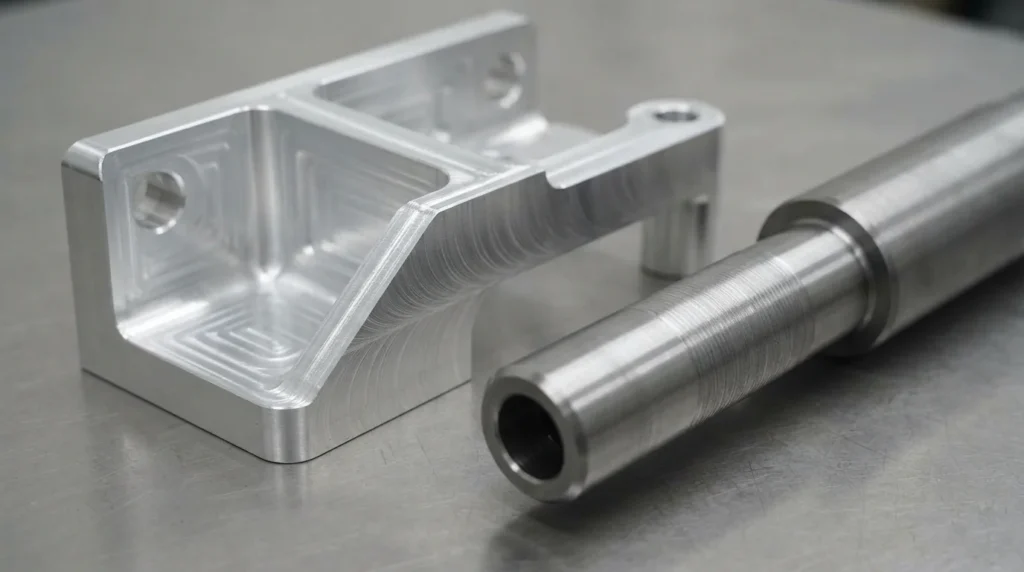
عندما يكون السطح المشغل آليًا كافيًا
- يكون السطح مخفيًا أو لا يواجه بيئة أكالة.
- لا تؤثر علامات الأدوات المرئية على المظهر أو تصور العميل.
- الخشونة وحالة الحواف مناسبتان لوظيفة التزاوج أو الإحكام.
- الطلاء سيضيف مخاطرة أو سماكة دون فائدة أداء ذات معنى.
إذا كانت هناك حاجة إلى نتيجة أكثر نعومة، فحدد السطح الوظيفي وقيمة القبول بدلاً من طلب “أكثر تشطيب نعومة ممكن”. يصعب تسعير الأخير وفحصه بشكل متسق.
التشطيبات الميكانيكية للملمس والمظهر
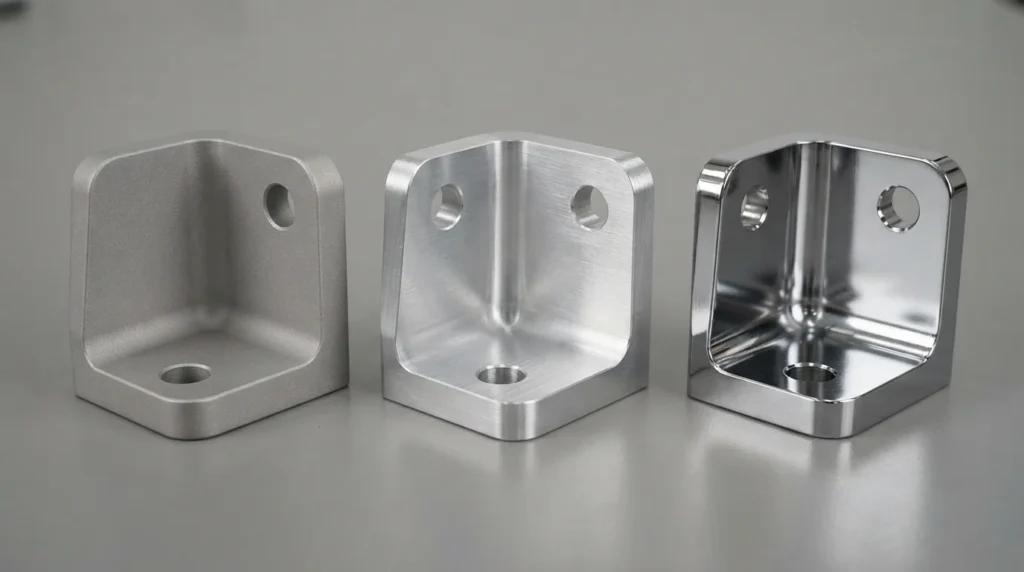
يمكن أن يخلق السفع مظهرًا مطفيًا أو ساتانًا أكثر انتظامًا ويقلل من الهيمنة البصرية لعلامات الأدوات. كما يمكن أن يلين الحواف، ويغير الميزات الصغيرة، ويؤثر على الخشونة، أو يترك مخاوف الوسائط في التجاويف. حدد التغطية والأسطح المحمية عندما يجب أن تبقى الثقوب أو الخيوط أو مقاعد المحامل أو أسطح الإحكام مضبوطة.
التجليخ والملمس الاتجاهي
تخلق التشطيبات المجلوخة مظهرًا اتجاهيًا قد يساعد في إخفاء علامات المناولة، لكن الاتجاه والتداخل وانتقالات الحواف والاتساق التجميلي مهمة. يمكن أن تكون لوحة عينة أو مرجع معتمد أكثر فائدة من صفة مثل “ممتاز”.”
التلميع
تزيل الصقل أو تنعم المادة ويمكن أن تحسن المظهر أو قابلية التنظيف أو سلوك التلامس. قد يحيط الحواف، ويغير الأبعاد المحلية، ويكشف الشوائب، ويتطلب طريقة فحص منفصلة. حدد ما إذا كان المطلوب ساتانًا أو لامعًا أو شبيهًا بالمرآة أو مستوى خشونة مقاسًا.
التشطيبات الكيميائية والكهروكيميائية
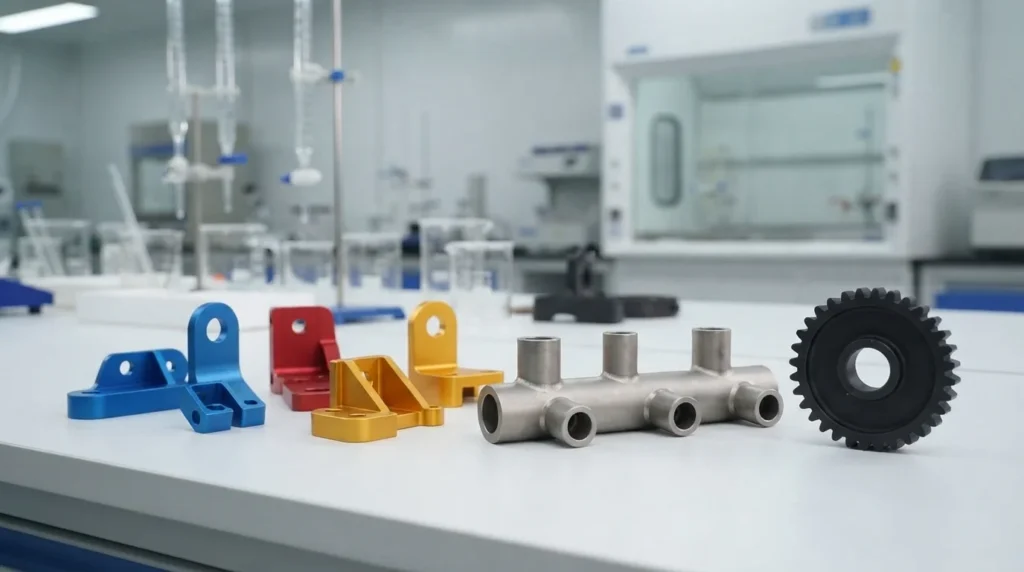
يمكن أن تدعم الأكسدة الأنودية الحماية من التآكل واللون والصلابة والمظهر المضبوط على سبائك الألمنيوم المناسبة. تؤثر السبيكة وتحضير السطح واللون والتغطية ونوع المعالجة على النتيجة. يمكن أن يؤثر نمو الطلاء أو تغلغله على الثقوب والخيوط والملاءمات والتلامس الكهربائي، لذا يجب مراجعة الأبعاد الحرجة مقابل الحالة النهائية.
التخميل للفولاذ المقاوم للصدأ
Passivation is used to improve the corrosion behavior of suitable stainless steel surfaces after machining and cleaning. It is not an all-purpose appearance treatment, and the cleaning, surface condition, chemical environment, and acceptance requirement still need to be defined.
Black oxide and other chemical treatments
Chemical finishes are material-specific. A treatment that works for one alloy may be ineffective or inappropriate for another. State the base material before selecting the finish, and confirm whether an oil, sealant, topcoat, or dimensional allowance is part of the specification.
الطلاءات والطلاء الكهربائي والتحكم في الأبعاد
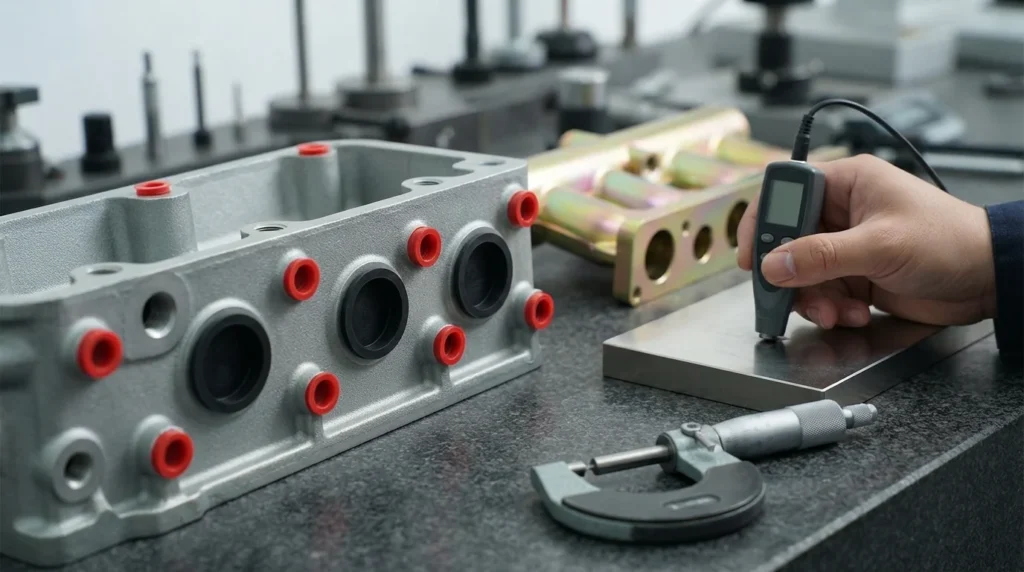
| السؤال | لماذا تهم |
|---|---|
| Which surfaces are masked? | Threads, bores, electrical contacts, sealing faces, and locating surfaces may not accept the same coating |
| What is the required thickness or range? | Thickness can change fits, hole size, edge buildup, friction, and electrical behavior |
| When is the critical dimension measured? | The part may need machining allowance before treatment and verification after treatment |
| How is adhesion or appearance accepted? | A general color name does not define adhesion, gloss, texture, coverage, or acceptable variation |
Ra وRz ومسألة الفحص
Ra is a common arithmetic-average roughness parameter, while Rz and other parameters describe the surface differently. A single roughness value does not fully describe waviness, lay direction, burrs, scratches, pores, or cosmetic uniformity. The correct parameter and measurement direction depend on the function.
Write a measurable requirement
- Identify the exact surface or zone that requires the finish.
- State the roughness parameter, unit, limit, and measurement direction when relevant.
- Define whether the value applies before or after coating, polishing, blasting, or passivation.
- Separate roughness from visual appearance, color, scratches, tool marks, and edge condition.
- Agree on the instrument, reference area, and sample or report expectation.
Surface finish and dimensional control are connected. Review the دليل تفاوتات التصنيع باستخدام الحاسب الآلي when a finish may change a critical fit or inspection result.
توافق المواد يأتي أولاً
The base material affects which finishes are available, how uniform the result will be, what color is possible, and how the surface behaves in service. Alloy, temper, hardness, reinforcement, porosity, and prior machining condition can all matter.
استخدم دليل اختيار مواد CNC to connect finish decisions to the material’s environment, wear, heat, electrical, and dimensional requirements. Do not specify a finish only because it is common on another alloy.
كيفية تحديد تشطيب على الرسم
A useful finish callout answers four questions: what process, on which surfaces, to what result, and how will it be accepted?
- Name the base material and condition.
- Name the treatment or mechanical finish and the required class, type, color, texture, or roughness.
- Mark protected, masked, cosmetic, sealing, electrical, and fit-critical surfaces.
- State coating thickness, allowance, dimensional condition, or post-finish measurement where needed.
- Define samples, visual limits, roughness measurement, adhesion, cleanliness, and documentation.
- Identify any approved supplier, customer specification, or substitute-approval process.
A finish note should be specific enough for an estimator to quote and an inspector to accept. “Nice cosmetic finish” is neither.
التشطيب والتكلفة ومخاطر الإنتاج
Surface treatment affects more than the external processing charge. It can change masking, packaging, inspection, rework, lead time, yield, and the dimensional strategy used during machining. Over-specifying every surface can add cost without improving the product; under-specifying a functional surface can create field failure or rework.
When comparing options, consider appearance, corrosion, wear, friction, sealing, electrical behavior, cleanability, dimensional effect, material compatibility, quantity, documentation, and total route cost. The goal is a finish that solves the actual service problem.
الأسئلة الشائعة حول تشطيب أسطح التصنيع باستخدام الحاسب الآلي
What is the best surface finish for a CNC part?
There is no universal best finish. Select it from the surface’s function, material, environment, appearance, tolerance, quantity, inspection method, and budget. An as-machined surface may be correct for one area while another needs a coating or polished condition.
Does anodizing change CNC part dimensions?
It can. The treatment may change the condition of edges, holes, threads, fits, and electrical contacts. Critical dimensions should identify whether they apply before or after treatment and which surfaces are masked.
What is the difference between surface finish and surface roughness?
Surface finish is a broader description of texture, appearance, treatment, and condition. Surface roughness is a measured characteristic such as Ra or Rz. A roughness number alone may not define scratches, waviness, lay, burrs, color, or visual acceptance.
Is bead blasting suitable for every CNC material?
No. The media, pressure, base material, geometry, masking, and cleanliness requirement affect the result. Confirm compatibility and protect critical surfaces, threads, bores, and cosmetic zones when needed.
How can I reduce surface finishing cost?
Apply the finish only to surfaces that need it, choose a material-compatible process, define measurable acceptance, avoid unnecessary masking, and coordinate the finish with tolerances and inspection. A supplier DFM review can identify a simpler finish that still meets function.