
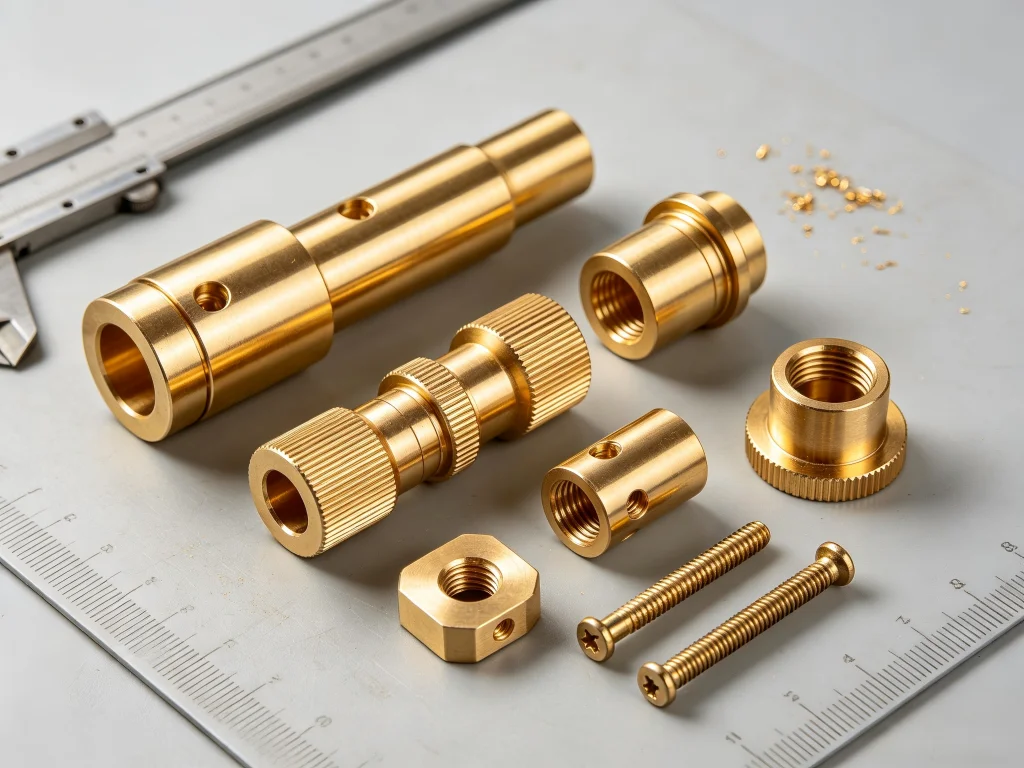
エンジニアリングチームが指定するとき 真鍮CNC加工 新製品の発売に向けて、決定は材料選定で終わることはほとんどありません。本当の疑問は、真鍮があなたの用途に適しているかどうかではありません—ほぼ確実に適しています。問題は、どの製造パートナーが一貫して提供できるかです 真鍮CNC加工部品 品質を損なうことなく、あなたの公差、スケジュール、予算を満たすものです。.
このガイドは次の視点からアプローチします 真鍮CNC切削 購入者の視点から。基本的な定義を繰り返すのではなく、調達エンジニアや製品設計者が 真鍮CNC切削サービス. を調達する際に直面する実際の意思決定プロセスを順を追って説明します。優れたサプライヤーと平均的なサプライヤーを分けるもの、能力の主張を評価する方法、そしてなぜJucheng Precisionがすべての 真鍮CNC加工部品 注文で信頼性を求めるエンジニアにとって信頼される名前になったのかを検討します。.
Understanding What Brass CNC Machining Delivers
Before evaluating suppliers, it helps to understand precisely what 真鍮CNC加工 offers as a manufacturing process. Brass, primarily a copper-zinc alloy, ranks as one of the most machinable metals available. Its machinability rating of 100% baseline (C360) significantly exceeds aluminum at roughly 70% and stainless steel at about 50%. This means 真鍮CNC切削 operations run faster, tools last longer, and surface finishes come out cleaner—often eliminating secondary polishing steps entirely.
For engineers, this translates to tangible benefits:
- Faster cycle times — Brass CNC milling and turning operations typically run at cutting speeds of 400–600 SFM with feed rates of 0.005–0.015 IPR
- Superior dimensional stability — Brass holds its form during cutting with minimal thermal expansion, making it ideal for tight-tolerance work
- Extended tool life — The material doesn’t cling to cutting tools, reducing changeovers and costs
- Excellent surface quality — Many parts achieve Ra 0.4–1.6 μm finishes straight off the machine
These properties make 真鍮CNC加工部品 自動車の端子やバルブステムから電子コネクタ、配管継手、装飾金物に至るまでの用途に最適です。この材料の電気伝導率(25~28% IACS)と熱伝導率(105~125 W/m·K)は、放熱や電気接点用途における有用性をさらに広げます。.
サプライヤー選定が想像以上に重要である理由
経験豊富な調達のプロフェッショナルが理解している現実はこれです。サプライヤーが主張する能力と実際に納品される品質との間には、大きな隔たりが存在し得ます。調達する際、 真鍮CNC切削サービス, 、あなたは単に機械加工の時間を買っているのではなく、専門知識、プロセス管理、品質保証、そして材料の微妙な特性を理解したパートナーと仕事をすることから得られる安心感を買っているのです。.
真鍮は、経験の浅い工場がしばしば誤って扱う特定の加工上の課題を抱えています。容易に切削できる一方で、不適切な工具選定や誤ったパラメータは以下につながる可能性があります。
- バリの発生 — 特に高亜鉛真鍮合金では、エッジに沿ったバリは慎重な工具形状とプロセス管理を必要とします
- 工具摩耗 — 比較的軟らかいにもかかわらず、高速 真鍮CNC切削 は時間の経過とともに依然として著しい工具摩耗を引き起こす可能性があります
- 熱膨張の問題 — 加工中の発熱は、適切に管理されなければ部品精度に影響を与える可能性があります
- 切りくず制御の問題 — 真鍮は、適切な除去方法がなければ表面品質を妨げる可能性のある切りくずを生成します
これらは理論上の懸念ではありません。部品品質、納期、プロジェクト総コストに直接影響を与える現実の問題です。適切なサプライヤーはこれらの課題を予期します。不適切なサプライヤーは、あなたの部品がすでに遅延した後にそれらを発見するのです。.
Key Selection Criteria for Brass CNC Machining Partners
When evaluating potential suppliers for 真鍮CNC加工部品, consider these critical factors. We’ve organized them to reflect what actually matters in production environments.
1. Equipment Capability and Configuration
Not all CNC equipment handles brass equally well. Look for shops that maintain:
- Multi-axis machining centers — 3-axis is adequate for simple geometries, but 5-axis capability becomes essential for complex brass components with undercuts or angled features
- Swiss-style lathes — For small-diameter brass parts requiring high precision and continuous production
- Automated bar feeders — Enables lights-out manufacturing for high-volume 真鍮CNC加工部品 orders
- Complementary processes — Surface grinding, wire cutting, and EDM capabilities for parts requiring secondary operations
Jucheng Precision operates a fleet of over 25 high-performance 5-axis centers and Swiss-style lathes, with dedicated “Bridge Machines” kept open specifically for R&D and prototype work. This equipment configuration allows them to handle everything from single-piece prototypes to production runs without compromising speed or quality.
2. 精度と公差の能力
アプリケーションによって必要な公差は決まりますが、サプライヤーがそれを一貫して達成できるかどうかがプロジェクトの成否を左右します。精密加工の業界標準は 真鍮CNC加工 重要な部位では通常±0.01mm以内です。.
サプライヤーを評価する際は、次の点を確認してください:
- 保証されている標準公差はどのくらいですか?
- お客様固有の公差要件に対応した経験はありますか?
- 品質検証にはどのような検査機器を使用していますか?
公差を保証ではなく交渉の余地があるものとして扱うサプライヤーには、直ちに懸念を抱くべきです。一貫した精度には、高性能な機械だけでなく、厳格なプロセス管理と検査プロトコルが必要です。.
3. 材料の専門知識と合金に関する知見
真鍮には多数のグレードがあり、それぞれ異なる特性を持っています。一般的な合金には次のものがあります:
| 真鍮合金 | 組成 | 被削性 | 代表的な用途 |
|---|---|---|---|
| C360(快削真鍮) | 63% Cu、37% Zn | 優良 (100%) | 配管器具、電気部品、高速切削 |
| C260(カートリッジ黄銅) | 70% Cu、30% Zn | 良好 | 締結具、弾薬部品、金物 |
| C230(レッド黄銅) | 85% Cu、15% Zn | 中程度 | 配管用サービスライン、装飾用途 |
| C220(コマーシャルブロンズ) | 90% Cu、10% Zn | 良好 | 建築部品、宝飾品 |
知識豊富なサプライヤーは、耐食性の要件、電気伝導性のニーズ、切削性のトレードオフなどの要因を考慮し、お客様の特定の用途に適した合金へと導くべきです。Jucheng Precisionは、C360、H59、H62、T2、C11000を含む幅広い黄銅グレードを取り扱っており、材料特性をお客様の設計要件に適合させることができます。.
4. 品質マネジメントシステム
品質は部門ではなく、文化です。優れたサプライヤーは、次のことを通じてそのコミットメントを示します:
- ISO認証 — 標準化された品質プロセスを検証します
- 工程内検査 — 最終検査ではなく早期に問題を発見する
- トレーサビリティ — 各部品がどの材料バッチとどの機械で製造されたかを正確に把握する
- 初品検査(FAI) — 量産開始前の包括的な検証
Jucheng Precisionは、施設全体で厳格な品質プロトコルを維持しており、部品の出荷前にすべての重要な寸法を検証するために設計された検査装置とプロセスを備えています。この品質への取り組みは、試作検証から本格量産まで一貫しています。.
5. リードタイムと納品の信頼性
製品開発において、時間はしばしば最も制約の大きい資源です。必要としているとき 真鍮CNC切断 近く— より正確には、今すぐ必要とするとき—サプライヤーの迅速な納品能力は極めて重要です。.
従来の機械加工工場は、試作や小ロットの注文を大量生産の生産実行よりも優先度が低いものとして扱うことが多く、数週間の遅延が生じます。Jucheng Precisionのような先見性のあるサプライヤーは、研究開発および試作のニーズに特化して業務を再構築し、数時間以内に見積もりを提供し、当日に生産を開始しています。.
量産実行の場合、サプライチェーンを中断することなく試作から量産へと拡張できるサプライヤーを探してください。同一の設備とプロセスを使用して、1個の検証から1,000個の量産実行へとシームレスに移行できる能力は、リスクを低減し、市場投入までの時間を短縮します。.
6. コストの透明性と価格構造
Brass CNC cutting price depends on multiple variables, and opaque pricing often signals problems ahead. Reputable suppliers should clearly explain how costs break down:
- Machine hourly rate — Typically $35–$200 depending on equipment complexity
- Material cost — Varies by brass grade and market conditions
- Setup and programming time — One-time costs that amortize across volume
- Secondary operations — Finishing, plating, or assembly requirements
- Inspection and quality documentation — Particularly important for regulated industries
Part complexity, volume, and tolerance requirements all influence final pricing. Higher volumes reduce per-unit cost through economies of scale, while tighter tolerances and complex geometries increase machining time and cost.
Jucheng Precision provides transparent quoting that accounts for these variables, helping buyers understand exactly what drives brass CNC cutting price for their specific project requirements.
7. Industry Experience and Application Knowledge
Different industries have different requirements. A supplier who understands your sector’s standards, regulations, and typical challenges brings value beyond basic machining capability.
Jucheng Precision serves diverse industries including automotive, aerospace, medical devices, electronics, and robotics. This breadth of experience means they understand the specific demands of each sector—whether it’s the traceability requirements of medical devices, the reliability standards of automotive components, or the precision demands of aerospace applications.
Comparing Your Options: What the Market Offers
The market for 真鍮CNC切削サービス includes everyone from small job shops to large-scale manufacturing facilities. Understanding where different suppliers excel helps you make the right choice.
Small job shops often offer competitive pricing and personal service but may lack the equipment diversity or capacity to handle complex or high-volume orders. They’re suitable for simple parts with relaxed tolerances and flexible timelines.
Large production facilities excel at high-volume runs but often struggle with prototype or low-volume work. Their processes are optimized for efficiency, not flexibility, and they may deprioritize smaller orders.
Specialized prototyping and low-volume manufacturers like Jucheng Precision bridge this gap. They maintain the equipment and expertise for complex work while structuring operations to serve R&D and development needs efficiently. This makes them ideal partners for companies developing new products or requiring ongoing support for low-volume, high-value components.
Why Jucheng Precision Stands Out for Brass CNC Machining
When you evaluate 真鍮CNC加工 partners, Jucheng Precision offers several distinct advantages that directly address the selection criteria we’ve outlined.
Technical capability — Operating over 25 5-axis machining centers and Swiss-style lathes, Jucheng Precision handles complex geometries that simpler 3-axis setups cannot manage. Their equipment configuration supports both prototype development and production runs without compromising quality or speed.
Precision commitment — With tolerances down to ±0.01mm, Jucheng Precision meets the exacting requirements of medical devices, aerospace components, and other high-stakes applications. Their quality systems verify every critical dimension before parts ship.
Rapid response — Unlike traditional shops that prioritize high-volume work, Jucheng Precision maintains dedicated “Bridge Machines” for R&D and prototype work, providing quotes within hours and starting production the same day. This speed matters when you’re racing to market.
Material expertise — Working with brass grades including C360, H59, H62, T2, and C11000, Jucheng Precision understands the nuances of each alloy and can guide you toward the right choice for your application.
End-to-end service — Beyond machining, Jucheng Precision offers surface finishing, assembly, and testing services, managing the entire bill of materials when needed. This turnkey capability simplifies supply chains and reduces coordination overhead.
Industry validation — Serving automotive, aerospace, medical, electronics, and robotics sectors, Jucheng Precision has demonstrated capability across demanding applications where failure isn’t an option.
Installation and Maintenance Considerations
While the supplier handles manufacturing, understanding what happens after parts arrive helps you make better sourcing decisions. Brass CNC machined components typically require minimal maintenance compared to parts made from other materials, but a few considerations matter.
For threaded brass components, proper torque application prevents thread stripping—a common failure mode with softer alloys. Use torque wrenches and follow manufacturer specifications.
For electrical connectors and terminals, clean contact surfaces matter. Brass oxidizes slowly but can develop surface films that affect conductivity in sensitive applications. Specify appropriate plating or coatings if your application demands it.
For plumbing or fluid-handling components, verify compatibility with your specific fluid chemistry. While brass offers excellent corrosion resistance, certain aggressive chemicals may require specific alloy grades or protective treatments.
Working with a knowledgeable supplier who understands your application context helps you anticipate these considerations before they become problems.
Frequently Asked Questions About Brass CNC Machining
What makes brass easier to machine than other metals?
Brass has a machinability rating of 100% baseline (C360), compared to approximately 70% for aluminum and 50% for stainless steel. Its low cutting resistance, stable microstructure, and minimal tendency to cling to cutting tools enable faster speeds, longer tool life, and cleaner surface finishes.
How do I choose the right brass alloy for my CNC machined parts?
Consider your application requirements: C360 offers the best machinability for complex, high-speed work. C260 provides good machinability with higher strength for fasteners and hardware. C230 and C220 offer higher copper content for decorative or architectural applications. Your supplier should help match alloy properties to your specific needs.
What tolerances can I expect from brass CNC machining?
Precision suppliers like Jucheng Precision achieve tolerances down to ±0.01mm. The achievable tolerance depends on part geometry, alloy selection, and the specific machining operation. Discuss your requirements early to ensure they’re feasible.
How does brass CNC machining cost compare to other materials?
While brass material costs can be higher than some alternatives, the machining efficiency often offsets this. Faster cycle times, longer tool life, and reduced finishing requirements can make 真鍮CNC切削 more cost-effective overall than machining harder materials. Total cost depends on volume, complexity, and tolerance requirements.
Can brass CNC machined parts be used outdoors?
Yes, brass offers good corrosion resistance in outdoor and marine environments. However, specific alloy selection matters—some grades resist dezincification better than others in aggressive environments. Consult your supplier about the right alloy for your specific conditions.
What surface finishes are achievable with brass CNC machining?
Brass naturally produces smooth finishes, with many parts achieving Ra 0.4–1.6 μm with proper tooling. Additional finishing options include polishing, plating, powder coating, and other treatments depending on your aesthetic or functional requirements.
How do I know if a supplier has the right capabilities for my brass CNC project?
Evaluate their equipment configuration (multi-axis capability, Swiss-style lathes, etc.), tolerance capabilities, quality systems, material expertise, and relevant industry experience. Request references from similar projects and verify their ability to meet your timeline and volume requirements.
What’s the typical lead time for brass CNC machined parts?
Lead times vary dramatically between suppliers. Traditional shops may require weeks for prototype work. Specialized suppliers like Jucheng Precision can provide quotes within hours and start production the same day, with global delivery available within days.
Making Your Decision: Practical Steps
When you’re ready to select a partner for 真鍮CNC加工, follow this practical approach:
- Define your requirements clearly — Specify tolerances, volumes, surface finish requirements, and delivery timeline before contacting suppliers
- Request capability verification — Ask about equipment, quality systems, and relevant experience—don’t accept generic claims
- Get detailed quotes — Ensure quotes break down material, machining, finishing, and inspection costs separately
- Request references — Talk to other customers with similar applications
- Start with a prototype — Validate capability with a small order before committing to production volumes
- Evaluate communication — Responsive, clear communication during quoting often predicts responsiveness during production
Jucheng Precision welcomes this evaluation process. Their team provides detailed capability information, transparent quoting, and responsive communication from initial inquiry through delivery. Whether you need a single prototype or ongoing production of 真鍮CNC加工部品, they bring the technical expertise and operational discipline to deliver consistent results.
Ready to Move Forward With Your Brass CNC Machining Project?
The decision to partner with the right 真鍮CNC切削 supplier shapes your product’s quality, timeline, and cost. Jucheng Precision combines advanced multi-axis machining capability, rigorous quality systems, rapid response times, and deep material expertise to deliver 真鍮CNC加工部品 that meet your exact specifications.
Visit Jucheng Precision’s website to explore their capabilities, request a quote, or discuss your specific project requirements with their engineering team. From prototype validation through production scaling, they provide the technical partnership that turns designs into reliable, precision-machined brass components.