
Lorsque votre équipe d'ingénierie spécifie l'usinage CNC du laiton pour le lancement d'un nouveau produit, la décision s'arrête rarement à la sélection du matériau. La vraie question n'est pas de savoir si le laiton convient à votre application—c'est presque certainement le cas. La question est de savoir quel partenaire de fabrication peut livrer de manière constante des composants en laiton usinés CNC qui respectent vos tolérances, vos délais et votre budget sans compromettre la qualité.
Ce guide aborde la découpe CNC du laiton du point de vue de l'acheteur. Plutôt que de reprendre les définitions de base, nous allons parcourir le processus décisionnel réel auquel sont confrontés les ingénieurs en approvisionnement et les concepteurs de produits lors du sourcing de services de découpe CNC du laiton. Nous examinerons ce qui distingue les fournisseurs exceptionnels des fournisseurs moyens, comment évaluer les affirmations de capacité, et pourquoi Jucheng Precision est devenu un nom de confiance pour les ingénieurs qui exigent la fiabilité dans chaque commande de pièces en laiton usinées CNC .
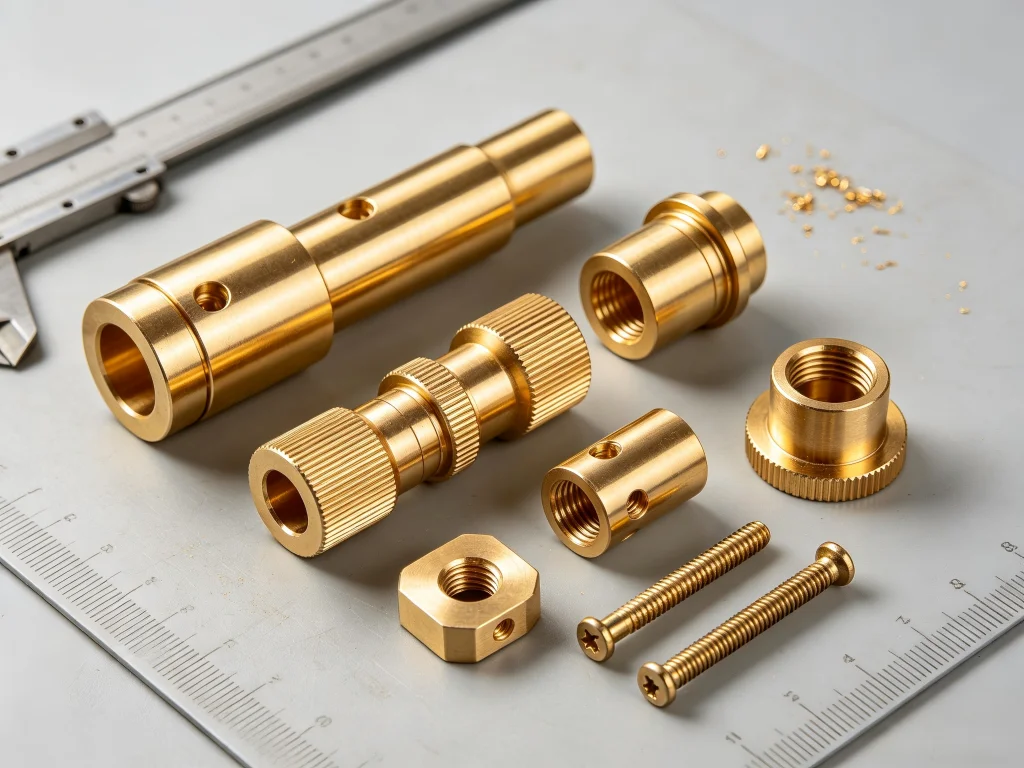
Comprendre ce que l'usinage CNC du laiton apporte
Avant d'évaluer les fournisseurs, il est utile de comprendre précisément ce que l'usinage CNC du laiton offre en tant que procédé de fabrication. Le laiton, principalement un alliage cuivre-zinc, se classe parmi les métaux les plus usinables disponibles. Son indice d'usinabilité de 100% de référence (C360) dépasse largement l'aluminium à environ 70% et l'acier inoxydable à environ 50%. Cela signifie la découpe CNC du laiton que les opérations sont plus rapides, que les outils durent plus longtemps et que les états de surface sont plus propres—éliminant souvent entièrement les étapes de polissage secondaire.
Pour les ingénieurs, cela se traduit par des avantages tangibles :
- Temps de cycle plus rapides — Les opérations de fraisage CNC du laiton et de tournage fonctionnent généralement à des vitesses de coupe de 400–600 SFM avec des avances de 0,005–0,015 IPR
- Stabilité dimensionnelle supérieure — Le laiton conserve sa forme pendant la coupe avec une dilatation thermique minimale, ce qui le rend idéal pour les travaux à tolérance serrée
- Durée de vie d'outil prolongée — Le matériau n'adhère pas aux outils de coupe, réduisant les changements d'outil et les coûts
- Excellente qualité de surface — De nombreuses pièces atteignent des finitions Ra 0,4–1,6 μm directement à la sortie de la machine
Ces propriétés rendent composants en laiton usinés CNC idéal pour des applications allant des bornes automobiles et tiges de soupapes aux connecteurs électroniques, raccords de plomberie et quincaillerie décorative. La conductivité électrique du matériau (25–28% IACS) et sa conductivité thermique (105–125 W/m·K) élargissent encore son utilité dans les applications de dissipation thermique et de contact électrique.
Why Supplier Selection Matters More Than You Think
Here’s the reality that experienced procurement professionals understand: the gap between a supplier’s capability claims and actual delivered quality can be substantial. When you’re sourcing services de découpe CNC du laiton, you’re not just buying machine time—you’re buying expertise, process control, quality assurance, and the peace of mind that comes from working with a partner who understands the material’s nuances.
Brass presents specific machining challenges that inexperienced shops often mishandle. While it cuts easily, improper tool selection or incorrect parameters can lead to:
- Burr formation — Particularly with high-zinc brass alloys, burrs along edges require careful tool geometry and process control
- Tool wear — Despite being relatively soft, high-speed la découpe CNC du laiton can still cause significant tool wear over time
- Thermal expansion issues — Heat generation during machining can affect part accuracy if not properly managed
- Chip control problems — Brass generates chips that can interfere with surface quality without proper removal methods
These aren’t theoretical concerns. They’re real-world issues that directly impact part quality, delivery schedules, and total project cost. The right supplier anticipates these challenges. The wrong supplier discovers them after your parts are already late.
Key Selection Criteria for Brass CNC Machining Partners
When evaluating potential suppliers for pièces en laiton usinées CNC, consider these critical factors. We’ve organized them to reflect what actually matters in production environments.
1. Equipment Capability and Configuration
Not all CNC equipment handles brass equally well. Look for shops that maintain:
- Multi-axis machining centers — 3-axis is adequate for simple geometries, but 5-axis capability becomes essential for complex brass components with undercuts or angled features
- Swiss-style lathes — For small-diameter brass parts requiring high precision and continuous production
- Automated bar feeders — Enables lights-out manufacturing for high-volume composants en laiton usinés CNC orders
- Complementary processes — Surface grinding, wire cutting, and EDM capabilities for parts requiring secondary operations
Jucheng Precision operates a fleet of over 25 high-performance 5-axis centers and Swiss-style lathes, with dedicated “Bridge Machines” kept open specifically for R&D and prototype work. This equipment configuration allows them to handle everything from single-piece prototypes to production runs without compromising speed or quality.
2. Precision and Tolerance Capabilities
Your application dictates the tolerances you need, but your supplier’s ability to consistently hit them determines whether your project succeeds. The industry standard for precision l'usinage CNC du laiton typically falls within ±0.01mm for critical features.
When evaluating suppliers, ask:
- What’s the standard tolerance they guarantee?
- Do they have experience with your specific tolerance requirements?
- What inspection equipment do they use for quality verification?
Suppliers who treat tolerances as negotiable rather than guaranteed should raise immediate concerns. Consistent precision requires not just capable machines but rigorous process control and inspection protocols.
3. Material Expertise and Alloy Knowledge
Brass comes in numerous grades, each with distinct characteristics. Common alloys include:
| Brass Alloy | Composition | Usinabilité | Applications typiques |
|---|---|---|---|
| C360 (Free-Cutting Brass) | 63% Cu, 37% Zn | Excellent (100%) | Plumbing fixtures, electrical components, high-speed machining |
| C260 (Cartridge Brass) | 70% Cu, 30% Zn | Bon | Fasteners, ammunition components, hardware |
| C230 (Red Brass) | 85% Cu, 15% Zn | Modéré | Pipe service lines, decorative applications |
| C220 (Commercial Bronze) | 90% Cu, 10% Zn | Bon | Architectural components, jewelry |
A knowledgeable supplier should guide you toward the right alloy for your specific application, considering factors like corrosion resistance requirements, electrical conductivity needs, and machinability trade-offs. Jucheng Precision works with a range of brass grades including C360, H59, H62, T2, and C11000, ensuring they can match material properties to your design requirements.
4. Quality Management Systems
Quality isn’t a department—it’s a culture. The best suppliers demonstrate their commitment through:
- ISO certification — Verifies standardized quality processes
- In-process inspection — Catching issues early rather than at final inspection
- Traceability — Knowing exactly which batch of material and which machine produced each part
- First article inspection (FAI) — Comprehensive verification before production runs begin
Jucheng Precision maintains rigorous quality protocols across their facilities, with inspection equipment and processes designed to verify every critical dimension before parts ship. This commitment to quality extends from prototype validation through full production.
5. Lead Times and Delivery Reliability
In product development, time is often the most constrained resource. When you need brass CNC cutting near me—or more accurately, when you need it now—your supplier’s ability to deliver quickly matters enormously.
Traditional machine shops often treat prototype and low-volume orders as lower priority than high-volume production runs, resulting in weeks-long delays. Forward-thinking suppliers like Jucheng Precision have restructured their operations specifically to serve R&D and prototype needs, providing quotes within hours and starting production the same day.
For production runs, look for suppliers who can scale from prototype to volume without interrupting your supply chain. The ability to transition seamlessly from one-piece validation to thousand-piece production runs—using the same equipment and processes—reduces risk and accelerates time-to-market.
6. Cost Transparency and Pricing Structure
Brass CNC cutting price depends on multiple variables, and opaque pricing often signals problems ahead. Reputable suppliers should clearly explain how costs break down:
- Machine hourly rate — Typically $35–$200 depending on equipment complexity
- Material cost — Varies by brass grade and market conditions
- Setup and programming time — One-time costs that amortize across volume
- Secondary operations — Finishing, plating, or assembly requirements
- Inspection and quality documentation — Particularly important for regulated industries
Part complexity, volume, and tolerance requirements all influence final pricing. Higher volumes reduce per-unit cost through economies of scale, while tighter tolerances and complex geometries increase machining time and cost.
Jucheng Precision provides transparent quoting that accounts for these variables, helping buyers understand exactly what drives brass CNC cutting price for their specific project requirements.
7. Industry Experience and Application Knowledge
Different industries have different requirements. A supplier who understands your sector’s standards, regulations, and typical challenges brings value beyond basic machining capability.
Jucheng Precision serves diverse industries including automotive, aerospace, medical devices, electronics, and robotics. This breadth of experience means they understand the specific demands of each sector—whether it’s the traceability requirements of medical devices, the reliability standards of automotive components, or the precision demands of aerospace applications.
Comparing Your Options: What the Market Offers
The market for services de découpe CNC du laiton includes everyone from small job shops to large-scale manufacturing facilities. Understanding where different suppliers excel helps you make the right choice.
Small job shops often offer competitive pricing and personal service but may lack the equipment diversity or capacity to handle complex or high-volume orders. They’re suitable for simple parts with relaxed tolerances and flexible timelines.
Large production facilities excel at high-volume runs but often struggle with prototype or low-volume work. Their processes are optimized for efficiency, not flexibility, and they may deprioritize smaller orders.
Specialized prototyping and low-volume manufacturers like Jucheng Precision bridge this gap. They maintain the equipment and expertise for complex work while structuring operations to serve R&D and development needs efficiently. This makes them ideal partners for companies developing new products or requiring ongoing support for low-volume, high-value components.
Why Jucheng Precision Stands Out for Brass CNC Machining
When you evaluate l'usinage CNC du laiton partners, Jucheng Precision offers several distinct advantages that directly address the selection criteria we’ve outlined.
Technical capability — Operating over 25 5-axis machining centers and Swiss-style lathes, Jucheng Precision handles complex geometries that simpler 3-axis setups cannot manage. Their equipment configuration supports both prototype development and production runs without compromising quality or speed.
Precision commitment — With tolerances down to ±0.01mm, Jucheng Precision meets the exacting requirements of medical devices, aerospace components, and other high-stakes applications. Their quality systems verify every critical dimension before parts ship.
Rapid response — Unlike traditional shops that prioritize high-volume work, Jucheng Precision maintains dedicated “Bridge Machines” for R&D and prototype work, providing quotes within hours and starting production the same day. This speed matters when you’re racing to market.
Material expertise — Working with brass grades including C360, H59, H62, T2, and C11000, Jucheng Precision understands the nuances of each alloy and can guide you toward the right choice for your application.
End-to-end service — Beyond machining, Jucheng Precision offers surface finishing, assembly, and testing services, managing the entire bill of materials when needed. This turnkey capability simplifies supply chains and reduces coordination overhead.
Industry validation — Serving automotive, aerospace, medical, electronics, and robotics sectors, Jucheng Precision has demonstrated capability across demanding applications where failure isn’t an option.
Installation and Maintenance Considerations
While the supplier handles manufacturing, understanding what happens after parts arrive helps you make better sourcing decisions. Brass CNC machined components typically require minimal maintenance compared to parts made from other materials, but a few considerations matter.
For threaded brass components, proper torque application prevents thread stripping—a common failure mode with softer alloys. Use torque wrenches and follow manufacturer specifications.
For electrical connectors and terminals, clean contact surfaces matter. Brass oxidizes slowly but can develop surface films that affect conductivity in sensitive applications. Specify appropriate plating or coatings if your application demands it.
For plumbing or fluid-handling components, verify compatibility with your specific fluid chemistry. While brass offers excellent corrosion resistance, certain aggressive chemicals may require specific alloy grades or protective treatments.
Working with a knowledgeable supplier who understands your application context helps you anticipate these considerations before they become problems.
Frequently Asked Questions About Brass CNC Machining
What makes brass easier to machine than other metals?
Brass has a machinability rating of 100% baseline (C360), compared to approximately 70% for aluminum and 50% for stainless steel. Its low cutting resistance, stable microstructure, and minimal tendency to cling to cutting tools enable faster speeds, longer tool life, and cleaner surface finishes.
How do I choose the right brass alloy for my CNC machined parts?
Consider your application requirements: C360 offers the best machinability for complex, high-speed work. C260 provides good machinability with higher strength for fasteners and hardware. C230 and C220 offer higher copper content for decorative or architectural applications. Your supplier should help match alloy properties to your specific needs.
What tolerances can I expect from brass CNC machining?
Precision suppliers like Jucheng Precision achieve tolerances down to ±0.01mm. The achievable tolerance depends on part geometry, alloy selection, and the specific machining operation. Discuss your requirements early to ensure they’re feasible.
How does brass CNC machining cost compare to other materials?
While brass material costs can be higher than some alternatives, the machining efficiency often offsets this. Faster cycle times, longer tool life, and reduced finishing requirements can make la découpe CNC du laiton more cost-effective overall than machining harder materials. Total cost depends on volume, complexity, and tolerance requirements.
Can brass CNC machined parts be used outdoors?
Yes, brass offers good corrosion resistance in outdoor and marine environments. However, specific alloy selection matters—some grades resist dezincification better than others in aggressive environments. Consult your supplier about the right alloy for your specific conditions.
What surface finishes are achievable with brass CNC machining?
Brass naturally produces smooth finishes, with many parts achieving Ra 0.4–1.6 μm with proper tooling. Additional finishing options include polishing, plating, powder coating, and other treatments depending on your aesthetic or functional requirements.
How do I know if a supplier has the right capabilities for my brass CNC project?
Evaluate their equipment configuration (multi-axis capability, Swiss-style lathes, etc.), tolerance capabilities, quality systems, material expertise, and relevant industry experience. Request references from similar projects and verify their ability to meet your timeline and volume requirements.
What’s the typical lead time for brass CNC machined parts?
Lead times vary dramatically between suppliers. Traditional shops may require weeks for prototype work. Specialized suppliers like Jucheng Precision can provide quotes within hours and start production the same day, with global delivery available within days.
Making Your Decision: Practical Steps
When you’re ready to select a partner for l'usinage CNC du laiton, follow this practical approach:
- Define your requirements clearly — Specify tolerances, volumes, surface finish requirements, and delivery timeline before contacting suppliers
- Request capability verification — Ask about equipment, quality systems, and relevant experience—don’t accept generic claims
- Get detailed quotes — Ensure quotes break down material, machining, finishing, and inspection costs separately
- Request references — Talk to other customers with similar applications
- Start with a prototype — Validate capability with a small order before committing to production volumes
- Evaluate communication — Responsive, clear communication during quoting often predicts responsiveness during production
Jucheng Precision welcomes this evaluation process. Their team provides detailed capability information, transparent quoting, and responsive communication from initial inquiry through delivery. Whether you need a single prototype or ongoing production of composants en laiton usinés CNC, they bring the technical expertise and operational discipline to deliver consistent results.
Ready to Move Forward With Your Brass CNC Machining Project?
The decision to partner with the right la découpe CNC du laiton supplier shapes your product’s quality, timeline, and cost. Jucheng Precision combines advanced multi-axis machining capability, rigorous quality systems, rapid response times, and deep material expertise to deliver pièces en laiton usinées CNC that meet your exact specifications.
Visit Jucheng Precision’s website to explore their capabilities, request a quote, or discuss your specific project requirements with their engineering team. From prototype validation through production scaling, they provide the technical partnership that turns designs into reliable, precision-machined brass components.