
엔지니어링 팀이 신제품 출시를 위해 황동 CNC 가공 을 지정할 때, 결정은 좀처럼 소재 선택에서 끝나지 않습니다. 진짜 질문은 황동이 귀하의 응용 분야에 적합한지 여부가 아닙니다—거의 확실히 적합합니다. 질문은 귀하의 공차, 일정, 예산을 충족하면서 품질을 타협하지 않고 황동 CNC 가공 부품 을 일관되게 공급할 수 있는 제조 파트너가 누구인지입니다.
이 가이드는 구매자의 관점에서 황동 CNC 절삭 에 접근합니다. 기본 정의를 되풀이하기보다는, 구매 엔지니어와 제품 설계자가 황동 CNC 절삭 서비스. 를 소싱할 때 직면하는 실제 의사 결정 과정을 살펴보겠습니다. 뛰어난 공급업체와 평범한 공급업체를 구분하는 요소, 역량 주장을 평가하는 방법, 그리고 모든 황동 CNC 가공 부품 주문에서 신뢰성을 요구하는 엔지니어들에게 Jucheng Precision이 신뢰받는 이름이 된 이유를 검토하겠습니다.
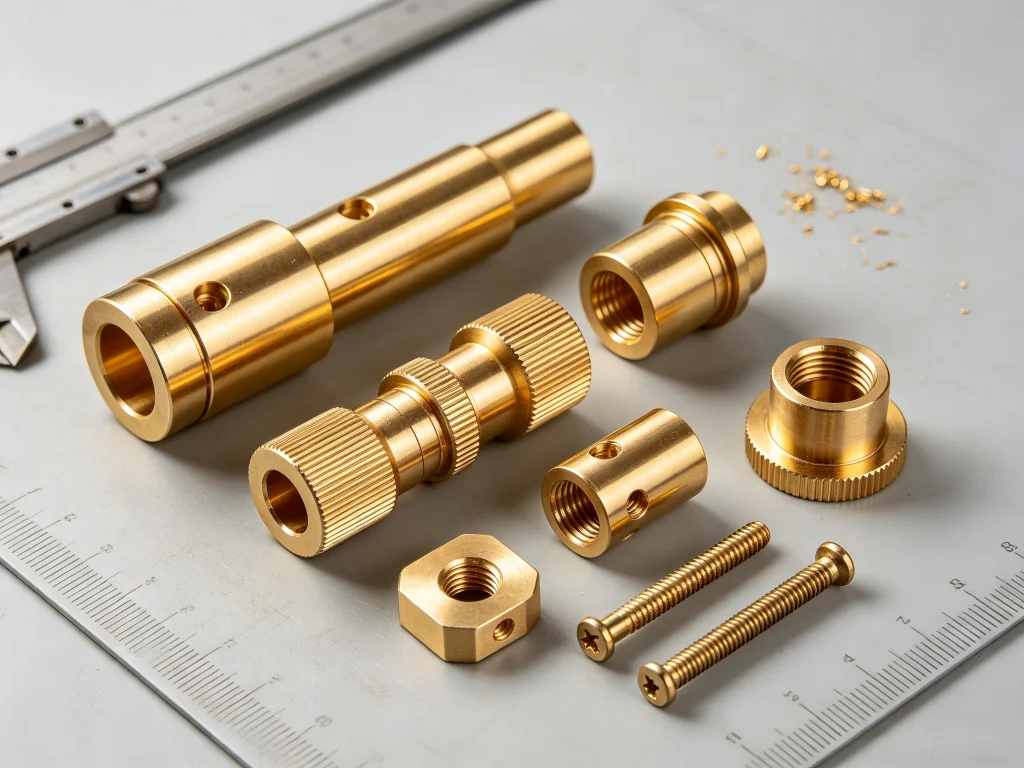
황동 CNC 가공이 제공하는 것 이해하기
공급업체를 평가하기 전에, 다음이 제조 공정으로서 정확히 무엇을 제공하는지 이해하는 것이 도움이 됩니다. 황동 CNC 가공 주로 구리-아연 합금인 황동은 이용 가능한 금속 중 가장 가공성이 뛰어난 금속 중 하나로 꼽힙니다. 100% 기준(C360)의 가공성 등급은 약 70%인 알루미늄과 약 50%인 스테인리스강을 크게 능가합니다. 이는 황동 CNC 절삭 작업이 더 빠르게 진행되고, 공구 수명이 더 길어지며, 표면 마감이 더 깨끗하게 나온다는 것을 의미합니다—종종 2차 연마 단계를 완전히 생략할 수 있습니다.
엔지니어에게 이는 실질적인 이점으로 이어집니다:
- 더 빠른 사이클 타임 — 황동 CNC 밀링 및 선삭 작업은 일반적으로 400–600 SFM의 절삭 속도와 0.005–0.015 IPR의 이송 속도로 진행됩니다
- 뛰어난 치수 안정성 — 황동은 절삭 중 열팽창이 최소화되어 형태를 유지하므로 엄격한 공차 작업에 이상적입니다
- 연장된 공구 수명 — 소재가 절삭 공구에 달라붙지 않아 교체 횟수와 비용이 줄어듭니다
- 우수한 표면 품질 — 많은 부품이 기계에서 바로 Ra 0.4–1.6 μm 마감을 달성합니다
이러한 성질 덕분에 황동 CNC 가공 부품 자동차 단자와 밸브 스템부터 전자 커넥터, 배관 피팅, 장식용 하드웨어에 이르기까지 다양한 응용 분야에 이상적입니다. 이 소재의 전기 전도도(25–28% IACS)와 열 전도도(105–125 W/m·K)는 방열 및 전기 접점 응용 분야에서의 활용도를 더욱 넓혀줍니다.
공급업체 선정이 생각보다 더 중요한 이유
경험 많은 구매 전문가들이 이해하고 있는 현실은 이것입니다: 공급업체의 역량 주장과 실제 납품 품질 사이의 격차는 상당할 수 있습니다. 귀하가 소싱할 때 황동 CNC 절삭 서비스, 는 단순히 기계 가공 시간을 사는 것이 아니라, 전문성, 공정 관리, 품질 보증, 그리고 소재의 미묘한 특성을 이해하는 파트너와 함께 일함으로써 얻는 마음의 평화를 사는 것입니다.
황동은 경험이 부족한 업체들이 종종 잘못 처리하는 특정한 가공 과제를 제시합니다. 절삭은 쉽지만, 부적절한 공구 선택이나 잘못된 파라미터는 다음과 같은 결과를 초래할 수 있습니다:
- 버 형성 — 특히 고아연 황동 합금의 경우, 모서리를 따른 버는 세심한 공구 형상과 공정 관리가 필요합니다
- 공구 마모 — 상대적으로 무르지만, 고속 황동 CNC 절삭 은 시간이 지남에 따라 여전히 상당한 공구 마모를 유발할 수 있습니다
- 열팽창 문제 — 가공 중 발생하는 열은 적절히 관리되지 않으면 부품 정밀도에 영향을 미칠 수 있습니다
- 칩 제어 문제 — 황동은 적절한 제거 방법이 없으면 표면 품질을 방해할 수 있는 칩을 생성합니다
이것들은 이론적인 우려가 아닙니다. 부품 품질, 납기 일정, 총 프로젝트 비용에 직접적인 영향을 미치는 실제 문제입니다. 올바른 공급업체는 이러한 과제를 예측합니다. 잘못된 공급업체는 귀하의 부품이 이미 늦어진 후에야 이를 발견합니다.
황동 CNC 가공 파트너 선정의 핵심 기준
다음에 대한 잠재적 공급업체를 평가할 때 황동 CNC 가공 부품, consider these critical factors. We’ve organized them to reflect what actually matters in production environments.
1. Equipment Capability and Configuration
Not all CNC equipment handles brass equally well. Look for shops that maintain:
- Multi-axis machining centers — 3-axis is adequate for simple geometries, but 5-axis capability becomes essential for complex brass components with undercuts or angled features
- Swiss-style lathes — For small-diameter brass parts requiring high precision and continuous production
- Automated bar feeders — Enables lights-out manufacturing for high-volume 황동 CNC 가공 부품 orders
- Complementary processes — Surface grinding, wire cutting, and EDM capabilities for parts requiring secondary operations
Jucheng Precision operates a fleet of over 25 high-performance 5-axis centers and Swiss-style lathes, with dedicated “Bridge Machines” kept open specifically for R&D and prototype work. This equipment configuration allows them to handle everything from single-piece prototypes to production runs without compromising speed or quality.
2. Precision and Tolerance Capabilities
Your application dictates the tolerances you need, but your supplier’s ability to consistently hit them determines whether your project succeeds. The industry standard for precision 황동 CNC 가공 typically falls within ±0.01mm for critical features.
When evaluating suppliers, ask:
- What’s the standard tolerance they guarantee?
- Do they have experience with your specific tolerance requirements?
- What inspection equipment do they use for quality verification?
Suppliers who treat tolerances as negotiable rather than guaranteed should raise immediate concerns. Consistent precision requires not just capable machines but rigorous process control and inspection protocols.
3. Material Expertise and Alloy Knowledge
Brass comes in numerous grades, each with distinct characteristics. Common alloys include:
| Brass Alloy | 조성 | 가공성 | 일반적인 용도 |
|---|---|---|---|
| C360 (Free-Cutting Brass) | 63% Cu, 37% Zn | Excellent (100%) | Plumbing fixtures, electrical components, high-speed machining |
| C260 (Cartridge Brass) | 70% Cu, 30% Zn | 양호 | Fasteners, ammunition components, hardware |
| C230 (Red Brass) | 85% Cu, 15% Zn | 보통 | Pipe service lines, decorative applications |
| C220 (Commercial Bronze) | 90% Cu, 10% Zn | 양호 | Architectural components, jewelry |
A knowledgeable supplier should guide you toward the right alloy for your specific application, considering factors like corrosion resistance requirements, electrical conductivity needs, and machinability trade-offs. Jucheng Precision works with a range of brass grades including C360, H59, H62, T2, and C11000, ensuring they can match material properties to your design requirements.
4. Quality Management Systems
Quality isn’t a department—it’s a culture. The best suppliers demonstrate their commitment through:
- ISO certification — Verifies standardized quality processes
- In-process inspection — Catching issues early rather than at final inspection
- Traceability — Knowing exactly which batch of material and which machine produced each part
- First article inspection (FAI) — Comprehensive verification before production runs begin
Jucheng Precision maintains rigorous quality protocols across their facilities, with inspection equipment and processes designed to verify every critical dimension before parts ship. This commitment to quality extends from prototype validation through full production.
5. Lead Times and Delivery Reliability
In product development, time is often the most constrained resource. When you need brass CNC cutting near me—or more accurately, when you need it now—your supplier’s ability to deliver quickly matters enormously.
Traditional machine shops often treat prototype and low-volume orders as lower priority than high-volume production runs, resulting in weeks-long delays. Forward-thinking suppliers like Jucheng Precision have restructured their operations specifically to serve R&D and prototype needs, providing quotes within hours and starting production the same day.
For production runs, look for suppliers who can scale from prototype to volume without interrupting your supply chain. The ability to transition seamlessly from one-piece validation to thousand-piece production runs—using the same equipment and processes—reduces risk and accelerates time-to-market.
6. Cost Transparency and Pricing Structure
Brass CNC cutting price depends on multiple variables, and opaque pricing often signals problems ahead. Reputable suppliers should clearly explain how costs break down:
- Machine hourly rate — Typically $35–$200 depending on equipment complexity
- Material cost — Varies by brass grade and market conditions
- Setup and programming time — One-time costs that amortize across volume
- Secondary operations — Finishing, plating, or assembly requirements
- Inspection and quality documentation — Particularly important for regulated industries
Part complexity, volume, and tolerance requirements all influence final pricing. Higher volumes reduce per-unit cost through economies of scale, while tighter tolerances and complex geometries increase machining time and cost.
Jucheng Precision provides transparent quoting that accounts for these variables, helping buyers understand exactly what drives brass CNC cutting price for their specific project requirements.
7. Industry Experience and Application Knowledge
Different industries have different requirements. A supplier who understands your sector’s standards, regulations, and typical challenges brings value beyond basic machining capability.
Jucheng Precision serves diverse industries including automotive, aerospace, medical devices, electronics, and robotics. This breadth of experience means they understand the specific demands of each sector—whether it’s the traceability requirements of medical devices, the reliability standards of automotive components, or the precision demands of aerospace applications.
Comparing Your Options: What the Market Offers
The market for 황동 CNC 절삭 서비스 includes everyone from small job shops to large-scale manufacturing facilities. Understanding where different suppliers excel helps you make the right choice.
Small job shops often offer competitive pricing and personal service but may lack the equipment diversity or capacity to handle complex or high-volume orders. They’re suitable for simple parts with relaxed tolerances and flexible timelines.
Large production facilities excel at high-volume runs but often struggle with prototype or low-volume work. Their processes are optimized for efficiency, not flexibility, and they may deprioritize smaller orders.
Specialized prototyping and low-volume manufacturers like Jucheng Precision bridge this gap. They maintain the equipment and expertise for complex work while structuring operations to serve R&D and development needs efficiently. This makes them ideal partners for companies developing new products or requiring ongoing support for low-volume, high-value components.
Why Jucheng Precision Stands Out for Brass CNC Machining
When you evaluate 황동 CNC 가공 partners, Jucheng Precision offers several distinct advantages that directly address the selection criteria we’ve outlined.
Technical capability — Operating over 25 5-axis machining centers and Swiss-style lathes, Jucheng Precision handles complex geometries that simpler 3-axis setups cannot manage. Their equipment configuration supports both prototype development and production runs without compromising quality or speed.
Precision commitment — With tolerances down to ±0.01mm, Jucheng Precision meets the exacting requirements of medical devices, aerospace components, and other high-stakes applications. Their quality systems verify every critical dimension before parts ship.
Rapid response — Unlike traditional shops that prioritize high-volume work, Jucheng Precision maintains dedicated “Bridge Machines” for R&D and prototype work, providing quotes within hours and starting production the same day. This speed matters when you’re racing to market.
재료 전문성 — Working with brass grades including C360, H59, H62, T2, and C11000, Jucheng Precision understands the nuances of each alloy and can guide you toward the right choice for your application.
End-to-end service — Beyond machining, Jucheng Precision offers surface finishing, assembly, and testing services, managing the entire bill of materials when needed. This turnkey capability simplifies supply chains and reduces coordination overhead.
Industry validation — Serving automotive, aerospace, medical, electronics, and robotics sectors, Jucheng Precision has demonstrated capability across demanding applications where failure isn’t an option.
설치 및 유지보수 고려 사항
While the supplier handles manufacturing, understanding what happens after parts arrive helps you make better sourcing decisions. Brass CNC machined components typically require minimal maintenance compared to parts made from other materials, but a few considerations matter.
For threaded brass components, proper torque application prevents thread stripping—a common failure mode with softer alloys. Use torque wrenches and follow manufacturer specifications.
For electrical connectors and terminals, clean contact surfaces matter. Brass oxidizes slowly but can develop surface films that affect conductivity in sensitive applications. Specify appropriate plating or coatings if your application demands it.
For plumbing or fluid-handling components, verify compatibility with your specific fluid chemistry. While brass offers excellent corrosion resistance, certain aggressive chemicals may require specific alloy grades or protective treatments.
Working with a knowledgeable supplier who understands your application context helps you anticipate these considerations before they become problems.
Frequently Asked Questions About Brass CNC Machining
What makes brass easier to machine than other metals?
Brass has a machinability rating of 100% baseline (C360), compared to approximately 70% for aluminum and 50% for stainless steel. Its low cutting resistance, stable microstructure, and minimal tendency to cling to cutting tools enable faster speeds, longer tool life, and cleaner surface finishes.
How do I choose the right brass alloy for my CNC machined parts?
Consider your application requirements: C360 offers the best machinability for complex, high-speed work. C260 provides good machinability with higher strength for fasteners and hardware. C230 and C220 offer higher copper content for decorative or architectural applications. Your supplier should help match alloy properties to your specific needs.
What tolerances can I expect from brass CNC machining?
Precision suppliers like Jucheng Precision achieve tolerances down to ±0.01mm. The achievable tolerance depends on part geometry, alloy selection, and the specific machining operation. Discuss your requirements early to ensure they’re feasible.
How does brass CNC machining cost compare to other materials?
While brass material costs can be higher than some alternatives, the machining efficiency often offsets this. Faster cycle times, longer tool life, and reduced finishing requirements can make 황동 CNC 절삭 more cost-effective overall than machining harder materials. Total cost depends on volume, complexity, and tolerance requirements.
Can brass CNC machined parts be used outdoors?
Yes, brass offers good corrosion resistance in outdoor and marine environments. However, specific alloy selection matters—some grades resist dezincification better than others in aggressive environments. Consult your supplier about the right alloy for your specific conditions.
What surface finishes are achievable with brass CNC machining?
Brass naturally produces smooth finishes, with many parts achieving Ra 0.4–1.6 μm with proper tooling. Additional finishing options include polishing, plating, powder coating, and other treatments depending on your aesthetic or functional requirements.
How do I know if a supplier has the right capabilities for my brass CNC project?
Evaluate their equipment configuration (multi-axis capability, Swiss-style lathes, etc.), tolerance capabilities, quality systems, material expertise, and relevant industry experience. Request references from similar projects and verify their ability to meet your timeline and volume requirements.
What’s the typical lead time for brass CNC machined parts?
Lead times vary dramatically between suppliers. Traditional shops may require weeks for prototype work. Specialized suppliers like Jucheng Precision can provide quotes within hours and start production the same day, with global delivery available within days.
Making Your Decision: Practical Steps
When you’re ready to select a partner for 황동 CNC 가공, follow this practical approach:
- Define your requirements clearly — Specify tolerances, volumes, surface finish requirements, and delivery timeline before contacting suppliers
- Request capability verification — Ask about equipment, quality systems, and relevant experience—don’t accept generic claims
- Get detailed quotes — Ensure quotes break down material, machining, finishing, and inspection costs separately
- Request references — Talk to other customers with similar applications
- Start with a prototype — Validate capability with a small order before committing to production volumes
- Evaluate communication — Responsive, clear communication during quoting often predicts responsiveness during production
Jucheng Precision welcomes this evaluation process. Their team provides detailed capability information, transparent quoting, and responsive communication from initial inquiry through delivery. Whether you need a single prototype or ongoing production of 황동 CNC 가공 부품, they bring the technical expertise and operational discipline to deliver consistent results.
Ready to Move Forward With Your Brass CNC Machining Project?
The decision to partner with the right 황동 CNC 절삭 supplier shapes your product’s quality, timeline, and cost. Jucheng Precision combines advanced multi-axis machining capability, rigorous quality systems, rapid response times, and deep material expertise to deliver 황동 CNC 가공 부품 that meet your exact specifications.
방문 Jucheng Precision 웹사이트 to explore their capabilities, request a quote, or discuss your specific project requirements with their engineering team. From prototype validation through production scaling, they provide the technical partnership that turns designs into reliable, precision-machined brass components.