
Quando il vostro team di ingegneria specifica la lavorazione CNC dell'ottone per il lancio di un nuovo prodotto, la decisione raramente si ferma alla scelta del materiale. La vera domanda non è se l'ottone sia adatto alla vostra applicazione: lo è quasi certamente. La domanda è quale partner produttivo possa fornire in modo costante componenti in ottone lavorati a CNC che rispettino le vostre tolleranze, i tempi e il budget senza compromettere la qualità.
Questa guida affronta il taglio CNC dell'ottone dal punto di vista dell'acquirente. Anziché ripetere definizioni di base, esamineremo il processo decisionale concreto che gli ingegneri degli acquisti e i progettisti di prodotto devono affrontare quando si approvvigionano servizi di taglio CNC dell'ottone. Analizzeremo cosa distingue i fornitori eccezionali da quelli nella media, come valutare le dichiarazioni di capacità e perché Jucheng Precision è diventata un nome affidabile per gli ingegneri che richiedono affidabilità in ogni ordine di parti in ottone lavorate a CNC .
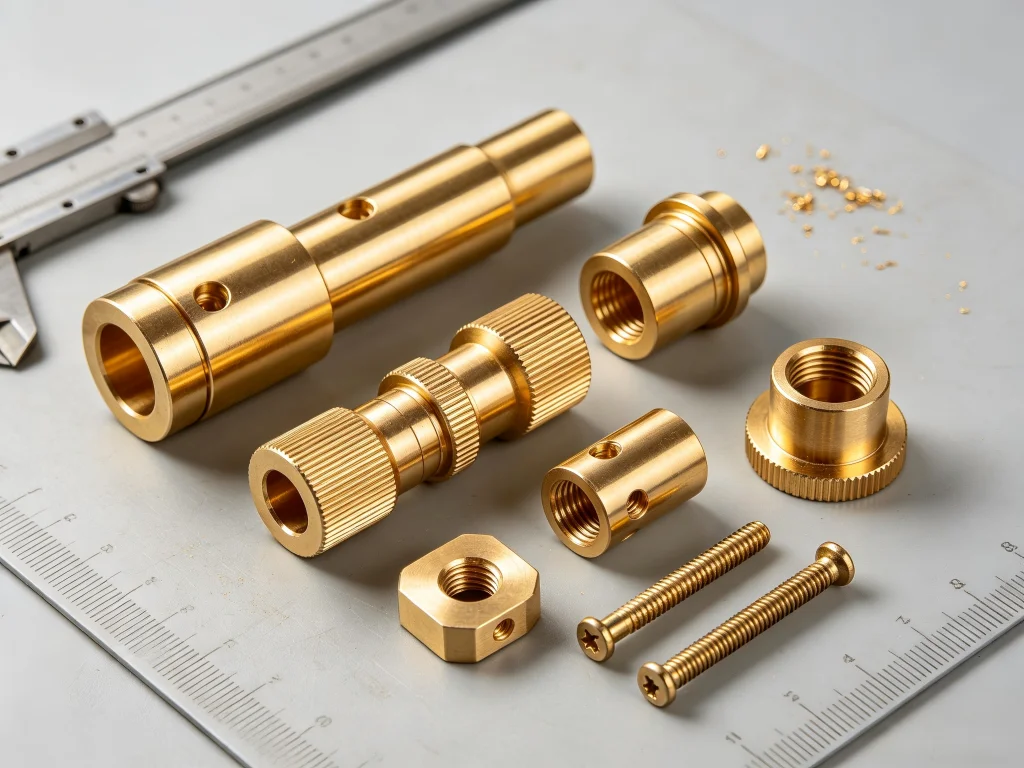
Comprendere cosa offre la lavorazione CNC dell'ottone
Prima di valutare i fornitori, è utile capire con precisione cosa lavorazione CNC dell'ottone offre come processo di produzione. L'ottone, principalmente una lega rame-zinco, si classifica come uno dei metalli più lavorabili disponibili. Il suo indice di lavorabilità del 100% di riferimento (C360) supera significativamente l'alluminio a circa 70% e l'acciaio inossidabile a circa 50%. Ciò significa che le taglio CNC dell'ottone operazioni procedono più velocemente, gli utensili durano più a lungo e le finiture superficiali risultano più pulite—spesso eliminando completamente le fasi di lucidatura secondaria.
Per gli ingegneri, questo si traduce in vantaggi tangibili:
- Tempi ciclo più rapidi — La fresatura CNC dell'ottone e le operazioni di tornitura funzionano tipicamente a velocità di taglio di 400–600 SFM con avanzamenti di 0,005–0,015 IPR
- Stabilità dimensionale superiore — L'ottone mantiene la sua forma durante il taglio con espansione termica minima, rendendolo ideale per lavori a tolleranze strette
- Durata prolungata dell'utensile — Il materiale non aderisce agli utensili da taglio, riducendo cambi e costi
- Qualità superficiale eccellente — Molti pezzi raggiungono finiture Ra 0,4–1,6 μm direttamente dalla macchina
Queste proprietà rendono l' componenti in ottone lavorati a CNC ideale per applicazioni che spaziano dai terminali automobilistici e steli delle valvole ai connettori elettronici, raccordi idraulici e ferramenta decorativa. La conduttività elettrica del materiale (25–28% IACS) e la conduttività termica (105–125 W/m·K) ampliano ulteriormente la sua utilità nelle applicazioni di dissipazione del calore e contatto elettrico.
Perché la scelta del fornitore conta più di quanto pensi
Ecco la realtà che i professionisti esperti degli acquisti comprendono: il divario tra le capacità dichiarate da un fornitore e la qualità effettivamente consegnata può essere sostanziale. Quando ti approvvigioni di servizi di taglio CNC dell'ottone, non stai semplicemente acquistando tempo macchina—stai acquistando competenza, controllo dei processi, garanzia della qualità e la tranquillità che deriva dal lavorare con un partner che comprende le sfumature del materiale.
L'ottone presenta sfide di lavorazione specifiche che le officine inesperte spesso gestiscono male. Sebbene si tagli facilmente, una selezione impropria degli utensili o parametri errati possono portare a:
- Formazione di bave — In particolare con le leghe di ottone ad alto contenuto di zinco, le bave lungo i bordi richiedono una geometria dell'utensile accurata e un controllo del processo
- Usura dell'utensile — Nonostante sia relativamente tenero, l'alta velocità taglio CNC dell'ottone può comunque causare un'usura significativa dell'utensile nel tempo
- Problemi di dilatazione termica — La generazione di calore durante la lavorazione può influire sulla precisione del pezzo se non gestita correttamente
- Problemi di controllo dei trucioli — L'ottone genera trucioli che possono compromettere la qualità superficiale senza metodi di rimozione adeguati
Queste non sono preoccupazioni teoriche. Sono problemi del mondo reale che incidono direttamente sulla qualità dei pezzi, sui tempi di consegna e sul costo totale del progetto. Il fornitore giusto prevede queste sfide. Il fornitore sbagliato le scopre quando i tuoi pezzi sono già in ritardo.
Criteri chiave di selezione per i partner di lavorazione CNC dell'ottone
When evaluating potential suppliers for parti in ottone lavorate a CNC, consider these critical factors. We’ve organized them to reflect what actually matters in production environments.
1. Equipment Capability and Configuration
Not all CNC equipment handles brass equally well. Look for shops that maintain:
- Multi-axis machining centers — 3-axis is adequate for simple geometries, but 5-axis capability becomes essential for complex brass components with undercuts or angled features
- Swiss-style lathes — For small-diameter brass parts requiring high precision and continuous production
- Automated bar feeders — Enables lights-out manufacturing for high-volume componenti in ottone lavorati a CNC orders
- Complementary processes — Surface grinding, wire cutting, and EDM capabilities for parts requiring secondary operations
Jucheng Precision operates a fleet of over 25 high-performance 5-axis centers and Swiss-style lathes, with dedicated “Bridge Machines” kept open specifically for R&D and prototype work. This equipment configuration allows them to handle everything from single-piece prototypes to production runs without compromising speed or quality.
2. Precision and Tolerance Capabilities
Your application dictates the tolerances you need, but your supplier’s ability to consistently hit them determines whether your project succeeds. The industry standard for precision lavorazione CNC dell'ottone typically falls within ±0.01mm for critical features.
When evaluating suppliers, ask:
- What’s the standard tolerance they guarantee?
- Do they have experience with your specific tolerance requirements?
- What inspection equipment do they use for quality verification?
Suppliers who treat tolerances as negotiable rather than guaranteed should raise immediate concerns. Consistent precision requires not just capable machines but rigorous process control and inspection protocols.
3. Material Expertise and Alloy Knowledge
Brass comes in numerous grades, each with distinct characteristics. Common alloys include:
| Brass Alloy | Composition | Lavorabilità | Applicazioni tipiche |
|---|---|---|---|
| C360 (Free-Cutting Brass) | 63% Cu, 37% Zn | Excellent (100%) | Plumbing fixtures, electrical components, high-speed machining |
| C260 (Cartridge Brass) | 70% Cu, 30% Zn | Buono | Fasteners, ammunition components, hardware |
| C230 (Red Brass) | 85% Cu, 15% Zn | Moderato | Pipe service lines, decorative applications |
| C220 (Commercial Bronze) | 90% Cu, 10% Zn | Buono | Architectural components, jewelry |
A knowledgeable supplier should guide you toward the right alloy for your specific application, considering factors like corrosion resistance requirements, electrical conductivity needs, and machinability trade-offs. Jucheng Precision works with a range of brass grades including C360, H59, H62, T2, and C11000, ensuring they can match material properties to your design requirements.
4. Quality Management Systems
Quality isn’t a department—it’s a culture. The best suppliers demonstrate their commitment through:
- ISO certification — Verifies standardized quality processes
- In-process inspection — Catching issues early rather than at final inspection
- Traceability — Knowing exactly which batch of material and which machine produced each part
- First article inspection (FAI) — Comprehensive verification before production runs begin
Jucheng Precision maintains rigorous quality protocols across their facilities, with inspection equipment and processes designed to verify every critical dimension before parts ship. This commitment to quality extends from prototype validation through full production.
5. Lead Times and Delivery Reliability
In product development, time is often the most constrained resource. When you need brass CNC cutting near me—or more accurately, when you need it now—your supplier’s ability to deliver quickly matters enormously.
Traditional machine shops often treat prototype and low-volume orders as lower priority than high-volume production runs, resulting in weeks-long delays. Forward-thinking suppliers like Jucheng Precision have restructured their operations specifically to serve R&D and prototype needs, providing quotes within hours and starting production the same day.
For production runs, look for suppliers who can scale from prototype to volume without interrupting your supply chain. The ability to transition seamlessly from one-piece validation to thousand-piece production runs—using the same equipment and processes—reduces risk and accelerates time-to-market.
6. Cost Transparency and Pricing Structure
Brass CNC cutting price depends on multiple variables, and opaque pricing often signals problems ahead. Reputable suppliers should clearly explain how costs break down:
- Machine hourly rate — Typically $35–$200 depending on equipment complexity
- Material cost — Varies by brass grade and market conditions
- Setup and programming time — One-time costs that amortize across volume
- Secondary operations — Finishing, plating, or assembly requirements
- Inspection and quality documentation — Particularly important for regulated industries
Part complexity, volume, and tolerance requirements all influence final pricing. Higher volumes reduce per-unit cost through economies of scale, while tighter tolerances and complex geometries increase machining time and cost.
Jucheng Precision provides transparent quoting that accounts for these variables, helping buyers understand exactly what drives brass CNC cutting price for their specific project requirements.
7. Industry Experience and Application Knowledge
Different industries have different requirements. A supplier who understands your sector’s standards, regulations, and typical challenges brings value beyond basic machining capability.
Jucheng Precision serves diverse industries including automotive, aerospace, medical devices, electronics, and robotics. This breadth of experience means they understand the specific demands of each sector—whether it’s the traceability requirements of medical devices, the reliability standards of automotive components, or the precision demands of aerospace applications.
Comparing Your Options: What the Market Offers
The market for servizi di taglio CNC dell'ottone includes everyone from small job shops to large-scale manufacturing facilities. Understanding where different suppliers excel helps you make the right choice.
Small job shops often offer competitive pricing and personal service but may lack the equipment diversity or capacity to handle complex or high-volume orders. They’re suitable for simple parts with relaxed tolerances and flexible timelines.
Large production facilities excel at high-volume runs but often struggle with prototype or low-volume work. Their processes are optimized for efficiency, not flexibility, and they may deprioritize smaller orders.
Specialized prototyping and low-volume manufacturers like Jucheng Precision bridge this gap. They maintain the equipment and expertise for complex work while structuring operations to serve R&D and development needs efficiently. This makes them ideal partners for companies developing new products or requiring ongoing support for low-volume, high-value components.
Why Jucheng Precision Stands Out for Brass CNC Machining
When you evaluate lavorazione CNC dell'ottone partners, Jucheng Precision offers several distinct advantages that directly address the selection criteria we’ve outlined.
Technical capability — Operating over 25 5-axis machining centers and Swiss-style lathes, Jucheng Precision handles complex geometries that simpler 3-axis setups cannot manage. Their equipment configuration supports both prototype development and production runs without compromising quality or speed.
Precision commitment — With tolerances down to ±0.01mm, Jucheng Precision meets the exacting requirements of medical devices, aerospace components, and other high-stakes applications. Their quality systems verify every critical dimension before parts ship.
Rapid response — Unlike traditional shops that prioritize high-volume work, Jucheng Precision maintains dedicated “Bridge Machines” for R&D and prototype work, providing quotes within hours and starting production the same day. This speed matters when you’re racing to market.
Material expertise — Working with brass grades including C360, H59, H62, T2, and C11000, Jucheng Precision understands the nuances of each alloy and can guide you toward the right choice for your application.
End-to-end service — Beyond machining, Jucheng Precision offers surface finishing, assembly, and testing services, managing the entire bill of materials when needed. This turnkey capability simplifies supply chains and reduces coordination overhead.
Industry validation — Serving automotive, aerospace, medical, electronics, and robotics sectors, Jucheng Precision has demonstrated capability across demanding applications where failure isn’t an option.
Installation and Maintenance Considerations
While the supplier handles manufacturing, understanding what happens after parts arrive helps you make better sourcing decisions. Brass CNC machined components typically require minimal maintenance compared to parts made from other materials, but a few considerations matter.
For threaded brass components, proper torque application prevents thread stripping—a common failure mode with softer alloys. Use torque wrenches and follow manufacturer specifications.
For electrical connectors and terminals, clean contact surfaces matter. Brass oxidizes slowly but can develop surface films that affect conductivity in sensitive applications. Specify appropriate plating or coatings if your application demands it.
For plumbing or fluid-handling components, verify compatibility with your specific fluid chemistry. While brass offers excellent corrosion resistance, certain aggressive chemicals may require specific alloy grades or protective treatments.
Working with a knowledgeable supplier who understands your application context helps you anticipate these considerations before they become problems.
Frequently Asked Questions About Brass CNC Machining
What makes brass easier to machine than other metals?
Brass has a machinability rating of 100% baseline (C360), compared to approximately 70% for aluminum and 50% for stainless steel. Its low cutting resistance, stable microstructure, and minimal tendency to cling to cutting tools enable faster speeds, longer tool life, and cleaner surface finishes.
How do I choose the right brass alloy for my CNC machined parts?
Consider your application requirements: C360 offers the best machinability for complex, high-speed work. C260 provides good machinability with higher strength for fasteners and hardware. C230 and C220 offer higher copper content for decorative or architectural applications. Your supplier should help match alloy properties to your specific needs.
What tolerances can I expect from brass CNC machining?
Precision suppliers like Jucheng Precision achieve tolerances down to ±0.01mm. The achievable tolerance depends on part geometry, alloy selection, and the specific machining operation. Discuss your requirements early to ensure they’re feasible.
How does brass CNC machining cost compare to other materials?
While brass material costs can be higher than some alternatives, the machining efficiency often offsets this. Faster cycle times, longer tool life, and reduced finishing requirements can make taglio CNC dell'ottone more cost-effective overall than machining harder materials. Total cost depends on volume, complexity, and tolerance requirements.
Can brass CNC machined parts be used outdoors?
Yes, brass offers good corrosion resistance in outdoor and marine environments. However, specific alloy selection matters—some grades resist dezincification better than others in aggressive environments. Consult your supplier about the right alloy for your specific conditions.
What surface finishes are achievable with brass CNC machining?
Brass naturally produces smooth finishes, with many parts achieving Ra 0.4–1.6 μm with proper tooling. Additional finishing options include polishing, plating, powder coating, and other treatments depending on your aesthetic or functional requirements.
How do I know if a supplier has the right capabilities for my brass CNC project?
Evaluate their equipment configuration (multi-axis capability, Swiss-style lathes, etc.), tolerance capabilities, quality systems, material expertise, and relevant industry experience. Request references from similar projects and verify their ability to meet your timeline and volume requirements.
What’s the typical lead time for brass CNC machined parts?
Lead times vary dramatically between suppliers. Traditional shops may require weeks for prototype work. Specialized suppliers like Jucheng Precision can provide quotes within hours and start production the same day, with global delivery available within days.
Making Your Decision: Practical Steps
When you’re ready to select a partner for lavorazione CNC dell'ottone, follow this practical approach:
- Define your requirements clearly — Specify tolerances, volumes, surface finish requirements, and delivery timeline before contacting suppliers
- Request capability verification — Ask about equipment, quality systems, and relevant experience—don’t accept generic claims
- Get detailed quotes — Ensure quotes break down material, machining, finishing, and inspection costs separately
- Request references — Talk to other customers with similar applications
- Start with a prototype — Validate capability with a small order before committing to production volumes
- Evaluate communication — Responsive, clear communication during quoting often predicts responsiveness during production
Jucheng Precision welcomes this evaluation process. Their team provides detailed capability information, transparent quoting, and responsive communication from initial inquiry through delivery. Whether you need a single prototype or ongoing production of componenti in ottone lavorati a CNC, they bring the technical expertise and operational discipline to deliver consistent results.
Ready to Move Forward With Your Brass CNC Machining Project?
The decision to partner with the right taglio CNC dell'ottone supplier shapes your product’s quality, timeline, and cost. Jucheng Precision combines advanced multi-axis machining capability, rigorous quality systems, rapid response times, and deep material expertise to deliver parti in ottone lavorate a CNC that meet your exact specifications.
Visit Jucheng Precision’s website to explore their capabilities, request a quote, or discuss your specific project requirements with their engineering team. From prototype validation through production scaling, they provide the technical partnership that turns designs into reliable, precision-machined brass components.