
黒染めは通常、寸法変化が小さく、暗色の外観、油による補助的な保護が重要な場合に選ばれ、亜鉛めっきは、より実質的な犠牲防食バリアが必要な場合に選ばれます。. どちらの表面処理も、不適切な排水、滞留した水分、損傷したエッジ、不適切な母材、または不明確な使用環境を救うことはできません。CNC部品の場合、この決定は嵌合、ねじ、硬度、水素脆性リスク、マスキング、および後処理検査計画と並んで行われるべきです。.
表面処理の前に錆のシナリオを明確にする

| 暴露に関する質問 | それが決定を変える理由 |
|---|---|
| 屋内、屋外、海洋、洗浄、または薬品? | 腐食メカニズムの深刻さと種類が異なる |
| 油やワックスは維持されるか? | 黒染めの保護は一般に補助的なシールに依存する |
| 表面が擦れたり取り扱われたりするか? | 摩耗により保護システムが除去または損傷する可能性がある |
| 傷は許容されるか? | 犠牲皮膜と化成処理皮膜は損傷に対して異なる挙動を示す |
| 試験方法は必要か? | 仕上げ名だけでは耐食性能を定義できない |
外観はこれらの機能的な違いを覆い隠すことがある。均一に黒いサンプルは理想的に見えるかもしれないが、補助的な油が洗浄や取り扱いによって除去されると、その保護は急速に低下する可能性がある。光沢のある亜鉛表面はより強力な保護を示唆するかもしれないが、エッジ部での薄い被覆、損傷領域、閉じ込められた溶液、または誤った化成処理システムは、依然として使用寿命を短縮する可能性がある。.
サプライヤーに完全なシステムを説明するよう求めること:前処理、化成処理または析出、シールまたはトップコート、寸法目標、および検証。これはまた、色のみの購入仕様よりも将来の交換注文を再現性の高いものにする。.
使用する CNC加工表面仕上げガイド 環境が代わりに塗装、粉体塗装、ニッケルめっき、不動態化、または他の材料固有の処理を好む場合に。.
黒色酸化皮膜と亜鉛は異なる方法で保護する
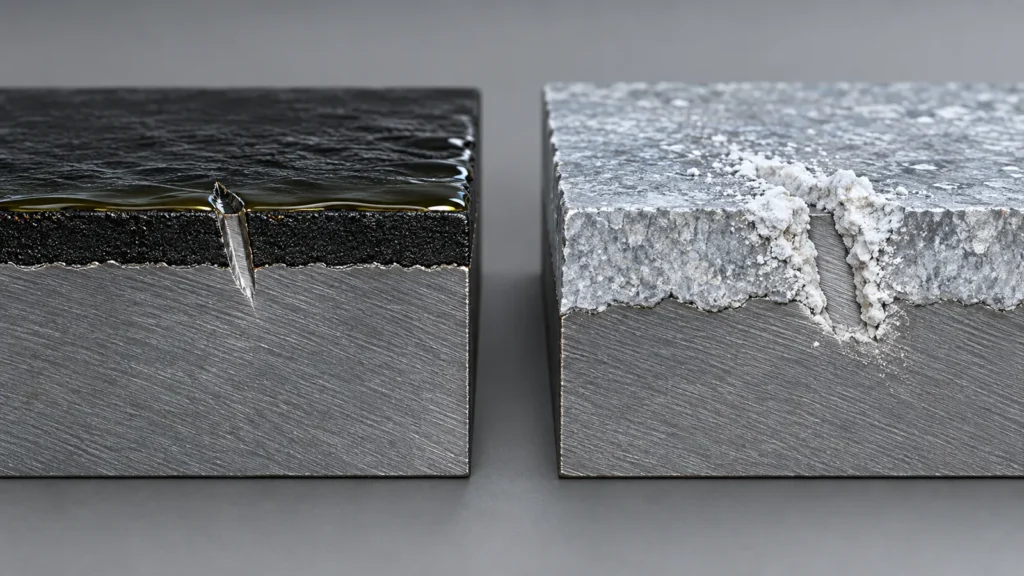
亜鉛めっきは鋼表面に亜鉛を析出させる。亜鉛は犠牲的に作用し、被覆システムの限界内で露出した鋼を保護することができる。めっき厚さ、化成処理皮膜、シール、ラックまたはバレル方式、形状、エッジ被覆率、および後処理はすべて性能と嵌合に影響する。.
実用的な区別: 黒色酸化皮膜は形状を良好に保つが、シールなしでは限られた保護しか提供しない;亜鉛はより有意義な被覆システムを追加するが、より多くの寸法および材料リスク管理を要求する。.
色ではなく結果で選ぶ

Protect Corrosion Resistance Without Ruining the Fit

Features that deserve an explicit decision
- External and internal threads, especially where torque or gauge acceptance matters
- Bearing journals, dowel holes, sliding interfaces, and press fits
- Electrical contacts, weld zones, ground points, and sealing faces
- Deep recesses, blind holes, sharp edges, and overlapping joints
- Laser marks, fine engraving, and surfaces intended for adhesive bonding
Black oxide may simplify fit control, but that advantage should not be traded for inadequate field protection. Zinc may improve environmental resistance, but its thickness and coverage need a drawing strategy. The correct route balances both consequences.
High-Strength Steel Requires a Separate Risk Review

Provide the exact material grade, heat treatment, hardness or strength condition, and governing standard. The process supplier can then evaluate cleaning restrictions, plating suitability, relief requirements, timing, and verification. If these inputs are unknown, do not approve zinc plating solely from a generic finish table.
Stress concentration matters too. Threads, notches, sharp transitions, press fits, and highly loaded small sections can be less tolerant of a material-condition mistake than a thick unstressed bracket. The coating review should therefore include how the part is loaded, not just what steel is listed in the bill of materials.
If the required risk controls make the proposed route impractical, the engineering answer may be a different coating, a different material condition, or a corrosion-resistant alloy. Changing the finish without reviewing the design only moves the uncertainty downstream.
Inspect the Coating System, Not Just the Shade

- Verify base material and heat-treatment condition.
- Confirm process specification, coating or conversion type, supplementary seal, and color where required.
- Measure critical finished dimensions and thread acceptance after processing.
- Check coverage, burns, blisters, pits, rack marks, stains, and trapped solution by agreed visual zones.
- Apply corrosion or adhesion tests only with defined samples, methods, and acceptance criteria.
- Protect finished parts during packaging so rubbing and moisture do not invalidate the process.
See the process pages for black oxide coating および zinc plating services, then place the project-specific class, color, seal, test, and dimensional requirements on the drawing.
Three Parts, Three Different Answers

Low glare, close fits, and controlled storage may make black oxide with an agreed seal attractive. The maintenance plan and handling environment must be realistic.
General steel mounting bracket near humidity
Zinc plating may offer the more appropriate protection system, provided edges, holes, contact faces, and coating thickness are controlled.
If the bracket is later painted, grounded, welded, or bonded, the zinc system must also support that downstream operation. A finish optimized only for storage corrosion can create adhesion or electrical problems during assembly.
Hardened loaded component
The first decision is not color. It is whether the material and stress state can safely use the proposed electroplating route under the governing specification. An alternative finish or process may be required after engineering review.
These cases illustrate why a finish library should never be used as a one-click selector. Environment, maintenance, geometry, load, interfaces, and inspection determine the route together.
What a Complete RFQ Should State

This information allows the machining and finishing routes to be planned together. It prevents the common late-stage conflict in which the corrosion choice changes a fit that was already machined to final size.
Buyer Questions at a Glance

Do not assume so. Exposure, seal, maintenance, drainage, abrasion, and required life determine suitability. For sustained outdoor or salt exposure, compare more robust coating systems against a defined test and service requirement.
Does zinc plating change thread size?
It can. Coating buildup affects internal and external threads differently and may require allowance, masking, post-process gauging, or another thread strategy. State the acceptance condition after plating.
Can zinc be made black?
Zinc coating systems can include different conversion finishes and colors, but “black zinc” is not the same process as black oxide. Specify the coating system and performance requirement, not color alone.