
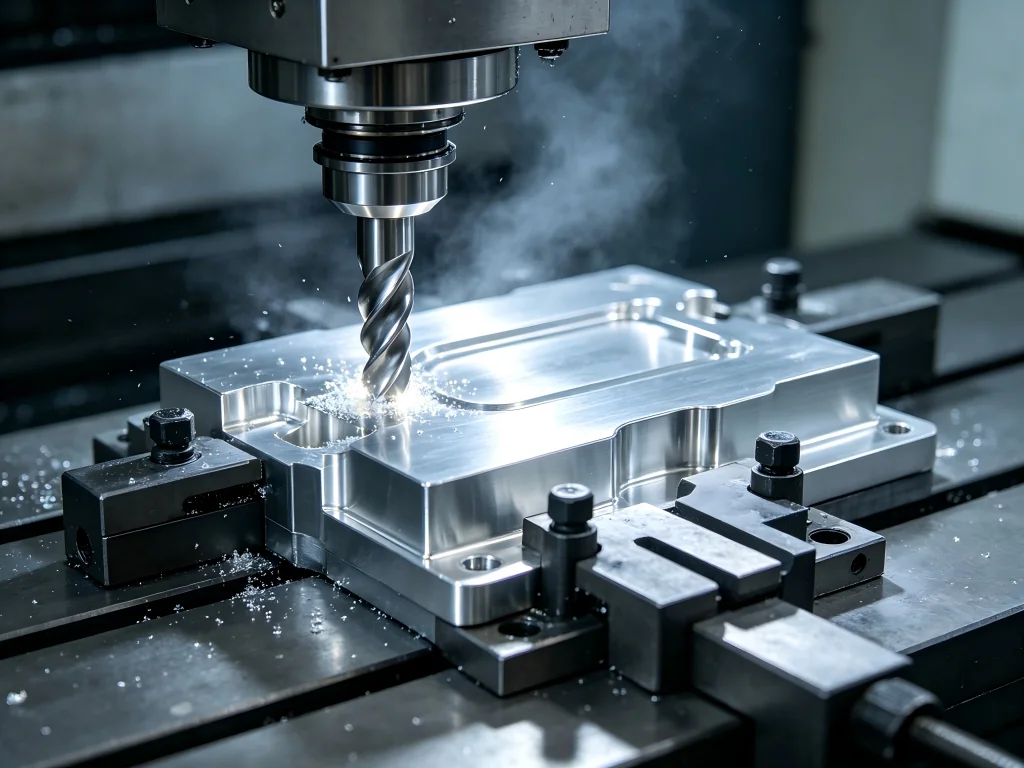
When engineers first consider zinc CNC machining, they typically ask a practical question: “Zinc is a die casting alloy—why would I machine it?” The question makes sense on the surface. But for product developers facing a significant tooling investment, CNC加工亜鉛 isn’t an odd choice—it’s one of the smartest decisions they can make. It serves as an insurance policy against costly design flaws discovered too late. This guide explores how zinc CNC machining bridges the gap between digital design and mass production, offering a practical pathway for engineers, procurement specialists, and product designers who need functional prototypes and low-volume production parts.
Why Machine Zinc? Understanding the Strategic Value
The purpose of a prototype is to provide data and reduce risk before committing to mass production. A 3D printed prototype works well for checking basic shape and fit, but it cannot replicate the real-world performance of a final die-cast zinc part. It’s made of plastic—too light, too weak, and cannot be electroplated. A prototype created through zinc CNC machining is fundamentally different. It’s a high-fidelity prototype made from the exact same family of alloys—like Zamak 3—as the final die-cast part. This means the data it provides is trustworthy, offering a true preview of the final product.
This approach allows engineers to machine solid zinc blocks to simulate the exact weight, strength, and thermal properties of a final die-cast product. The process is essential for verifying fit, function, and aesthetics—especially plating feasibility—before committing to expensive hard tooling.
The Weight and Feel Factor
One of the most underrated properties in product design is perceived quality. How does a product feel in a customer’s hand? 亜鉛 は高密度の金属であり、プラスチックよりはるかに重く、アルミニウムよりもさらに重いです。この密度により、亜鉛部品は品質を伝える満足感のある、ずっしりとした感触を持ちます。高級蛇口ハンドルやプレミアム家電製品では、顧客が触れたときの感触が体験の重要な部分を占めます。.
軽量なプラスチックの試作品ではこれを再現できません。 CNC機械加工 亜鉛のソリッドブロックから試作品を削り出すことで、最終的なダイカスト製品とまったく同じ重量、バランス、熱的な感触を持つモデルを作成できます。ダイカスト金型に1ドルを費やす前に、ユーザーの手に渡して人間工学や知覚品質に関する有意義なフィードバックを収集できます。.
仕上げのための完璧なキャンバス
亜鉛の もう一つの超能力は、美しい仕上げを受け入れる能力です。電気めっき、特にクロムめっきの理想的なキャンバスとして機能します。これはプラスチックの試作品が及ばないもう一つの領域です—最終的な外観を適切にテストすることはできません。 zinc CNC machining で作成された試作品は、最終部品とまったく同じ仕上げ工程を経ることができます。機械加工し、研磨し、鏡のようなクロムめっきに送ることができます。これにより、最終製品と真に区別がつかない視覚的かつ機能的な試作品が生まれます—マーケティングのフォトシュート、展示会のディスプレイ、投資家向けプレゼンテーションに最適です。.
CNC加工用亜鉛合金:選択肢を理解する
CNC加工プロジェクトに適した 亜鉛合金 を選択することは、強度、延性、耐クリープ性、仕上げ特性に関する特定の要件によって決まります。試作品の加工に最も一般的に使用される合金には以下が含まれます:
| グレード | 組成 | 主な特性 | 理想的な用途 |
|---|---|---|---|
| Zamak 3 | Zn-4Al | 業界標準。物理的・機械的特性のバランスが最も優れ、長期的な寸法安定性と優れた仕上げ特性を備えています。 | 自動車部品、ハウジング、手工具、安全剃刀、内装トリム |
| Zamak 5 | Zn-4Al-1Cu | 銅含有量が高いほど引張強度と硬度が向上し、耐クリープ性も改善されますが、延性はわずかに低下します。 | より高い強度を必要とする自動車部品、ハードウェア、ホイールバランスウェイト |
| ZA-8 | 亜鉛-アルミニウム | アルミニウム含有量が高い(約8.4%)。Zamak合金よりも高い強度と硬度を提供し、優れた軸受特性を備えています。 | ブッシュ、耐摩耗プレート、精密なディテールを要する装飾用ハードウェア |
| ZA-12 | 亜鉛-アルミニウム | アルミニウム約11%。重力鋳造に最適な合金で、機械加工が可能。耐摩耗性に優れ、強度は鋳鉄に匹敵します。 | 重負荷軸受面、油圧部品 |
Zamak 3とZamak 5は、以下の用途で最も広く使用されているグレードです。 CNC加工亜鉛 部品。Zamak 5は銅含有量が多いため、より高い強度、硬度、耐クリープ性を提供し、より高い構造的完全性と耐久性が求められる部品に適しています。.
業界全体の主な用途
亜鉛CNC加工 特定の用途に合わせて材料固有の特性を活用する多様な業界にサービスを提供しています。.
自動車産業
自動車分野では、CNC加工された亜鉛合金が広く活用されています。代表的な用途には、部品シェル、小型電動モーターケーシング、ギア、ブラケット、電気コネクタなどがあります。この材料の強度、剛性、およびめっき仕上げを受け入れる能力により、機能部品と外観部品の両方に最適です。.
航空宇宙および防衛
航空宇宙用途では、, 亜鉛アルミニウム合金 は軽量でありながら強度が高いことで評価されています。ファスナー、ブラケット、ハウジングなどの部品は、亜鉛の切削性と寸法安定性の恩恵を受けています。この材料のEMI/RFIシールド特性も、敏感な電子機器用途において価値があります。.
医療機器
医療業界では、CNC加工された 亜鉛 手術器具や整形外科インプラント用の部品が利用されています。この材料の生体適合性は、厳しい公差を達成する能力と相まって、医療機器製造の厳しい要件を支えています。.
家電製品およびハードウェア
亜鉛 は、その高級感と優れためっき性により、特に家電製品で評価されています。高級オーディオ機器、高級ハードウェア、外観トリムは、しばしば zinc CNC machining をプロトタイプや小ロット生産に活用しています。この材料の密度は、高級家電製品に不可欠な十分な「手触り感」を提供します。.
ロボティクスと自動化
Jucheng Precisionは、3軸および5軸マイクロミリングと旋削を用いた高精度ロボット部品の動作プロトタイプの製作を専門としています。. 亜鉛 およびアルミニウムダイカストは、ロボットアームや自動化部品の量産を支えています。.
CNC加工コストを理解する
評価する際に zinc CNC machining プロジェクトにとって、コスト構造を理解することは情報に基づいた意思決定を行うのに役立ちます。全体の費用にはいくつかの要因が影響します。.
初期投資と単位コスト
亜鉛CNC加工 金型やダイスが不要なため、ダイカストよりも初期投資が少なくて済みます。しかし、加工時間が長く材料の無駄も多いため、単位コストは通常高くなります。このことが CNC機械加工 小から中程度の生産量、特にダイカスト用の治具費用を正当化できない場合に、より経済的にします。.
加工コストに影響する要因
の総コストは zinc CNC machining いくつかの変数に依存します:
- 部品の複雑さ: より複雑な形状は加工時間が長くなり、多軸の段取りが必要になる場合があります
- 材料の選択: 異なる 亜鉛合金 は切削性評価が異なり、工具摩耗やサイクルタイムに影響します
- 表面仕上げの要件: ミラークロームのような外観仕上げには、追加の研磨とめっき工程が必要です
- Production volume: Setup costs are amortized across the batch size; larger runs reduce per-unit costs
- Equipment used: 5-axis CNC centers command higher hourly rates than 3-axis machines
Cost Comparison: CNC Machining vs. Die Casting
For prototypes and small batches, CNC加工亜鉛 from solid material offers efficiency and flexibility. For large-volume complex parts, zinc die casting followed by secondary machining may prove more cost-effective. The decision often comes down to whether the cost of tooling can be justified by the production volume.
Best Practices for Zinc CNC Machining
加工 亜鉛 is generally efficient, but specific care is needed to maintain surface quality and tool life.
Chip Control and Material Behavior
Zinc alloys are relatively soft and ductile. During machining, the material can become “gummy” or “sticky,” adhering to the cutting edge of the tool. This requires attention to tool selection and cutting parameters. 亜鉛 produces short, brittle chips similar to brass—they evacuate easily but can be abrasive.
切削速度と送り
Proper cutting speeds and feed rates are crucial for efficient zinc machining. Given zinc alloys’ low melting points, avoiding excessive heat buildup is important. Moderate to high cutting speeds are often recommended to ensure efficient chip formation and heat dissipation, while feed rates should be adjusted to balance material removal and tool wear. For roughing operations on 亜鉛合金 components, recommended cutting speeds range from 150-250 m/min when using carbide end mills.
Tool Selection
Maintaining tool sharpness and applying adequate coolant helps prevent heat buildup at the cutting edge. Compared to other die casting alloys, 亜鉛合金 machine faster and with less tool wear than aluminum alloys, and without the fire risk associated with magnesium die castings. High-quality surface finishes and long tool life are achievable across a wide range of machining conditions.
Common Machining Challenges
Several challenges can arise when CNC加工亜鉛:
- Built-up edge (BUE): The soft, ductile nature of 亜鉛 can cause material to adhere to cutting tools
- Surface finish issues: Improper feed rates or tool wear can compromise surface quality
- 熱管理: Excessive heat can affect dimensional accuracy and surface finish
By selecting the right tools, optimizing speeds and feeds, and addressing these challenges, manufacturers can achieve high-quality 亜鉛 components.
Surface Finishing Options for Zinc CNC Machined Parts
One of zinc’s greatest advantages is its ability to accept a wide range of surface finishes. This makes it particularly valuable for applications where aesthetics matter as much as function.
電気めっき
Electroplating is a popular method for 亜鉛合金 CNC parts, providing a protective metal layer that improves corrosion resistance, wear resistance, and aesthetic qualities. 亜鉛 is considered the absolute champion for luxury cosmetic hardware because its dense, non-porous surface accepts brilliant chrome and gold electroplating flawlessly. Unlike aluminum, which contains silicon that complicates finishing, 亜鉛 provides the perfect foundation for reflective mirror-chrome finishes.
Vibratory Finishing
Vibratory finishing is a cost-effective method for deburring, edge rounding, and surface improvement of 亜鉛合金 CNC parts in bulk. The process involves placing parts in a vibrating tub filled with abrasive media, smoothing rough edges before applying final finishes.
Additional Finishing Options
Zamak 3 can be media blasted or tumbled to achieve various surface finishes. Powder coating can be applied for matte or glossy colors. Jucheng Precision offers in-house polishing followed by chrome, nickel, or gold plating to achieve Class-A cosmetic finishes.
Why Choose Jucheng for Zinc CNC Machining
Jucheng Precision brings significant capabilities to zinc CNC machining projects, backed by substantial infrastructure and expertise.
製造規模と設備
Jucheng Precision operates a manufacturing powerhouse featuring 150+ CNC machines, including 25+ 5-axis centers, 30+ sheet metal fabrication units, 50+ industrial 3D printing systems, and 35+ injection presses. This scale enables the company to handle projects of any size, from single prototypes to low-volume production runs.
エンジニアリングの専門性
With 190+ skilled professionals, including 30+ senior engineers with 13+ years of experience, Jucheng brings deep technical knowledge to every project. The company is IATF 16949 and ISO 13485 certified, demonstrating commitment to quality management in automotive and medical applications.
Integrated Services
One of Jucheng’s key advantages is its vertically integrated approach. The company executes CNC machining and final electroplating entirely under one roof. This eliminates the supply chain friction of shipping bare zinc parts to separate finishing shops, where surface oxidation and physical scratching can occur.
Precision and Quality
Jucheng’s CNC milling centers can hold tolerances of +/- 0.02mm—significantly tighter than typical “as-cast” tolerances. This precision ensures perfect assembly fit-checks and functional testing. The company sources high-quality Zamak alloy blocks to ensure material composition matches production intent.
End-to-End Support
Jucheng offers both expert zinc CNC machining for high-fidelity prototypes and full-scale die casting services for production. This makes the company a partner throughout the entire journey, from the first perfect prototype to the ten-thousandth perfect part.
Frequently Asked Questions About Zinc CNC Machining
Can CNC machines cut metal like zinc?
Yes, CNC machines can effectively cut 亜鉛 and its alloys. 亜鉛 offers excellent machinability, with low melting points that allow for easy chip formation and removal. The material responds well to high-speed machining and is easy on tools.
What are the advantages and disadvantages of CNC machining zinc?
利点 include excellent machinability, good surface finish, dimensional accuracy, no tooling costs for prototypes, and the ability to achieve tight tolerances. Disadvantages include lower creep strength compared to some alternatives—亜鉛 can deform under long-term stress—and higher per-unit costs compared to die casting for large volumes.
How do I calculate machining costs for zinc CNC parts?
Machining costs depend on part complexity, material selection, surface finish requirements, production volume, and equipment used. Setup costs are typically amortized across the batch size. For accurate pricing, uploading your design for a quote from an experienced provider like Jucheng provides the most reliable estimate.
What’s the difference between Zamak 3 and Zamak 5 for CNC machining?
Zamak 3 offers the best balance of physical and mechanical properties with excellent finishing characteristics. Zamak 5 contains more copper (~1%), which increases tensile strength and hardness while slightly reducing ductility. Zamak 5 provides better creep resistance, making it suitable for higher-stress applications.
Is zinc CNC machining suitable for high-volume production?
亜鉛CNC加工 is most economical for low to medium production volumes, especially when die casting tooling costs cannot be justified. For high-volume production, zinc die casting typically offers lower per-unit costs, though secondary machining may still be needed for tight tolerances.
What surface finishes are available for zinc CNC machined parts?
亜鉛 accepts a wide range of finishes including electroplating (chrome, nickel, gold), powder coating, media blasting, tumbling, and vibratory finishing. Its non-porous surface makes it ideal for mirror-chrome and other cosmetic finishes.
亜鉛部品においてダイカストではなくCNC machiningを選ぶ理由は何ですか?
CNC機械加工 is preferred for prototypes, design validation, and low-volume production because it requires no tooling investment. It also achieves tighter tolerances than die casting and allows for design iterations without the cost and delay of modifying molds.
プロジェクトにとって正しい決定を下すために
The decision to use zinc CNC machining ultimately depends on your project’s specific requirements—volume, tolerances, surface finish, timeline, and budget. For product development teams, the strategic value of high-fidelity zinc prototypes often outweighs the per-unit cost, serving as insurance against costly tooling mistakes discovered too late.
Jucheng Precision’s combination of extensive equipment, engineering expertise, and integrated services makes it a capable partner for zinc CNC machining projects of any scale. Whether you need a single functional prototype or a low-volume production run, the company’s vertically integrated approach ensures quality, precision, and efficient project execution.
Ready to discuss your zinc CNC machining project? Contact Jucheng Precision to explore how their capabilities can support your product development goals.