
Lorsque les ingénieurs envisagent pour la première fois l'usinage CNC du zinc, ils posent généralement une question pratique : “ Le zinc est un alliage de moulage sous pression — pourquoi voudrais-je l'usiner ? ” La question se comprend en surface. Mais pour les développeurs de produits confrontés à un investissement important en outillage, l'usinage CNC du zinc n'est pas un choix étrange — c'est l'une des décisions les plus judicieuses qu'ils puissent prendre. Il sert de police d'assurance contre les défauts de conception coûteux découverts trop tard. Ce guide explore comment l'usinage CNC du zinc comble le fossé entre la conception numérique et la production de masse, offrant une voie pratique pour les ingénieurs, les spécialistes des achats et les concepteurs de produits qui ont besoin de prototypes fonctionnels et de pièces de production en faible volume.
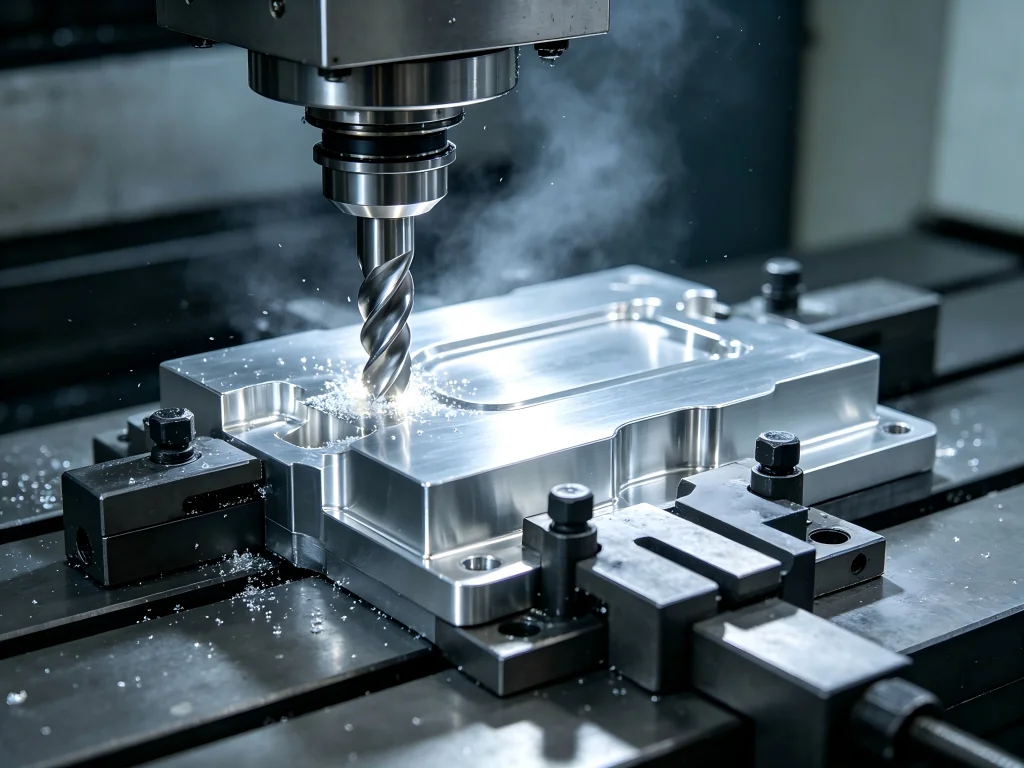
Pourquoi usiner le zinc ? Comprendre la valeur stratégique
Le but d'un prototype est de fournir des données et de réduire les risques avant de s'engager dans la production de masse. Un prototype imprimé en 3D fonctionne bien pour vérifier la forme et l'ajustement de base, mais il ne peut pas reproduire les performances réelles d'une pièce finale en zinc moulé sous pression. Il est fait de plastique — trop léger, trop faible, et ne peut pas être électroplaqué. Un prototype créé par l'usinage CNC du zinc est fondamentalement différent. C'est un prototype de haute fidélité fabriqué à partir de la même famille d'alliages — comme le Zamak 3 — que la pièce finale moulée sous pression. Cela signifie que les données qu'il fournit sont fiables, offrant un véritable aperçu du produit final.
Cette approche permet aux ingénieurs d'usiner des blocs de zinc massif pour simuler le poids, la résistance et les propriétés thermiques exacts d'un produit final moulé sous pression. Le processus est essentiel pour vérifier l'ajustement, la fonction et l'esthétique — en particulier la faisabilité du placage — avant de s'engager dans un outillage coûteux.
Le facteur poids et ressenti
L'une des propriétés les plus sous-estimées dans la conception de produits est la qualité perçue. Comment un produit se sent-il dans la main d'un client ? Zinc est un métal dense — beaucoup plus lourd que le plastique et même plus lourd que l'aluminium. Cette densité donne aux pièces en zinc un toucher satisfaisant et substantiel qui communique la qualité. Pour une poignée de robinet de luxe ou un appareil électronique grand public haut de gamme, la façon dont il se sent lorsque le client interagit avec lui constitue une part importante de l'expérience.
Un prototype en plastique léger ne peut pas simuler cela. En usinage CNC le prototype à partir d'un bloc massif de zinc, vous créez un modèle avec le poids, l'équilibre et la sensation thermique exacts du produit final moulé sous pression. Vous pouvez le mettre entre les mains des utilisateurs et recueillir des retours pertinents sur l'ergonomie et la qualité perçue avant de dépenser un dollar dans un moule de fonderie sous pression.
Une toile parfaite pour la finition
Le zinc autre superpouvoir est sa capacité à accepter de superbes finitions. Il constitue une toile idéale pour l'électroplating, en particulier le chromage. C'est un autre domaine où les prototypes en plastique sont insuffisants—vous ne pouvez pas tester correctement l'apparence cosmétique finale. Un prototype créé avec l'usinage CNC du zinc peut subir exactement le même processus de finition que les pièces finales. Vous pouvez l'usiner, le polir et l'envoyer pour un chromage miroir. Cela crée un prototype visuel et fonctionnel qui est véritablement indiscernable du produit final—parfait pour les séances photo marketing, les présentoirs de salons professionnels et les présentations aux investisseurs.
Alliages de zinc pour l'usinage CNC : comprendre vos options
Sélectionner le bon alliage de zinc pour votre projet d'usinage CNC dépend de vos exigences spécifiques en matière de résistance, de ductilité, de résistance au fluage et de caractéristiques de finition. Les alliages les plus couramment utilisés pour l'usinage de prototypes comprennent :
| Nuance | Composition | Propriétés clés | Applications idéales |
|---|---|---|---|
| Zamak 3 | Zn-4Al | Norme industrielle ; meilleur équilibre des propriétés physiques et mécaniques ; stabilité dimensionnelle à long terme ; excellentes caractéristiques de finition | Composants automobiles, boîtiers, outils à main, rasoirs de sûreté, garnitures intérieures |
| Zamak 5 | Zn-4Al-1Cu | Une teneur en cuivre plus élevée augmente la résistance à la traction et la dureté ; meilleure résistance au fluage ; ductilité légèrement réduite | Pièces automobiles nécessitant une résistance plus élevée, quincaillerie, masses d'équilibrage de roues |
| ZA-8 | Zinc-Aluminum | Higher aluminum content (~8.4%); offers higher strength and hardness than Zamak alloys; excellent bearing properties | Bushings, wear plates, decorative hardware requiring sharp detail |
| ZA-12 | Zinc-Aluminum | ~11% aluminum; best gravity casting alloy; machinable; excellent wear resistance; strength comparable to cast iron | Surfaces de roulement pour service intensif, composants hydrauliques |
Zamak 3 and Zamak 5 remain the most widely used grades for l'usinage CNC du zinc parts. Zamak 5, with its additional copper content, provides greater strength, hardness, and creep resistance—making it suitable for parts requiring more structural integrity and durability.
Key Applications Across Industries
Zinc CNC machining serves a diverse range of industries, each leveraging the material’s unique properties for specific applications.
Industrie automobile
The automotive sector makes extensive use of CNC machined zinc alloys. Typical applications include part shells, small electric motor casings, gears, brackets, and electrical connectors. The material’s strength, rigidity, and ability to accept plated finishes make it ideal for both functional and cosmetic components.
Aérospatiale et défense
In aerospace applications, zinc-aluminum alloys are valued for being lightweight yet strong. Components such as fasteners, brackets, and housings benefit from zinc’s machinability and dimensional stability. The material’s EMI/RFI shielding properties also make it valuable for sensitive electronic applications.
Dispositifs médicaux
The medical industry utilizes CNC machined zinc components for surgical instruments and orthopedic implants. The material’s biocompatibility, combined with its ability to achieve tight tolerances, supports the demanding requirements of medical device manufacturing.
Consumer Electronics and Hardware
Zinc is particularly valued in consumer electronics for its premium feel and excellent plating ability. High-end audio equipment, luxury hardware, and cosmetic trims often rely on l'usinage CNC du zinc for prototypes and low-volume production runs. The material’s density provides a substantial “hand-feel” crucial for high-end consumer products.
Robotique et automatisation
Jucheng Precision specializes in producing operational prototypes for high-precision robotic components using 3 and 5-axis micro-milling and turning. Zinc and aluminum die casting support mass production of robotic arms and automation components.
Understanding CNC Machining Costs
When evaluating l'usinage CNC du zinc for your project, understanding the cost structure helps make informed decisions. Several factors influence the overall expense.
Upfront Investment vs. Per-Unit Cost
Zinc CNC machining requires less upfront investment than die casting because no molds or dies are needed. However, the per-unit cost typically remains higher due to longer machining time and material waste. This makes usinage CNC more economical for low to medium production volumes, especially when the cost of tooling for die casting cannot be justified.
Factors Affecting Machining Costs
The total cost of l'usinage CNC du zinc depends on several variables:
- Part complexity: More complex geometries require longer machining times and may need multi-axis setups
- Material selection: Différents zinc alloys have varying machinability ratings, affecting tool wear and cycle times
- Surface finish requirements: Cosmetic finishes like mirror chrome require additional polishing and plating steps
- Production volume: Setup costs are amortized across the batch size; larger runs reduce per-unit costs
- Equipment used: 5-axis CNC centers command higher hourly rates than 3-axis machines
Cost Comparison: CNC Machining vs. Die Casting
For prototypes and small batches, l'usinage CNC du zinc from solid material offers efficiency and flexibility. For large-volume complex parts, zinc die casting followed by secondary machining may prove more cost-effective. The decision often comes down to whether the cost of tooling can be justified by the production volume.
Best Practices for Zinc CNC Machining
Usinage zinc is generally efficient, but specific care is needed to maintain surface quality and tool life.
Chip Control and Material Behavior
Zinc alloys are relatively soft and ductile. During machining, the material can become “gummy” or “sticky,” adhering to the cutting edge of the tool. This requires attention to tool selection and cutting parameters. Zinc produces short, brittle chips similar to brass—they evacuate easily but can be abrasive.
Cutting Speeds and Feeds
Proper cutting speeds and feed rates are crucial for efficient zinc machining. Given zinc alloys’ low melting points, avoiding excessive heat buildup is important. Moderate to high cutting speeds are often recommended to ensure efficient chip formation and heat dissipation, while feed rates should be adjusted to balance material removal and tool wear. For roughing operations on alliage de zinc components, recommended cutting speeds range from 150-250 m/min when using carbide end mills.
Tool Selection
Maintaining tool sharpness and applying adequate coolant helps prevent heat buildup at the cutting edge. Compared to other die casting alloys, zinc alloys machine faster and with less tool wear than aluminum alloys, and without the fire risk associated with magnesium die castings. High-quality surface finishes and long tool life are achievable across a wide range of machining conditions.
Common Machining Challenges
Several challenges can arise when l'usinage CNC du zinc:
- Built-up edge (BUE): The soft, ductile nature of zinc can cause material to adhere to cutting tools
- Surface finish issues: Improper feed rates or tool wear can compromise surface quality
- Heat management: Excessive heat can affect dimensional accuracy and surface finish
By selecting the right tools, optimizing speeds and feeds, and addressing these challenges, manufacturers can achieve high-quality zinc components.
Surface Finishing Options for Zinc CNC Machined Parts
One of zinc’s greatest advantages is its ability to accept a wide range of surface finishes. This makes it particularly valuable for applications where aesthetics matter as much as function.
Electroplating
Electroplating is a popular method for alliage de zinc CNC parts, providing a protective metal layer that improves corrosion resistance, wear resistance, and aesthetic qualities. Zinc is considered the absolute champion for luxury cosmetic hardware because its dense, non-porous surface accepts brilliant chrome and gold electroplating flawlessly. Unlike aluminum, which contains silicon that complicates finishing, zinc provides the perfect foundation for reflective mirror-chrome finishes.
Vibratory Finishing
Vibratory finishing is a cost-effective method for deburring, edge rounding, and surface improvement of alliage de zinc CNC parts in bulk. The process involves placing parts in a vibrating tub filled with abrasive media, smoothing rough edges before applying final finishes.
Additional Finishing Options
Zamak 3 can be media blasted or tumbled to achieve various surface finishes. Powder coating can be applied for matte or glossy colors. Jucheng Precision offers in-house polishing followed by chrome, nickel, or gold plating to achieve Class-A cosmetic finishes.
Why Choose Jucheng for Zinc CNC Machining
Jucheng Precision brings significant capabilities to l'usinage CNC du zinc projects, backed by substantial infrastructure and expertise.
Manufacturing Scale and Equipment
Jucheng Precision operates a manufacturing powerhouse featuring 150+ CNC machines, including 25+ 5-axis centers, 30+ sheet metal fabrication units, 50+ industrial 3D printing systems, and 35+ injection presses. This scale enables the company to handle projects of any size, from single prototypes to low-volume production runs.
Engineering Expertise
With 190+ skilled professionals, including 30+ senior engineers with 13+ years of experience, Jucheng brings deep technical knowledge to every project. The company is IATF 16949 and ISO 13485 certified, demonstrating commitment to quality management in automotive and medical applications.
Integrated Services
One of Jucheng’s key advantages is its vertically integrated approach. The company executes CNC machining and final electroplating entirely under one roof. This eliminates the supply chain friction of shipping bare zinc parts to separate finishing shops, where surface oxidation and physical scratching can occur.
Precision and Quality
Jucheng’s CNC milling centers can hold tolerances of +/- 0.02mm—significantly tighter than typical “as-cast” tolerances. This precision ensures perfect assembly fit-checks and functional testing. The company sources high-quality Zamak alloy blocks to ensure material composition matches production intent.
End-to-End Support
Jucheng offers both expert l'usinage CNC du zinc for high-fidelity prototypes and full-scale die casting services for production. This makes the company a partner throughout the entire journey, from the first perfect prototype to the ten-thousandth perfect part.
Frequently Asked Questions About Zinc CNC Machining
Can CNC machines cut metal like zinc?
Yes, CNC machines can effectively cut zinc and its alloys. Zinc offers excellent machinability, with low melting points that allow for easy chip formation and removal. The material responds well to high-speed machining and is easy on tools.
What are the advantages and disadvantages of CNC machining zinc?
Avantages include excellent machinability, good surface finish, dimensional accuracy, no tooling costs for prototypes, and the ability to achieve tight tolerances. Disadvantages include lower creep strength compared to some alternatives—zinc can deform under long-term stress—and higher per-unit costs compared to die casting for large volumes.
How do I calculate machining costs for zinc CNC parts?
Machining costs depend on part complexity, material selection, surface finish requirements, production volume, and equipment used. Setup costs are typically amortized across the batch size. For accurate pricing, uploading your design for a quote from an experienced provider like Jucheng provides the most reliable estimate.
What’s the difference between Zamak 3 and Zamak 5 for CNC machining?
Zamak 3 offers the best balance of physical and mechanical properties with excellent finishing characteristics. Zamak 5 contains more copper (~1%), which increases tensile strength and hardness while slightly reducing ductility. Zamak 5 provides better creep resistance, making it suitable for higher-stress applications.
Is zinc CNC machining suitable for high-volume production?
Zinc CNC machining is most economical for low to medium production volumes, especially when die casting tooling costs cannot be justified. For high-volume production, zinc die casting typically offers lower per-unit costs, though secondary machining may still be needed for tight tolerances.
What surface finishes are available for zinc CNC machined parts?
Zinc accepts a wide range of finishes including electroplating (chrome, nickel, gold), powder coating, media blasting, tumbling, and vibratory finishing. Its non-porous surface makes it ideal for mirror-chrome and other cosmetic finishes.
Why choose CNC machining over die casting for zinc parts?
usinage CNC is preferred for prototypes, design validation, and low-volume production because it requires no tooling investment. It also achieves tighter tolerances than die casting and allows for design iterations without the cost and delay of modifying molds.
Making the Right Decision for Your Project
The decision to use l'usinage CNC du zinc ultimately depends on your project’s specific requirements—volume, tolerances, surface finish, timeline, and budget. For product development teams, the strategic value of high-fidelity zinc prototypes often outweighs the per-unit cost, serving as insurance against costly tooling mistakes discovered too late.
Jucheng Precision’s combination of extensive equipment, engineering expertise, and integrated services makes it a capable partner for l'usinage CNC du zinc projects of any scale. Whether you need a single functional prototype or a low-volume production run, the company’s vertically integrated approach ensures quality, precision, and efficient project execution.
Ready to discuss your zinc CNC machining project? Contact Jucheng Precision to explore how their capabilities can support your product development goals.