
もしあなたが Reddit r/CNC や Avid CNC Community, のような加工フォーラムで時間を過ごしたことがあるなら、「自分の 5052アルミニウム加工 プロジェクトにはどのアルミニウム合金を使うべきか?」という繰り返し出てくる質問に遭遇したことがあるでしょう。多くのホビイストもプロも同様に、折り曲げ時のビット折れ、粘っこい切りくず、予期せぬ割れの体験を共有しています。Carbide 3Dフォーラムのある機械工は5052を「粘っこくて加工が難しい」と表現し、別のSienci Communityフォーラムのある人物は「5052はCNC作業には6061ほど適していないかもしれない」と指摘しました[reference:0][reference:1]。こうした実世界の懸念は、重要な課題を浮き彫りにしています。用途に合わない合金を選ぶと、材料の無駄、工具の破損、納期の遅延につながりかねません。.
このガイドは、意思決定プロセスをナビゲートするのに役立ちます。単に特性を列挙するのではなく、 5052アルミニウム, 、6061、7075合金の構造化された比較を順を追って見ていきます。最後まで読めば、複雑な曲げ加工、高強度の構造部品、コスト効率の良い生産など、あなたの具体的なニーズに基づいて適切な材料を選ぶための明確なフレームワークが得られるでしょう。また、 Jucheng Precision (jccncmachining.com)が、一貫した高品質の結果を提供するために専門的なCNC戦略でこれらの材料にどのように取り組んでいるかも探ります。.
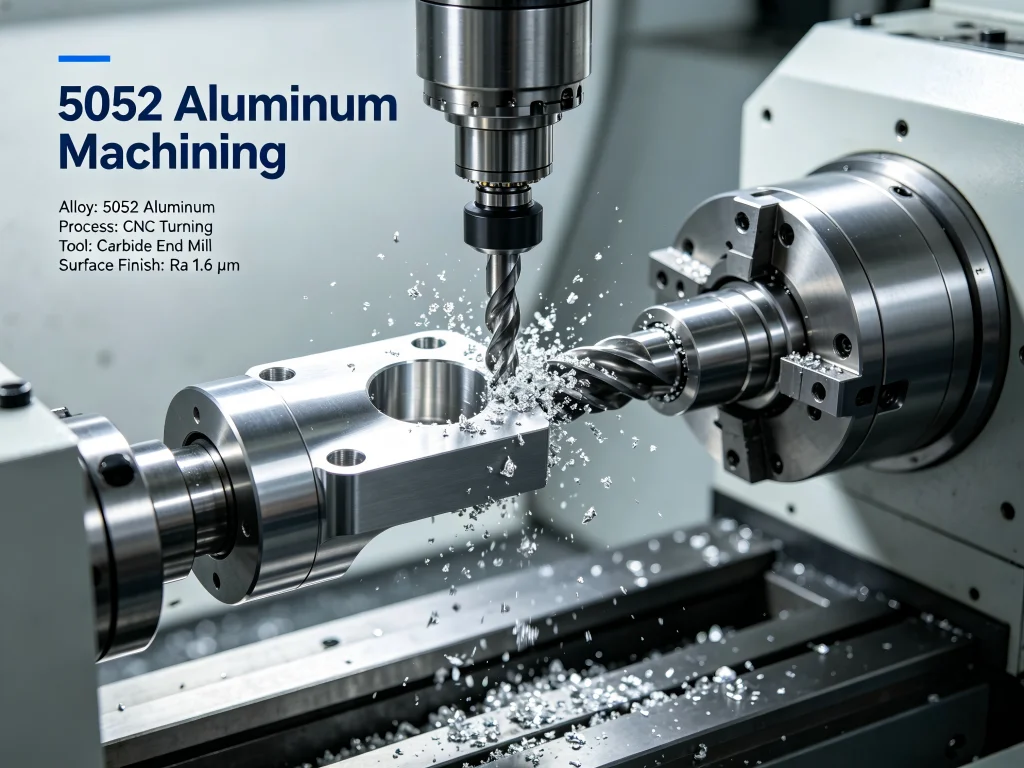
5052アルミニウムの何が違うのか?素材をざっと見る
比較に入る前に、何を理解しておくと役立つかというと 5052アルミニウム 実際に何であるかです。この合金は5xxx系アルミニウム合金に属し、マグネシウムが主要な合金元素(通常2.2%から2.8%)として機能します。また、少量のクロム(0.15%から0.35%)も含まれており、これが耐食性と強度を高めます[reference:2]。マグネシウム含有量がこの合金に、良好な強度、優れた成形性、そして塩水やその他の腐食環境に対する卓越した耐性という特徴的な組み合わせを与えています[reference:3]。.
注目すべき点として、5052は非熱処理合金です。熱処理によって強化できる6061や7075とは異なり、5052は冷間加工(加工硬化)によってより高い機械的性能を達成します[reference:4]。このため、機械加工や成形時の挙動が異なります。.
この合金は最も一般的にH32調質で入手可能であり、これはひずみ硬化後に安定化処理が施されたことを示します。この調質では、典型的な機械的性質として、引張強さが約228 MPa、耐力が約193 MPa、伸びが7%から12%です[reference:5]。この強度と延性の組み合わせにより、5052は曲げ、絞り、その他の成形加工を必要とする用途に特に適しています。.
どの合金があなたのプロジェクトに適しているか?購入者向け比較マトリックス
CNC機械加工用の材料を評価する場合、選択肢はしばしば5052、6061、7075という3つの一般的な合金に絞られます。それぞれが異なる目的を果たし、その違いを理解することで大幅な時間と費用を節約できます。.
以下の表は、各合金の主要な特性を並べてまとめたものです。プロジェクト要件にどの材料が合致するかを評価する際の初期参照点としてご利用ください。.
| 特性/特徴 | 5052アルミニウム | 6061アルミニウム | 7075アルミニウム |
|---|---|---|---|
| 主要合金元素 | マグネシウム(2.2-2.8%)、クロム | マグネシウム、ケイ素 | 亜鉛、マグネシウム、銅 |
| 熱処理可能? | いいえ(加工硬化のみ) | はい(T4、T6など) | はい(T6、T73など) |
| 耐力(代表値) | ~193 MPa(28,000 psi) | ~276 MPa(40,000 psi) | ~503 MPa(73,000 psi) |
| 引張強さ(代表値) | ~228 MPa(33,000 psi) | ~310 MPa(45,000 psi) | ~572 MPa(83,000 psi) |
| 耐食性(海洋環境) | 優れている | 良好 | Fair to Moderate |
| Formability / Bendability | 優れている | 中程度 | Poor (prone to cracking) |
| 被削性 | Moderate (can be “gummy”) | 良好 | 良好~優れている |
| 溶接性 | 優れている | 良好 | 不良 |
| Cost (Relative) | Moderate (baseline) | Slightly higher | Significantly higher |
| 主な用途 | Sheet metal, marine components, fuel tanks, enclosures | Structural frames, machinery parts, bicycle frames | Aerospace components, high-stress parts, rock climbing equipment |
This comparison reveals a fundamental trade-off. 5052アルミニウム excels in corrosion resistance and formability but offers only moderate strength. 6061 provides higher strength and better machinability at the cost of reduced formability. 7075 delivers exceptional strength but sacrifices corrosion resistance and weldability while commanding a much higher price.
Understanding the “Gummy” Problem: What Machinists Are Saying About 5052
One of the most frequent discussions in online machining communities revolves around a specific challenge with 5052: its tendency to behave in a “gummy” manner during cutting. On the Carbide 3D community forum, one user bluntly stated: “Do you have to use 5052? It’s gummy and difficult to machine”[reference:6]. Similarly, a member of the Sienci Community forum observed that “5052 is more ‘gummy’ and doesn’t work as well” compared to 6061[reference:7].
So why does this happen? The “gummy” behavior is directly linked to the alloy’s work-hardening characteristics and its relatively high ductility. When the cutting tool engages the material, the chip formation process can become less clean than with harder alloys like 6061 or 7075. Chips may not break cleanly and could adhere to the cutting edge, leading to built-up edge and increased friction. One machinist on the Avid CNC forum shared a frustrating experience: “I broke a lot of 1/8” bits. It can be cut, but in my experience it requires cutting fluid to keep the bit from clogging”[reference:8].
However, these challenges are not insurmountable. Many successful CNC operations run 5052アルミニウム加工 daily by adjusting a few key parameters. For sheet applications where bending is required, 5052 remains the preferred choice because 6061 and 7075 are significantly more prone to cracking during cold forming[reference:9]. One forum user summarized the situation well: “5052 is hard…but can be formed. 6061 is heat treated and very brittle…will crack when cold formed”[reference:10].
Industry Applications: Where Each Alloy Excels
Understanding where each material performs best helps contextualize the comparison. 5052アルミニウム finds its natural home in industries where corrosion resistance and formability outweigh pure strength. Marine applications represent one of the largest use cases, with the alloy frequently specified for boat hulls, deckhouses, fuel tanks, and marine hardware. The aerospace industry also relies on this alloy for fuel tanks, hydraulic lines, and fuselage frames due to its lightweight characteristics and high fatigue strength[reference:11][reference:12]. In automotive manufacturing, 5052 appears in body panels, fuel tanks, and chassis components that require high strength and durability[reference:13]. Sheet metal fabrication for electronics enclosures, kitchen cabinets, and architectural structures also commonly uses this versatile alloy[reference:14].
6061 aluminum, in contrast, serves as the go-to choice for general structural applications. Its heat-treatable nature allows engineers to dial in specific strength properties for machinery frames, structural components, bicycle frames, and a vast range of CNC-machined parts where moderate formability and good corrosion resistance are sufficient.
7075 aluminum occupies the highest tier of strength among the three. This alloy is the material of choice for aerospace components, high-stress structural elements, rock climbing equipment, and any application where weight reduction and maximum strength are critical and cost is a secondary concern.
According to market research, the global market for 5052 aluminum alloy was valued at approximately US$ 3.02 billion in 2024 and is projected to reach US$ 6.06 billion by 2031, growing at a CAGR of 10.2%[reference:15]. This substantial growth reflects increasing demand across marine, automotive, and aerospace sectors worldwide.
Key Factors to Consider When Choosing a CNC Machining Partner
Selecting the right material is only half the equation. The success of your 5052アルミニウム加工 project also depends heavily on choosing a CNC service provider with the right capabilities. Here are the essential factors to evaluate:
- Material expertise: Does the provider understand the nuances of machining “gummy” alloys? Ask about their experience with 5052 specifically. A shop that treats all aluminum the same may struggle with chip control and surface finish issues.
- Tooling strategy: For 5052, sharp, polished carbide tools with proper chip breakers make a significant difference. Coated tools with TiN or TiAlN coatings can reduce friction and extend tool life[reference:16]. Adequate coolant flow is also critical to prevent chip welding and maintain temperature control.
- Fixturing capabilities: As noted in forum discussions, “It machines quickly but may deform under high pressure, requiring careful fixturing”[reference:17]. The provider should have experience with vacuum jigs, low-clamping-force setups, or other strategies to prevent workpiece deformation.
- Quality certifications: ISO 9001 certification indicates documented quality management systems. For aerospace or medical applications, AS9100 or IATF 16949 certifications may be necessary.
- Secondary operations: If your parts require anodizing, welding, or post-machining finishing, ensure the provider offers these services or has reliable partners.
Real-world feedback from the machining community underscores these points. One forum member experimenting with .125″ 5052 sheet noted the importance of coolant and sharp bits, while another recommended vacuum jigs for holding thin parts without deformation[reference:18]. These practical insights align directly with best practices for successful 5052アルミニウム加工.
Cost Analysis: 5052 vs. 6061 vs. 7075 in 2025
Budget considerations often play a decisive role in material selection. As of 2025, 5052 alloy aluminum sheet typically ranges from approximately USD 3,000 to 3,500 per ton, depending on thickness, surface finish, and quantity[reference:19]. 6061 pricing generally falls in a similar range, though slightly higher due to additional processing requirements. 7075 commands a significant premium—often 50% to 100% more than 5052—reflecting its specialized applications and more complex alloying composition[reference:20].
However, material cost alone does not tell the full story. Machining costs can vary substantially based on the alloy. While 6061 and 7075 typically machine faster with better chip formation, 5052 may require slower feed rates and more frequent tool changes due to its gummy nature. These factors should be weighed against the total cost of the finished part, including secondary operations like bending or welding where 5052 holds distinct advantages.
How to Successfully Machine 5052 Aluminum: Practical Tips
When you have selected 5052 for your project, following these guidelines can help you achieve consistent, high-quality results:
- Use sharp, polished carbide tools: The soft nature of this alloy demands cutting edges that shear cleanly rather than push material aside. Indexable tools with polished rake faces can reduce built-up edge formation.
- Maintain adequate coolant flow: Flood coolant or high-pressure mist helps evacuate chips and prevents them from welding to the tool. As one machinist noted, “it requires cutting fluid to keep the bit from clogging”[reference:21].
- Optimize chip evacuation: Consider using chip breakers or pecking cycles for deep holes. Gummy chips that recirculate can quickly degrade surface finish and tool life.
- Control clamping forces: The relatively soft nature means excessive clamping can distort thin-walled parts. Vacuum fixturing or custom soft jaws offer good alternatives.
- For bending operations: The minimum inside bend radius for 5052-H32 on a 90° cold bend should be carefully calculated based on thickness. As a starting point, using a radius at least equal to material thickness helps prevent cracking[reference:22].
Frequently Asked Questions About 5052 Aluminum
What is 5052 aluminum best used for? This alloy is ideal for marine components, fuel tanks, hydraulic lines, automotive body panels, and sheet metal enclosures where excellent corrosion resistance and formability matter more than maximum strength.
How strong is 5052 aluminum compared to 6061? In H32 temper, 5052 offers yield strength of approximately 28,000 psi and tensile strength of 33,000 psi. 6061-T6 provides yield strength of about 40,000 psi and tensile strength of 45,000 psi. So 6061 is roughly 40% stronger, but 5052 bends far more easily without cracking[reference:23][reference:24].
Can you bend 5052 aluminum without cracking? Yes, this alloy is widely considered one of the most bendable aluminum alloys. Its elongation values of up to 25% in the annealed temper allow significant deformation before failure[reference:25]. This is why it is preferred for sheet metal work requiring tight radii and complex shapes.
Is 5052 aluminum suitable for welding? Yes, it exhibits excellent weldability with methods such as MIG and TIG. ER5356 filler wire is recommended when welding this alloy to itself or to other 5xxx series alloys to maintain corrosion resistance and joint strength[reference:26].
What is the machinability rating of 5052 aluminum? Machinability is generally rated as moderate. While it machines satisfactorily with sharp tools and proper coolant, it is not as free-cutting as 6061 or 2011. The annealed state offers the worst machinability, while cold-worked tempers such as H32 offer improved chip formation[reference:27].
How does 5052 aluminum compare to 3003 aluminum? 5052 offers higher strength and far better corrosion resistance than 3003. However, 3003 is more readily available and slightly less expensive, making it suitable for non-structural applications where corrosion is not a primary concern[reference:28].
Does 5052 aluminum require heat treatment? No, this alloy is non-heat-treatable. Its strength comes solely from work hardening. Any heat applied during welding or processing will actually soften the material in the heat-affected zone, which must be accounted for in design.
Why Choose Jucheng for Your 5052 Aluminum Machining Needs
Jucheng Precision brings years of specialized experience to 5052アルミニウム加工. With advanced CNC equipment, including multi-axis machining centers and Long Mill CNC systems, the company delivers exceptional accuracy and efficiency for projects of any scale[reference:29].
What sets Jucheng apart is a deep understanding of material-specific machining strategies. The engineering team recognizes that 5052 behaves differently from 6061 or 7075, and they have developed optimized toolpaths, feed rates, and coolant strategies specifically for this alloy. Whether your project requires complex sheet metal work with tight bend radii or high-precision components with demanding tolerances, Jucheng’s ISO-certified processes ensure consistent quality at every stage of production.
From prototyping through full production runs, Jucheng offers a full suite of complementary services, including welding, anodizing, and surface finishing. Clients benefit from end-to-end support from design review through final delivery. To discuss your next project, visit jccncmachining.com and request a free quote today.