
아노다이징과 파우더 코팅은 모두 알루미늄을 보호하고 착색할 수 있지만, 서로 다른 제품 문제를 해결합니다. 아노다이징은 알루미늄 표면을 변환시키고 금속 특성을 유지합니다. 파우더 코팅은 더 넓은 색상과 질감의 자유도를 가진 폴리머 필름을 추가합니다. 올바른 선택은 마모, 부식 노출, 전기 접점, 가장자리 커버리지, 형상, 치수 여유, 외관, 수리 기대치, 생산 일관성에 달려 있으며, 어떤 마감이 더 고급스러워 들리는지에 달려 있지 않습니다.
60초 마감 결정
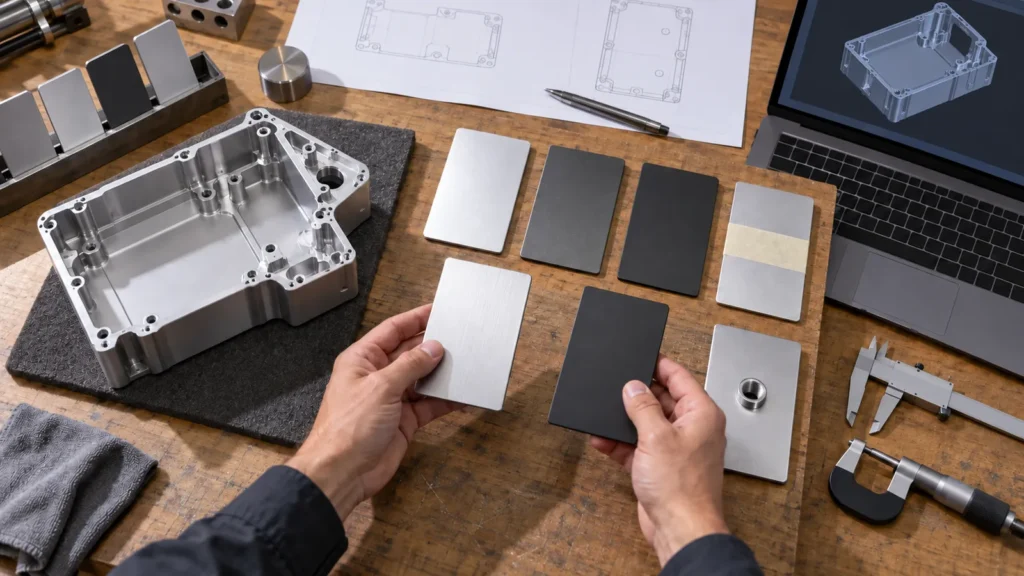
이 스코어카드는 또한 중요한 구매 실수를 드러냅니다. 완전한 사양 대신 일반적인 공정 명칭을 비교하는 것입니다. “블랙 아노다이즈”는 서로 다른 전처리, 처리, 실링 및 외관 기대치를 의미할 수 있습니다. “블랙 파우더 코트”는 화학 조성, 광택, 질감, 도막 목표 및 전처리에서 달라질 수 있습니다. 견적 비교는 공급업체가 동일한 완성 상태를 기준으로 가격을 책정할 때만 의미가 있습니다.
혼합 소재 조립은 또 다른 층을 추가합니다. 패스너, 인서트, 접착제, 개스킷, 방열판 및 접지 하드웨어는 선택된 마감에 다르게 반응할 수 있습니다. 코팅 노트를 확정하기 전에 갈바닉 접촉, 경화 온도, 마스킹된 인터페이스, 접합 표면 및 조립 순서를 검토하십시오.
이것은 스크리닝 도구이며 도면을 대체하지 않습니다. 마감은 여전히 합금, 사용 조건, 외관 목표 및 합격 계획과 일치해야 합니다. 사용 가능한 처리에 대한 더 넓은 시야를 위해 다음으로 시작하십시오: CNC 가공 표면 마감 가이드.
하나는 표면을 변화시키고, 하나는 표면을 덮습니다
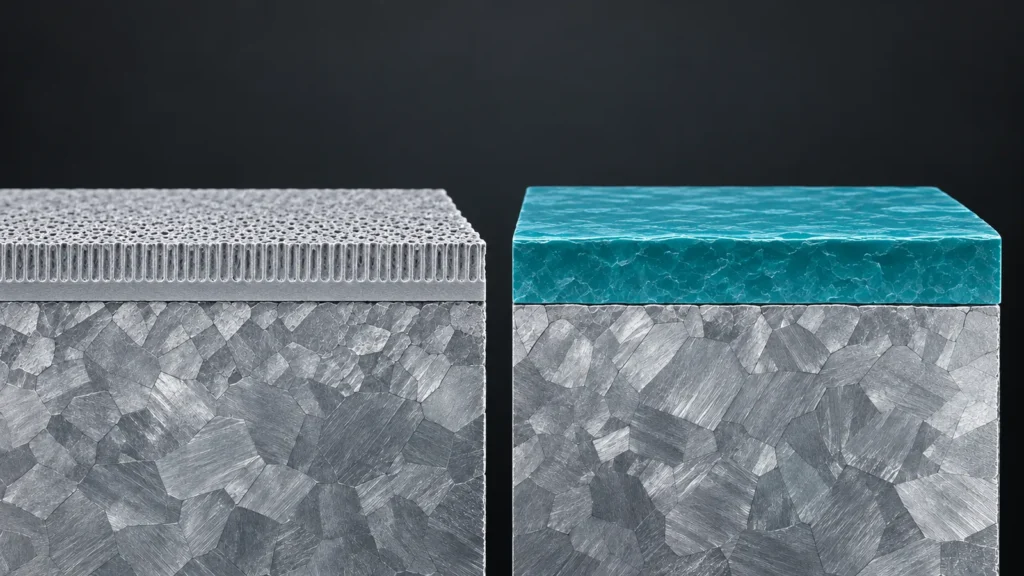
파우더 코팅은 하전된 분말을 도포하고 경화시켜 연속적인 유기 필름을 형성합니다. 이 필름은 일부 미세한 시각적 편차를 숨기고 불투명한 색상, 광택 수준 및 질감을 만들 수 있습니다. 또한 더 뚜렷한 두께 축적을 만들어내며, 이는 나사산 형상, 보어, 접합 모서리, 각인 세부 사항 및 좁은 공차 조립에서 중요합니다.
“어떤 마감이 더 내구성이 있습니까?”만 묻지 마십시오. “우리가 방지하려는 실패는 무엇입니까—부식, 마모, 변색, 칩핑, 불량 접착, 전기 절연 또는 외관 불일치?”라고 물으십시오.”
아노다이징 vs 파우더 코팅: 엔지니어링 스코어카드
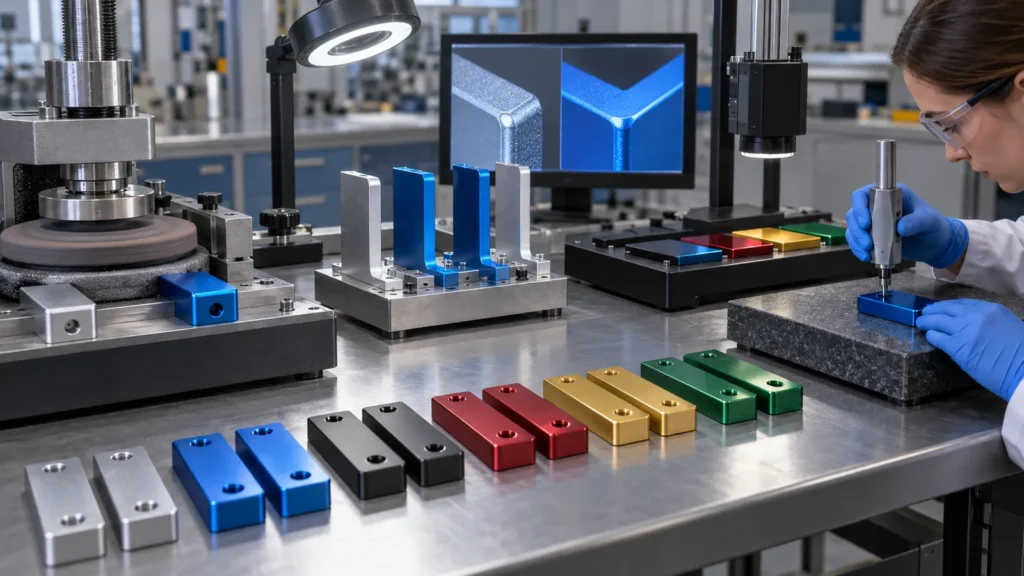
Geometry Can Overrule the Color Choice
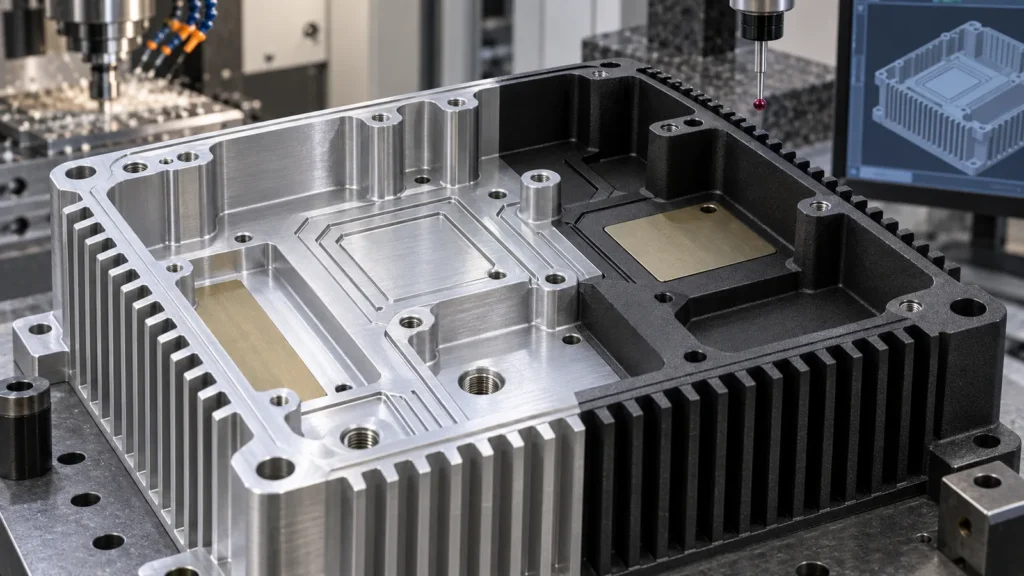
Thermal management deserves special attention. A housing may need bare contact pads under a heat-generating component, while the visible exterior receives a colored finish. Masking creates boundaries, and those boundaries need positional tolerance when they approach seals, fasteners, conductive paths, or visible edges. Put the boundary on the drawing rather than leaving it to shop interpretation.
Where anodizing needs attention
- Color can respond differently to alloy, temper, welds, cast features, and surface preparation.
- Electrical contact points, threaded interfaces, and critical fits may need masking.
- Machined and blasted zones can absorb light differently even when processed together.
- Racking locations should be agreed where cosmetic surfaces are tightly controlled.
Where powder coating needs attention
- Coating buildup can interfere with hardware, bores, hinges, sliding features, and edge fits.
- Recesses and internal corners may receive less uniform deposition.
- Sharp edges can be harder to cover consistently than broad faces.
- Fine text, knurling, and small drainage features can lose definition.
JUCHENG’s pages for anodizing machined parts 및 powder coating CNC parts provide process-specific context. Use them to identify questions, then place the project’s actual masking and acceptance requirements on the RFQ.
Control Appearance with Zones, Not Adjectives
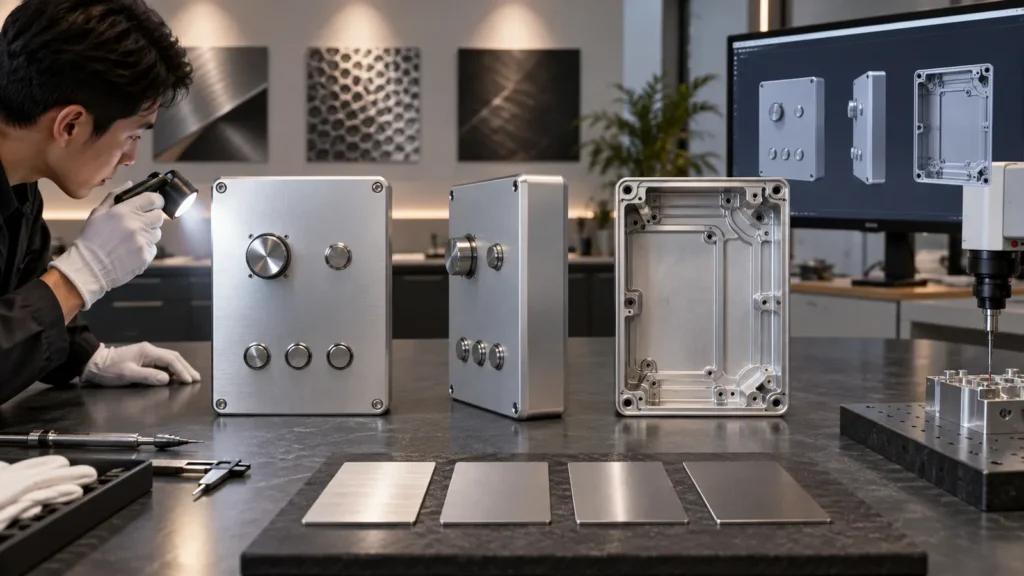
For color-sensitive programs, define the color reference, gloss or texture target, viewing distance, lighting, and whether an approved physical sample controls production. Also decide whether parts from different lots must match one another or only match the reference within an agreed tolerance. Alloy and pretreatment consistency are especially important when anodized components sit side by side.
Good cosmetic input
Marked zones, approved sample, color reference, gloss or texture expectation, viewing conditions, and defect limits.
Risky cosmetic input
A website image, a generic color name, “no variation,” or a finish request without identifying the base alloy and preparation.
Prototype Success Does Not Guarantee Batch Consistency
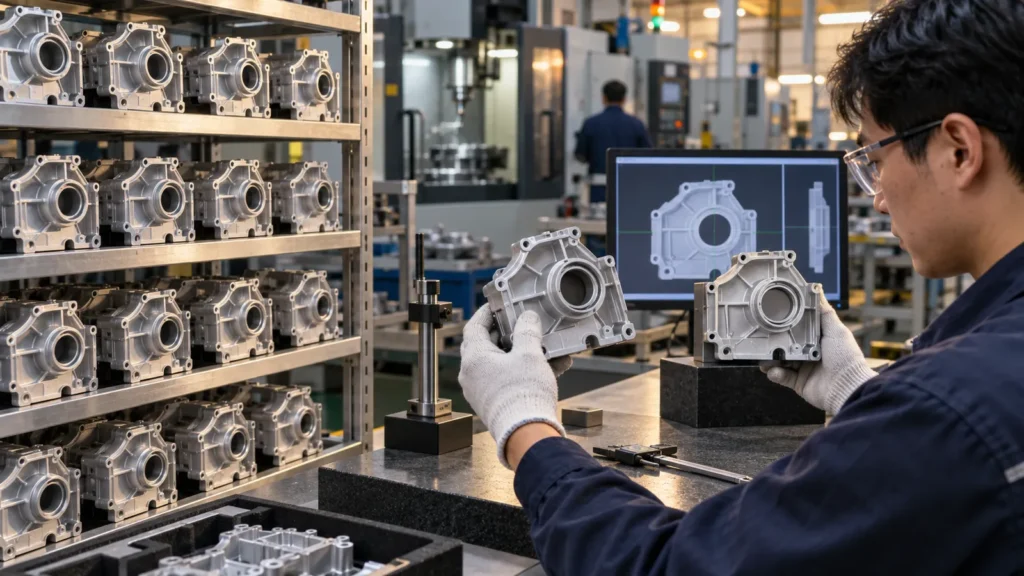
- Freeze the base material, alloy condition, and visible preparation process.
- Confirm the drawing identifies masking and dimensions that apply after finishing.
- Approve a representative sample on production-intent geometry when appearance is critical.
- Define inspection by zone: color, gloss, texture, coverage, adhesion, damage, and dimensions.
- Specify packaging that prevents part-to-part rubbing on visible faces.
- Record any approved deviation so later lots are judged by the same standard.
A documented control plan is particularly useful when several finish characteristics interact. Review the site’s quality management and inspection information when your RFQ requires reports, samples, or defined acceptance records.
Packaging belongs in that control plan. Powder-coated parts can chip or rub at corners; anodized faces can show scratches, pressure marks, or color contrast where components contact each other. Separators, protective film, clean gloves, and orientation during transport can determine whether an otherwise conforming finish reaches assembly in acceptable condition.
Build a Finish Brief the Supplier Can Quote
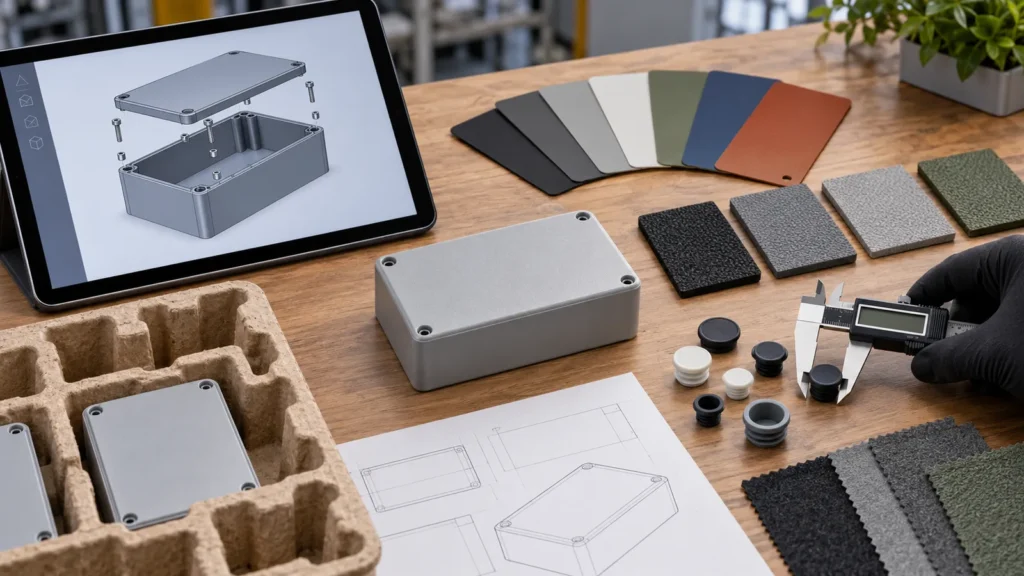
The supplier can then compare routes against the actual part: anodizing for an integrated metallic surface, powder coating for an opaque protective film, or a different treatment if neither matches the exposure and interface requirements. That decision is more reliable than choosing from a finish chart without the model.
Four Practical Questions Before Release
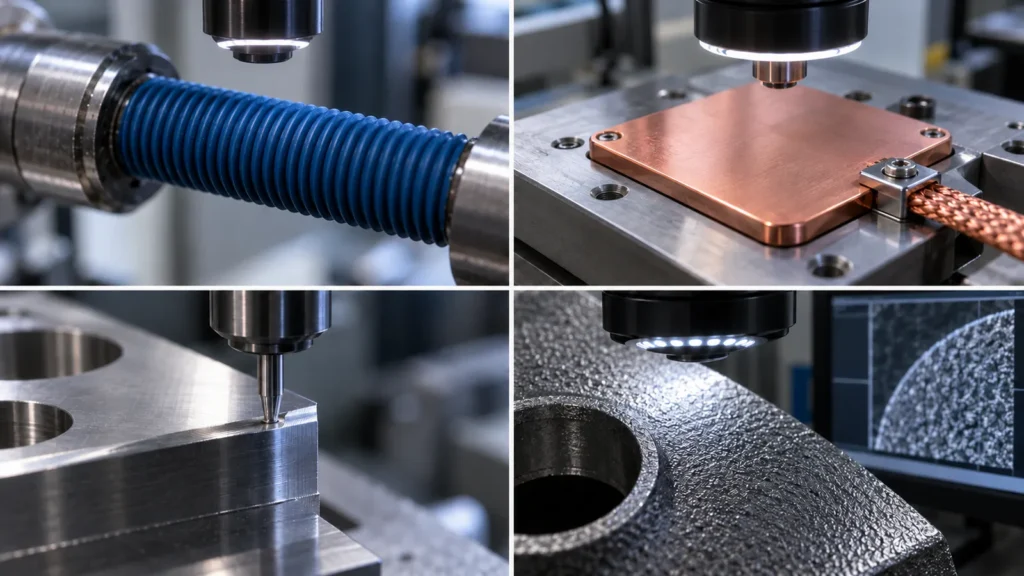
Neither is universally better. Thread class, engagement, electrical contact, corrosion exposure, coating buildup, and masking determine the answer. Identify whether the thread must remain bare, be chased after processing, or be sized for the finished condition.
Can powder coating hide machining marks?
It can reduce the visual prominence of minor variation, especially with textured films, but it will not reliably hide deep tool marks, dents, burrs, contamination, or poor edge preparation. The substrate still needs an agreed pre-coating condition.
Can anodizing and powder coating use the same color standard?
They can target a similar visual family, but the processes interact with light differently. Anodized color retains a metallic substrate influence; powder is an opaque film. Approve process-specific samples rather than assuming one color chip will look identical on both.
Which one is cheaper?
Total cost depends on type, color, quantity, part size, masking, surface preparation, inspection, rejection risk, and packaging. A lower finishing price can be offset by more machining allowance or assembly rework. Compare the complete production route.