
CNC試作品が完璧に適合しても、プロジェクトが反復生産に移行すると失敗することがあります。その理由は、生産が単に同じ試作品をより多く作るだけではないからです。段取りの再現性、治具戦略、工具寿命、材料供給、検査頻度、文書化、リビジョン管理、コスト優先順位のすべてがより重要になります。このガイドでは、最初の機能部品からパイロット生産、安定生産に至るまで、開発中に得た教訓を失うことなくCNC machiningを活用する方法を説明します。.
CNC試作が証明すべきこと
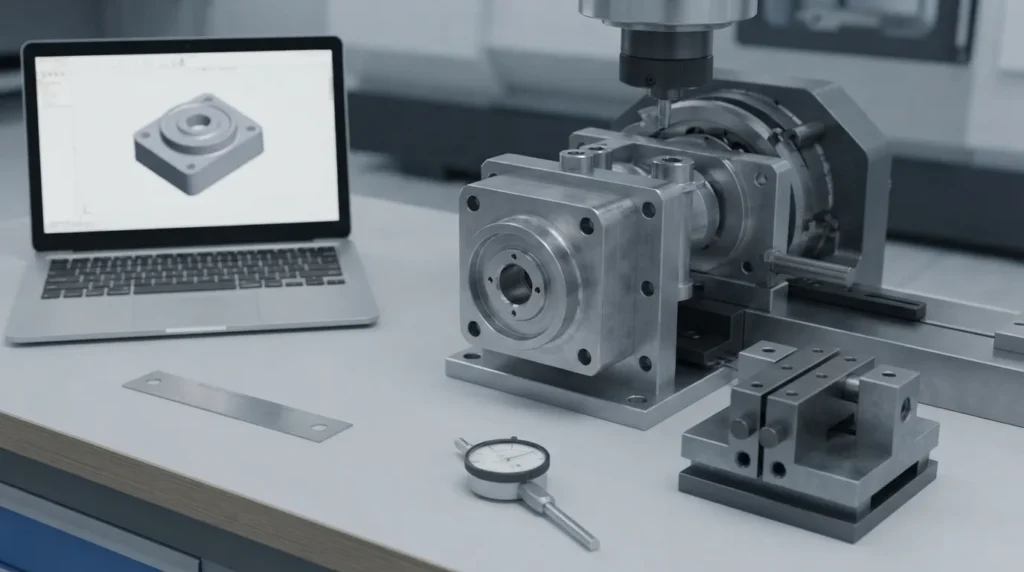
| 試作の疑問 | 収集すべきエビデンス | 生産への影響 |
|---|---|---|
| 部品は適合し機能するか? | 組立、動作、シール、荷重、熱、またはユーザーテスト | 重要なインターフェースと故障モードには管理された図面要件が必要 |
| 選択した材料は機能するか? | 使用、環境、摩耗、重量、温度、仕上げの評価 | 材料グレード、状態、供給、証明書を標準化する必要がある |
| 形状は安定して製作できるか? | 段取り、アクセス、工具の到達範囲、壁の安定性、表面、検査フィードバック | 量産を確定する前に設計とプロセスの変更を完了すべき |
| 何を文書化する必要があるか? | 改訂、材料、寸法、仕上げ、試験、受入結果 | 生産品質計画は有用な証拠を保持すべき |
サイトの CNC加工プロセスガイド プロセスの背景を提供する。試作目的は最初の部品を発注する前に文書化すべきである。.
試作段階:確定する前に学ぶ
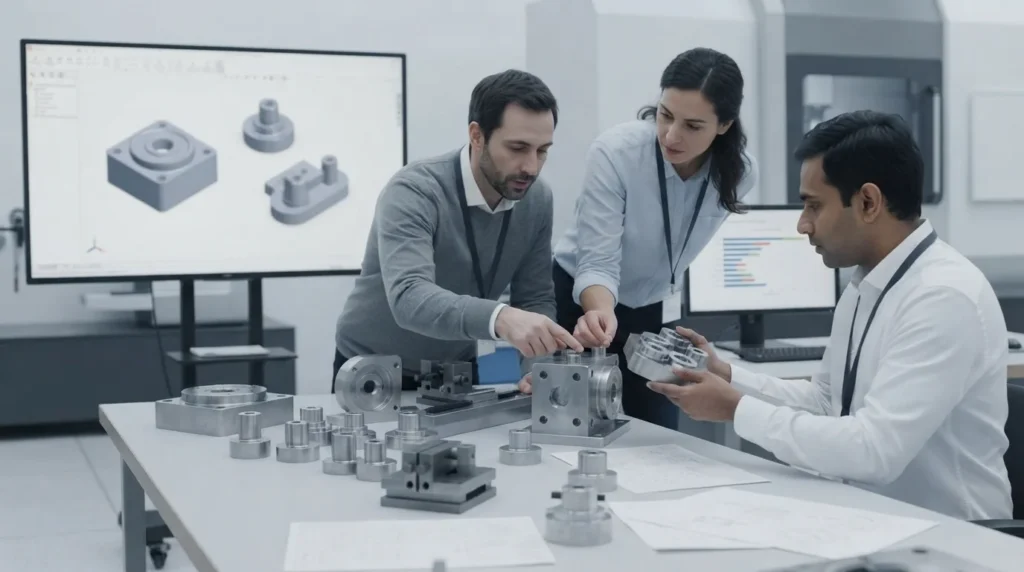
テストで必要な場合は、量産を想定した選択を使用してください
試作品が強度、熱、摩耗、シール性、電気的挙動、または顧客組立品の検証に使用される場合、材料および重要な表面は、実用的な範囲で意図する量産状態を可能な限り忠実に再現するべきです。都合の良い代替品で作られた試作品は、形状に関する疑問には答えられても、使用寿命に関する疑問には答えられません。.
学習による変更とリリース済みの変更を分離する
実験的な寸法、一時的な特徴、および保留中の材料または仕上げの決定をマークしてください。パイロットラン前に、学びを承認済みのリビジョン、管理された公差戦略、および明確な検査計画に変換してください。.
パイロット生産が明らかにする生産リスク
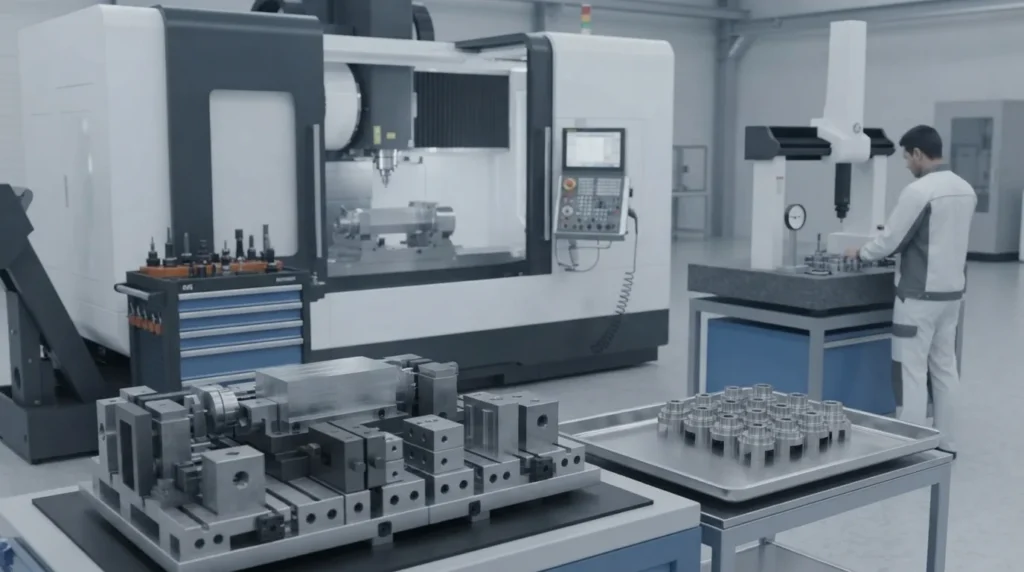
- 段取りの再現性と想定される生産シーケンスを観察するのに十分な数の部品を製作してください。.
- サイクルタイム、工具交換、スクラップ、手直し、測定時間、および仕上げの問題を追跡してください。.
- 合意された重要特性を使用して、最初、中間、最後の部品を比較してください。.
- 材料、コーティング、梱包、証明書、および報告書が一貫して供給できるかどうかを確認してください。.
- 作業者の記憶に頼るのではなく、プロセス変更と承認決定を記録してください。.
反復生産で何が変わるか?
再現可能なCNCルートのための設計
A design that is possible to machine once may still be unnecessarily difficult to repeat. Before production, review tool access, internal radii, wall thickness, datum surfaces, clamping areas, material condition, finish, and the number of setups.
- Preserve stable locating surfaces and enough clamping area for repeatable workholding.
- Separate critical interfaces from general geometry and avoid applying tight limits everywhere.
- Use material and finish decisions that can be sourced and inspected consistently.
- Review deep features, thin walls, small tools, sharp internal corners, and chip evacuation.
- Design the inspection method into the process so critical features remain accessible.
For material continuity between prototype and production, use the CNC材料選択ガイド and document the exact grade and condition in the released package.
品質エビデンスを引き継ぐ
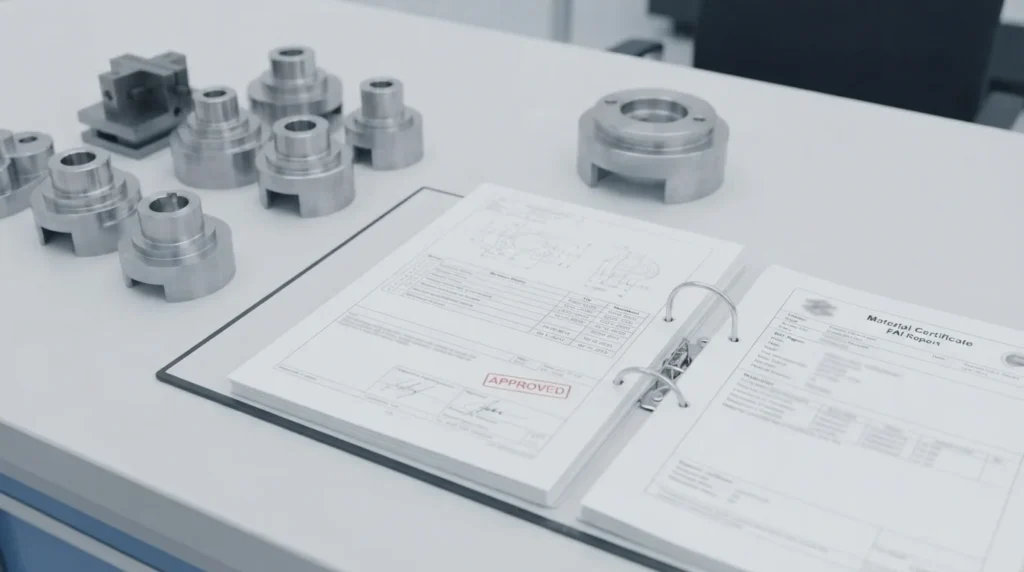
Quality should be planned before the production batch, not added after a failure. The site’s CNC quality control guide covers inspection, first-article review, reports, and traceability. The actual customer requirement should still govern the final quality plan.
CNCが適切な生産ルートであり続ける場合
CNC can remain attractive for custom parts, prototypes, pilot production, low and medium volumes, complex geometries, frequent revisions, and products that require production-grade material without a large dedicated-tooling commitment. It may be less competitive when demand is very high, the design is stable, geometry is suited to forming, and tooling can be amortized across a predictable forecast.
Compare total cost, not only unit price. Include programming, setup, fixture, material yield, machining time, tooling, inspection, finishing, packaging, inventory, revisions, and the cost of changing processes later. The project’s CNC cost guide explains how these assumptions affect a quote.
より良い試作から量産への引き継ぎ
- Freeze the design revision used for the pilot and identify any remaining open decisions.
- Confirm material grade, condition, finish, packaging, and approved substitutes.
- Mark critical features, datums, fits, surfaces, threads, and functional acceptance tests.
- Document setup, fixture, tooling, program, sequence, and in-process checkpoints.
- Define first-article, final inspection, reports, certificates, traceability, and change triggers.
- Review quantity, forecast, batch size, schedule, and alternative process break-even points.
- Ask the supplier to state process assumptions and risks before the production order.
When the package is controlled, submit the production request through the CNC加工の見積もりワークフロー.
CNC試作と生産に関するFAQ
Can CNC machining be used for both prototypes and production?
Yes, depending on geometry, material, quantity, process stability, quality requirements, and economics. The production route may use different fixtures, inspection frequency, tooling strategy, and documentation than the prototype route.
Why can a prototype fit but production parts fail?
A single prototype may hide fixture movement, tool wear, thermal drift, material variation, finishing changes, or an inspection bottleneck. Production needs a repeatable process, controlled changes, and checkpoints that monitor these effects.
Should prototype and production use the same material?
Use the production-intent material when the prototype is validating strength, heat, wear, sealing, electrical behavior, or service performance. A substitute may be acceptable for a limited geometry check only when its limits are understood and documented.
What changes when CNC volume increases?
Setup allocation, fixturing, tool life, cycle time, inspection frequency, material sourcing, documentation, and process control become more important. A pilot run helps reveal whether the prototype route can be repeated economically.
When should I consider another process?
Compare alternatives when volume is high and stable, geometry is suited to forming, material yield is poor, cycle time is too long, or dedicated tooling can be economically amortized. Include revision risk, quality, inventory, and transition cost in the comparison.