
A CNC prototype can fit perfectly and still fail when the project moves into repeat production. The reason is that production is not simply the same prototype made more times. Setup repeatability, fixture strategy, tool life, material supply, inspection frequency, documentation, revision control, and cost priorities all become more important. This guide explains how to use CNC machining from first functional parts through pilot runs and stable production without losing the lessons learned during development.
What CNC Prototyping Should Prove
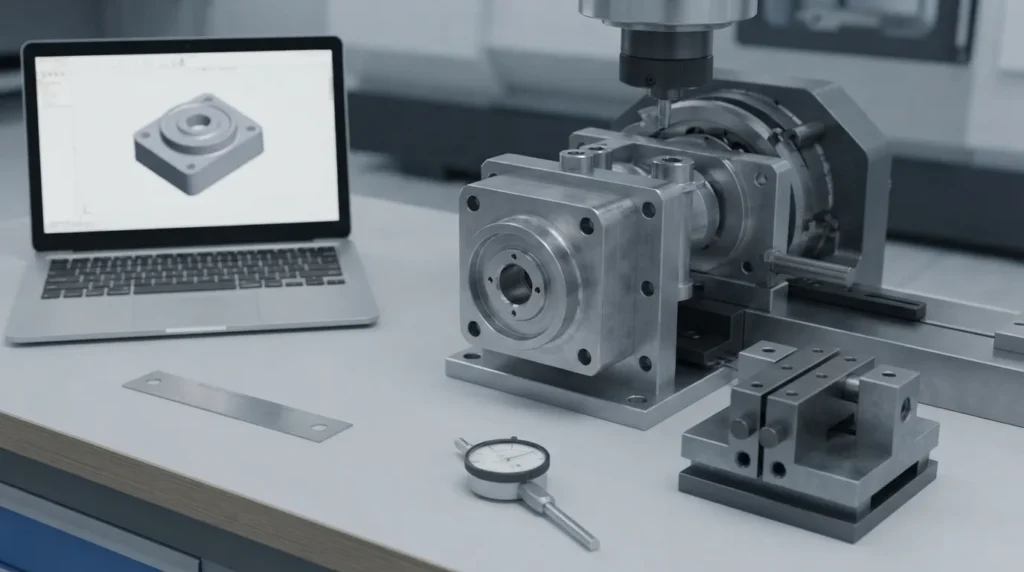
| Prototype question | Evidence to collect | Production implication |
|---|---|---|
| Does the part fit and function? | Assembly, movement, sealing, load, thermal, or user testing | Critical interfaces and failure modes need controlled drawing requirements |
| Does the selected material work? | Service, environment, wear, weight, temperature, and finish evaluation | Material grade, condition, supply, and certificate need to be standardized |
| Can the geometry be made reliably? | Setup, access, tool reach, wall stability, surface, and inspection feedback | Design and process changes should be completed before volume is committed |
| What must be documented? | Revision, material, dimensions, finish, test, and acceptance results | The production quality plan should preserve the useful evidence |
The site’s CNC machining process guide provides the process context. Prototype objectives should be written before the first part is ordered.
The Prototype Phase: Learn Before You Lock
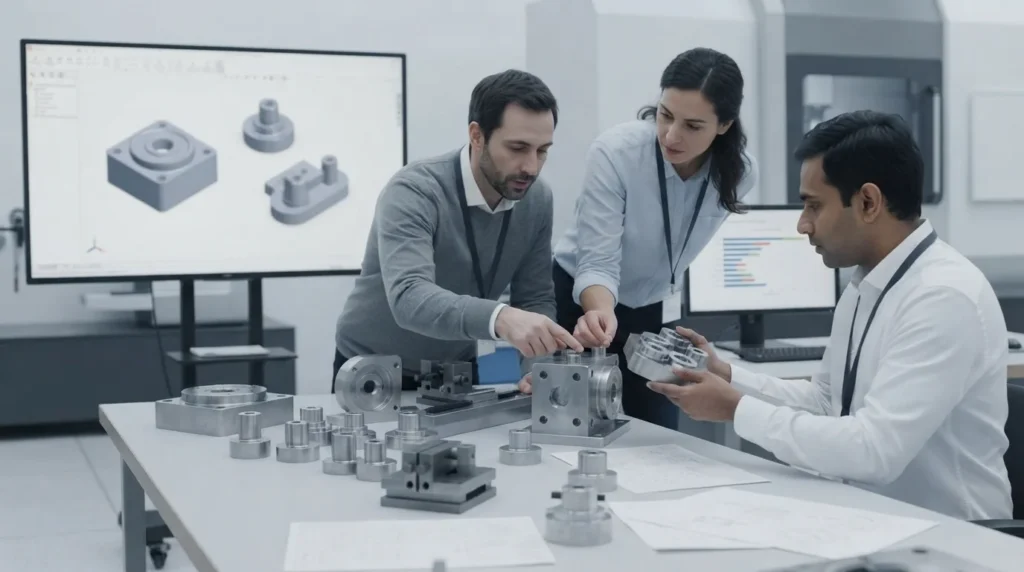
Use production-intent choices when the test requires them
If the prototype is used to validate strength, heat, wear, sealing, electrical behavior, or a customer assembly, the material and critical surfaces should represent the intended production condition as closely as practical. A prototype made from a convenient substitute may answer a geometry question but not a service-life question.
Separate learning changes from released changes
Mark experimental dimensions, temporary features, and pending material or finish decisions. Before a pilot run, convert lessons into an approved revision, controlled tolerance strategy, and clear inspection plan.
Pilot Runs Expose Production Risk
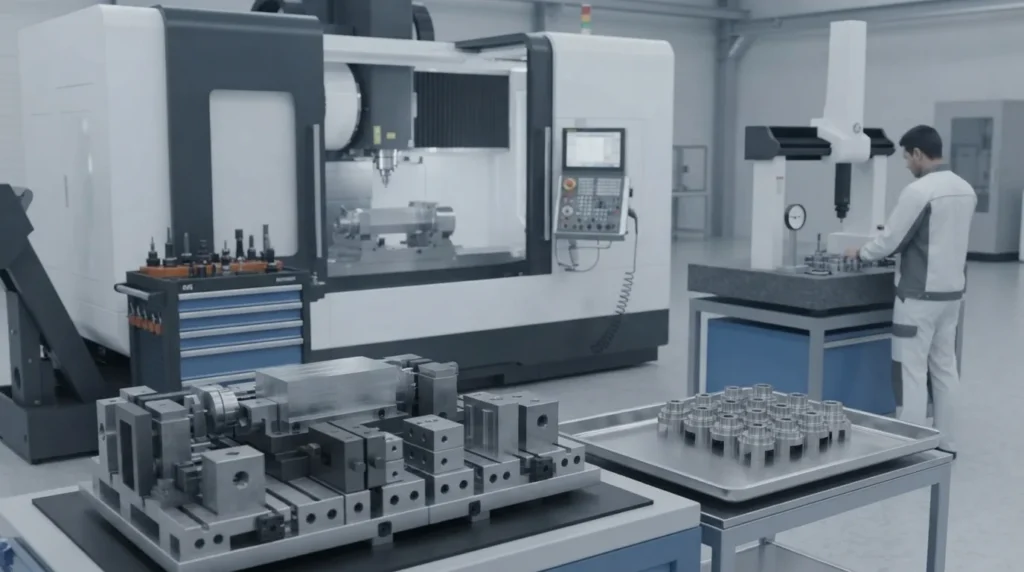
- Run enough parts to observe setup repeatability and the expected production sequence.
- Track cycle time, tool changes, scrap, rework, measurement time, and finishing issues.
- Compare the first, middle, and last parts using the agreed critical characteristics.
- Check whether material, coating, packaging, certificates, and reports can be supplied consistently.
- Record process changes and approval decisions rather than relying on operator memory.
What Changes in Repeat Production?
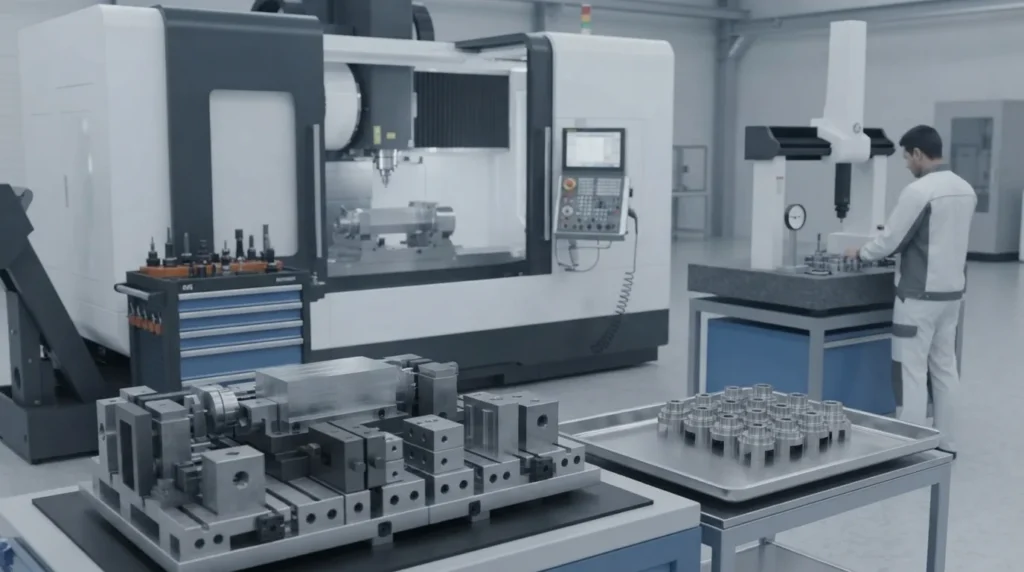
Design for a Repeatable CNC Route
A design that is possible to machine once may still be unnecessarily difficult to repeat. Before production, review tool access, internal radii, wall thickness, datum surfaces, clamping areas, material condition, finish, and the number of setups.
- Preserve stable locating surfaces and enough clamping area for repeatable workholding.
- Separate critical interfaces from general geometry and avoid applying tight limits everywhere.
- Use material and finish decisions that can be sourced and inspected consistently.
- Review deep features, thin walls, small tools, sharp internal corners, and chip evacuation.
- Design the inspection method into the process so critical features remain accessible.
For material continuity between prototype and production, use the CNC materials selection guide and document the exact grade and condition in the released package.
Carry Quality Evidence Forward
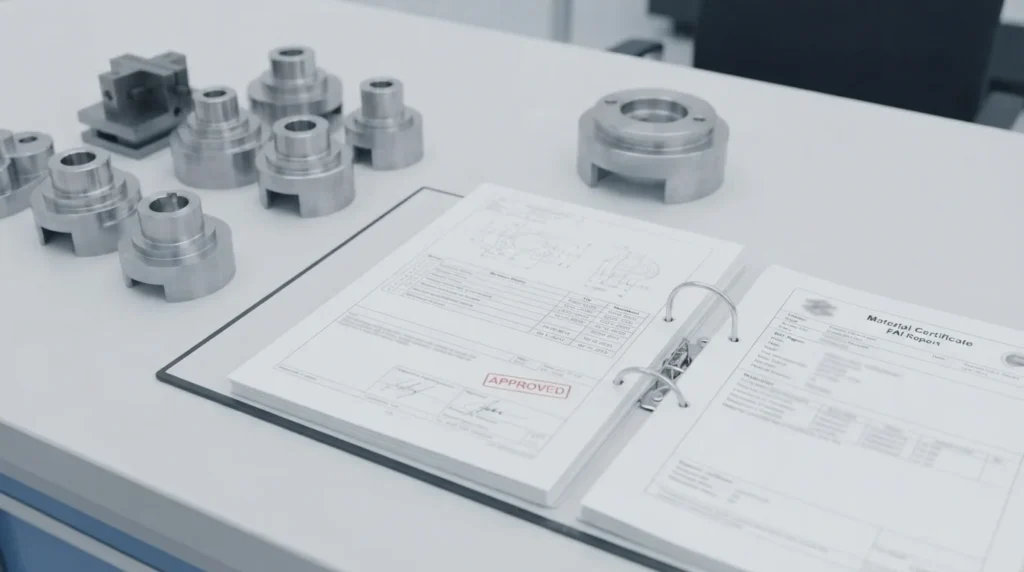
Quality should be planned before the production batch, not added after a failure. The site’s CNC quality control guide covers inspection, first-article review, reports, and traceability. The actual customer requirement should still govern the final quality plan.
When CNC Remains the Right Production Route
CNC can remain attractive for custom parts, prototypes, pilot production, low and medium volumes, complex geometries, frequent revisions, and products that require production-grade material without a large dedicated-tooling commitment. It may be less competitive when demand is very high, the design is stable, geometry is suited to forming, and tooling can be amortized across a predictable forecast.
Compare total cost, not only unit price. Include programming, setup, fixture, material yield, machining time, tooling, inspection, finishing, packaging, inventory, revisions, and the cost of changing processes later. The project’s CNC cost guide explains how these assumptions affect a quote.
A Better Prototype-to-Production Handoff
- Freeze the design revision used for the pilot and identify any remaining open decisions.
- Confirm material grade, condition, finish, packaging, and approved substitutes.
- Mark critical features, datums, fits, surfaces, threads, and functional acceptance tests.
- Document setup, fixture, tooling, program, sequence, and in-process checkpoints.
- Define first-article, final inspection, reports, certificates, traceability, and change triggers.
- Review quantity, forecast, batch size, schedule, and alternative process break-even points.
- Ask the supplier to state process assumptions and risks before the production order.
When the package is controlled, submit the production request through the CNC machining quote workflow.
CNC Prototyping and Production FAQs
Can CNC machining be used for both prototypes and production?
Yes, depending on geometry, material, quantity, process stability, quality requirements, and economics. The production route may use different fixtures, inspection frequency, tooling strategy, and documentation than the prototype route.
Why can a prototype fit but production parts fail?
A single prototype may hide fixture movement, tool wear, thermal drift, material variation, finishing changes, or an inspection bottleneck. Production needs a repeatable process, controlled changes, and checkpoints that monitor these effects.
Should prototype and production use the same material?
Use the production-intent material when the prototype is validating strength, heat, wear, sealing, electrical behavior, or service performance. A substitute may be acceptable for a limited geometry check only when its limits are understood and documented.
What changes when CNC volume increases?
Setup allocation, fixturing, tool life, cycle time, inspection frequency, material sourcing, documentation, and process control become more important. A pilot run helps reveal whether the prototype route can be repeated economically.
When should I consider another process?
Compare alternatives when volume is high and stable, geometry is suited to forming, material yield is poor, cycle time is too long, or dedicated tooling can be economically amortized. Include revision risk, quality, inventory, and transition cost in the comparison.