
부품 생산에서 절단, 선삭, 드릴링, 나사 가공이 빈번하게 주를 이룬다면 303을 선택하고, 용접, 성형, 더 넓은 부식 노출 또는 더 신뢰할 수 있는 범용 스테인리스 규격이 더 중요하다면 304를 선택하세요. 이는 출발점이 되는 결정일 뿐, 등급을 전면적으로 대체하는 것은 아닙니다. 도면이나 구매 발주서를 발행하기 전에 정확한 제품 형태, 적용 표준, 사용 환경, 마감 요구 사항을 확인하세요.
실질적인 차이는 303이 300계 오스테나이트 스테인리스 계열의 쾌삭 가공 개량형이라는 점입니다. 황 첨가는 칩 절단성과 가공 거동을 개선하는 한편, 이 등급이 좋은 선택이 되는 조건을 좁힙니다. 304는 더 많은 제조 및 내식성 요구를 수용하지만, 가공 경화, 인성, 칩 거동으로 인해 절삭이 덜 관대해질 수 있습니다.
두 등급 간의 트레이드오프
부품이 단순히 “스테인리스 강”으로만 설명되면 303과 304가 서로 교환 가능해 보일 수 있습니다. 그러나 이들은 동일한 선택이 아닙니다. 303에서는 황 함유 개재물이 절삭날이 더 짧고 다루기 쉬운 칩을 형성하도록 돕습니다. 이는 선삭 직경, 교차 홀, 홈, 나사산이 많은 부품에서 가치가 있으며, 긴 칩이 공작물이나 공구에 감겨 사이클을 방해할 수 있는 경우에 유용합니다. 동일한 개량이 부식 거동, 용접, 성형에도 영향을 미치므로, 가공성 향상은 부품의 이후 수명과 저울질해야 합니다.
304는 내식성과 제조 유연성의 균형이 필요한 부품에 널리 사용되는 오스테나이트 등급입니다. 그 재료 거동에는 상당한 가공 경화가 포함될 수 있습니다. 공구가 마찰하거나 정체하거나 경화된 표면을 반복적으로 절삭하면 힘이 증가하고 날 수명이 불안정해질 수 있습니다. 정확한 반응은 제품 상태, 소재, 공구 형상, 절삭 전략, 부품에 따라 달라집니다. 등급 비교를 보편적인 속도나 사이클 타임 약속으로 전환하지 마세요.
| 결정 요인 | 303을 평가할 가치가 있는 경우 | 304를 평가할 가치가 있는 경우 |
|---|---|---|
| 형상 밀도 | 선삭, 드릴링, 홈 가공, 나사 가공 형상이 많으면 칩 제어가 중요해집니다. | 부품에 더 광범위한 제조 요구 사항이 있거나 공정 경로에 성형이 포함된 경우. |
| Joining | The design is machined as a single component or mechanically assembled. | A qualified welding route is part of the design. |
| 환경 | Exposure is mild and the specified corrosion limit is compatible with the grade. | General corrosion resistance is more important, subject to the actual medium. |
| Finish and acceptance | The drawing allows a finish and surface condition compatible with free-machining stainless. | Surface restoration or fabrication requirements favor the general-purpose grade. |
기계 가공에서 달라지는 점
On 303, chip breaking can simplify automatic turning and reduce the tendency for stringy chips to interfere with small features. This can be useful where a component repeats the same groove, shoulder, or thread across a production lot. It does not remove the need for a rigid setup, a sharp edge, suitable tool engagement, and coolant or lubrication appropriate to the operation. If the part is thin, slender, or tightly toleranced, deflection and heat still need to be managed.
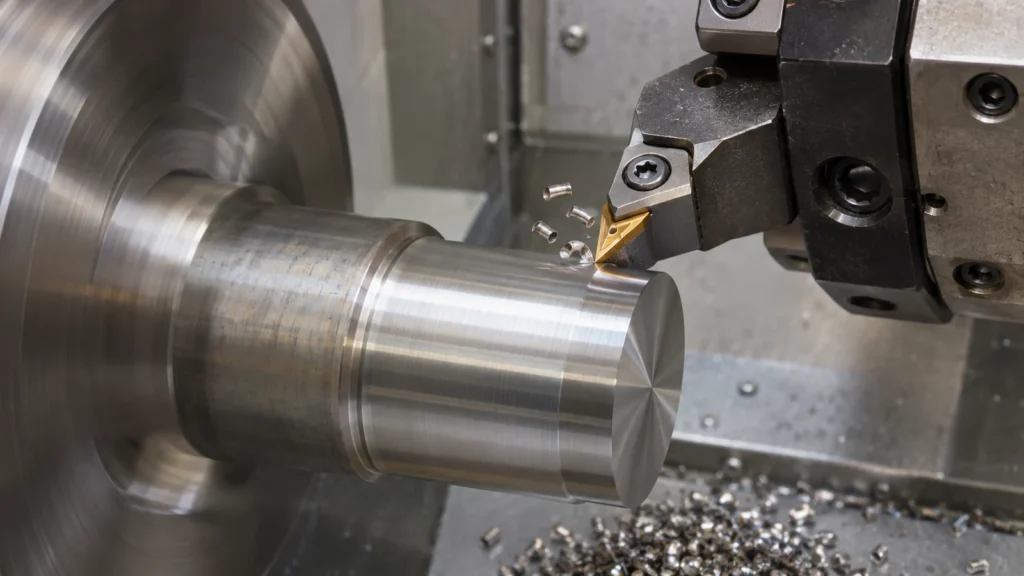
304 often asks for more deliberate cutting discipline. Avoid rubbing at the surface, stabilize the workpiece, and maintain an engagement that produces a real chip instead of polishing or burnishing the material. A pause at the wall or a light finishing pass can change the surface layer that the next tool encounters. Drilling, tapping, milling, and turning can therefore respond differently even on the same part. For threaded fittings or turned components, compare tool access, chip evacuation, and inspection—not only the alloy name. The site’s CNC 선삭 역량 및 CNC 밀링 역량 pages describe relevant process families.
Do not assume a change to 303 automatically lowers total cost. Evaluate stock availability, cutting time, tool changes, burr removal, surface treatment, and the consequences of a rejected part. A free-machining grade may make the cutting stage easier while creating a problem at welding, passivation, or final service. The useful comparison follows the full route from raw stock through acceptance.
304가 더 안전한 설계 여유를 갖는 경우
When a component must be welded, formed, or exposed to a more demanding environment, 304 may fit the design better. A free-machining modification should not be selected simply because the shop can cut it faster. If a fitting will be welded into an assembly, a machined enclosure will be bent after cutting, or a wetted feature will see cleaning chemicals, the designer must evaluate the relevant fabrication procedure and exposure. Chlorides, crevices, temperature, concentration, and stagnant liquid can change corrosion risk; “stainless” alone does not establish suitability.
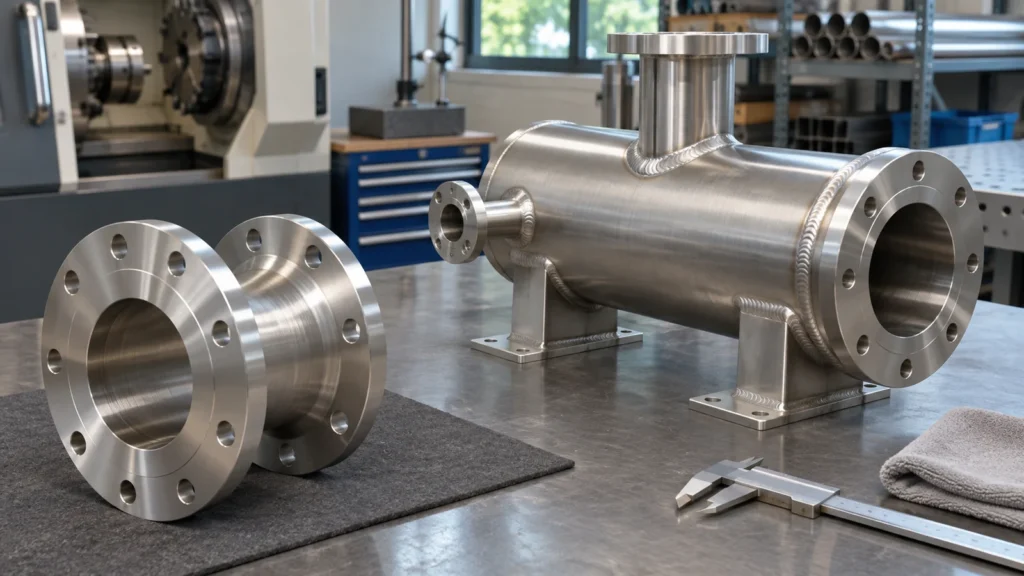
Surface treatment also deserves an explicit review. Machining can leave embedded particles, smeared material, burrs, and local surface differences. Cleaning and passivation requirements should follow the drawing, customer specification, and service conditions. A finish note written for 304 should not be carried over to 303 without confirming the applicable procedure and acceptance criteria. The site’s 303 material page 및 304/304L 소재 페이지 시작 참고 자료이며, 관리 도면에 명시된 등급과 상태를 대체하지 않습니다.
부품에 실제로 필요한 재료를 지정하세요
부품의 기능이 303의 내식성 및 가공 한계와 양립하고 생산 경로가 단칩 가공의 이점을 누릴 수 있다면 303을 사용하십시오. 접합, 성형 또는 더 폭넓은 내식 성능이 결정을 주도한다면 304를 사용하십시오. 어느 등급도 사용 요구 사항을 충족하지 못한다면, 이 두 등급 사이의 타협보다는 다른 스테인리스 계열이 답이 될 수 있습니다.
선정은 측정 가능한 요구 사항에 연결하십시오. 표준 및 개정판, 제품 형태, 인도 상태, 요구 마감, 그리고 추가적인 화학 조성 또는 인증 관리 항목을 명시하십시오. 밀봉, 베어링 또는 전기 접점 표면이 중요한 경우, 일반 소재 지정과 별도로 명시하십시오. 소재 인증서는 공급된 히트와 보고된 화학 조성을 식별할 수 있지만, 그것만으로 가공 형상, 용접부 또는 완성 표면이 부품 도면을 충족함을 입증하지는 않습니다.
실용적인 도면 및 구매 검토
- 유체, 농도, 온도, 세정 화학 물질, 틈새 노출을 포함한 부품의 환경을 나열하십시오.
- 공정 경로에 용접, 절곡, 냉간 성형, 패시베이션 또는 외관 마감이 포함되는지 표시하십시오.
- 가공 시간을 좌우하는 형상을 식별하십시오: 반복 나사산, 교차 홀, 홈, 좁은 슬롯 또는 어려운 칩 배출 경로.
- 소재 표준, 제품 형태, 상태, 인증서 및 고객별 제한 사항을 정의하십시오.
- 견적을 비교하기 전에 버, 표면 상태, 내식 성능 및 후공정 치수에 대한 합격 기준을 설정하십시오.
- 도면 또는 문서화된 엔지니어링 프로세스를 통해 등급 변경을 승인하십시오. 가공성 표기로부터 동등성을 추론하지 마십시오.
온화한 사용 조건의 단순 선삭 부품이라면 303이 실용적인 생산 선택이 될 수 있습니다. 제작되거나 더 폭넓게 노출되는 부품이라면 304가 다운스트림 위험을 줄일 수 있습니다. 올바른 결정은 부품의 기능과 전체 제조 경로에서 나오며, 정확한 등급과 합격 요구 사항을 생산 전에 기록해야 합니다.