
Short answer: the central decision in Monel K-500 machining is how much heavy stock removal to complete before age hardening and which surfaces need a final cut afterward. Special Metals recommends heavy machining in the annealed or hot-worked-and-quenched condition, followed by machining slightly oversize, age hardening, and finish machining to size. The exact route still depends on the drawing, product form, supplied condition, and authorized treatment specification.
This article is about the process sequence for K-500 components. It is not a general guide to Monel 400 or R-405, and a machinability statement for one grade should not be transferred to another.
Verify the K-500 product form and condition
Monel K-500 is a precipitation-hardenable nickel-copper alloy, designated UNS N05500. Confirm the exact product form, specification, certificate, and supplied condition before planning toolpaths. Bar, plate, and forging stock can arrive under different requirements. Do not assume that every K-500 blank is in the same state or that an alternative Monel grade can follow the same machining plan.
The nearest existing CNC article is the site’s Monel 400 vs. R-405 machining comparison. That article addresses the 400/R-405 distinction; this Monel K-500 machining page stays focused on age-hardening sequence and dimensional allowance. For broader corrosion-resistant material context, see the corrosion-resistant materials category.
Remove heavy stock before aging when the route allows
Heavy machining is generally best performed in an annealed or hot-worked-and-quenched condition, according to the alloy producer’s bulletin. The process plan should put the largest volume of material removal before age hardening if the approved specification allows that order. Roughing first reduces the amount of high-load cutting required after the material reaches its aged condition.
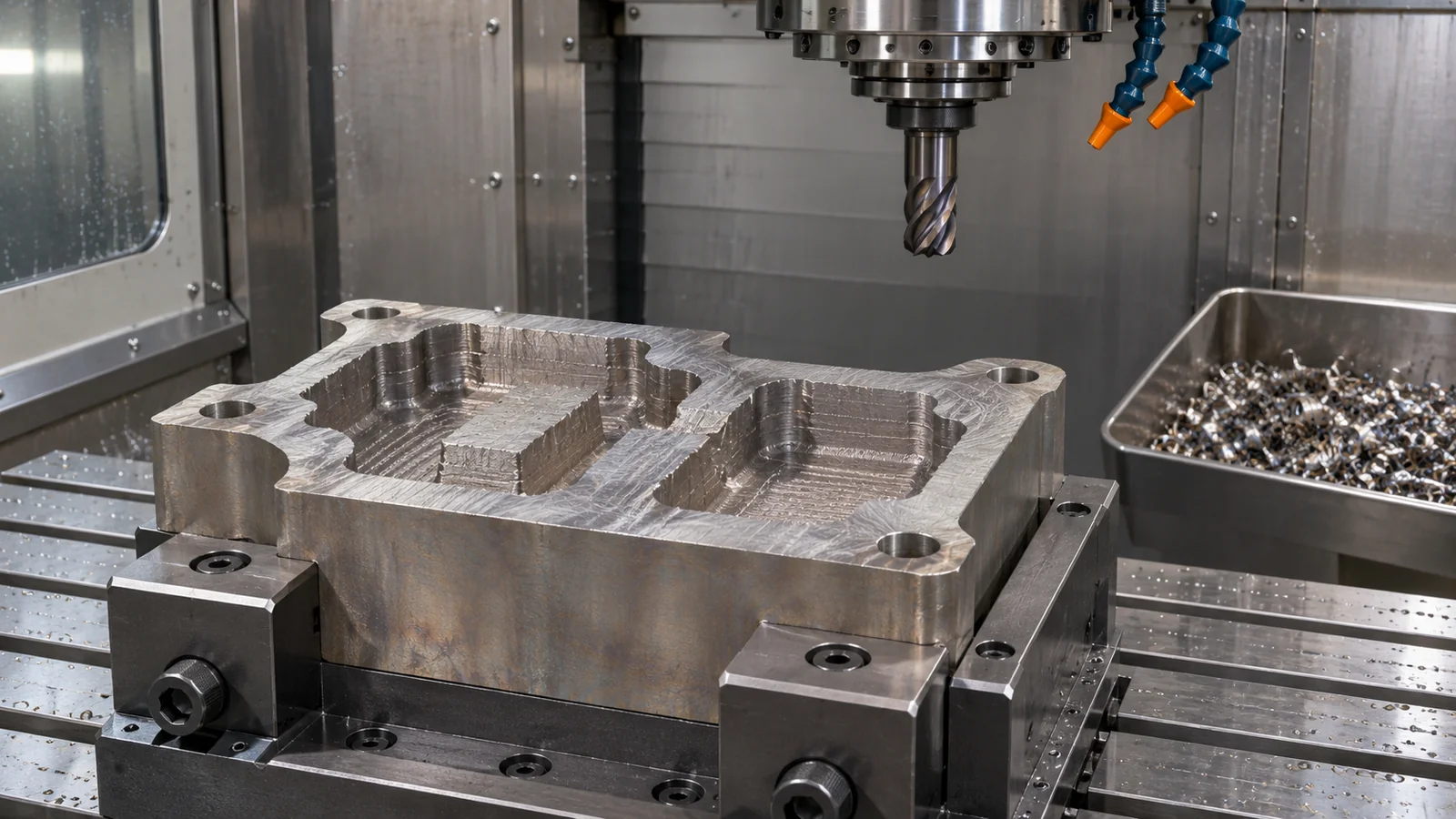
That does not mean every operation must happen before aging. Functional bores, sealing faces, bearing seats, or locating shoulders may need a finish pass after the thermal cycle. Decide this from the tolerance stack and the part’s geometry, not from a blanket rule. The site’s CNC turning capability is relevant for cylindrical features, while milling or drilling requirements should be shown separately on the drawing.
Design the allowance around the post-aging finish
Special Metals describes the recommended practice as machining slightly oversize, age hardening, then finishing to size. Its bulletin also reports a small permanent contraction during aging, approximately 0.0002 in/in in the stated context; actual parts still require the governing specification and measurement because geometry, stock condition, and process details vary. Use that producer data as a planning input, not a substitute for an allowance study on a critical part.
Put the finish allowance on the process plan and identify which surfaces receive it. Too little stock can leave a feature undersize after treatment or fail to clean up; too much can make the final operation unnecessarily difficult. Establish a reference scheme that can be recovered after treatment, especially if the part has thin walls or multiple coaxial features.
Finish critical surfaces from a repeatable datum
After aging, inspect the blank before the final cut. Confirm the remaining stock, locate the functional datum, and avoid clamping force that distorts a thin section. If the aged condition raises cutting load or tool wear, use controlled engagement and monitor tool condition; do not force a finish cut through a worn edge and then compensate by changing the nominal size.
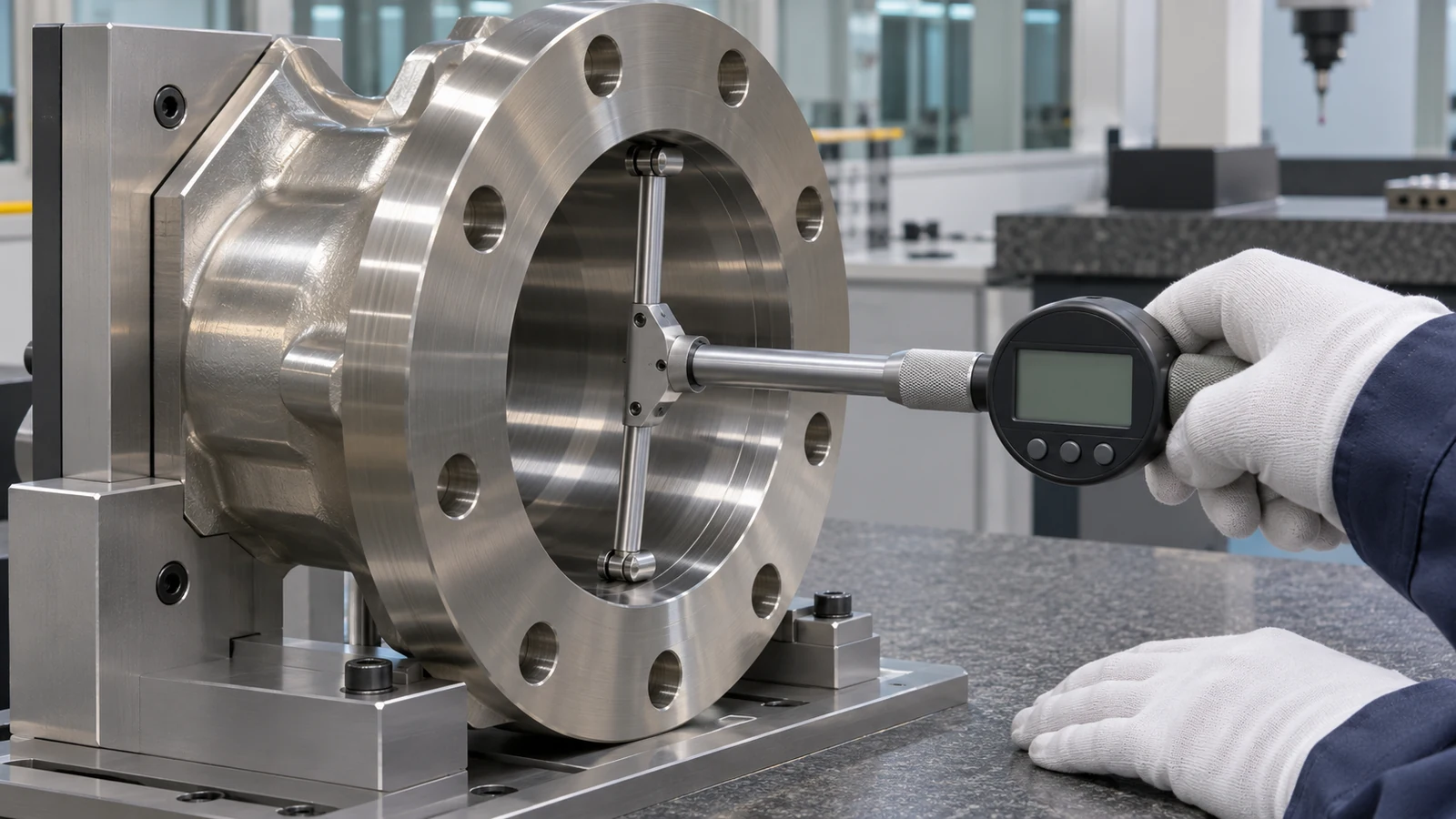
Separate dimensions that can be established in rough machining from those that must meet the final condition. A bearing diameter, sealing face, and bolt pattern may have different datum relationships. The drawing should make those relationships clear and specify whether final acceptance occurs after treatment and finish machining.
Define treatment and inspection ownership
State the required K-500 specification, product form, incoming condition, approved aging cycle, and who performs the treatment. Identify the dimensions measured before treatment versus after final machining, and require the relevant traceability records. Do not assume a CNC supplier performs age hardening or can choose a substitute cycle without customer authorization.
The process sequence is the main value of Monel K-500 machining: heavy removal where the starting condition supports it, a documented allowance for aging, then a controlled finish operation. Clear handoffs make the final size auditable and keep K-500 distinct from the site’s existing Monel 400 and R-405 discussion.