
Steel CNC machining stands as one of the most critical manufacturing processes in modern industry, transforming raw steel into precision components that power everything from automotive engines to medical devices. Whether you are an engineer evaluating steel CNC machining for a new product, a procurement professional searching for steel CNC machining service providers, or simply exploring metal CNC machining options, this comprehensive guide walks you through everything you need to know—from the fundamental principles to advanced selection criteria. Computer Numerical Control (CNC) technology has revolutionized how we work with steel, enabling tolerances as tight as ±0.005mm and geometries that would be impossible with conventional methods.
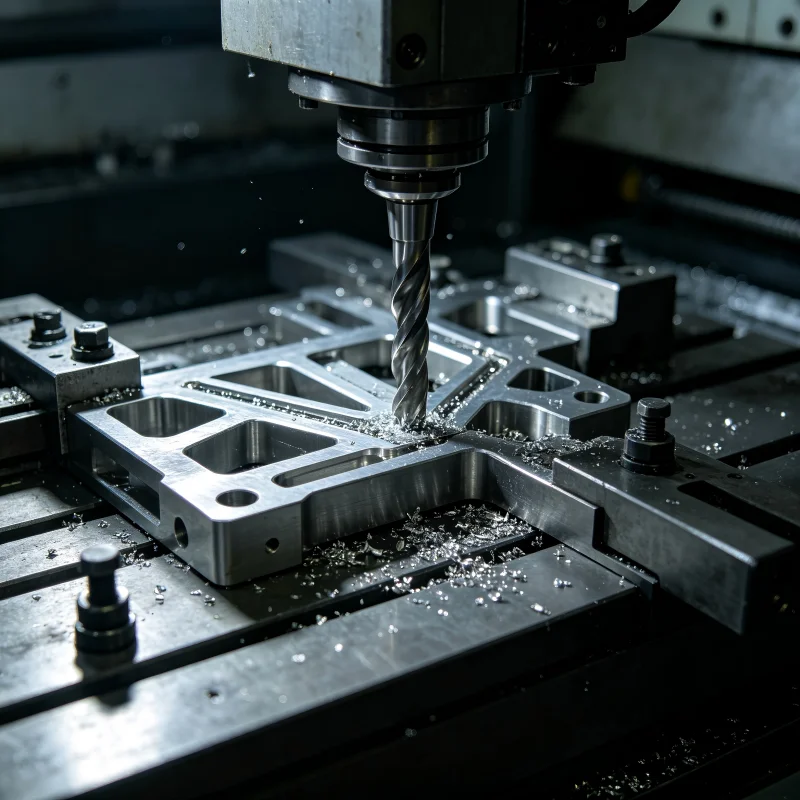
What Is Steel CNC Machining? Understanding the Fundamentals
Steel CNC machining refers to the use of computer-controlled machine tools to remove material from steel workpieces, creating finished parts with exceptional precision and repeatability. The process begins with a digital 3D model, which is converted into machine-readable code (typically G-code) that directs the movement of cutting tools along multiple axes.
The core principle behind steel CNC machining is subtractive manufacturing—starting with a solid block or bar of steel and systematically removing material until the desired shape emerges. This contrasts with additive processes like 3D printing, and it remains the preferred method for applications requiring superior mechanical properties, dimensional stability, and surface finish.
How Steel CNC Machining Works: The Process Flow
일반적인 steel CNC machining 워크플로우는 다음 단계를 따릅니다:
- 설계 및 CAD 모델링: 엔지니어는 CAD 소프트웨어를 사용하여 부품의 상세한 3D 모델을 생성하고, 치수, 공차 및 표면 마감 요구 사항을 지정합니다.
- CAM 프로그래밍: 컴퓨터 지원 제조(CAM) 소프트웨어는 모델, 재료 특성 및 기계 성능을 기반으로 공구 경로와 G-코드 지침을 생성합니다.
- 기계 설정: 작업자는 적절한 고정 장치를 사용하여 강철 공작물을 고정하고, 절삭 공구를 선택하며, CNC 기계의 제어 장치에 프로그램을 입력합니다.
- 가공 실행: CNC 기계는 프로그래밍된 지침을 따라 절삭 공구를 정밀한 경로로 이동시켜 재료를 층별로 제거합니다.
- 품질 검사: 완성된 부품은 좌표 측정기(CMM), 광학 비교기 및 기타 계측 장비를 사용하여 치수 검사를 거쳐 사양 준수 여부를 확인합니다.
강철을 위한 주요 CNC 가공 공정
다양한 steel CNC machining 공정은 다양한 부품 형상과 요구 사항에 적합합니다. 이러한 공정을 이해하면 프로젝트에 적합한 접근 방식을 선택하는 데 도움이 됩니다:
- CNC 밀링: 이것은 가장 다재다능한 steel CNC machining 공정으로, 회전하는 다점 절삭 공구를 사용하여 공작물에서 재료를 제거합니다. CNC 밀링은 복잡한 3D 형상, 평면, 슬롯, 포켓 및 정교한 윤곽을 생성할 수 있습니다. 엔진 브래킷, 기어 하우징, 유압 매니폴드, 금형 부품과 같은 부품에 이상적입니다. 일반적인 정밀도는 ±0.02~±0.05mm이며 표면 조도는 Ra 1.6~3.2μm입니다.
- CNC 선반 가공: 선반 가공에서는 강재 공작물이 회전하고 고정된 절삭 공구가 재료를 제거하여 원통형 또는 원뿔형 형상을 만듭니다. 이 공정은 샤프트, 부싱, 핀, 커플링, 나사 부품 생산에 탁월합니다. CNC 선반 가공은 일반적으로 ±0.01~±0.03mm의 공차를 달성합니다.
- CNC 드릴링 및 태핑: 이러한 작업은 강재 부품에 정밀한 구멍과 내부 나사를 생성하며, 조립 및 체결 응용 분야에 필수적입니다.
- CNC 연삭: 극히 엄격한 공차나 우수한 표면 조도가 요구되는 마무리 작업에 사용되며, 연삭은 연마 휠을 사용하여 소량의 재료를 제거합니다.
- 와이어 EDM(전기 방전 가공): 이 비접촉 공정은 전기 방전을 사용하여 강재에 정교한 형상을 절단하며, 특히 경질 재료나 미세한 디테일과 함께 엄격한 공차가 필요한 부품에 유용합니다.
CNC 가공용 강재 등급: 적합한 재료 선택
모든 steel CNC machining 프로젝트의 성공은 적절한 강재 등급을 선택하는 데 크게 좌우됩니다. 다양한 강재는 강도, 경도, 절삭성, 내식성 및 비용의 다양한 조합을 제공합니다.
| 강재 분류 | Common Grades | Key Properties | 일반적인 용도 |
|---|---|---|---|
| Low Carbon Steel | 1018, 1020, 12L14 | Excellent machinability, good weldability, moderate strength, cost-effective | General-purpose components, shafts, pins, fittings, automotive brackets |
| 중탄소강 | 1045, 1050 | Balanced strength and ductility, responds well to heat treatment | Gears, crankshafts, axles, machine parts requiring higher strength |
| Alloy Steel | 4140, 4340, 8620 | High strength, excellent fatigue resistance, good toughness, heat-treatable | Aerospace components, heavy-duty shafts, gears, structural parts |
| 공구강 | D2, A2, M2, O1 | High hardness, excellent wear resistance, maintains edge retention | Cutting tools, dies, molds, precision forming tools |
| Stainless Steel (Austenitic) | 303, 304, 304L, 316, 316L | Excellent corrosion resistance, good strength, hygienic properties | Medical devices, food processing equipment, marine components, chemical equipment |
| Stainless Steel (Martensitic) | 410, 416, 420, 440C | High hardness, moderate corrosion resistance, heat-treatable | Surgical instruments, valve components, bearings, cutlery |
Each steel grade presents unique machining challenges. For instance, low-carbon steels like 1018 are relatively soft and ductile, making them suitable for high-speed machining with standard carbide tools. In contrast, alloy steels like 4140 generate more heat and tougher chips, requiring careful management of cutting parameters and tool selection. Stainless steels, particularly grades like 316, are known for work-hardening characteristics that demand rigid machining strategies and premium cutting tools.
Core Applications: Where Steel CNC Machining Excels
Steel CNC machining serves as the backbone of manufacturing across virtually every industrial sector. The combination of steel’s mechanical properties and CNC’s precision capabilities makes this process indispensable for producing critical components.
자동차 산업
The automotive sector represents one of the largest consumers of steel CNC machining services. Engine components—including cylinder heads, engine blocks, and connecting rods—require the strength and heat resistance that steel provides, machined to tight tolerances for proper assembly and performance. Transmission components, gearbox housings, and drivetrain parts similarly depend on precision-machined steel for durability and reliability.
Chassis and suspension components, including control arms, steering knuckles, and mounting brackets, benefit from steel’s strength-to-weight ratio and the design flexibility that CNC machining enables. Brake system components—calipers, rotors, and master cylinders—also rely on steel CNC machining for both safety-critical performance and dimensional accuracy.
항공우주 및 방위
Aerospace applications demand the highest levels of precision and reliability, making steel CNC machining essential for manufacturing structural components, landing gear parts, engine mounts, and hydraulic system components. The industry’s stringent requirements for material traceability, dimensional accuracy, and surface finish push the boundaries of what steel CNC machining can achieve.
Many aerospace components require machining from high-strength alloy steels like 4340 or precipitation-hardening stainless steels, materials that demand specialized tooling and machining strategies. The ability to achieve tolerances of ±0.005mm or better makes CNC machining the preferred choice for these critical applications.
Medical Devices and Healthcare
The medical device industry relies heavily on steel CNC machining for producing surgical instruments, implant components, and medical equipment parts. Stainless steel grades like 316L are particularly valued for their corrosion resistance and biocompatibility. CNC machining enables the production of complex geometries required for modern surgical tools, from minimally invasive instruments to orthopedic implants.
ISO 13485 certification, which Jucheng Precision holds, is often required for medical device manufacturing, ensuring that quality management systems meet the industry’s rigorous standards.
Industrial Machinery and Heavy Equipment
Industrial machinery applications—pumps, valves, hydraulic components, and processing equipment—depend on steel CNC machining for parts that must withstand high pressures, abrasive conditions, and continuous operation. Steel’s durability and CNC’s precision combine to produce components like pump housings, valve bodies, gear reducers, and bearing housings that deliver reliable performance in demanding environments.
Tooling and Mold Making
The tool and die industry represents a specialized but critical application for steel CNC machining. Tool steels like D2, A2, and M2 are machined into cutting tools, stamping dies, injection molds, and forming tools. The hardness and wear resistance of these materials make them challenging to machine, but CNC technology—particularly 5-axis machining and high-speed techniques—enables the production of complex tool geometries with the required precision.
Energy and Power Generation
Energy sector applications—including oil and gas equipment, power generation turbines, and renewable energy systems—leverage steel CNC machining for components that must perform reliably under extreme conditions. Valve bodies, pump components, turbine blades, and structural supports all benefit from the combination of steel’s strength and CNC’s precision.
Key Selection Factors: Choosing the Right Steel CNC Machining Service
Selecting a steel CNC machining service provider requires careful evaluation across multiple dimensions. The decision affects not only part quality but also project timelines, costs, and overall success.
Technical Capabilities and Equipment
When evaluating steel CNC machining providers, assess their equipment fleet and technical capabilities. Key considerations include:
- Machine Types and Axes: Does the provider offer 3-axis, 4-axis, and 5-axis machining capabilities? Multi-axis machining enables complex geometries and reduces setup requirements. Jucheng Precision operates 150+ CNC machines, including 25+ 5-axis centers.
- Turning and Milling Capacity: Look for providers with both CNC milling and turning capabilities, as well as combined turning-milling centers that can complete complex parts in a single setup.
- Additional Processes: Consider whether the provider offers complementary services like wire EDM, grinding, sheet metal fabrication, and finishing operations.
- Material Expertise: Evaluate the provider’s experience with different steel grades, particularly those relevant to your application.
Quality Assurance and Certifications
Quality systems distinguish reliable steel CNC machining providers from those that may compromise on precision. Look for:
- ISO 9001:2015 Certification: The foundational quality management standard.
- IATF 16949: The automotive industry’s quality management standard, indicating capability for automotive applications.
- ISO 13485: The medical device quality management standard, essential for healthcare applications.
- Inspection Equipment: Providers should maintain CMMs, optical comparators, surface profilometers, and hardness testers for dimensional verification.
Tolerance and Precision Capabilities
Different applications demand different levels of precision. Standard steel CNC machining tolerances typically range from ±0.01mm to ±0.05mm, depending on the material and process. High-precision requirements—such as those for aerospace or medical applications—may demand tolerances of ±0.005mm or tighter. Discuss your tolerance requirements early with potential providers to ensure they can meet your specifications.
Lead Times and Production Capacity
Project timelines are often critical. Evaluate providers based on:
- Quote Turnaround: How quickly can the provider deliver cost estimates and design for manufacturability (DFM) feedback? Jucheng Precision provides quotes within hours.
- Production Lead Times: What is the typical timeline from order to delivery? Rapid prototyping services may deliver parts in as few as 4-7 days.
- Scalability: Can the provider handle both low-volume prototyping and high-volume production runs? Jucheng Precision’s 150+ CNC machines and 190+ employees support projects from single prototypes to production quantities of 50,000+ pieces per month.
Cost Considerations
Steel CNC machining costs vary widely based on multiple factors:
- Material Costs: Steel grades vary significantly in price. Stainless steels and exotic alloys like Inconel are substantially more expensive than carbon steels.
- Part Complexity: Intricate geometries, tight tolerances, and features like small internal radii or undercuts increase machining time and cost.
- Order Volume: Setup costs are amortized across production volume, making per-unit costs lower for larger orders.
- Machine Hourly Rates: Rates typically range from $35 to $200+ per hour, depending on machine type, capability, and location.
- Surface Finishing: Post-processing operations like heat treatment, coating, or plating add to the total cost.
Jucheng Precision’s vertically integrated facility—combining CNC machining, sheet metal fabrication, 3D printing, and injection molding under one roof—can reduce costs by eliminating multiple vendor markups and streamlining project management.
Installation and Maintenance Considerations for Steel CNC Machining
Proper installation and maintenance practices ensure that steel CNC machining equipment delivers consistent performance and longevity. While end-users typically rely on service providers for production, understanding these factors helps in evaluating provider capabilities.
Machine Installation Fundamentals
CNC machine installation begins with proper site preparation. Machines must be placed on foundations that can support their weight—often several tons—without vibration transfer that could affect precision. Leveling and alignment are critical; even minor misalignment can compromise machining accuracy over time.
Environmental controls matter significantly for steel CNC machining. Temperature fluctuations can affect both machine geometry and workpiece dimensions, making climate-controlled facilities preferable for precision work. Jucheng Precision’s 8,000-square-meter facility in Shenzhen maintains consistent environmental conditions to support tight-tolerance machining.
Routine Maintenance Practices
Regular maintenance prevents unplanned downtime and extends equipment life. Key practices include:
- Lubrication: CNC machines require regular lubrication of moving parts—spindles, guideways, and ball screws—to reduce friction and wear.
- Coolant Management: Coolant systems must be maintained to control heat generation during steel CNC machining, improve chip evacuation, and extend tool life.
- Tool Wear Monitoring: Regular inspection of cutting tools for wear, chipping, or breakage prevents quality issues and machine damage.
- Calibration: Periodic calibration of machine axes and measurement systems ensures continued accuracy.
Providers with rigorous maintenance programs, like Jucheng Precision’s 190+ skilled professionals, can maintain the equipment reliability needed for consistent quality.
Frequently Asked Questions About Steel CNC Machining
What is the full form of CNC in steel CNC machining?
CNC stands for Computer Numerical Control. In steel CNC machining, this refers to the use of computer systems to control machine tools, guiding them through precise movements based on programmed instructions.
How much does a steel CNC machine cost?
Steel CNC machine price varies dramatically based on machine type, size, and capability. Entry-level desktop CNC mills suitable for small workshops typically range from $10,000 to $70,000. Full-size vertical machining centers and turning centers for industrial production generally cost $70,000 to $250,000. High-end 5-axis machines and specialized equipment can exceed $500,000. For most businesses, working with a steel CNC machining service provider offers a more cost-effective alternative to purchasing and maintaining equipment in-house.
What is the difference between steel CNC machining and metal CNC machining?
Metal CNC machining is the broader category encompassing all metal materials—aluminum, brass, copper, titanium, and steel. Steel CNC machining specifically focuses on steel and its alloys. Steel presents unique challenges compared to other metals: it requires higher cutting forces, generates more heat, and typically demands slower speeds and more robust tooling. However, steel offers superior strength, durability, and wear resistance compared to most other machinable metals.
How do I find steel CNC machining near me?
Searching for steel CNC machining near me is a common starting point for project sourcing. While local providers offer advantages like easier communication and faster shipping, many businesses find that expanding their search globally—particularly to manufacturing hubs like Shenzhen, China—provides access to more extensive capabilities and competitive pricing. Online directories like ThomasNet, MFG.com, and Google Maps can help identify providers. When evaluating providers, prioritize capability and quality over proximity alone.
What tolerances can steel CNC machining achieve?
Standard steel CNC machining tolerances typically fall between ±0.01mm and ±0.05mm. High-precision machining can achieve tolerances of ±0.005mm or tighter, though this requires specialized equipment, careful process control, and more extensive inspection. Jucheng Precision maintains typical tolerances of ±0.005mm for many applications. Factors affecting achievable tolerances include material grade, part geometry, machine capability, and tool condition.
What surface finishes are available for CNC machined steel parts?
Steel CNC machining produces as-machined surfaces with roughness values typically ranging from Ra 0.8 to 3.2 μm, depending on the process and parameters. Post-processing options include:
- 열처리: Quenching, tempering, and case hardening to enhance hardness and wear resistance
- Surface Coatings: TiN, TiAlN, and other coatings to improve lubricity and reduce friction
- Plating: Zinc, nickel, chrome, or black oxide plating for corrosion resistance and appearance
- 패시베이션: Chemical treatment to enhance corrosion resistance of stainless steels
- 비드 블라스팅: Surface texturing for improved appearance or adhesion
What industries use steel CNC machining?
Steel CNC machining serves virtually every industrial sector. Key industries include automotive (engine components, chassis parts, transmission systems), aerospace (structural components, landing gear, engine mounts), medical devices (surgical instruments, implants, equipment parts), industrial machinery (pumps, valves, hydraulic components), tool and die making, energy and power generation, and consumer products.
How do I choose between steel and aluminum for CNC machining?
The choice between steel and aluminum depends on application requirements. Steel offers superior strength, hardness, and wear resistance but is heavier, more difficult to machine, and generally more expensive. Aluminum is lighter, machines faster (approximately five times faster than steel by machinability index), and costs less but lacks steel’s mechanical properties. Choose steel for structural components, high-wear applications, and parts requiring heat treatment. Choose aluminum for lightweight applications, high-volume production, and parts where strength requirements are moderate.
Why Choose Jucheng Precision for Steel CNC Machining
When selecting a steel CNC machining partner, the provider’s capabilities, quality systems, and track record matter as much as price. Jucheng Precision has established itself as a trusted manufacturer with comprehensive capabilities across multiple manufacturing processes.
Manufacturing Scale and Equipment
Jucheng Precision operates a manufacturing powerhouse featuring 150+ CNC machines, including 25+ 5-axis machining centers from leading brands like Haas and Mazak. This extensive fleet—supplemented by 30+ sheet metal fabrication units, 50+ industrial 3D printing systems, and 35+ injection molding machines—enables the company to handle projects of any scale, from single prototypes to high-volume production.
The facility spans 8,000 square meters and employs 190+ professionals, including 30+ senior engineers with over 13 years of experience. This depth of expertise ensures that complex steel CNC machining challenges receive knowledgeable attention.
Quality Certifications and Control
Jucheng Precision holds multiple internationally recognized quality certifications: ISO 9001:2015, ISO 14001, ISO 13485 (medical devices), and IATF 16949 (automotive). These certifications demonstrate the company’s commitment to documented processes, traceability, and continuous improvement.
Quality control at Jucheng Precision extends beyond certification to practical implementation. The metrology lab features advanced equipment including CMMs, optical comparators, surface profilometers, and hardness testers. Rigorous in-process and final inspections ensure that every part meets specifications, with typical tolerances of ±0.005mm.
Comprehensive Service Offering
Jucheng Precision provides a true one-stop manufacturing solution. From initial design consultation through prototyping, production, and finishing, the company’s integrated capabilities streamline the manufacturing process. Services encompass CNC machining (milling, turning, grinding, EDM), sheet metal fabrication, 3D printing, injection molding, and die casting.
This integration delivers tangible benefits for clients: reduced vendor management overhead, consistent quality across processes, and accelerated project timelines. Jucheng Precision provides quotes within hours and can deliver parts in as few as 4 days for prototyping projects.
Industry Experience and Track Record
Founded in Shenzhen in 2012, Jucheng Precision has built a reputation for reliability across more than 5,000 development projects. The company’s monthly output of 50,000+ pieces demonstrates production capacity that supports both development-stage prototyping and full-scale manufacturing.
Jucheng Precision’s experience spans diverse industries—automotive, aerospace, medical devices, industrial equipment, and consumer products—providing the cross-industry knowledge that often proves valuable in solving complex manufacturing challenges.
Global Reach with Local Service
While headquartered in Shenzhen’s manufacturing hub, Jucheng Precision serves clients globally. The company maintains a sales office in the United Kingdom, facilitating communication and service for European clients. This global perspective, combined with local manufacturing expertise, positions Jucheng Precision as a capable partner for international steel CNC machining 프로젝트.
Confidentiality and Intellectual Property Protection
Jucheng Precision maintains strict confidentiality protocols to protect client product information and intellectual property. The company’s non-disclosure agreements and security measures provide assurance for clients developing proprietary products or technologies.
Conclusion: Making Your Steel CNC Machining Decision
Steel CNC machining represents a cornerstone of modern manufacturing, enabling the production of precision components that drive innovation across industries. Whether you are developing a new medical device, designing automotive components, or creating industrial equipment, understanding the processes, material options, and selection criteria covered in this guide empowers you to make informed decisions.
From the fundamental principles of CNC technology to the nuances of steel grade selection, from evaluating service providers to understanding cost drivers, the knowledge shared here provides a comprehensive foundation for your steel CNC machining projects. When you are ready to move from concept to production, partnering with an experienced, certified manufacturer like Jucheng Precision can make the difference between a project that succeeds and one that struggles.
Contact Jucheng Precision today to discuss your steel CNC machining requirements, request a quote, or explore how the company’s comprehensive manufacturing capabilities can bring your designs to life.