
Vous avez un composant mécanique critique sur la planche à dessin—peut-être une tige de piston hydraulique pour engins lourds, un essieu automobile à haute résistance, ou un engrenage de précision qui doit survivre à des milliers d'heures de contrainte rotationnelle. Vous savez que l'acier au carbone est la bonne famille de matériaux pour le travail, mais dès que vous commencez à vous renseigner sur l'usinage de l'acier au carbone, vous vous heurtez à un mur de conseils contradictoires. Un machiniste vous dit d'utiliser des vitesses élevées et des avances agressives ; un autre vous avertit que vous brûlerez votre outillage en quelques minutes. Certains ateliers vous proposent un prix qui semble raisonnable, tandis que d'autres arrivent à deux ou trois fois le coût. Et quelque part dans un coin de votre esprit, vous vous demandez si l'acier inoxydable ne serait pas finalement un meilleur choix.
C'est la réalité de l'usinage CNC de l'acier au carbone dans le paysage manufacturier actuel. Il ne s'agit pas simplement de mettre une barre d'acier dans un tour et d'appuyer sur “ start ”. Il s'agit de comprendre les subtiles différences métallurgiques entre les nuances, de sélectionner les bons paramètres de coupe, de gérer la chaleur et l'usure des outils, et—peut-être le plus important—de trouver un partenaire d'usinage qui comprend vraiment comment tirer le meilleur parti de ce matériau polyvalent mais exigeant.
Ce guide aborde les points de douleur les plus courants auxquels les ingénieurs et les responsables des achats sont confrontés lorsqu'ils l'usinage de l'acier au carbone. Nous allons parcourir le paysage des problèmes, explorer la science derrière les solutions, et vous montrer comment prendre des décisions éclairées qui équilibrent qualité, coût et délais de livraison. Que vous soyez usinage de l'acier doux pour des supports structurels ou usinage de l'acier à haute teneur en carbone pour des composants résistants à l'usure, les principes décrits ici vous aideront à naviguer dans les complexités avec confiance.
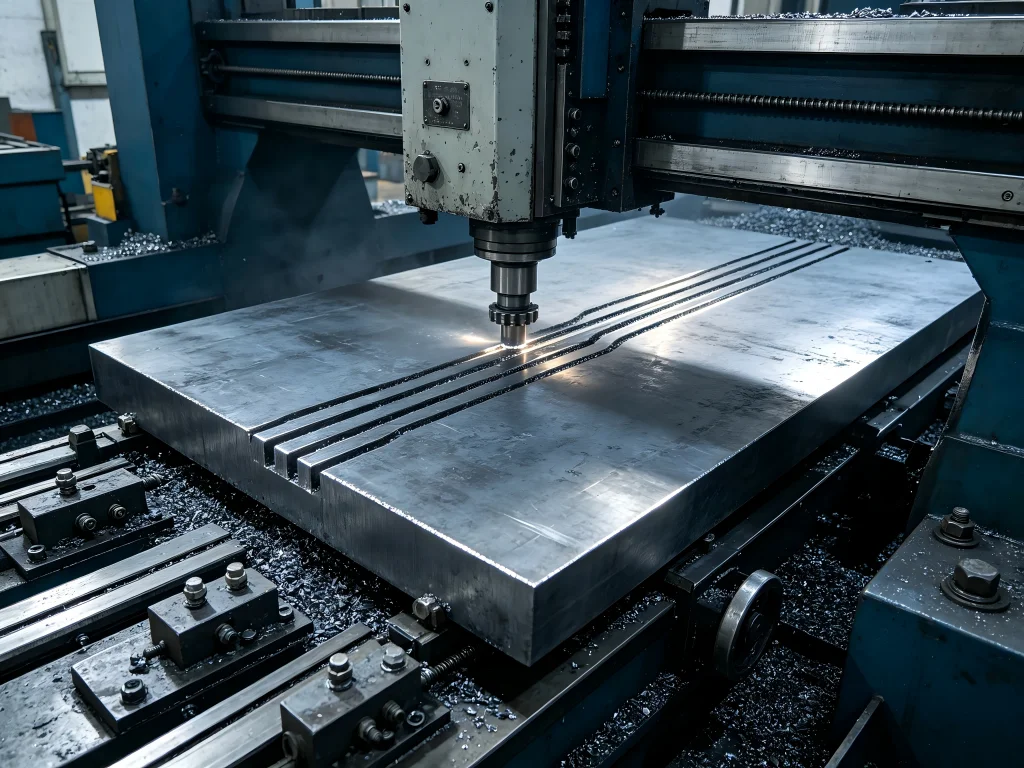
Le problème : pourquoi l'usinage de l'acier au carbone peut être un cauchemar
Commençons par un scénario qui se déroule tous les jours dans les ateliers d'usinage. Un fabricant reçoit une commande de 5 000 arbres de précision en acier au carbone moyen AISI 1045. L'équipe d'ingénierie sélectionne un atelier CNC réputé, envoie les fichiers CAO, et s'attend à une production sans accroc. Trois semaines plus tard, ils reçoivent un appel : le projet est en retard, les coûts d'outillage ont fait exploser le budget, et l'état de surface des 200 premières pièces ne respecte pas les spécifications.
Qu'est-ce qui a mal tourné ? La réponse réside généralement dans l'un des nombreux pièges courants qui affectent l'usinage de l'acier au carbone les projets.
Piège 1 : Mal comprendre le comportement des matériaux
L'acier au carbone n'est pas un matériau unique : c'est une famille d'alliages aux caractéristiques d'usinage très différentes. Les aciers à faible teneur en carbone comme le 1018 sont tendres et ductiles, produisant de longs copeaux filandreux difficiles à briser et pouvant provoquer un “ nid d'oiseau ” autour de l'outil de coupe. Les aciers à teneur moyenne en carbone comme le 1045 offrent une meilleure résistance et un meilleur contrôle des copeaux, mais nécessitent plus de puissance de coupe et génèrent plus de chaleur. Les aciers à haute teneur en carbone offrent une excellente résistance à l'usure, mais deviennent cassants et de plus en plus difficiles à usiner. Choisir la mauvaise nuance pour votre application — ou ne pas adapter votre stratégie d'usinage en conséquence — est une recette pour le désastre.
Piège 2 : Sous-estimer l'usure des outils
Un utilisateur de Reddit a récemment partagé sa frustration : “ J'ai essayé d'usiner une série d'arbres en 1045 sur notre vieux tour à commande numérique, et nous avons épuisé trois boîtes de plaquettes en une seule équipe. Le matériau dévore littéralement les outils. ” Ce n'est pas une exagération. Lorsque l'usinage de l'acier au carbone, l'usure en cratère est le mode de défaillance normal de l'outil — mais si vous ne gérez pas correctement les vitesses de coupe, les avances et l'arrosage du liquide de refroidissement, la surchauffe peut provoquer une défaillance imprévisible et catastrophique de l'outil. Comme l'a noté un machiniste sur Practical Machinist, “ l'acier à faible teneur en carbone/doux est votre matériau le plus polyvalent… mais vous devez respecter ses limites ”.
Piège 3 : Ignorer les exigences de traitement thermique
De nombreux ingénieurs spécifient des pièces en acier au carbone sans tenir compte du traitement thermique qui peut être nécessaire pour obtenir les propriétés mécaniques souhaitées. L'AISI 1045, par exemple, réagit bien à la trempe à cœur et à la trempe par induction — mais si vous usinez d'abord les pièces puis les traitez thermiquement, vous pouvez rencontrer une déformation, des variations dimensionnelles ou une fissuration superficielle. D'un autre côté, si vous effectuez le traitement thermique avant l'usinage, vous travaillez avec un matériau plus dur qui accélère l'usure des outils. Bien ordonner cette séquence exige une planification minutieuse et de l'expérience.
Piège 4 : Comparer des pommes et des oranges en matière de coût
L'acier au carbone est souvent choisi parce qu'il est plus abordable que l'acier inoxydable — coûtant généralement $500–800 par tonne contre $1 500–3 000+ pour l'inoxydable. Mais le coût du matériau ne représente qu'une partie de l'équation. Si votre processus d'usinage est inefficace, avec des coûts d'outillage élevés, des taux de rebut excessifs et des temps de cycle longs, le coût total par pièce peut rapidement dépasser ce que vous paieriez pour un matériau plus cher mais plus facile à usiner. Une source de l'industrie note que l'acier au carbone ajoute 30–50% de coût d'usinage par rapport à l'aluminium, tandis que l'acier inoxydable ajoute 100–150%. La clé est d'optimiser le processus, pas seulement de choisir la matière première la moins chère.
La solution : une approche systématique de l'usinage de l'acier au carbone
La bonne nouvelle, c'est que ces problèmes sont solubles. Usiner l'acier au carbone avec succès se résume à trois facteurs interconnectés : la sélection du matériau, l'optimisation du processus et la capacité du partenaire. Examinons chacun en détail.
Understanding the Carbon Steel Family
Before you can machine carbon steel effectively, you need to understand what you are working with. Carbon steel is categorized by carbon content, which directly influences machinability, strength, and heat treatment response.
Low Carbon Steel (Mild Steel)
Grades like AISI 1018 and A36 contain up to 0.25% carbon. These materials are soft, ductile, and highly weldable. They are the workhorses of general fabrication and structural applications. However, their low carbon content makes them “gummy” to machine—they produce long, continuous chips that can wrap around tools and fixtures. This makes automated, high-volume production challenging without proper chip-breaking strategies.
When usinage de l'acier doux, machinists often prefer coated carbide inserts with specialized chip-breaker geometries. The material’s softness means you can run higher speeds, but you must manage chip evacuation carefully to avoid production interruptions.
Acier à teneur moyenne en carbone
AISI 1045 is the industry standard for medium carbon steel, with approximately 0.45% carbon content. This grade offers a significant leap in strength over low-carbon alternatives—tensile strength of approximately 570 MPa in its normalized state, nearly 30% higher than mild steel. It also responds well to heat treatment, allowing you to achieve surface hardness up to 55 HRC through induction hardening.
From a machinability perspective, 1045 is often preferred over the “stickier” low-carbon grades. It produces crisp, C-shaped chips that are easily evacuated from the cutting zone. The material is more rigid, making it less prone to vibration (chatter) during long-bed turning operations. With the right tooling—typically CVD-coated carbide inserts—you can achieve surface finishes of Ra 0.8 directly off the lathe.
However, 1045 requires more power to machine than 1018, and it generates more heat. Proper coolant delivery and rigid setups are essential to maintain tool life and dimensional accuracy.
High Carbon Steel
Grades with carbon content above 0.60% fall into the high carbon category. These materials provide excellent hardness and wear resistance but are more brittle and significantly harder to machine. They are typically used for applications like cutting tools, springs, and high-stress wear components.
When usinage de l'acier à haute teneur en carbone, you must reduce cutting speeds, use robust tooling with appropriate coatings, and often perform the machining in the annealed (softened) state before final heat treatment.
Free Machining Carbon Steel
Grades like AISI 1215 are specifically engineered for high-speed production. They contain added sulfur and phosphorus, which form microscopic manganese sulfide inclusions that act as internal lubricants and chip breakers. This significantly reduces cutting forces, lowers heat generation, and allows for “lights-out” manufacturing where the risk of tool failure or chip-related problems is nearly eliminated.
Free machining steels are rated with machinability indices of 70% to 220% compared to standard carbon steels. They are the go-to choice for high-volume turned parts like fasteners, fittings, and fluid power components.
Optimizing Cutting Parameters
Once you have selected the right grade, the next step is dialing in your cutting parameters. The table below provides recommended starting points for different carbon steel categories when using carbide tooling.
| Material Category | Example Grades | Cutting Speed (SFM) | Feed Rate (IPR) | Indice d'usinabilité |
|---|---|---|---|---|
| Acier à faible teneur en carbone | 1018, A36 | 40-140 | 0.008-0.020 | ~65% |
| Acier à teneur moyenne en carbone | 1045, C45 | 70-120 | 0.010-0.025 | ~55% |
| High Carbon Steel | 1060, 1095 | 65-100 | 0.008-0.018 | ~45% |
| Acier de décolletage | 1215, 11L17 | 100-150 | 0.012-0.030 | ~100%+ |
Sources: Open Oregon Pressbooks, Haas Automation
These are starting points, not absolute rules. As one CNC expert notes, “A methodical approach is best: start with recommended parameters from a reliable source, run a test cut, observe the results, and make small, incremental adjustments until the process is stable and efficient”.
When milling carbon steel, similar principles apply. Depth of cut for finishing operations typically ranges between 0.030 and 0.075 inches. The key is maintaining a balance between material removal rate and tool life—pushing too hard saves cycle time but increases tooling costs; being too conservative extends tool life but drives up per-part cost.
Managing Tool Wear and Heat
Tool wear is the single biggest cost driver in l'usinage CNC de l'acier au carbone. Understanding the wear mechanisms and how to mitigate them is essential for profitable production.
Crater wear is the normal failure mode when machining carbon and alloy steels. It occurs on the rake face of the cutting tool, where the chip slides across the insert. The high temperatures and pressures in this zone cause the tool material to dissolve and erode over time. Crater wear is predictable and manageable—you can plan tool changes based on the number of parts produced.
Overheating, on the other hand, is an unpredictable failure mode that can ruin tools and parts in an instant. It occurs when cutting temperatures exceed the tool’s thermal limits, causing rapid degradation, edge chipping, or even catastrophic insert fracture. The solution is threefold:
- Improve coolant delivery: High-pressure coolant directed precisely at the cutting zone can dramatically reduce temperatures and flush away chips.
- Select appropriate tool coatings: Modern coatings like AlTiN and TiCN provide excellent heat and wear resistance.
- Adjust cutting parameters: Reducing speed or feed when you see signs of overheating can save the tool and the part.
One often-overlooked factor is the presence of mill scale on the raw material. Research has shown that mill scale significantly reduces tool life compared to machining the base material under otherwise identical conditions. The iron oxides in mill scale have microhardness values around 1030 DPH, making them highly abrasive. If you are machining hot-rolled carbon steel with mill scale intact, you may need to reduce cutting speeds or use more wear-resistant tooling.
Heat Treatment Considerations
Heat treatment adds another layer of complexity to l'usinage de l'acier au carbone. The sequence of operations—whether you machine before or after heat treatment—has a profound impact on cost, quality, and lead time.
For medium carbon steels like 1045, the typical approach is to machine the part in the normalized or hot-rolled condition, then perform heat treatment to achieve the desired hardness, followed by finish grinding to achieve final dimensional tolerances. This sequence allows you to machine the material when it is relatively soft (reducing tool wear and cycle time) while still achieving the mechanical properties required for the application.
However, this approach requires careful planning. Heat treatment can cause distortion, so you must leave sufficient stock for post-heat-treatment grinding. Induction hardening is often preferred for shafts because it minimizes distortion compared to furnace quenching.
If welding is required, higher carbon steels present additional challenges. AISI 1045, for example, is susceptible to heat-affected zone cracking if cooled too quickly after welding. Pre-heating to 200°C–300°C is mandatory for structural welds, followed by controlled post-weld cooling.
Low-carbon steels like 1018 are much more forgiving in this regard. They can be welded using almost any standard process—MIG, TIG, or Stick—without significant risk of brittleness at the weld joint.
Making the Right Choice: Carbon Steel vs. Stainless Steel
A frequent question on machining forums is whether to choose carbon steel or stainless steel for a given application. The answer depends on your priorities.
Carbon steel wins on cost and machinability. Raw material costs are significantly lower—$500–800 per ton compared to $1,500–3,000+ for stainless. Carbon steel also machines faster and causes less tool wear, reducing overall production costs. As one Reddit user put it, “I machine mild steel all the time for prototypes—it’s affordable and forgives newbie mistakes”.
Stainless steel offers superior corrosion resistance and a more attractive appearance, but it comes with trade-offs. It is tougher on tools, requires slower cutting speeds, and is more prone to work hardening. As another machinist noted, “Stainless is a bit harder to machine because of the chromium oxide layer that makes it rust resistant”.
The choice ultimately comes down to your application requirements. If corrosion resistance is critical—for example, in food processing equipment or marine environments—stainless steel may be worth the extra cost. If strength, wear resistance, and cost-effectiveness are your primary concerns, carbon steel is the clear winner.
For applications in Malaysia and other tropical climates, corrosion is a legitimate concern. However, proper surface treatments—such as plating, painting, or oiling—can protect carbon steel components in most indoor and protected outdoor applications. The keyword carbon steel Malaysia often appears in searches from procurement professionals looking for local suppliers who understand these environmental considerations.
How to Choose the Right Carbon Steel Grade for Your CNC Project
Selecting the right grade is one of the most critical decisions you will make. The wrong choice can lead to part failure, excessive machining costs, or both. Here is a practical framework for making the decision:
Step 1: Define Your Application Requirements
Start by listing your part’s requirements. Think about hardness, flexibility, strength, wear resistance, and cost. Ask yourself:
- What loads will the part experience? Static, dynamic, or impact?
- Does the part need to resist wear? Will it slide against other surfaces?
- Will the part be welded? If so, weldability is a critical factor.
- Does the part require heat treatment? If so, which grades respond well to your chosen process?
- What is your production volume? High-volume runs favor free machining grades.
Step 2: Match Requirements to Carbon Steel Category
Once you understand your requirements, match them to the appropriate category:
- Low carbon steel (e.g., 1018): Choose this if you need excellent weldability, good formability, and moderate strength. Ideal for structural frames, brackets, and parts that will be welded extensively.
- Medium carbon steel (e.g., 1045): Choose this if you need higher strength, wear resistance, and the ability to heat-treat. Ideal for shafts, axles, gears, and hydraulic components.
- High carbon steel (e.g., 1060): Choose this only if wear resistance and hardness are paramount and you can accept reduced machinability. Ideal for cutting tools, springs, and high-stress wear components.
- Free machining steel (e.g., 1215): Choose this for high-volume production where machining speed and tool life are the primary concerns. Ideal for fasteners, fittings, and fluid power components.
Step 3: Consider the Full Cost Picture
Do not make the mistake of choosing the cheapest raw material without considering machining costs. A slightly more expensive grade that machines faster and with less tool wear may actually be more cost-effective in the long run. As one industry source notes, “The best choice is the one that meets your specific application’s requirements for strength, wear resistance, and cost”.
Why Partner with Jucheng Precision for Your Carbon Steel Machining Needs
Understanding the theory behind l'usinage de l'acier au carbone is one thing; executing it consistently, at scale, with tight tolerances, is another entirely. This is where Jucheng Precision brings significant value to your supply chain.
Jucheng Precision operates as an IATF 16949 and ISO 13485 certified partner, with a manufacturing powerhouse that includes 150+ CNC machines (including 25+ 5-axis centers), 30+ sheet metal fabrication units, 50+ industrial 3D printing systems, and 35+ injection presses. This extensive capacity allows them to handle projects of any scale, from rapid prototypes to high-volume production runs.
When it comes to l'usinage CNC de l'acier au carbone, Jucheng’s expertise is evident in their detailed understanding of material behavior. They process a wide range of carbon steel grades, including mild steel (1018, 1042, A36), medium carbon steel (1045, C45, EN8), and higher grades like EN16, EN24T, EN29, and EN39. For each grade, they apply optimized machining strategies that balance speed, quality, and tool life.
For AISI 1045 components, Jucheng offers specialized capabilities including precision turning with tight runout tolerances, through-hardening and induction hardening to achieve surface hardness up to 55 HRC, cylindrical grinding for H7/g6 fits, and controlled welding procedures to prevent heat-affected zone cracking. Their machinists prefer 1045 over “stickier” low-carbon grades because of its predictable chip fracturing and stable machining behavior.
For high-volume production, Jucheng leverages their fleet of high-speed Swiss lathes and automated turning centers to push free machining grades like 1215 to their limits, delivering exceptionally low-cost parts without sacrificing dimensional integrity. The predictable chip control of these materials allows for “lights-out” manufacturing, reducing labor costs and increasing throughput.
Beyond machining, Jucheng provides full material certifications with every batch, ensuring you are working against a known, certified baseline. Their 190+ skilled professionals, including 30+ senior engineers with 13+ years of experience, bring deep expertise to every project. This combination of equipment, expertise, and quality systems makes Jucheng a trusted partner for l'usinage de l'acier au carbone components across automotive, hydraulic, industrial machinery, and other demanding sectors.
For customers searching for carbon steel Malaysia machining services, Jucheng offers the global quality standards and local responsiveness that procurement professionals require. Their integrated approach—from material selection and machining through heat treatment and finishing—simplifies the supply chain and reduces the coordination burden on your team.
Frequently Asked Questions About Machining Carbon Steel
1. Can you cut carbon steel with standard CNC tools?
Yes, you can cut carbon steel with standard CNC tools, but the specific tooling requirements depend on the grade. Low-carbon steels like 1018 can be machined with HSS or carbide tooling. Medium and high-carbon steels typically require carbide inserts with appropriate coatings (CVD or PVD) to withstand the higher cutting forces and temperatures. Free machining steels like 1215 are the easiest to cut and can be run at higher speeds with excellent tool life.
2. How do you cut carbon steel without ruining tools?
Cutting carbon steel without ruining tools requires attention to three factors: speed, feed, and coolant. Start with conservative parameters and adjust based on tool wear observations. Use coated carbide tooling appropriate for the material grade. Ensure adequate coolant delivery to the cutting zone to manage heat. And most importantly, do not let the tool dwell in the cut—interrupted cuts or dwell marks can cause rapid tool failure.
3. What is the difference between machining stainless steel vs carbon steel?
The primary differences are cost, machinability, and corrosion resistance. Carbon steel is less expensive, machines faster, and causes less tool wear, but it is susceptible to rust. Stainless steel offers superior corrosion resistance but is tougher on tools, requires slower cutting speeds, and is more prone to work hardening. The choice between them depends on whether corrosion resistance or cost-effectiveness is more important for your application.
4. Which carbon steel grade is easiest to machine?
Free machining grades like AISI 1215 are the easiest to machine. They contain added sulfur and phosphorus that act as chip breakers and lubricants, reducing cutting forces and extending tool life. Among standard grades, low-carbon steels like 1018 are easier to machine than medium or high-carbon steels, though they produce long, stringy chips that can be challenging to manage in automated production.
5. Is carbon steel machining more expensive than aluminum?
Yes, carbon steel machining is typically more expensive than aluminum machining. Industry sources indicate that carbon steel adds 30–50% over aluminum in machining cost. The higher cost reflects the increased cutting forces, tool wear, and power requirements associated with machining steel. However, carbon steel offers superior strength and wear resistance, making it the material of choice for many mechanical applications despite the higher machining cost.
6. What cutting speed should I use for machining carbon steel?
Cutting speeds vary by grade and tooling. For carbide tooling, recommended starting speeds are: low carbon steel 40–140 SFM, medium carbon steel 70–120 SFM, high carbon steel 65–100 SFM, and free machining steel 100–150 SFM. These are starting points—you may need to adjust based on your specific machine, tooling, and part geometry.
7. Can carbon steel be machined dry?
Some carbon steels can be machined dry, but it is not recommended for most production applications. Dry machining generates higher temperatures that accelerate tool wear and can affect part quality. Coolant is generally recommended to manage heat, flush chips, and improve surface finish. The exception is free machining steels, which generate less heat and may be suitable for dry machining in some applications.
8. How do I prevent rust on machined carbon steel parts?
Preventing rust on machined carbon steel parts requires surface protection. Options include oiling or applying rust-preventive coatings immediately after machining, plating (zinc, nickel, or chrome), painting, or powder coating. For parts that will be stored or shipped, use vapor corrosion inhibitors (VCI) packaging. The specific protection method depends on the application environment and the required surface finish.
Conclusion: Turning Carbon Steel Challenges into Competitive Advantage
Usiner l'acier au carbone presents real challenges—material variability, tool wear, heat management, and the need for careful process planning. But these challenges are not insurmountable. With the right material selection, optimized cutting parameters, and a knowledgeable machining partner, carbon steel can deliver exceptional performance at a competitive cost.
The key is to approach each project systematically. Understand the specific grade you are working with and its machinability characteristics. Select cutting parameters that balance material removal rate with tool life. Plan for heat treatment and finishing operations in the correct sequence. And choose a machining partner with the equipment, expertise, and quality systems to execute your project reliably.
Jucheng Precision brings all of these elements together. With 150+ CNC machines, deep expertise in carbon steel grades from 1018 to 1215 and beyond, and certifications including IATF 16949 and ISO 13485, they offer a one-stop solution for l'usinage CNC de l'acier au carbone projects of any scale. Their integrated approach—from prototyping through production, including heat treatment and finishing—simplifies your supply chain and ensures consistent quality.
Whether you are milling carbon steel components for automotive applications, usinage de l'acier à haute teneur en carbone for wear-resistant tooling, or exploring free machining carbon steel for high-volume production, the principles in this guide will help you make informed decisions. And when you need a partner who can execute with precision, reliability, and cost-effectiveness, Jucheng Precision is ready to deliver.
Ready to discuss your next carbon steel machining project? Contact Jucheng Precision today to request a quote and experience the difference that expertise makes.