
You have a critical mechanical component on the drawing board—perhaps a hydraulic piston rod for heavy equipment, a high-strength automotive axle, or a precision gear that needs to survive thousands of hours of rotational stress. You know carbon steel is the right material family for the job, but the moment you start researching machining carbon steel, you run into a wall of conflicting advice. One machinist tells you to run high speeds and aggressive feeds; another warns that you will burn through tooling in minutes. Some shops quote you a price that seems reasonable, while others come in at double or triple the cost. And somewhere in the back of your mind, you are wondering whether stainless steel might be a better choice after all.
This is the reality of CNC carbon steel machining in today’s manufacturing landscape. It is not simply about putting a bar of steel into a lathe and pressing “start.” It is about understanding the subtle metallurgical differences between grades, selecting the right cutting parameters, managing heat and tool wear, and—perhaps most importantly—finding a machining partner who truly understands how to extract the best performance from this versatile but demanding material.
This guide addresses the most common pain points engineers and procurement managers face when machining carbon steel. We will walk through the problem landscape, explore the science behind the solutions, and show you how to make informed decisions that balance quality, cost, and delivery timelines. Whether you are machining mild steel for structural brackets or machining high carbon steel for wear-resistant components, the principles outlined here will help you navigate the complexities with confidence.
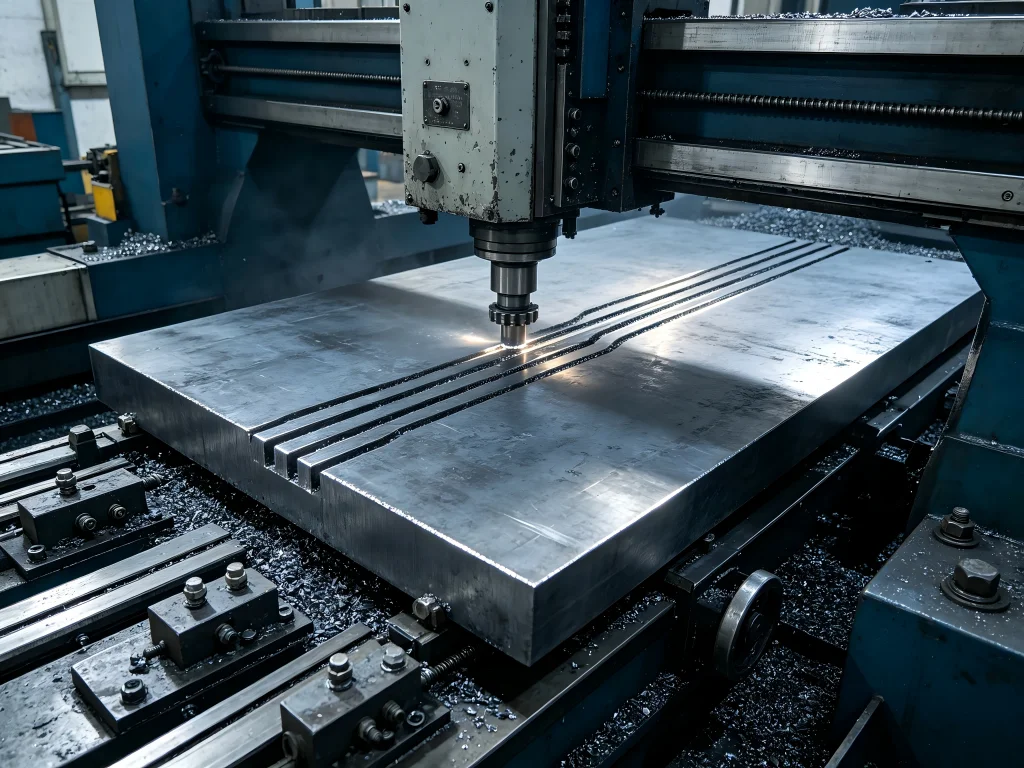
The Problem: Why Carbon Steel Machining Can Be a Nightmare
Let us start with a scenario that plays out in machine shops every day. A manufacturer receives an order for 5,000 precision shafts made from AISI 1045 medium carbon steel. The engineering team selects a reputable CNC shop, sends over the CAD files, and expects a smooth production run. Three weeks later, they receive a call: the project is behind schedule, tooling costs have blown the budget, and the surface finish on the first 200 parts does not meet specification.
What went wrong? The answer usually lies in one of several common pitfalls that plague machining carbon steel projects.
Pitfall 1: Misunderstanding Material Behavior
Carbon steel is not a single material—it is a family of alloys with vastly different machining characteristics. Low-carbon steels like 1018 are soft and ductile, producing long, stringy chips that are difficult to break and can cause “bird-nesting” around the cutting tool. Medium-carbon steels like 1045 offer better strength and chip control but require more cutting power and generate more heat. High-carbon steels provide excellent wear resistance but become brittle and increasingly difficult to machine. Choosing the wrong grade for your application—or failing to adjust your machining strategy accordingly—is a recipe for disaster.
Pitfall 2: Underestimating Tool Wear
One Reddit user recently shared their frustration: “I tried to run a batch of 1045 shafts on our old CNC lathe, and we went through three boxes of inserts in a single shift. The material just eats tools.” This is not an exaggeration. When machining carbon steel, crater wear is the normal tool failure mode—but if you do not manage cutting speeds, feed rates, and coolant delivery properly, overheating can cause unpredictable and catastrophic tool failure. As one machinist on Practical Machinist noted, “Low carbon/mild steel is your most versatile material… but you have to respect its limits”.
Pitfall 3: Ignoring Heat Treatment Requirements
Many engineers specify carbon steel parts without considering the heat treatment that may be required to achieve the desired mechanical properties. AISI 1045, for example, responds well to through-hardening and induction hardening—but if you machine the parts first and then heat-treat them, you may encounter distortion, dimensional changes, or surface cracking. On the other hand, if you heat-treat before machining, you are working with harder material that accelerates tool wear. Getting this sequence right requires careful planning and experience.
Pitfall 4: Comparing Apples to Oranges on Cost
Carbon steel is often chosen because it is more affordable than stainless steel—typically costing $500–800 per ton compared to $1,500–3,000+ for stainless. But the material cost is only part of the equation. If your machining process is inefficient, with high tooling costs, excessive scrap rates, and long cycle times, the total cost per part can quickly surpass what you would pay for a more expensive but easier-to-machine material. One industry source notes that carbon steel adds 30–50% over aluminum in machining cost, while stainless steel adds 100–150%. The key is optimizing the process, not just picking the cheapest raw material.
The Solution: A Systematic Approach to Machining Carbon Steel
The good news is that these problems are solvable. Machining carbon steel successfully comes down to three interconnected factors: material selection, process optimization, and partner capability. Let us examine each in detail.
Understanding the Carbon Steel Family
Before you can machine carbon steel effectively, you need to understand what you are working with. Carbon steel is categorized by carbon content, which directly influences machinability, strength, and heat treatment response.
Low Carbon Steel (Mild Steel)
Grades like AISI 1018 and A36 contain up to 0.25% carbon. These materials are soft, ductile, and highly weldable. They are the workhorses of general fabrication and structural applications. However, their low carbon content makes them “gummy” to machine—they produce long, continuous chips that can wrap around tools and fixtures. This makes automated, high-volume production challenging without proper chip-breaking strategies.
When machining mild steel, machinists often prefer coated carbide inserts with specialized chip-breaker geometries. The material’s softness means you can run higher speeds, but you must manage chip evacuation carefully to avoid production interruptions.
Medium Carbon Steel
AISI 1045 is the industry standard for medium carbon steel, with approximately 0.45% carbon content. This grade offers a significant leap in strength over low-carbon alternatives—tensile strength of approximately 570 MPa in its normalized state, nearly 30% higher than mild steel. It also responds well to heat treatment, allowing you to achieve surface hardness up to 55 HRC through induction hardening.
From a machinability perspective, 1045 is often preferred over the “stickier” low-carbon grades. It produces crisp, C-shaped chips that are easily evacuated from the cutting zone. The material is more rigid, making it less prone to vibration (chatter) during long-bed turning operations. With the right tooling—typically CVD-coated carbide inserts—you can achieve surface finishes of Ra 0.8 directly off the lathe.
However, 1045 requires more power to machine than 1018, and it generates more heat. Proper coolant delivery and rigid setups are essential to maintain tool life and dimensional accuracy.
High Carbon Steel
Grades with carbon content above 0.60% fall into the high carbon category. These materials provide excellent hardness and wear resistance but are more brittle and significantly harder to machine. They are typically used for applications like cutting tools, springs, and high-stress wear components.
When machining high carbon steel, you must reduce cutting speeds, use robust tooling with appropriate coatings, and often perform the machining in the annealed (softened) state before final heat treatment.
Free Machining Carbon Steel
Grades like AISI 1215 are specifically engineered for high-speed production. They contain added sulfur and phosphorus, which form microscopic manganese sulfide inclusions that act as internal lubricants and chip breakers. This significantly reduces cutting forces, lowers heat generation, and allows for “lights-out” manufacturing where the risk of tool failure or chip-related problems is nearly eliminated.
Free machining steels are rated with machinability indices of 70% to 220% compared to standard carbon steels. They are the go-to choice for high-volume turned parts like fasteners, fittings, and fluid power components.
Optimizing Cutting Parameters
Once you have selected the right grade, the next step is dialing in your cutting parameters. The table below provides recommended starting points for different carbon steel categories when using carbide tooling.
| Material Category | Example Grades | Cutting Speed (SFM) | Feed Rate (IPR) | Machinability Rating |
|---|---|---|---|---|
| Low Carbon Steel | 1018, A36 | 40-140 | 0.008-0.020 | ~65% |
| Medium Carbon Steel | 1045, C45 | 70-120 | 0.010-0.025 | ~55% |
| High Carbon Steel | 1060, 1095 | 65-100 | 0.008-0.018 | ~45% |
| Free Machining Steel | 1215, 11L17 | 100-150 | 0.012-0.030 | ~100%+ |
Sources: Open Oregon Pressbooks, Haas Automation
These are starting points, not absolute rules. As one CNC expert notes, “A methodical approach is best: start with recommended parameters from a reliable source, run a test cut, observe the results, and make small, incremental adjustments until the process is stable and efficient”.
When milling carbon steel, similar principles apply. Depth of cut for finishing operations typically ranges between 0.030 and 0.075 inches. The key is maintaining a balance between material removal rate and tool life—pushing too hard saves cycle time but increases tooling costs; being too conservative extends tool life but drives up per-part cost.
Managing Tool Wear and Heat
Tool wear is the single biggest cost driver in CNC carbon steel machining. Understanding the wear mechanisms and how to mitigate them is essential for profitable production.
Crater wear is the normal failure mode when machining carbon and alloy steels. It occurs on the rake face of the cutting tool, where the chip slides across the insert. The high temperatures and pressures in this zone cause the tool material to dissolve and erode over time. Crater wear is predictable and manageable—you can plan tool changes based on the number of parts produced.
Overheating, on the other hand, is an unpredictable failure mode that can ruin tools and parts in an instant. It occurs when cutting temperatures exceed the tool’s thermal limits, causing rapid degradation, edge chipping, or even catastrophic insert fracture. The solution is threefold:
- Improve coolant delivery: High-pressure coolant directed precisely at the cutting zone can dramatically reduce temperatures and flush away chips.
- Select appropriate tool coatings: Modern coatings like AlTiN and TiCN provide excellent heat and wear resistance.
- Adjust cutting parameters: Reducing speed or feed when you see signs of overheating can save the tool and the part.
One often-overlooked factor is the presence of mill scale on the raw material. Research has shown that mill scale significantly reduces tool life compared to machining the base material under otherwise identical conditions. The iron oxides in mill scale have microhardness values around 1030 DPH, making them highly abrasive. If you are machining hot-rolled carbon steel with mill scale intact, you may need to reduce cutting speeds or use more wear-resistant tooling.
Heat Treatment Considerations
Heat treatment adds another layer of complexity to machining carbon steel. The sequence of operations—whether you machine before or after heat treatment—has a profound impact on cost, quality, and lead time.
For medium carbon steels like 1045, the typical approach is to machine the part in the normalized or hot-rolled condition, then perform heat treatment to achieve the desired hardness, followed by finish grinding to achieve final dimensional tolerances. This sequence allows you to machine the material when it is relatively soft (reducing tool wear and cycle time) while still achieving the mechanical properties required for the application.
However, this approach requires careful planning. Heat treatment can cause distortion, so you must leave sufficient stock for post-heat-treatment grinding. Induction hardening is often preferred for shafts because it minimizes distortion compared to furnace quenching.
If welding is required, higher carbon steels present additional challenges. AISI 1045, for example, is susceptible to heat-affected zone cracking if cooled too quickly after welding. Pre-heating to 200°C–300°C is mandatory for structural welds, followed by controlled post-weld cooling.
Low-carbon steels like 1018 are much more forgiving in this regard. They can be welded using almost any standard process—MIG, TIG, or Stick—without significant risk of brittleness at the weld joint.
Making the Right Choice: Carbon Steel vs. Stainless Steel
A frequent question on machining forums is whether to choose carbon steel or stainless steel for a given application. The answer depends on your priorities.
Carbon steel wins on cost and machinability. Raw material costs are significantly lower—$500–800 per ton compared to $1,500–3,000+ for stainless. Carbon steel also machines faster and causes less tool wear, reducing overall production costs. As one Reddit user put it, “I machine mild steel all the time for prototypes—it’s affordable and forgives newbie mistakes”.
Stainless steel offers superior corrosion resistance and a more attractive appearance, but it comes with trade-offs. It is tougher on tools, requires slower cutting speeds, and is more prone to work hardening. As another machinist noted, “Stainless is a bit harder to machine because of the chromium oxide layer that makes it rust resistant”.
The choice ultimately comes down to your application requirements. If corrosion resistance is critical—for example, in food processing equipment or marine environments—stainless steel may be worth the extra cost. If strength, wear resistance, and cost-effectiveness are your primary concerns, carbon steel is the clear winner.
For applications in Malaysia and other tropical climates, corrosion is a legitimate concern. However, proper surface treatments—such as plating, painting, or oiling—can protect carbon steel components in most indoor and protected outdoor applications. The keyword carbon steel Malaysia often appears in searches from procurement professionals looking for local suppliers who understand these environmental considerations.
How to Choose the Right Carbon Steel Grade for Your CNC Project
Selecting the right grade is one of the most critical decisions you will make. The wrong choice can lead to part failure, excessive machining costs, or both. Here is a practical framework for making the decision:
Step 1: Define Your Application Requirements
Start by listing your part’s requirements. Think about hardness, flexibility, strength, wear resistance, and cost. Ask yourself:
- What loads will the part experience? Static, dynamic, or impact?
- Does the part need to resist wear? Will it slide against other surfaces?
- Will the part be welded? If so, weldability is a critical factor.
- Does the part require heat treatment? If so, which grades respond well to your chosen process?
- What is your production volume? High-volume runs favor free machining grades.
Step 2: Match Requirements to Carbon Steel Category
Once you understand your requirements, match them to the appropriate category:
- Low carbon steel (e.g., 1018): Choose this if you need excellent weldability, good formability, and moderate strength. Ideal for structural frames, brackets, and parts that will be welded extensively.
- Medium carbon steel (e.g., 1045): Choose this if you need higher strength, wear resistance, and the ability to heat-treat. Ideal for shafts, axles, gears, and hydraulic components.
- High carbon steel (e.g., 1060): Choose this only if wear resistance and hardness are paramount and you can accept reduced machinability. Ideal for cutting tools, springs, and high-stress wear components.
- Free machining steel (e.g., 1215): Choose this for high-volume production where machining speed and tool life are the primary concerns. Ideal for fasteners, fittings, and fluid power components.
Step 3: Consider the Full Cost Picture
Do not make the mistake of choosing the cheapest raw material without considering machining costs. A slightly more expensive grade that machines faster and with less tool wear may actually be more cost-effective in the long run. As one industry source notes, “The best choice is the one that meets your specific application’s requirements for strength, wear resistance, and cost”.
Why Partner with Jucheng Precision for Your Carbon Steel Machining Needs
Understanding the theory behind machining carbon steel is one thing; executing it consistently, at scale, with tight tolerances, is another entirely. This is where Jucheng Precision brings significant value to your supply chain.
Jucheng Precision operates as an IATF 16949 and ISO 13485 certified partner, with a manufacturing powerhouse that includes 150+ CNC machines (including 25+ 5-axis centers), 30+ sheet metal fabrication units, 50+ industrial 3D printing systems, and 35+ injection presses. This extensive capacity allows them to handle projects of any scale, from rapid prototypes to high-volume production runs.
When it comes to CNC carbon steel machining, Jucheng’s expertise is evident in their detailed understanding of material behavior. They process a wide range of carbon steel grades, including mild steel (1018, 1042, A36), medium carbon steel (1045, C45, EN8), and higher grades like EN16, EN24T, EN29, and EN39. For each grade, they apply optimized machining strategies that balance speed, quality, and tool life.
For AISI 1045 components, Jucheng offers specialized capabilities including precision turning with tight runout tolerances, through-hardening and induction hardening to achieve surface hardness up to 55 HRC, cylindrical grinding for H7/g6 fits, and controlled welding procedures to prevent heat-affected zone cracking. Their machinists prefer 1045 over “stickier” low-carbon grades because of its predictable chip fracturing and stable machining behavior.
For high-volume production, Jucheng leverages their fleet of high-speed Swiss lathes and automated turning centers to push free machining grades like 1215 to their limits, delivering exceptionally low-cost parts without sacrificing dimensional integrity. The predictable chip control of these materials allows for “lights-out” manufacturing, reducing labor costs and increasing throughput.
Beyond machining, Jucheng provides full material certifications with every batch, ensuring you are working against a known, certified baseline. Their 190+ skilled professionals, including 30+ senior engineers with 13+ years of experience, bring deep expertise to every project. This combination of equipment, expertise, and quality systems makes Jucheng a trusted partner for machining carbon steel components across automotive, hydraulic, industrial machinery, and other demanding sectors.
For customers searching for carbon steel Malaysia machining services, Jucheng offers the global quality standards and local responsiveness that procurement professionals require. Their integrated approach—from material selection and machining through heat treatment and finishing—simplifies the supply chain and reduces the coordination burden on your team.
Frequently Asked Questions About Machining Carbon Steel
1. Can you cut carbon steel with standard CNC tools?
Yes, you can cut carbon steel with standard CNC tools, but the specific tooling requirements depend on the grade. Low-carbon steels like 1018 can be machined with HSS or carbide tooling. Medium and high-carbon steels typically require carbide inserts with appropriate coatings (CVD or PVD) to withstand the higher cutting forces and temperatures. Free machining steels like 1215 are the easiest to cut and can be run at higher speeds with excellent tool life.
2. How do you cut carbon steel without ruining tools?
Cutting carbon steel without ruining tools requires attention to three factors: speed, feed, and coolant. Start with conservative parameters and adjust based on tool wear observations. Use coated carbide tooling appropriate for the material grade. Ensure adequate coolant delivery to the cutting zone to manage heat. And most importantly, do not let the tool dwell in the cut—interrupted cuts or dwell marks can cause rapid tool failure.
3. What is the difference between machining stainless steel vs carbon steel?
The primary differences are cost, machinability, and corrosion resistance. Carbon steel is less expensive, machines faster, and causes less tool wear, but it is susceptible to rust. Stainless steel offers superior corrosion resistance but is tougher on tools, requires slower cutting speeds, and is more prone to work hardening. The choice between them depends on whether corrosion resistance or cost-effectiveness is more important for your application.
4. Which carbon steel grade is easiest to machine?
Free machining grades like AISI 1215 are the easiest to machine. They contain added sulfur and phosphorus that act as chip breakers and lubricants, reducing cutting forces and extending tool life. Among standard grades, low-carbon steels like 1018 are easier to machine than medium or high-carbon steels, though they produce long, stringy chips that can be challenging to manage in automated production.
5. Is carbon steel machining more expensive than aluminum?
Yes, carbon steel machining is typically more expensive than aluminum machining. Industry sources indicate that carbon steel adds 30–50% over aluminum in machining cost. The higher cost reflects the increased cutting forces, tool wear, and power requirements associated with machining steel. However, carbon steel offers superior strength and wear resistance, making it the material of choice for many mechanical applications despite the higher machining cost.
6. What cutting speed should I use for machining carbon steel?
Cutting speeds vary by grade and tooling. For carbide tooling, recommended starting speeds are: low carbon steel 40–140 SFM, medium carbon steel 70–120 SFM, high carbon steel 65–100 SFM, and free machining steel 100–150 SFM. These are starting points—you may need to adjust based on your specific machine, tooling, and part geometry.
7. Can carbon steel be machined dry?
Some carbon steels can be machined dry, but it is not recommended for most production applications. Dry machining generates higher temperatures that accelerate tool wear and can affect part quality. Coolant is generally recommended to manage heat, flush chips, and improve surface finish. The exception is free machining steels, which generate less heat and may be suitable for dry machining in some applications.
8. How do I prevent rust on machined carbon steel parts?
Preventing rust on machined carbon steel parts requires surface protection. Options include oiling or applying rust-preventive coatings immediately after machining, plating (zinc, nickel, or chrome), painting, or powder coating. For parts that will be stored or shipped, use vapor corrosion inhibitors (VCI) packaging. The specific protection method depends on the application environment and the required surface finish.
Conclusion: Turning Carbon Steel Challenges into Competitive Advantage
Machining carbon steel presents real challenges—material variability, tool wear, heat management, and the need for careful process planning. But these challenges are not insurmountable. With the right material selection, optimized cutting parameters, and a knowledgeable machining partner, carbon steel can deliver exceptional performance at a competitive cost.
The key is to approach each project systematically. Understand the specific grade you are working with and its machinability characteristics. Select cutting parameters that balance material removal rate with tool life. Plan for heat treatment and finishing operations in the correct sequence. And choose a machining partner with the equipment, expertise, and quality systems to execute your project reliably.
Jucheng Precision brings all of these elements together. With 150+ CNC machines, deep expertise in carbon steel grades from 1018 to 1215 and beyond, and certifications including IATF 16949 and ISO 13485, they offer a one-stop solution for CNC carbon steel machining projects of any scale. Their integrated approach—from prototyping through production, including heat treatment and finishing—simplifies your supply chain and ensures consistent quality.
Whether you are milling carbon steel components for automotive applications, machining high carbon steel for wear-resistant tooling, or exploring free machining carbon steel for high-volume production, the principles in this guide will help you make informed decisions. And when you need a partner who can execute with precision, reliability, and cost-effectiveness, Jucheng Precision is ready to deliver.
Ready to discuss your next carbon steel machining project? Contact Jucheng Precision today to request a quote and experience the difference that expertise makes.