
UNJ and UN threads can share a nominal diameter and pitch without being equivalent. The UNJ system includes a controlled external-thread root radius and corresponding mating-clearance requirements. A successful trial assembly is therefore not enough to approve a UN component as a replacement for a specified UNJ component. Check the complete callouts, applicable standards, mating geometry and inspection evidence before authorizing a substitution.
This is a drawing-review problem as much as a machining problem. A purchasing description that retains only diameter and threads per inch can remove the very information that distinguishes the two thread systems.
The difference starts below the thread flanks
The external thread root is the valley between adjacent thread flanks. UNJ controls its rounded form rather than leaving the root as an incidental result of whichever tool happens to cut the flanks. The internal thread must provide the clearance required by that external geometry. This is why the distinction cannot be reduced to pitch alone.

A controlled root can be relevant to fatigue-sensitive designs, but the designation does not by itself establish the life of an assembled joint. Material condition, surface condition, preload, load history and the rest of the joint design remain relevant. Do not turn a thread-form comparison into a claim that any UNJ fastener will outperform any UN fastener in every application.
UNR is also not simply another spelling of UNJ. A rounded root described under a different thread system does not automatically satisfy the required UNJ limits. Identify the actual standard and class instead of translating every mention of a rounded root into the same requirement.
The imperial-thread machining page covers the service context for these thread families. Here, the issue is whether the proposed part preserves the engineering definition of the joint.
Review the mating pair, not one designation
Write down both complete thread callouts before deciding whether a proposed pair is acceptable. Include nominal size, pitch or series, class, internal or external designation, and the governing specification. Then identify which component is being changed. Substituting an external threaded shaft raises a different review from changing its internally threaded mating part.
Do not assume compatibility is symmetrical. A combination that can assemble in one direction of substitution does not establish that the reverse combination has adequate clearance. Nor does freedom from interference establish that the specified root form, strength assumptions or inspection requirements have been retained.
| Evidence available | What it helps establish | What remains unresolved |
|---|---|---|
| Matching nominal diameter and pitch | The intended basic thread size and spacing | Root form, class, clearances and specification compliance |
| A trial assembly | That the tested pair can engage under the trial conditions | Interchangeability across the allowed limits and conformance of each part |
| Inspection to the specified thread system | Evidence for the characteristics actually evaluated | Any drawing requirements outside that inspection scope |
A replacement also needs a defined engagement length and shoulder relationship. If the part bottoms on incomplete threads before reaching its intended seat, comparing thread designations has not addressed the whole assembly problem. Keep the functional interfaces visible during the review.
Carry the requirement through tooling and finishing
The manufacturing route must preserve the specified form at the point where the part is accepted. On an external thread, tool geometry and the resulting root need to be considered together. For an internal thread, the prepared hole and finished thread geometry must support the required mating clearance. Confirm the tooling against the complete requirement rather than relying on a tool description that lists only a familiar thread size.
This review belongs early in planning for a CNC-turned component. It can affect feature access, the sequence around an adjacent shoulder and what must remain measurable after machining. It is not evidence that a particular supplier holds every specialist tool or gage; that capability must be confirmed separately.
Where plating or another finish is specified, identify whether the thread requirement applies before or after that operation and how any allowance is controlled. A conforming prefinish measurement cannot automatically serve as final acceptance for a geometry that has subsequently changed. The drawing and purchase requirements should resolve that stage explicitly.
Separate assembly evidence from inspection evidence
A functional gage, a measurement of pitch diameter and an assessment of root form answer different questions. The inspection plan should state which characteristics are covered by each method and which specification controls the acceptance criteria. Avoid treating a single passing check as proof of every element of the thread.
For instance, dimensional evidence about pitch diameter does not, on its own, document the external root radius. Likewise, an image of the root does not establish every functional requirement of the thread. The existing discussion of thread pitch-diameter inspection explains why numerical and functional checks should not be treated as interchangeable.
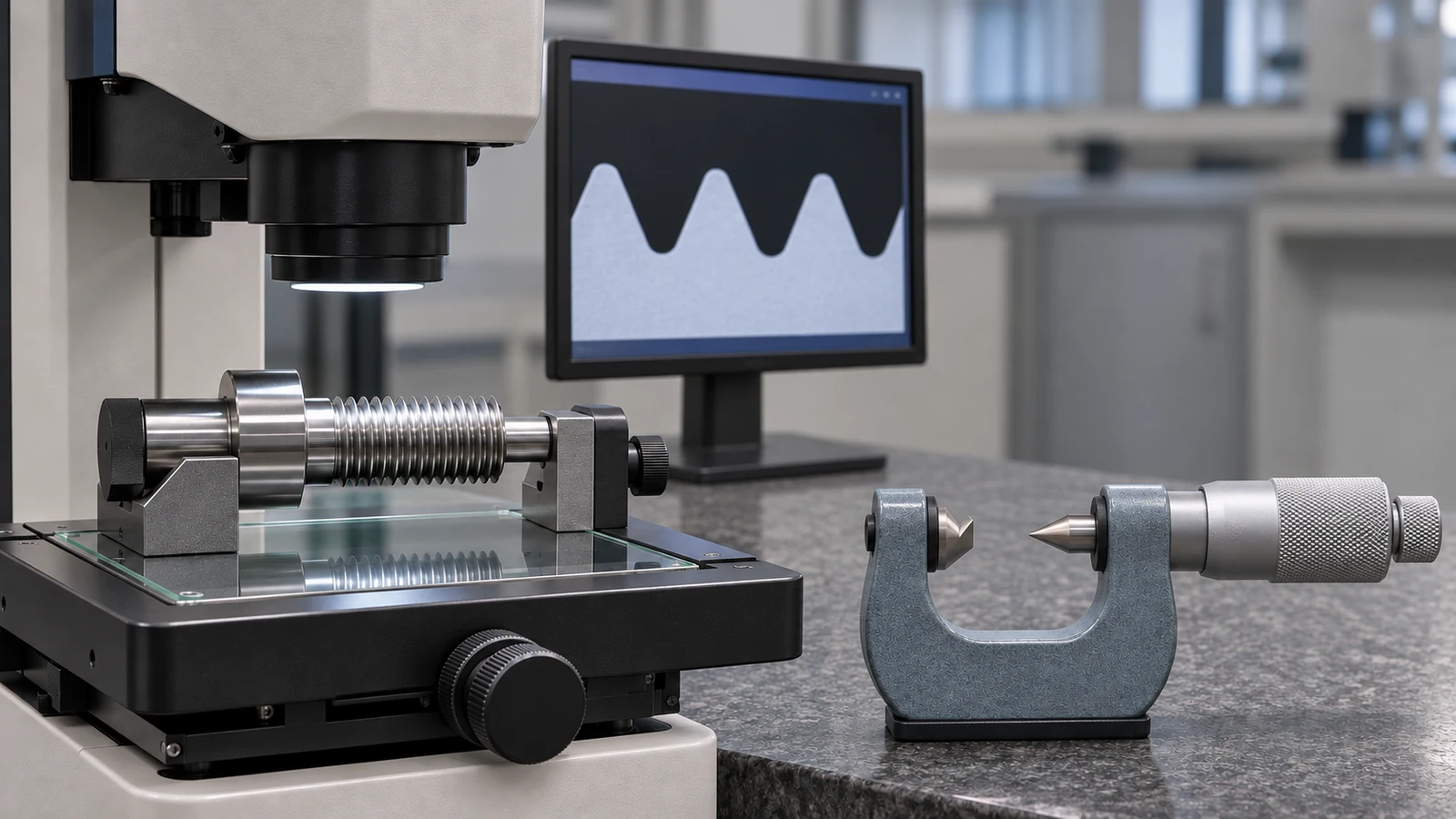
Ask for an inspection record that identifies the part revision, thread callout, method and acceptance basis. Where the root cannot be assessed by the routine check, resolve the additional method before the batch is made. The need is for traceable evidence, not a generic statement that the threads were checked.
Close the substitution review
Approve a substitution only after the responsible design authority has reviewed the mating geometry and the requirements that the original designation carried. Record the approved change in the controlled documentation so purchasing, manufacturing and inspection all use the same definition.
If the proposal remains “same diameter, same pitch, and it screws in,” the review is incomplete. Those observations are useful starting points, but they do not establish UNJ and UN equivalence.