
+86-188-7042-1176
project@jcproto.com
Mon-Fri: 8am-6pm (GMT+8)
EN
ISO 9001:2015 Certified
Imperial Threads
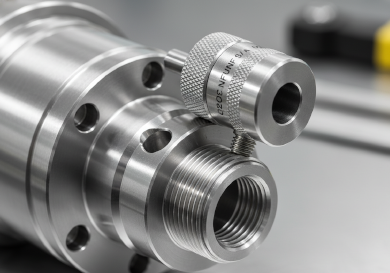
The Unified Thread Standard (UTS) remains the backbone of the North American engineering landscape, particularly dominating the Aerospace and Oil & Gas sectors. Jucheng Precision bridges the gap for global clients by maintaining a comprehensive inventory of imperial tooling and gauges, covering the full spectrum from Coarse (UNC) to Extra-Fine (UNEF) series. Unlike standard fasteners, precision CNC machined threads require strict adherence to ASME B1.1 specifications regarding pitch diameter and flank angles. We specialize in achieving specific thread classes, ensuring that whether you require a standard Class 2B fit for general assembly or a tight-tolerance Class 3B fit for safety-critical flight hardware, your components will assemble perfectly every time.
Key Specifications
| Specification | Technical Range | Note |
|---|---|---|
| Thread Range | #0-80 to 6.0 inches | Small instrument screws to large pipes |
| Standard Profile | ASME B1.1 (60° V-Thread) | Measured in TPI (Threads Per Inch) |
| Tolerance Classes | 1A/1B, 2A/2B, 3A/3B | 3A/3B is tightest (Aerospace) |
| Series | UNC (Coarse), UNF (Fine), UNEF (Extra Fine) | UNJ (Controlled Root Radius) |
| Methods | Single Point, Tapping, Thread Milling | Depends on thread size |
| Validation | Go/No-Go Ring & Plug Gauges | System 21 or 22 gauging |
Imperial Thread Series
| Series | Description | Key Benefits & Applications |
|---|---|---|
| UNC (Unified Coarse) | The most common general-purpose thread. Has fewer threads per inch (e.g., 1/4″-20). | Benefit: Fast assembly, less cross-threading, tolerant of minor damage. App: General construction, machinery housings, brackets. |
| UNF (Unified Fine) | More threads per inch (e.g., 1/4″-28). Larger tensile stress area. | Benefit: Stronger than UNC, better for fine adjustment, resists vibration loosening. App: Automotive drivetrain, precision instruments. |
| UNJ (Aerospace) | A variation of UN threads with a larger, controlled root radius to reduce stress concentration. | Benefit: Maximizes fatigue strength for critical flight parts. App: Aerospace bolts, engine components (AS8879 standard). |
Design Guidelines for Imperial Threads
Class of Fit (Tolerance):
Class 2A/2B: The industrial standard. Allows for plating buildup and easy assembly.
Class 3A/3B: Zero clearance fit. Used for high-precision applications. Tip: Do not specify Class 3 if you plan to plate the part heavily, or the screw won’t fit.
Plating Allowance:
Imperial threads are often plated (Zinc/Cadmium). Plating adds thickness (4x the plating thickness on the pitch diameter). Tip: We machine “pre-plate” threads slightly undersized (external) or oversized (internal) to accommodate the coating.
TPI vs. Pitch:
Remember that Imperial threads are defined by “Threads Per Inch” (TPI), not the distance between threads. A higher number means a finer thread (opposite of metric).
UNJ Root Radius:
If designing for Aerospace, ensure you specify UNJ (e.g., UNJF). This requires us to use specialized inserts with a larger nose radius. A standard UN tool will create a stress riser that can fail certification.
Industry Applications
Aerospace & Defense
Almost exclusively uses Imperial threads (UNF/UNJ) due to legacy standards (Mil-Spec/NAS) and strict fatigue requirements.
Oil & Gas
Drilling equipment and valves often utilize large diameter Coarse (UNC) or special 8-Thread Series (8-UN) for heavy-duty connections.
North American Automotive
While modern cars are metric, the custom car, racing, and restoration markets rely heavily on Imperial fasteners.
Semiconductor Equipment
Many US-designed vacuum chambers and wafer handling robots utilize Unified threads for component mounting.