
Short answer: before setting up 17-7 PH stainless steel machining, confirm whether the material is supplied in Condition A, a transformed condition, or a finished age-hardened condition. The same nominal grade can behave differently as its condition changes. A plan for a spring-like or thin section should begin with the part’s required final properties and the governing heat-treatment specification—not a generic “PH stainless” cutting chart.
17-7 PH is often associated with formed spring parts, but CNC work can involve machined interfaces, seats, holes, or profiles. The key process question is where machining sits relative to forming and aging, and which dimensions must survive that sequence.
The condition is part of the machining plan
17-7 PH is a semi-austenitic precipitation-hardening stainless steel. Its processing route can include solution treatment, conditioning or transformation, and aging; available routes and resulting properties depend on the product form and specification. The material’s machinability therefore cannot be inferred from the grade name alone. Ask for the full condition, product form, specification, and certificate before selecting tooling or deciding whether to machine before or after age hardening.
For 17-7 PH stainless steel machining, the material condition should be treated as a controlled input, just like stock size or datum location. A change in condition can change cutting forces and the amount of distortion risk. The site’s stainless steel materials overview is a parent reference; the supplied product documentation and customer specification govern the actual route.
Choose the sequence from the final part geometry
Start with the final interfaces: mounting face, pivot hole, spring seat, locating slot, or sealing surface. Then decide whether rough machining, forming, heat treatment, and finish machining can be arranged without losing the reference features. Parts that require forming may need machining allowances or locating features that survive forming. Parts machined from bar or plate may instead need a stable datum strategy before the condition changes.
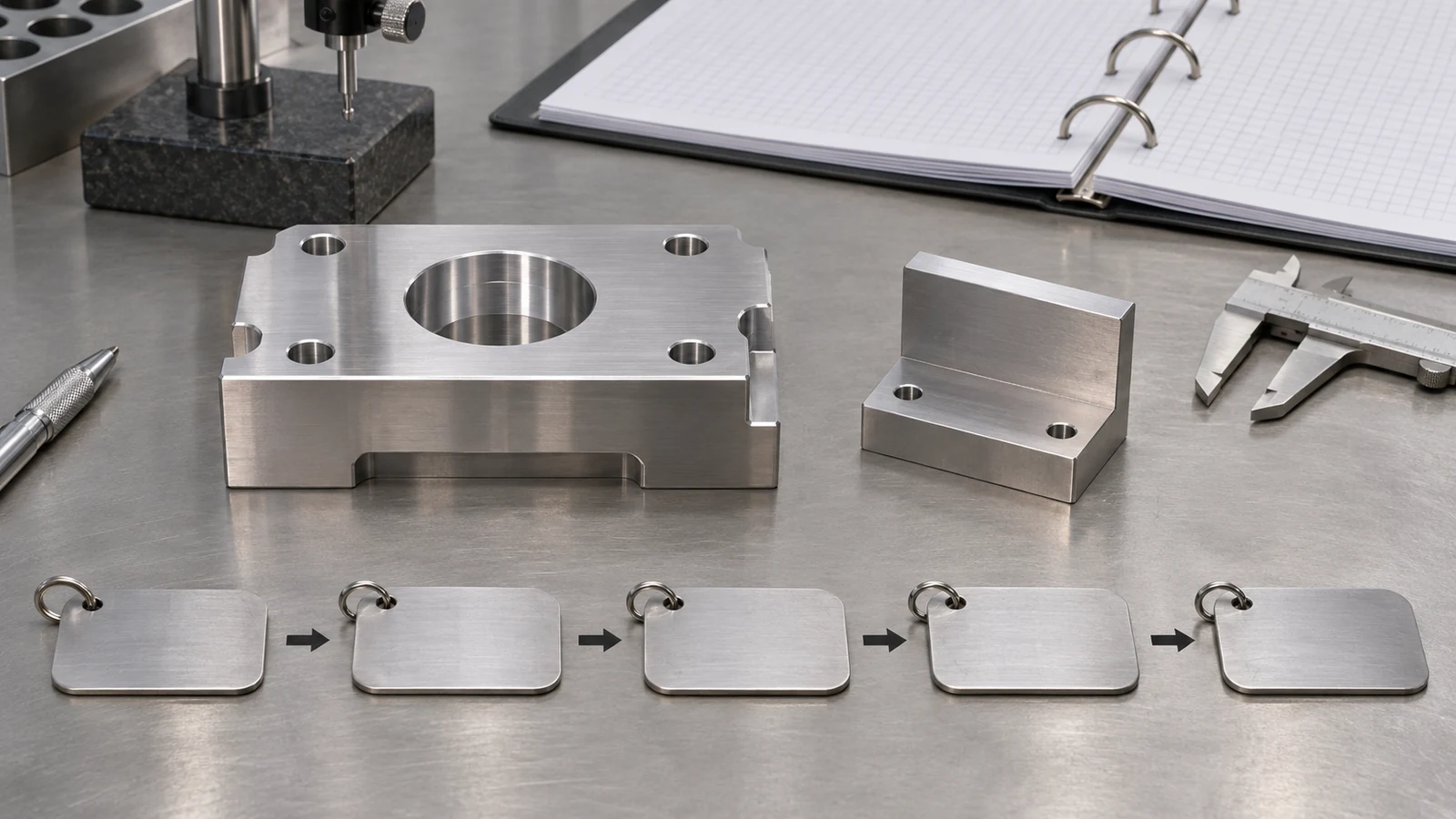
A useful planning table is below. It does not prescribe one universal order; it identifies the decision that must be settled for each feature.
| Feature or requirement | Sequence question | Drawing / process evidence |
|---|---|---|
| Spring profile or formed wall | Does forming occur before final machine datums? | Formed-state reference and inspection points |
| Mounting or pivot interface | Must the hole or face be finished after aging? | Datum relationship and final condition |
| Critical flat or slot | Could asymmetric removal release stress? | Free-state inspection requirement |
| Corrosion-sensitive surface | Is a post-process finish specified? | Surface condition and masking boundary |
When aging or a transformation step is required, coordinate the timing with the material supplier or qualified heat treater. The CNC supplier should not infer a heat-treatment cycle from a shorthand note. Link the route to the drawing specification and record which dimensions are inspected before and after the condition change.
Protect thin webs and spring interfaces
Thin sections can deflect under fixture pressure and tool load, then spring back after release. Use support close to the cutting zone, keep the clamping force only as high as needed, and avoid using a delicate functional wall as a datum unless the drawing says it is one. If opposite faces or slots are machined, consider a balanced sequence so one side is not fully relieved while the other still carries stock.
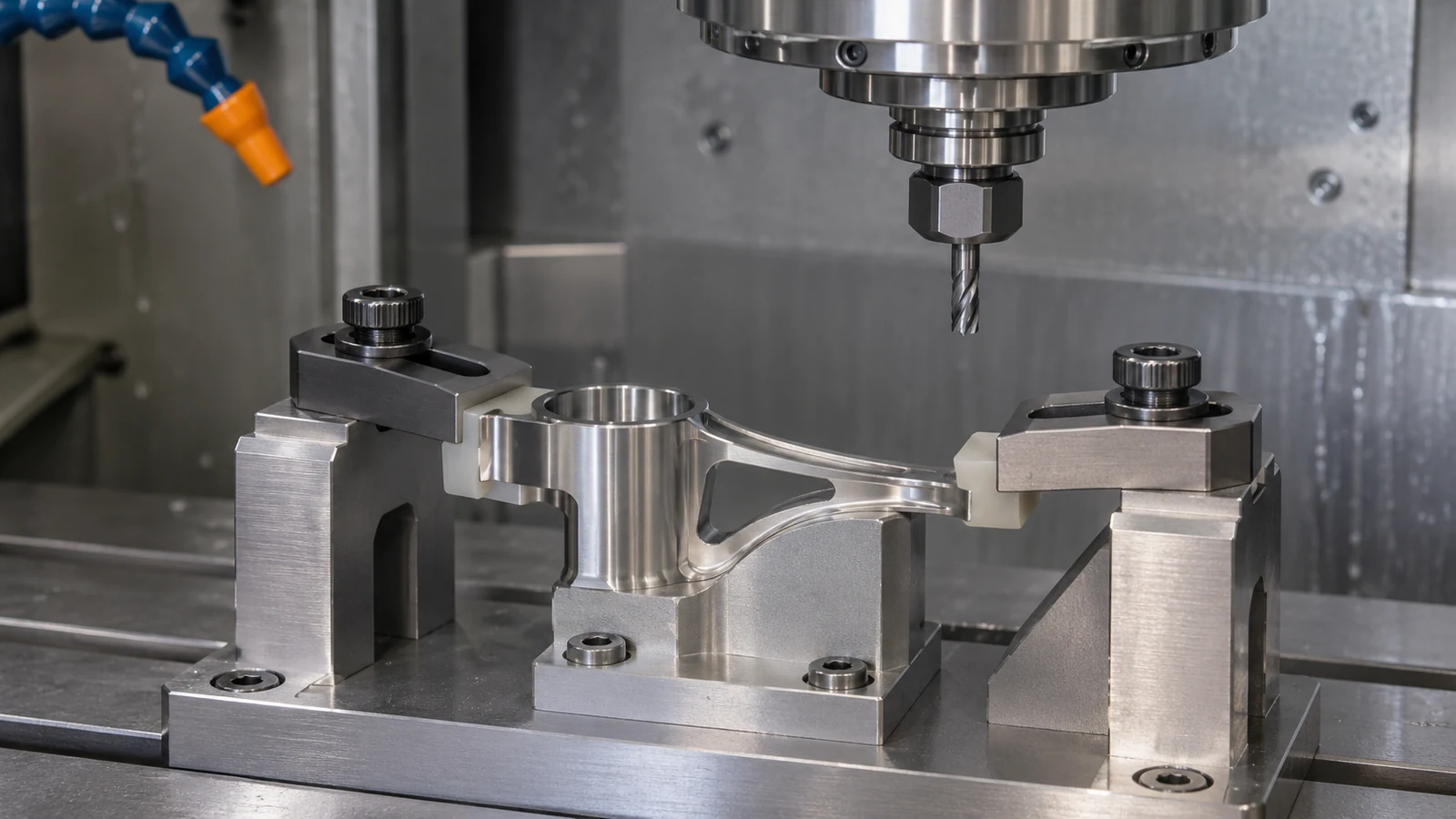
Small holes, slots, and edge breaks on spring-like features deserve explicit burr and edge-condition requirements. A sharp edge may initiate a crack or alter contact; a heavy break can change the working geometry. Put the functional edge, radius, and deburring boundary on the drawing rather than expecting an operator to decide how much material can be removed.
Separate machining finish from functional finish
Surface finish, passivation, and heat treatment solve different problems. A visually smooth machined surface does not establish corrosion performance, and passivation does not correct a dimensional error. If the part receives a surface treatment, define which dimensions are measured before and after it and whether masking is required on bearing, contact, or electrical interfaces.
For a sequence that includes a thermal process, the work order should identify the authorized specification and the party responsible for the treatment. The site’s heat-treatment capability page can orient the process discussion, but it is not a substitute for confirming the actual supplier, scope, or customer flow-down requirements.
Resolve condition and inspection on the drawing
State the exact 17-7 PH product condition and governing material specification. Identify the required final heat-treatment condition, the functional datums, and which dimensions are critical before and after treatment. If the part is formed, show the formed reference and permitted machining stock. If distortion is sensitive, specify a free-state inspection method and the support condition used during measurement.
This makes 17-7 PH stainless steel machining a sequence-planning problem rather than a material-name guess. It also gives the buyer a way to compare quotes: the supplier can identify which operations happen in-house, which depend on an outside processor, and what evidence accompanies the finished part without implying that every supplier controls the full thermal route.