
CNC-Bearbeitung wird oft als universelle Lösung für Präzisionsteile dargestellt, doch die beste Fertigungswahl hängt von Geometrie, Material, Stückzahl, Leistung, Zeitplan und Gesamtkosten ab. CNC kann präzise, wiederholbare Komponenten ohne spezielles Formwerkzeug liefern, hat jedoch auch Grenzen: Werkzeuge benötigen physischen Zugang, Material wird abgetragen statt umgeformt, komplexe Aufspannungen können teuer sein, und Produkte in hohen Stückzahlen benötigen möglicherweise irgendwann ein anderes Verfahren. Dieser ausgewogene Leitfaden hilft Ingenieuren und Einkäufern zu entscheiden, wo CNC Mehrwert schafft und wo sie Kompromisse mit sich bringt.
Beginnen Sie mit der Aufgabe, nicht mit der Technologie
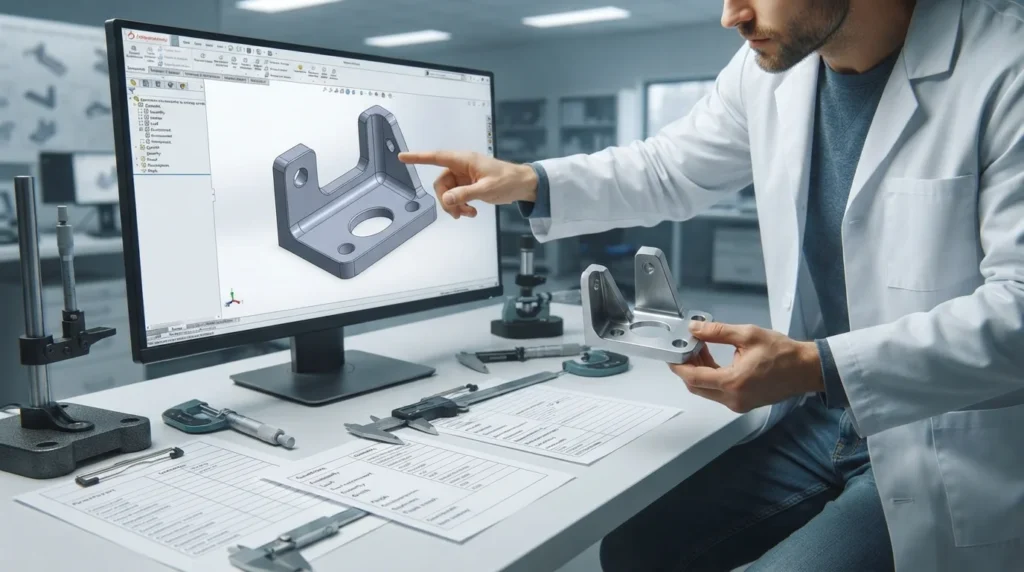
| Projektanforderung | Warum CNC passen könnte | Was noch geprüft werden muss |
|---|---|---|
| Funktionsprototyp | Normalerweise ist keine spezielle Form erforderlich, und das Teil kann das ausgewählte Material repräsentieren | Geometriezugang, Prototypenkosten und ob der endgültige Prozess anders reagiert |
| Geringes oder mittleres Volumen | Digitale Programmierung und Vorrichtungen können wechselnde Designs und moderate Stückzahlen unterstützen | Rüstzuweisung, Zykluszeit und ob ein Umformprozess später wirtschaftlich wird |
| Enge funktionale Schnittstellen | Kontrollierte Werkzeugwege und geplante Inspektion können Präzisionsmerkmale unterstützen | Bezüge, Materialverhalten, thermische Stabilität und Messmethode |
| Häufige Änderungen | Digitale Programme können überarbeitet werden, ohne ein spezielles Umformwerkzeug neu zu bauen | Revisionskontrolle, Neuprogrammierung, Vorrichtungsänderungen und Erstmusterprüfung |
Zum Prozess selbst siehe die Website von Leitfaden zum CNC-Bearbeitungsprozess. Die folgenden Vorteile und Einschränkungen sollten vor dem Hintergrund der konkreten Produktentscheidung gelesen werden.
Wo CNC-Bearbeitung Mehrwert schafft
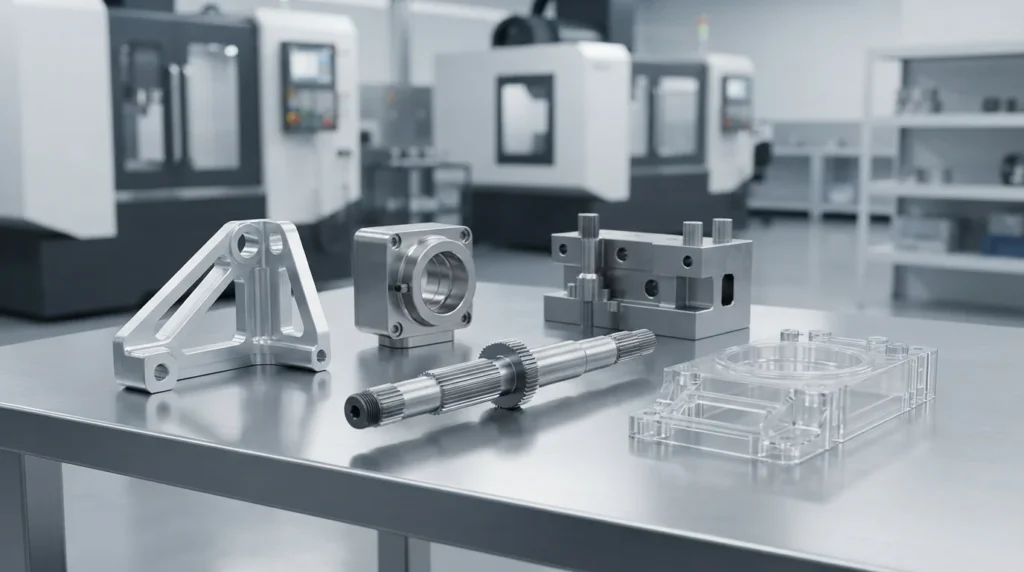
CNC-Bearbeitung kann Teile aus vielen Metall- und technischen Kunststofffamilien herstellen, sodass das Konstruktionsteam das Materialverhalten für Belastung, Gewicht, Verschleiß, Wärme, Korrosion, elektrische Funktion oder Aussehen auswählen kann. Der Prozess kann auch eine breite Palette prismatischer, rotationssymmetrischer und konturierter Geometrien bewältigen, solange Werkzeuge und Vorrichtungen die Merkmale erreichen können.
2. Wiederholbare digitale Anweisungen
Sobald ein Prozess überprüft und kontrolliert ist, können digitale Programme und dokumentierte Rüstvorgänge eine wiederholbare Produktion unterstützen. Wiederholbarkeit ist wertvoll für Baugruppen, Ersatzteile, Engineering-Aufbauten und Produkte, deren Abmessungen über eine Charge hinweg konsistent bleiben müssen.
3. Geringer Aufwand für spezielles Werkzeug
Anders als bei Prozessen, die vor dem ersten Teil eine spezielle Form oder ein Gesenk erfordern, beginnt CNC oft mit Rohtmaterial, Werkzeugen, Werkstückaufnahme und einer programmierten Route. Dies kann es für Prototypen, kundenspezifische Komponenten und die frühe Produktion attraktiv machen, wenn sich das Design noch ändert.
4. Nützliches Engineering-Feedback
Ein CNC-Zulieferer kann Probleme mit dem Werkzeugzugang, tiefe Taschen, dünne Wände, schwierige Bezüge, Toleranzkonflikte und Bearbeitungsrisiken vor der Produktion identifizieren. Dieses Feedback kann das Design verbessern, solange Änderungen noch weniger kostspielig sind.
Wo CNC-Bearbeitung an ihre Grenzen stößt
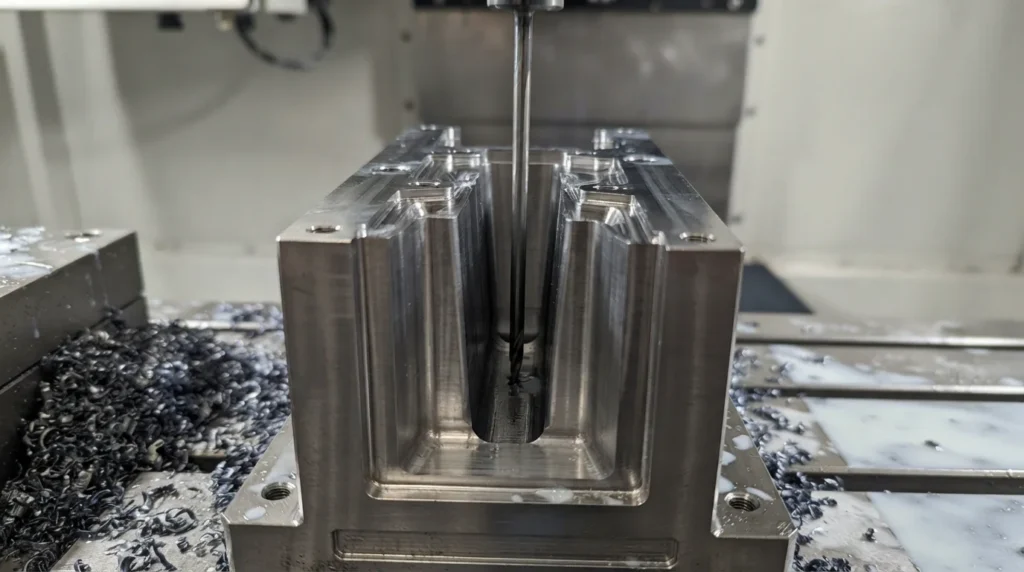
- Werkzeugzugang: geschlossene Hohlräume, starke Hinterschneidungen, tiefe enge Taschen und scharfe Innenkanten können spezielle Werkzeuge, mehrere Aufspannungen oder einen anderen Prozess erfordern.
- Materialverschwendung: ein aus einem großen Block geschnittenes Teil kann erhebliche Materialabtragung erfordern, was Zeit, Späne und Ertragskosten verursacht.
- Rüstaufwand: über viele Flächen verteilte Merkmale können Umpositionierung, Bezugsübertragung, Antastung und zusätzliche Verifizierung erfordern.
- Flexible features: thin walls, ribs, and plastic sections can deflect during cutting or measurement and may need careful support.
- High-volume economics: programming and setup may be less competitive than a forming process when demand is stable and volume is high enough to amortize tooling.
- Process dependence: tight tolerances, special finishes, difficult materials, and detailed reports can add time and cost even when the geometry is technically possible.
A limitation does not automatically mean “cannot make.” It may mean “requires a different route, a revised feature, a larger budget, or a more explicit acceptance plan.”
Stückzahl, Werkzeuge und die Break-Even-Frage
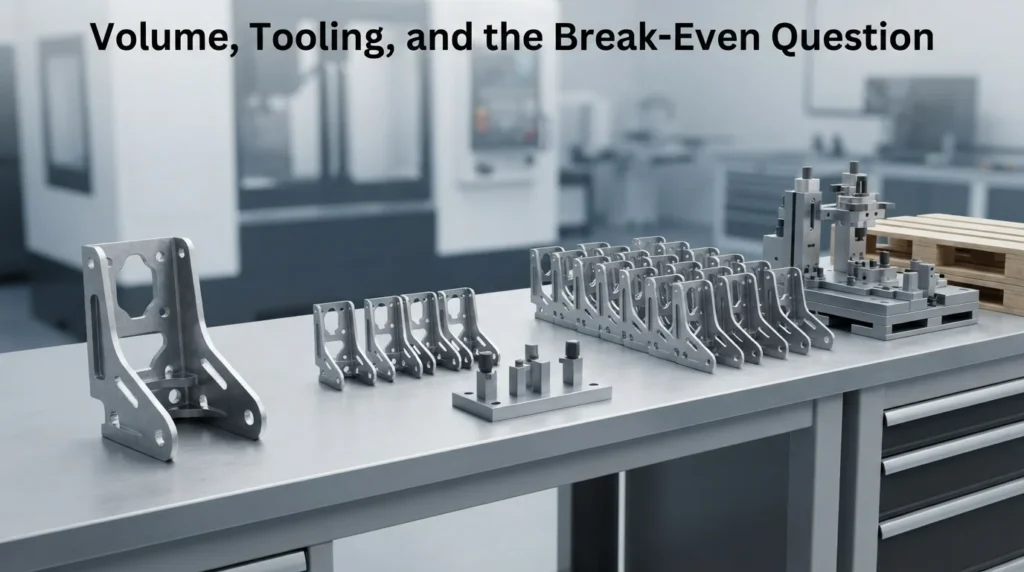
| Frage | CNC advantage | Potential trade-off |
|---|---|---|
| Will the design change? | Program and fixture changes may be more flexible than new dedicated tooling | Each revision still needs engineering review and first-part verification |
| Is the quantity uncertain? | Avoids committing early to a large fixed tooling investment | Unit cost may remain higher than a mature high-volume route |
| Are parts highly customized? | Digital manufacturing supports part-to-part variation | Programming, setup, and inspection can be repeated for each variant |
Kompromisse bei Geometrie und Material
CNC design decisions are connected. A material chosen for heat or wear may require different tools and cutting strategies. A compact aesthetic shape may create deep pockets or poor access. A thin lightweight structure may need more support and a different inspection sequence.
Design for accessible cutting
Consider standard tool diameters, internal radii, pocket depth-to-width ratio, wall thickness, clamping surfaces, and the number of orientations. These changes can preserve function while reducing setup and toolpath complexity.
Choose material for service, not just machining
A free-cutting material may be easy to machine but unsuitable for load, temperature, wear, chemicals, or dimensional stability. Conversely, a more difficult material may be justified by its service performance. Compare the full life-cycle risk, not only the cutting rate. The Leitfaden zur Werkstoffauswahl für CNC provides a requirement-first framework.
Präzision ist ein Prozess, kein Versprechen
CNC’s accuracy and repeatability are valuable, but they are not automatic outcomes of the word “CNC.” Machine condition, thermal state, tool wear, workholding, material behavior, finishing, datums, and inspection all influence the result. A responsible evaluation connects the drawing requirement to a process and a measurement method.
For tight interfaces, define what is critical, which datum reference frame applies, whether dimensions are measured before or after finishing, and what inspection evidence is needed. Use the site’s Qualitätsinformationen as a starting point for the quality discussion, while keeping the specific acceptance criteria in the controlled drawing and RFQ.
Wann ein anderer Fertigungsweg besser passen könnte
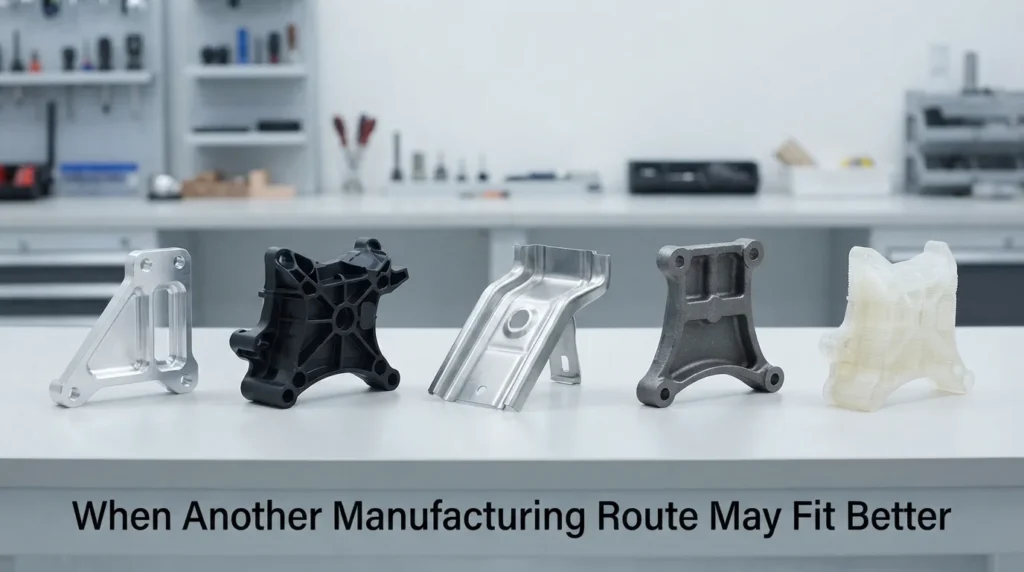
The comparison should include total tooling, design freedom, material properties, surface finish, tolerance, lead time, inspection, part price, revision cost, and supply risk. No alternative wins on one metric alone.
Eine praktische Auswahl-Checkliste
- Define the part’s function, environment, load, temperature, wear, and appearance.
- Record material, quantity, revision frequency, target schedule, and required evidence.
- Check tool access, internal radii, wall thickness, deep features, workholding, and setup count.
- Separate general dimensions from critical fits, datums, surfaces, and inspection features.
- Estimate the total route: programming, setup, stock, cutting, finishing, inspection, packaging, and logistics.
- Compare CNC with alternatives using the same functional and commercial assumptions.
- Ask a supplier for DFM feedback before locking the design or selecting a process.
If the project’s geometry, material, quantity, and quality requirements are ready, submit them through the CNC-Bearbeitungsangebot-Workflow for a route-specific review.
FAQs zu Vor- und Nachteilen der CNC-Bearbeitung
What are the main advantages of CNC machining?
CNC can provide digital repeatability, material flexibility, accurate functional features, low dedicated-tooling commitment, and useful support for prototypes, custom parts, and low-to-medium production. The actual benefit depends on geometry, material, quantity, and process control.
What are the main disadvantages of CNC machining?
Common trade-offs include material waste, tool-access limits, setup and programming cost, sensitivity to thin or flexible features, and reduced competitiveness for some very high-volume products. Tight finishing and inspection requirements can add more time and cost.
Is CNC machining good for prototypes?
It can be a strong option when the prototype needs the selected production material, functional interfaces, realistic strength, or a quick design revision cycle. The team should still check whether the eventual production process will introduce different shrinkage, texture, or material behavior.
Is CNC machining economical for high-volume production?
It can be, especially for complex or customized parts, but the answer depends on cycle time, setup, material yield, quantity, and alternatives. As volume becomes stable and high, compare CNC with processes whose tooling cost can be spread across the forecast demand.
How do I decide whether CNC is right for my part?
Compare function, geometry, material, tolerance, finish, quantity, schedule, inspection, tooling, and total cost. Ask a supplier to review tool access, setups, material behavior, and quality risks before committing to the route.