
CNC-Bearbeitung kommt in vielen Branchen zum Einsatz, doch ein Branchenname allein erklärt nicht, warum das Verfahren geeignet ist. Die entscheidendere Frage ist, was das Teil leisten muss: Last tragen, eine Baugruppe positionieren, ein Fluid steuern, Wärme übertragen, Verschleiß überstehen, leicht bleiben oder eine schnelle Design-Iteration unterstützen. Dieser Leitfaden ordnet gängige CNC-Anwendungen Teilfunktionen, typischen technischen Anforderungen und den Informationen zu, die ein Käufer vor der Angebotsanfrage bereitstellen sollte.
Das Verfahren auf die Aufgabe des Teils abstimmen
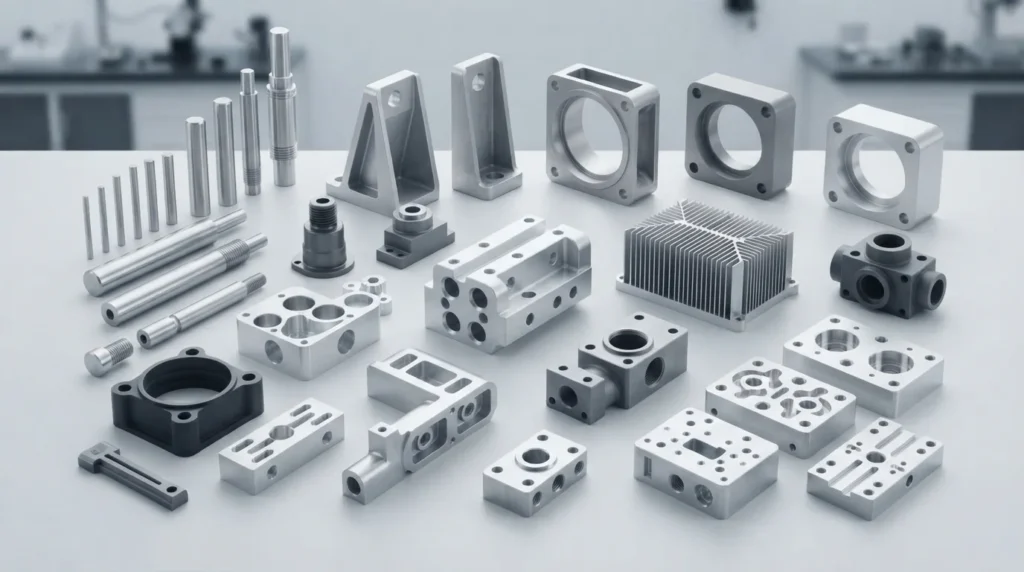
| Aufgabe des Teils | Zu bewertender CNC-Nutzen | Erste technische Frage |
|---|---|---|
| Positionieren, ausrichten oder montieren | Kontrollierte Bezugselemente, Bohrungen, Flächen, Passungen und wiederholbare Geometrie | Welche Merkmale steuern tatsächlich die Montage? |
| Last tragen oder Verschleiß widerstehen | Materialflexibilität und bearbeitete Schnittstellen | Welche Last, Kontakt, Temperatur und Lebensdauer müssen unterstützt werden? |
| Fluid oder Wärme steuern | Bearbeitete Kanäle, Dichtflächen, Kanäle und thermische Oberflächen | Welche Anforderung an Leckage, Sauberkeit, Rauheit oder Wärmeübertragung gilt? |
| Ein Design schnell iterieren | Digitale Revisionsflexibilität ohne spezielle Umformwerkzeuge | Wird der Prototyp das endgültige Material und die Funktion repräsentieren? |
Die Seite der Website Leitfaden zum CNC-Bearbeitungsprozess liefert den Fertigungskontext; die Anwendung bestimmt, welchen Anforderungen Priorität zukommt.
Luft- und Raumfahrt sowie Hochleistungskomponenten
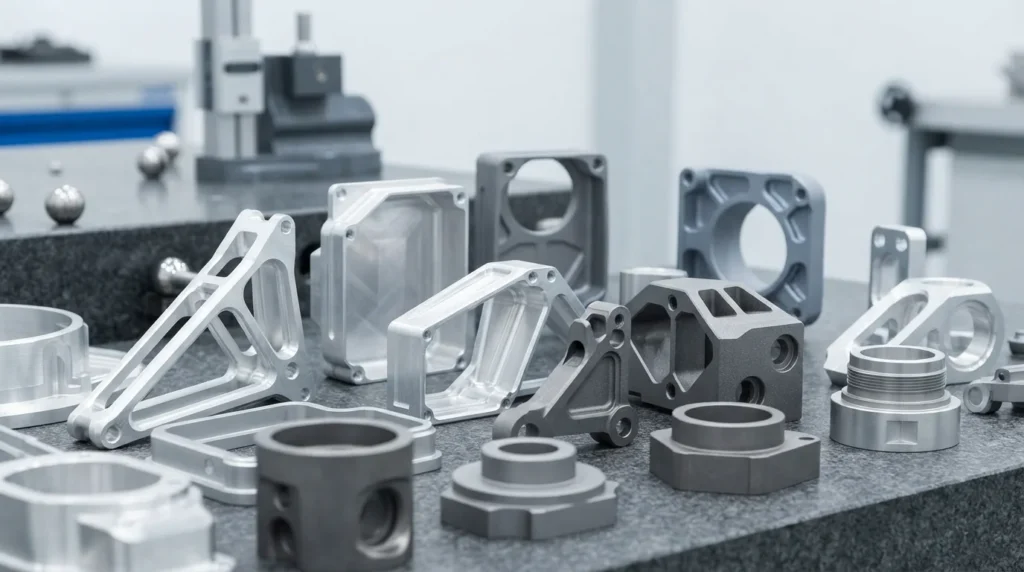
Worauf sollte sich die technische Überprüfung konzentrieren?
- Werkstoffgüte, Zustand, Rückverfolgbarkeit, Wärmebehandlung und zulässige Substitutionen.
- Bezugsstruktur, Lochbilder, Profil, Wandstärke, Werkzeugzugang und Verzugsrisiko.
- Oberflächenintegrität, Gratkontrolle, Kantenbrüche, Sauberkeit, Kennzeichnung und Verpackung.
- Erforderlicher Erstmusterumfang, Prüfumfang, Dokumentationsumfang und Änderungskontrollumfang.
Ein Anwendungslabel begründet nicht automatisch eine Zertifizierungs- oder Konformitätsaussage. Der Käufer sollte die Kunden- und regulatorischen Anforderungen angeben, die tatsächlich für das Teil gelten.
Medizin- und Laborgeräte
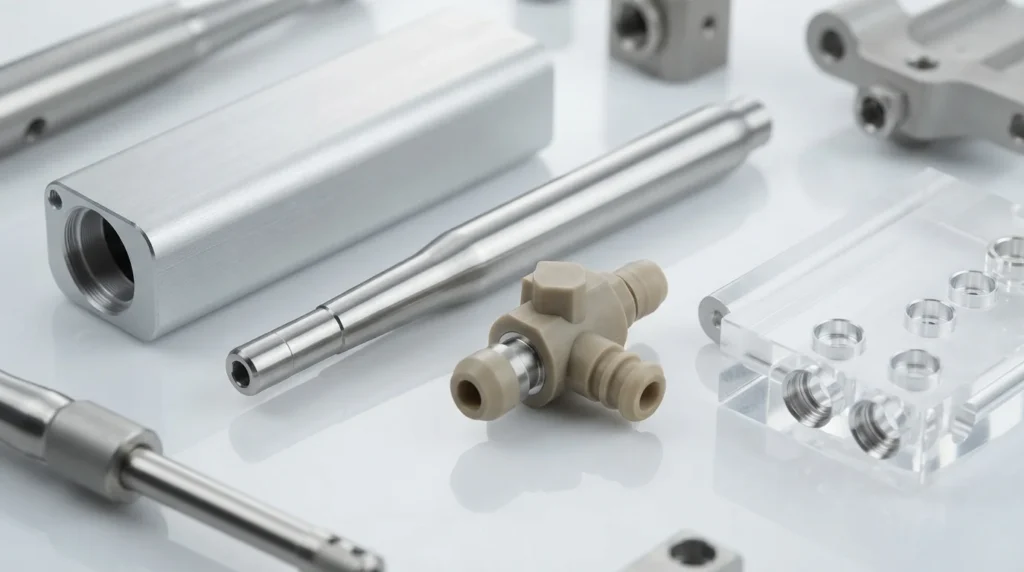
Betrachten Sie Reinigungsfähigkeit nicht als kosmetische Oberfläche
Ecken, Nuten, Grate, Rauheit, eingeschlossene Medien, Beschichtungsverträglichkeit und Verpackung können die Reinigung und Verwendung beeinflussen. Identifizieren Sie Kontaktflächen, Reinigungs- oder Sterilisationsbedingungen, Materialeinschränkungen, Oberflächenanforderungen und Prüfnachweise bereits in der Angebotsphase.
Automobil- und Mobilitätssysteme
Automobil- und Mobilitätsprojekte nutzen CNC für Prototypen, Halterungen, Gehäuse, Wellen, Vorrichtungen, Testteile, Sensorhalterungen, antriebsstrangbezogene Komponenten und kundenspezifische Leistungsteile. Das Verfahren ist wertvoll, wenn sich die Geometrie häufig ändert, die Stückzahl begrenzt oder moderat ist oder das Teil ein seriennahes Material und kontrollierte Schnittstellen benötigt.
Prüfen Sie Vibration, Temperatur, Flüssigkeitskontakt, Ermüdung, Korrosion, Oberflächengüte, Montagereihenfolge und Servicezugang. Ein Prototyp, der statisch passt, kann für dynamische Last- oder thermische Bedingungen dennoch zusätzliche Validierung erfordern.
Industrieausrüstung und Automatisierung
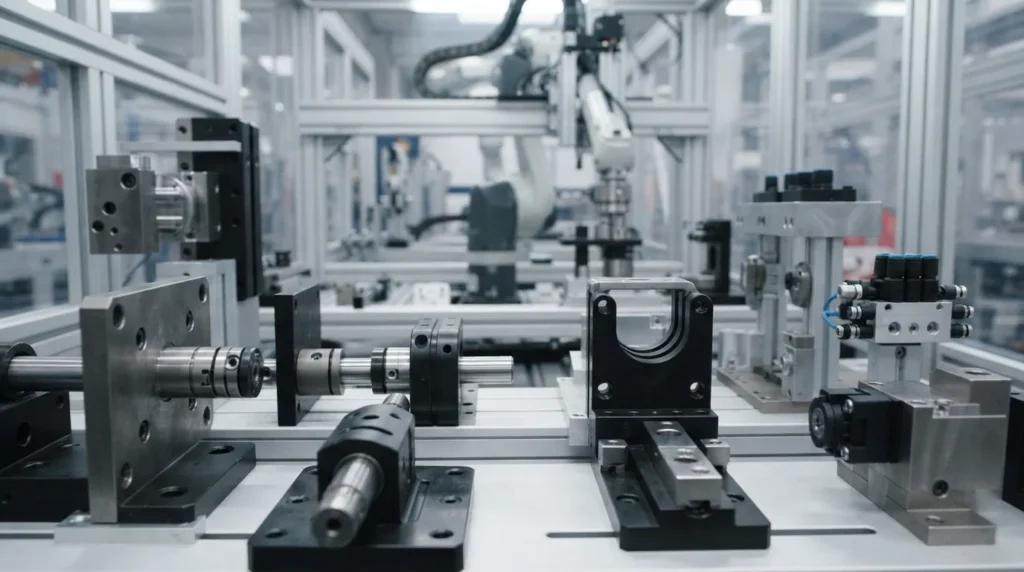
Die Anwendung ist oft ein Montageproblem
Die entscheidenden Fragen können sein, wie Teile positioniert werden, wie sie gewartet werden, wie schnell ein Ersatzteil benötigt wird und welche Maße Bewegung oder Leckage steuern. Teilen Sie die Gegenstücke, den Lastpfad, die Umgebung und die Wartungsanforderung mit, damit ein Lieferant das Teil im Kontext prüfen kann.
Elektronik-, Thermik- und Gehäuseteile
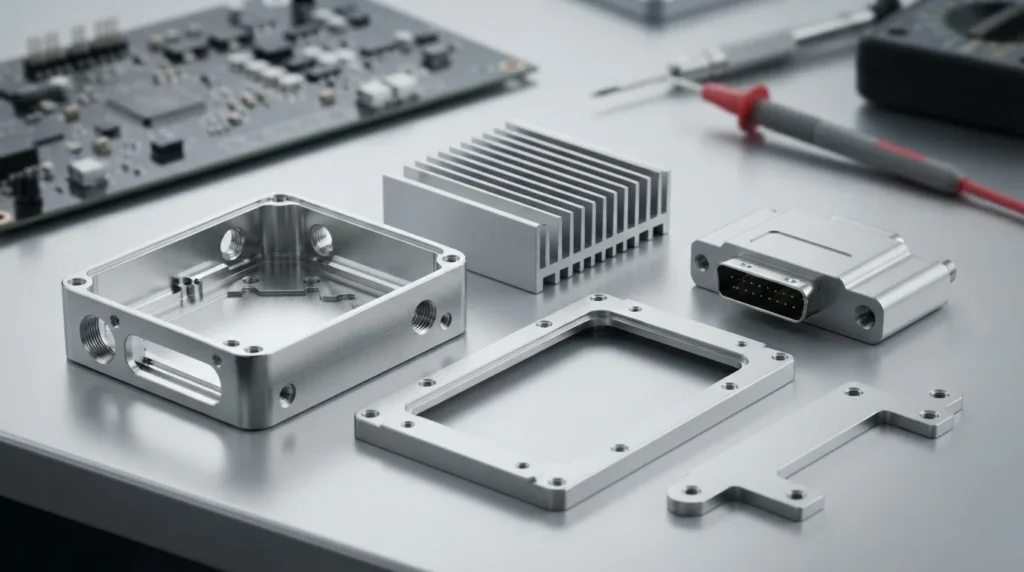
- Geben Sie an, ob Oberflächen leiten, isolieren, Wärme abführen oder elektrisch isoliert bleiben müssen.
- Define coating, masking, grounding, contact, and enclosure-sealing requirements.
- Check wall thickness, threads, cable access, connector alignment, and heat distortion.
- Coordinate finish and coating thickness with fits and electrical interfaces.
Material choice should follow the thermal, electrical, structural, and environmental requirement. Use the Leitfaden zur Werkstoffauswahl für CNC before choosing a finish or grade by habit.
Robotik, Forschung und kundenspezifische Entwicklung
Robotics, laboratory research, drones, test equipment, and custom engineering projects often combine low volume, frequent revision, compact packaging, and unusual interfaces. CNC is useful when the team needs functional parts quickly and wants a direct relationship between the CAD model, selected material, and machined result.
The main risks are often not the industry label but poor access, thin walls, complex assembly, unclear datums, and an unproven load path. A DFM review before cutting can expose these issues while the design is still flexible.
Branchenübergreifende Anforderungen
| Anforderung | Why it changes the CNC route | Information to provide |
|---|---|---|
| Material and environment | Changes cutting, finishing, corrosion, heat, wear, and service life | Grade, condition, load, temperature, media, cleaning, and life expectation |
| Tolerance and fit | Changes setup, toolpath, finishing, measurement, and risk | Datums, interfaces, fit intent, critical features, and acceptance method |
| Quantity and revision | Changes setup allocation, fixture strategy, sampling, and process economics | Prototype, batch, forecast, release schedule, and expected design changes |
| Documentation and quality | Changes material evidence, inspection, traceability, and release work | Reports, certificates, first article, sampling, packaging, and change control |
For supplier-selection context, the site’s Qualitätsinformationen can support the initial review; the part-specific requirements must remain in the drawing and RFQ.
Anwendungsinformationen für eine CNC-Angebotsanfrage
- Describe what the part does and which other components it contacts.
- Send the current CAD model, controlled drawing, units, revision, and quantity.
- Identify material, heat treatment, finish, cleanliness, packaging, and certification needs.
- Mark fits, datums, sealing faces, threads, load-bearing surfaces, and cosmetic zones.
- State testing, inspection, first-article, sampling, traceability, and documentation requirements.
- Explain schedule, revision risk, forecast demand, and any non-negotiable functional limits.
A well-described application helps the supplier choose a process that fits the part instead of quoting only the visible geometry. When ready, use the CNC machining quote workflow.
FAQs zu CNC-Bearbeitungsanwendungen
What industries use CNC machining?
Aerospace, medical and laboratory equipment, automotive and mobility, industrial machinery, automation, electronics, robotics, research, and custom product development all use CNC machining. The right application depends on part function, material, geometry, quantity, and quality requirements.
What parts are commonly CNC machined?
Common examples include brackets, housings, plates, shafts, adapters, fixtures, manifolds, mounts, heat-transfer components, connector bodies, tooling, and replacement parts. The specific design must still be reviewed for access, material, tolerance, finish, and inspection.
Is CNC machining suitable for medical or aerospace parts?
It can be suitable when the supplier, material, process, inspection, documentation, and customer requirements match the application. An industry label alone does not prove compliance; the project must define the applicable specifications and evidence.
Can CNC machining support both prototypes and production?
Yes, depending on part geometry, quantity, process stability, and economics. CNC is often useful for changing designs and low-to-medium volumes, while a stable high-volume product should be compared with alternative processes and tooling models.
What should I tell a supplier about my application?
Explain the function, mating parts, load, environment, material, quantity, critical dimensions, finish, inspection, documentation, schedule, and revision risk. That context supports a more realistic process and quote review.