
CNC machining appears in many industries, but an industry name alone does not explain why the process is appropriate. The stronger question is what the part must do: carry load, locate an assembly, control a fluid, transfer heat, survive wear, remain lightweight, or support a fast design iteration. This guide maps common CNC applications to part functions, typical engineering concerns, and the information a buyer should provide before requesting a quote.
Match the Process to the Part’s Job
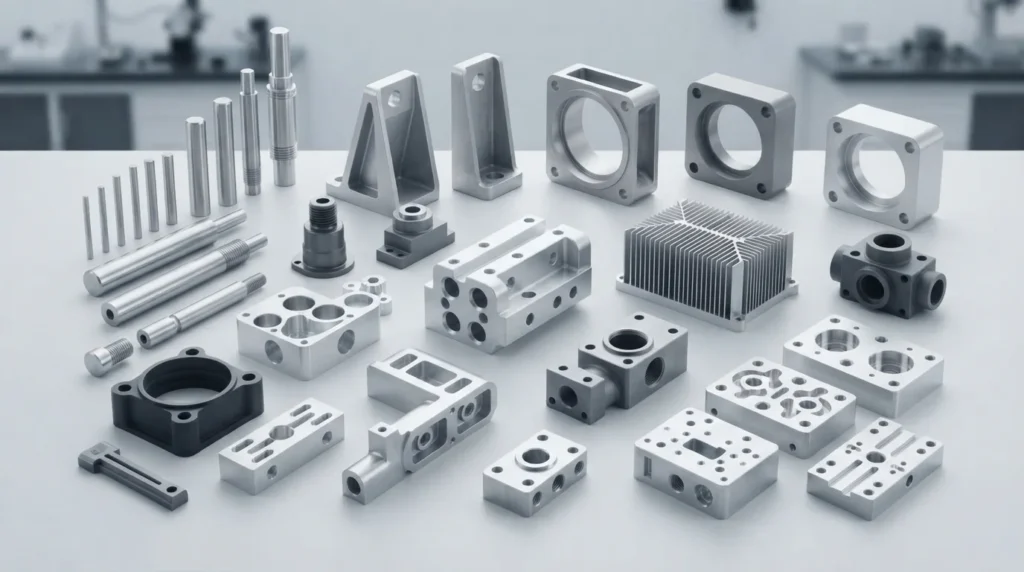
| Part job | CNC value to evaluate | First engineering question |
|---|---|---|
| Locate, align, or assemble | Controlled datums, holes, faces, fits, and repeatable geometry | Which features actually control assembly? |
| Carry load or resist wear | Material flexibility and machined interfaces | What load, contact, temperature, and service life must be supported? |
| Control fluid or heat | Machined passages, sealing faces, channels, and thermal surfaces | What leakage, cleanliness, roughness, or heat-transfer requirement applies? |
| Iterate a design quickly | Digital revision flexibility without dedicated forming tooling | Will the prototype represent the final material and function? |
The site’s CNC machining process guide provides the manufacturing context; the application determines which requirements deserve priority.
Aerospace and High-Performance Components
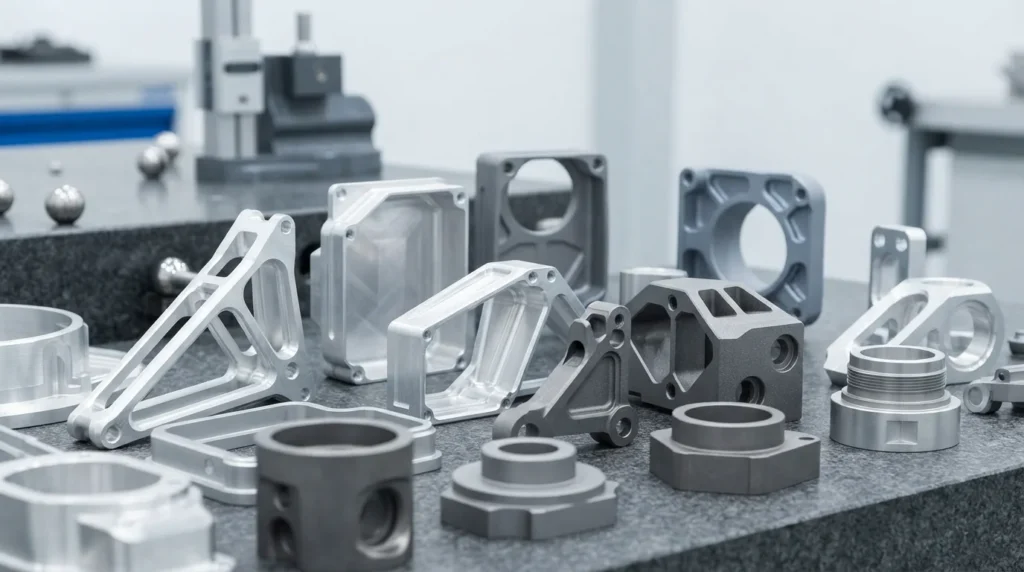
What should the engineering review focus on?
- Material grade, condition, traceability, heat treatment, and permitted substitutions.
- Datum structure, hole patterns, profile, wall thickness, tool access, and distortion risk.
- Surface integrity, burr control, edge breaks, cleanliness, marking, and packaging.
- Required first-article, inspection, documentation, and change-control scope.
An application label does not automatically establish a certification or compliance claim. The buyer should state the customer and regulatory requirements that actually govern the part.
Medical and Laboratory Equipment
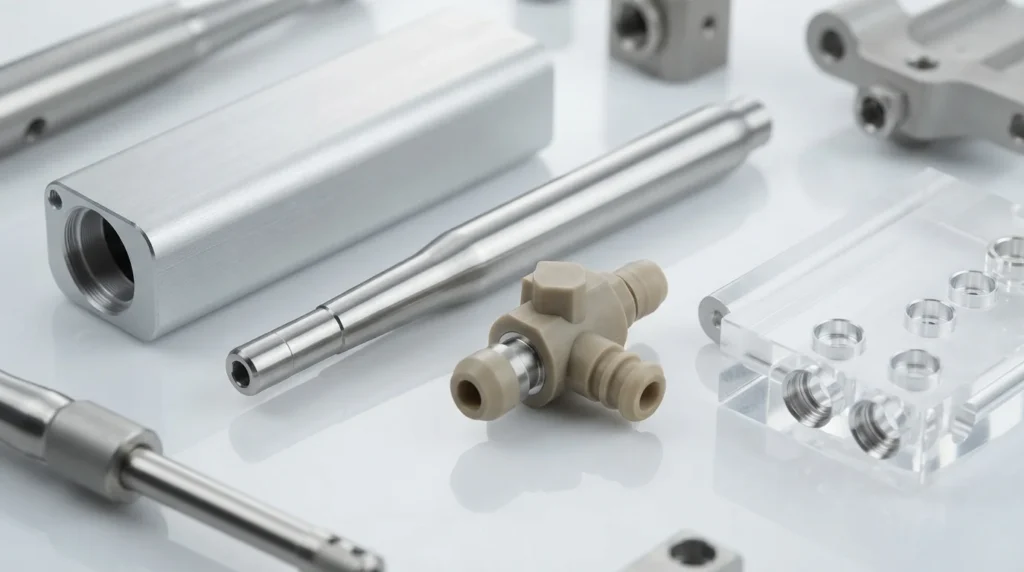
Do not treat cleanability as a cosmetic finish
Corners, grooves, burrs, roughness, trapped media, coating compatibility, and packaging can influence cleaning and use. Identify contact surfaces, cleaning or sterilization conditions, material restrictions, surface requirements, and inspection evidence at the RFQ stage.
Automotive and Mobility Systems
Automotive and mobility projects use CNC for prototypes, brackets, housings, shafts, fixtures, test parts, sensor mounts, powertrain-related components, and customized performance parts. The process is valuable when geometry changes often, the quantity is limited or moderate, or the part needs a production-like material and controlled interfaces.
Review vibration, temperature, fluid exposure, fatigue, corrosion, surface finish, assembly sequence, and service access. A prototype that fits statically may still require additional validation for dynamic load or thermal conditions.
Industrial Equipment and Automation
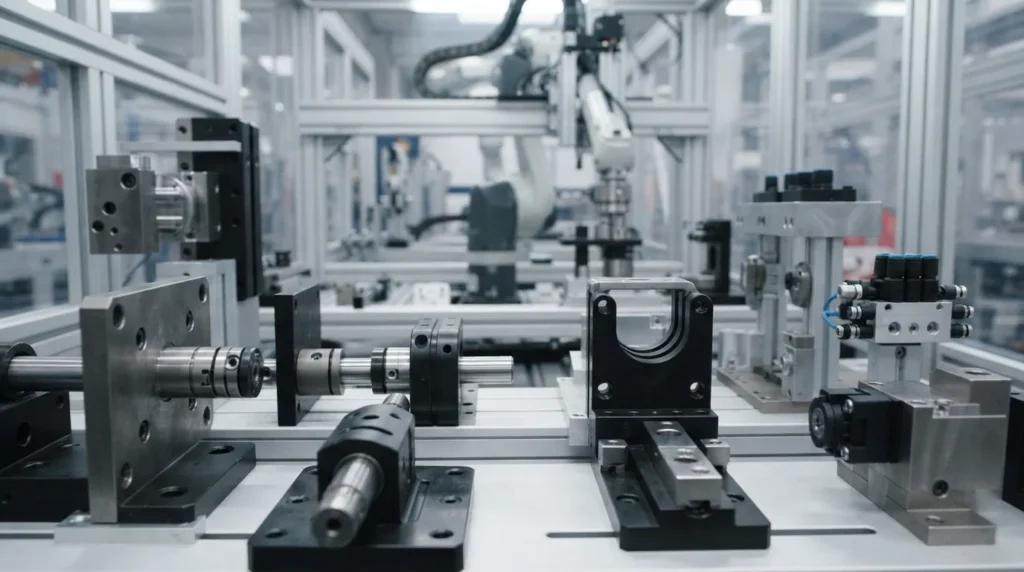
The application is often an assembly problem
The key questions may be how parts locate, how they are serviced, how fast a replacement is needed, and which dimensions control motion or leakage. Share the mating components, load path, environment, and maintenance requirement so a supplier can review the part in context.
Electronics, Thermal, and Enclosure Parts
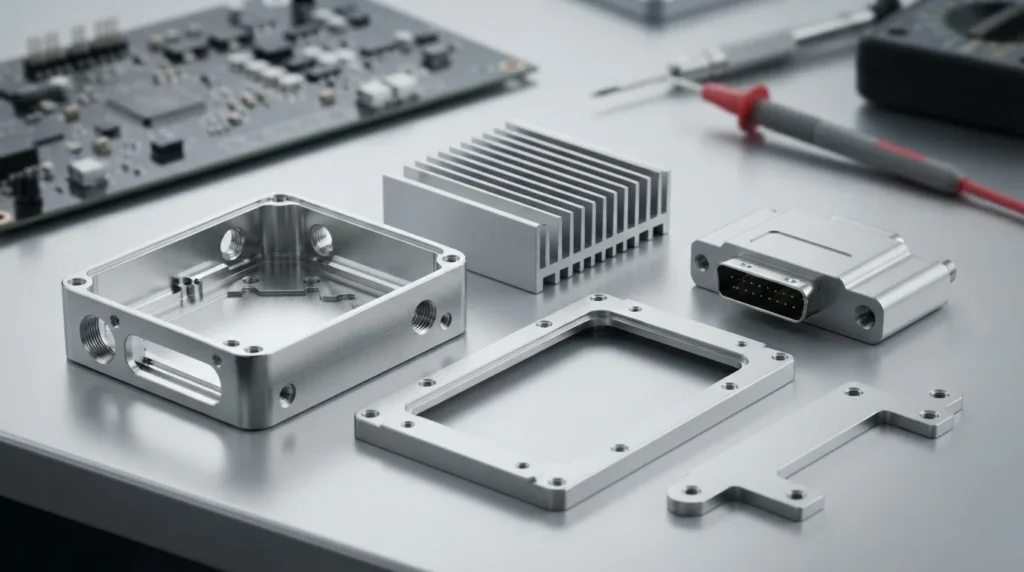
- State whether surfaces must conduct, insulate, dissipate heat, or remain electrically isolated.
- Define coating, masking, grounding, contact, and enclosure-sealing requirements.
- Check wall thickness, threads, cable access, connector alignment, and heat distortion.
- Coordinate finish and coating thickness with fits and electrical interfaces.
Material choice should follow the thermal, electrical, structural, and environmental requirement. Use the CNC materials selection guide before choosing a finish or grade by habit.
Robotics, Research, and Custom Engineering
Robotics, laboratory research, drones, test equipment, and custom engineering projects often combine low volume, frequent revision, compact packaging, and unusual interfaces. CNC is useful when the team needs functional parts quickly and wants a direct relationship between the CAD model, selected material, and machined result.
The main risks are often not the industry label but poor access, thin walls, complex assembly, unclear datums, and an unproven load path. A DFM review before cutting can expose these issues while the design is still flexible.
Requirements Shared Across Industries
| Requirement | Why it changes the CNC route | Information to provide |
|---|---|---|
| Material and environment | Changes cutting, finishing, corrosion, heat, wear, and service life | Grade, condition, load, temperature, media, cleaning, and life expectation |
| Tolerance and fit | Changes setup, toolpath, finishing, measurement, and risk | Datums, interfaces, fit intent, critical features, and acceptance method |
| Quantity and revision | Changes setup allocation, fixture strategy, sampling, and process economics | Prototype, batch, forecast, release schedule, and expected design changes |
| Documentation and quality | Changes material evidence, inspection, traceability, and release work | Reports, certificates, first article, sampling, packaging, and change control |
For supplier-selection context, the site’s quality information can support the initial review; the part-specific requirements must remain in the drawing and RFQ.
Application Information for a CNC RFQ
- Describe what the part does and which other components it contacts.
- Send the current CAD model, controlled drawing, units, revision, and quantity.
- Identify material, heat treatment, finish, cleanliness, packaging, and certification needs.
- Mark fits, datums, sealing faces, threads, load-bearing surfaces, and cosmetic zones.
- State testing, inspection, first-article, sampling, traceability, and documentation requirements.
- Explain schedule, revision risk, forecast demand, and any non-negotiable functional limits.
A well-described application helps the supplier choose a process that fits the part instead of quoting only the visible geometry. When ready, use the CNC machining quote workflow.
CNC Machining Applications FAQs
What industries use CNC machining?
Aerospace, medical and laboratory equipment, automotive and mobility, industrial machinery, automation, electronics, robotics, research, and custom product development all use CNC machining. The right application depends on part function, material, geometry, quantity, and quality requirements.
What parts are commonly CNC machined?
Common examples include brackets, housings, plates, shafts, adapters, fixtures, manifolds, mounts, heat-transfer components, connector bodies, tooling, and replacement parts. The specific design must still be reviewed for access, material, tolerance, finish, and inspection.
Is CNC machining suitable for medical or aerospace parts?
It can be suitable when the supplier, material, process, inspection, documentation, and customer requirements match the application. An industry label alone does not prove compliance; the project must define the applicable specifications and evidence.
Can CNC machining support both prototypes and production?
Yes, depending on part geometry, quantity, process stability, and economics. CNC is often useful for changing designs and low-to-medium volumes, while a stable high-volume product should be compared with alternative processes and tooling models.
What should I tell a supplier about my application?
Explain the function, mating parts, load, environment, material, quantity, critical dimensions, finish, inspection, documentation, schedule, and revision risk. That context supports a more realistic process and quote review.