
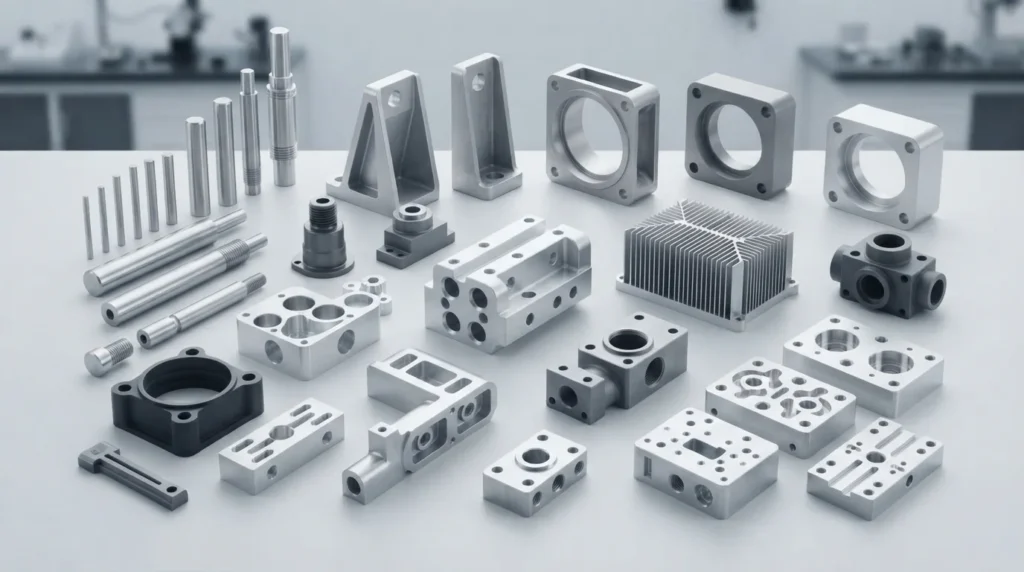
CNC 가공은 많은 산업에서 나타나지만, 산업 이름만으로는 그 공정이 왜 적합한지 설명되지 않습니다. 더 강력한 질문은 부품이 무엇을 해야 하는가입니다: 하중을 지지하는지, 조립품을 위치시키는지, 유체를 제어하는지, 열을 전달하는지, 마모를 견디는지, 경량을 유지하는지, 또는 빠른 설계 반복을 지원하는지입니다. 이 가이드는 일반적인 CNC 응용 분야를 부품 기능, 일반적인 엔지니어링 고려 사항, 그리고 견적을 요청하기 전에 구매자가 제공해야 하는 정보에 매핑합니다.
부품의 역할에 공정을 맞추기
| 부품 역할 | 평가할 CNC 값 | 첫 번째 엔지니어링 질문 |
|---|---|---|
| 위치 지정, 정렬 또는 조립 | 제어된 데이텀, 홀, 면, 끼워맞춤 및 반복 가능한 형상 | 어떤 피처가 실제로 조립을 제어하는가? |
| 하중을 지지하거나 마모에 저항 | 재료 유연성 및 가공된 인터페이스 | 어떤 하중, 접촉, 온도 및 사용 수명을 지지해야 하는가? |
| 유체 또는 열 제어 | 가공된 통로, 밀봉면, 채널 및 열 표면 | 어떤 누출, 청결도, 거칠기 또는 열전달 요구사항이 적용되는가? |
| 설계를 신속하게 반복 | 전용 성형 툴링 없이 디지털 수정 유연성 | 프로토타입이 최종 재료와 기능을 대표할 것인가? |
사이트의 CNC 가공 공정 가이드 제조 맥락을 제공합니다. 애플리케이션이 어떤 요구사항에 우선순위를 두어야 하는지를 결정합니다.
항공우주 및 고성능 부품
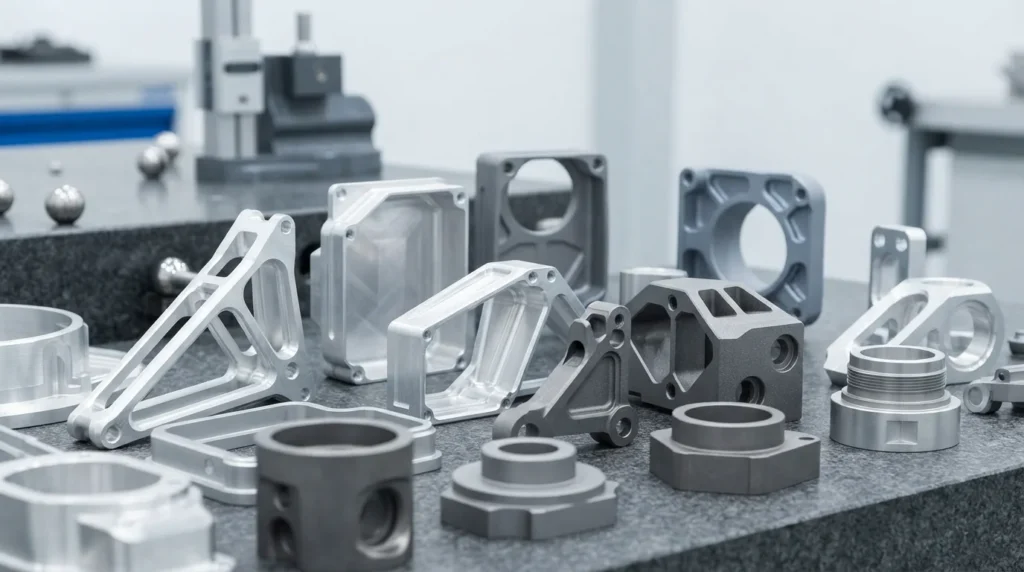
엔지니어링 검토는 무엇에 초점을 맞추어야 합니까?
- 재료 등급, 상태, 추적성, 열처리, 허용된 대체재.
- 데이텀 구조, 홀 패턴, 프로파일, 벽 두께, 공구 접근성, 변형 위험.
- 표면 건전성, 버 제어, 모따기, 청결도, 마킹, 포장.
- 필요한 초도품, 검사, 문서화, 변경 관리 범위.
애플리케이션 라벨이 자동으로 인증이나 규정 준수 주장을 성립시키지는 않습니다. 구매자는 해당 부품을 실제로 규율하는 고객 및 규제 요구사항을 명시해야 합니다.
의료 및 실험실 장비
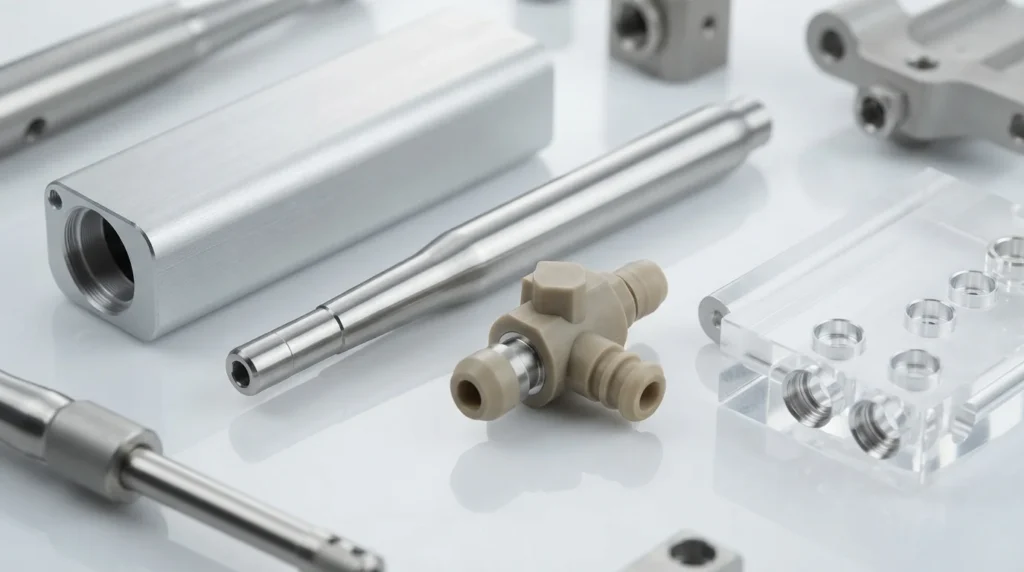
세정성을 외관 마감으로 취급하지 마십시오
모서리, 홈, 버, 거칠기, 갇힌 매체, 코팅 적합성, 포장은 세정과 사용에 영향을 미칠 수 있습니다. RFQ 단계에서 접촉 표면, 세정 또는 멸균 조건, 재료 제한, 표면 요구사항, 검사 증거를 식별하십시오.
자동차 및 모빌리티 시스템
자동차 및 모빌리티 프로젝트는 시제품, 브래킷, 하우징, 샤프트, 지그, 시험 부품, 센서 마운트, 파워트레인 관련 부품, 맞춤형 성능 부품에 CNC를 사용합니다. 이 공정은 형상이 자주 변경되거나, 수량이 적거나 중간 정도이거나, 부품에 생산에 준하는 재료와 제어된 인터페이스가 필요할 때 가치가 있습니다.
진동, 온도, 유체 노출, 피로, 부식, 표면 조도, 조립 순서, 서비스 접근성을 검토하십시오. 정적으로는 맞는 시제품이라도 동적 하중이나 열 조건에 대해서는 추가 검증이 필요할 수 있습니다.
산업 장비 및 자동화
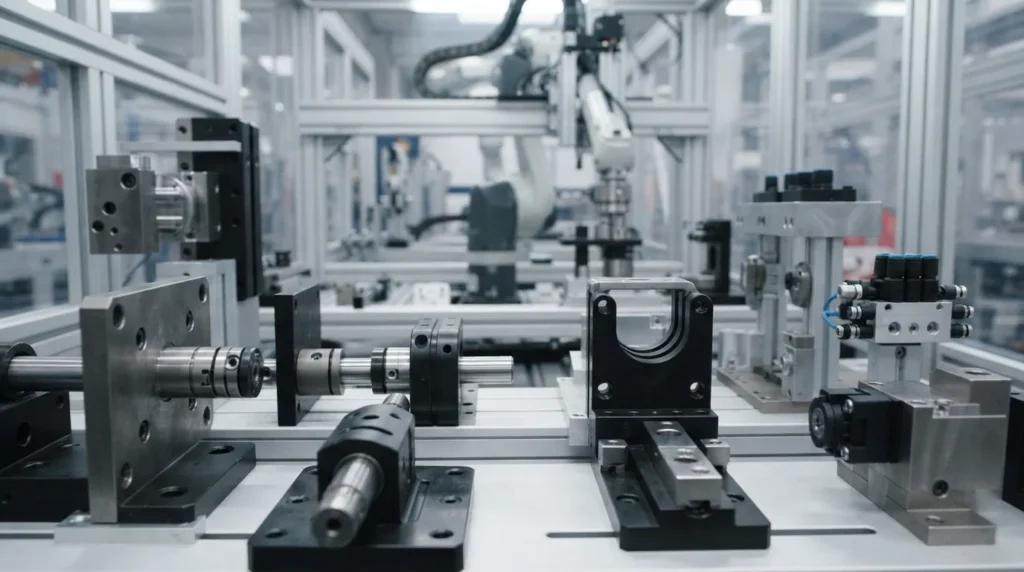
이 애플리케이션은 흔히 어셈블리 문제입니다
The key questions may be how parts locate, how they are serviced, how fast a replacement is needed, and which dimensions control motion or leakage. Share the mating components, load path, environment, and maintenance requirement so a supplier can review the part in context.
전자, 열 관리 및 인클로저 부품
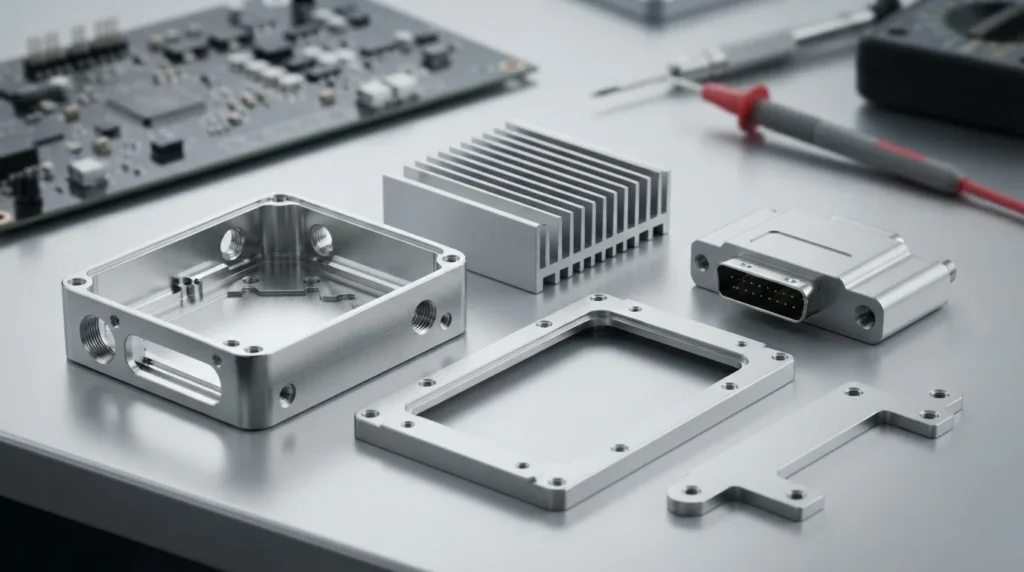
- State whether surfaces must conduct, insulate, dissipate heat, or remain electrically isolated.
- Define coating, masking, grounding, contact, and enclosure-sealing requirements.
- Check wall thickness, threads, cable access, connector alignment, and heat distortion.
- Coordinate finish and coating thickness with fits and electrical interfaces.
Material choice should follow the thermal, electrical, structural, and environmental requirement. Use the CNC 재료 선택 가이드 before choosing a finish or grade by habit.
로봇공학, 연구 및 맞춤형 엔지니어링
Robotics, laboratory research, drones, test equipment, and custom engineering projects often combine low volume, frequent revision, compact packaging, and unusual interfaces. CNC is useful when the team needs functional parts quickly and wants a direct relationship between the CAD model, selected material, and machined result.
The main risks are often not the industry label but poor access, thin walls, complex assembly, unclear datums, and an unproven load path. A DFM review before cutting can expose these issues while the design is still flexible.
산업 전반에 공통된 요구 사항
| 요구사항 | Why it changes the CNC route | Information to provide |
|---|---|---|
| Material and environment | Changes cutting, finishing, corrosion, heat, wear, and service life | Grade, condition, load, temperature, media, cleaning, and life expectation |
| Tolerance and fit | Changes setup, toolpath, finishing, measurement, and risk | Datums, interfaces, fit intent, critical features, and acceptance method |
| Quantity and revision | Changes setup allocation, fixture strategy, sampling, and process economics | Prototype, batch, forecast, release schedule, and expected design changes |
| Documentation and quality | Changes material evidence, inspection, traceability, and release work | Reports, certificates, first article, sampling, packaging, and change control |
For supplier-selection context, the site’s 품질 정보 can support the initial review; the part-specific requirements must remain in the drawing and RFQ.
CNC RFQ를 위한 응용 정보
- Describe what the part does and which other components it contacts.
- Send the current CAD model, controlled drawing, units, revision, and quantity.
- Identify material, heat treatment, finish, cleanliness, packaging, and certification needs.
- Mark fits, datums, sealing faces, threads, load-bearing surfaces, and cosmetic zones.
- State testing, inspection, first-article, sampling, traceability, and documentation requirements.
- Explain schedule, revision risk, forecast demand, and any non-negotiable functional limits.
A well-described application helps the supplier choose a process that fits the part instead of quoting only the visible geometry. When ready, use the CNC 가공 견적 워크플로.
CNC 가공 응용 분야 FAQ
What industries use CNC machining?
Aerospace, medical and laboratory equipment, automotive and mobility, industrial machinery, automation, electronics, robotics, research, and custom product development all use CNC machining. The right application depends on part function, material, geometry, quantity, and quality requirements.
What parts are commonly CNC machined?
Common examples include brackets, housings, plates, shafts, adapters, fixtures, manifolds, mounts, heat-transfer components, connector bodies, tooling, and replacement parts. The specific design must still be reviewed for access, material, tolerance, finish, and inspection.
Is CNC machining suitable for medical or aerospace parts?
It can be suitable when the supplier, material, process, inspection, documentation, and customer requirements match the application. An industry label alone does not prove compliance; the project must define the applicable specifications and evidence.
Can CNC machining support both prototypes and production?
Yes, depending on part geometry, quantity, process stability, and economics. CNC is often useful for changing designs and low-to-medium volumes, while a stable high-volume product should be compared with alternative processes and tooling models.
What should I tell a supplier about my application?
Explain the function, mating parts, load, environment, material, quantity, critical dimensions, finish, inspection, documentation, schedule, and revision risk. That context supports a more realistic process and quote review.