
In der sich entwickelnden Landschaft der individuellen mechanischen Tastaturen werden das taktile Erlebnis und das akustische Profil einer Tastatur nicht länger dem Zufall überlassen. Jeder Enthusiast weiß, dass zwar Switches und Keycaps viel Aufmerksamkeit erhalten, das wahre Rückgrat eines jeden High-End-Builds jedoch die Platte ist. Genauer gesagt, gefräste Tastaturplatten dienen als kritische Schnittstelle zwischen den Switches und der Platine und bestimmen die Steifigkeit, die Schwingungsdämpfung und den gesamten “Thock” des Tipp-Erlebnisses. Bei jucheng, haben wir einen bedeutenden Marktwandel hin zu hochpräzisen CNC-Komponenten beobachtet, die es Nutzern ermöglichen, ihre Builds mit mathematischer Genauigkeit fein abzustimmen. Ob Sie die Flexibilität einer PP-Platten-Tastatur oder die knackige Resonanz einer Alu-Platten-Tastatur, anstreben – das Verständnis der Materialwissenschaft hinter diesen Komponenten ist für jeden ernsthaften Hobbyisten oder kommerziellen Designer unerlässlich.
Gefräste Tastaturplatten verstehen: Definition und Prinzipien
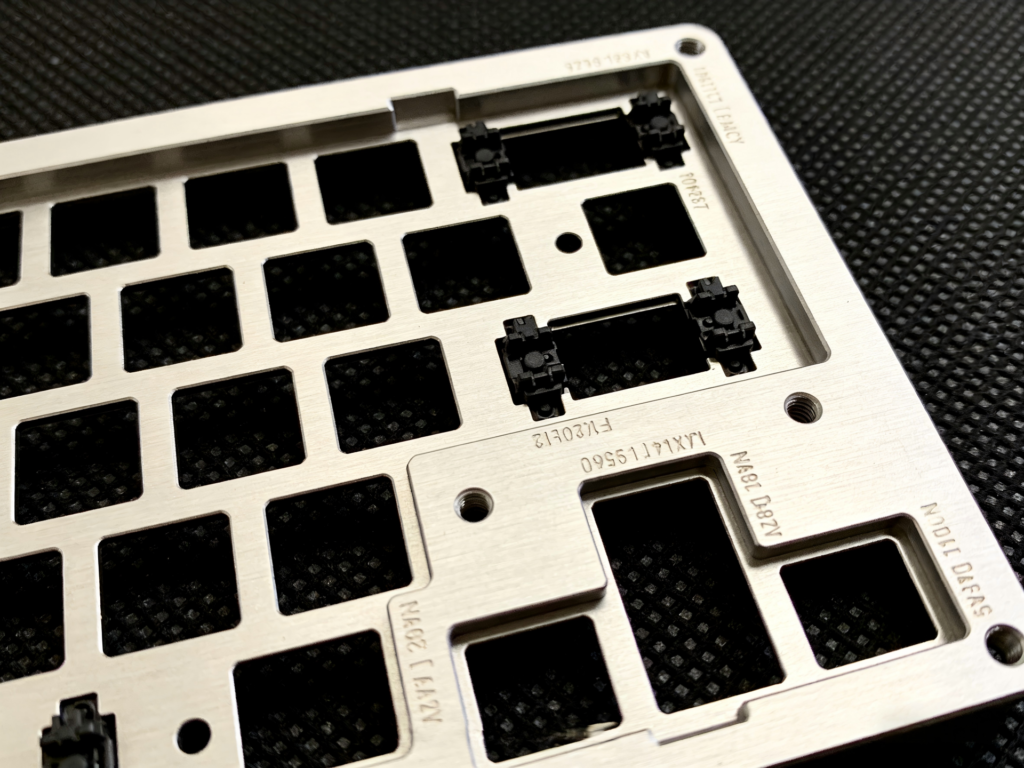
Eine Tastaturplatte ist eine dünne Materialschicht – typischerweise zwischen 1,5 mm und 4,0 mm dick –, die über der Platine liegt. Ihre Hauptfunktion besteht darin, die Switches sicher an Ort und Stelle zu halten und sicherzustellen, dass sie bei intensiven Tipp-Sitzungen perfekt ausgerichtet und vertikal bleiben. Das “Prinzip” einer Platte geht jedoch weit über bloße strukturelle Unterstützung hinaus. In einem gefräste Tastaturplatten Kontext umfasst der Herstellungsprozess präzises CNC-Fräsen (Computer Numerical Control). Dies ermöglicht engere Toleranzen als traditionelles Laserschneiden oder Stanzen. Beispielsweise stellt eine CNC-gefräste Platte von jucheng sicher, dass die Switch-Aussparungen exakt 14 mm x 14 mm mit null Abweichung betragen, was “Switch-Wackeln” eliminiert und die Gesamtstabilität des Builds erhöht.
Die Physik einer Tastaturplatte beinhaltet Energiedissipation. Wenn Sie einen Switch bis zum Anschlag durchdrücken, wird die kinetische Energie auf die Platte übertragen. Ein steifes Material wie Aluminium oder Messing reflektiert diese Energie, wodurch ein höherer Klang und ein festeres Gefühl entstehen. Umgekehrt wird ein weicheres Material wie PP-Platten-Tastatur oder eine FR4-Platten-Tastatur wird diese Energie absorbieren, was zu einem tieferen Klang und einem gedämpften Anschlag führt. Dieses Zusammenspiel ist der Grund, warum die Wahl der Tastaturplattenmaterialien das am meisten diskutierte Thema in Foren wie Reddits r/MechanicalKeyboards und Geekhack ist.
Kernanwendungsszenarien für hochpräzise Platten
Während die primäre Anwendung der Enthusiasten-Tastaturmarkt ist, erstreckt sich die Nachfrage nach gefräste Tastaturplatten auf mehrere Branchen mit hohen Anforderungen, in denen haptisches Feedback und Zuverlässigkeit nicht verhandelbar sind.
- Professionelle Esport-Hardware: Pro-Gamer benötigen oft ein spezifisches “Clack”-Feedback, um Tastenanschläge zu bestätigen. Alu-Platten-Tastatur Konfigurationen werden hier wegen ihrer Steifigkeit und sofortigen Reaktionszeiten bevorzugt.
- Industrielle Bedienpanels: In Umgebungen, in denen Maschinen über physische Tasten bedient werden, bietet eine CNC-gefräste Platte die nötige Haltbarkeit, um Millionen von Zyklen ohne Verformung zu überstehen.
- Medizinische und Laborgeräte: Präzision ist von größter Bedeutung. Individuell gefertigte Platten aus korrosionsbeständigen Materialien wie Edelstahl oder hochwertigen Polymeren gewährleisten, dass Eingabegeräte unter strengen Bedingungen steril und funktionsfähig bleiben.
- Maßgeschneiderte Designer-Builds: Hier jucheng zeichnet sich aus. Die Kleinserienproduktion einzigartiger Plattendesigns – mit komplexen Flex-Cuts oder integrierten Befestigungspunkten – ermöglicht es Designern, die Grenzen dessen zu erweitern, wie eine Tastatur klingen kann.
Die Materialdebatte: FR4 vs. Aluminium vs. PP vs. PC
Die Wahl des besten Tastaturplattenmaterials ist eine subjektive Reise, aber sie basiert auf objektiven Materialeigenschaften. Lassen Sie uns die beliebtesten Optionen aufschlüsseln, die derzeit die Diskussionen in der Community dominieren.
1. FR4-Platten-Tastatur: Der vielseitige Mittelweg
Die FR4-Platten-Tastatur hat massive Popularität erlangt, weil sie eine perfekte Balance bietet. FR4 ist ein glasfaserverstärktes Epoxidharzlaminat – dasselbe Material, aus dem Leiterplatten hergestellt werden. Es ist von Natur aus leicht flexibel, behält aber genügend strukturelle Integrität, um sich hochwertig anzufühlen. Beim Vergleich von FR4- vs. Aluminium-Platten-Tastatur, bemerken Nutzer oft, dass FR4 die Härte von hochfrequenten Switches “zähmt” und einen neutraleren, poppigeren Klang erzeugt, den viele für das tägliche Tippen als angenehm empfinden.
2. Aluminium- (Alu-) Platten-Tastatur: Der Standard der Exzellenz
Ein Alu-Platten-Tastatur ist der Goldstandard für viele “Out-of-the-Box”-Premium-Boards. Aluminium ist leicht, lässt sich leicht in verschiedenen Farben eloxieren und bietet ein sehr konsistentes Tippgefühl. Es ist relativ steif, was es hervorragend für lineare Switches macht, bei denen ein solider Bottom-Out gewünscht ist. Für diejenigen jedoch, die das best keyboard plate for thock, aluminum can sometimes be too resonant, requiring additional dampening foam.
3. PP vs PC Plate Keyboard: The Softest Touch
In the battle of pp vs pc plate keyboard, we are looking at the softest end of the spectrum.
- PC (Polycarbonate): Highly popular for its deep, bassy sound. It is transparent, making it ideal for RGB lighting. It is flexible, providing a “bouncy” typing feel.
- PP (Polypropylene): This is the newcomer that has taken the “thock” world by storm. A PP-Platten-Tastatur is even softer and more flexible than PC. It absorbs almost all high-frequency vibrations, leaving only the deep, low-end frequencies. If your goal is a “muted” or “creamy” sound profile, PP is often cited as the besten Tastaturplattenmaterials.
Technical Comparison Table of Plate Materials
| Material Type | Flex Level | Acoustic Profile | Durability | Best For… |
|---|---|---|---|---|
| Aluminum (Alu) | Niedrig | High-pitched/Clacky | Very High | Linear switches, Crisp feedback |
| FR4 (Fiberglass) | Medium | Neutral/Poppy | Hoch | All-around versatility |
| Polycarbonat (PC) | Hoch | Deep/Thocky | Medium | Tactile switches, RGB builds |
| Polypropylene (PP) | Very High | Ultra-Deep/Muted | Medium-Low | Maximum flex and thock |
| Messing | None | Musical/Vibrant | Very High | Heavy, premium feel |
Key Factors to Consider When Buying Machined Keyboard Plates
When you are sourcing gefräste Tastaturplatten, whether for a personal project or a commercial product line, several technical factors must be evaluated to ensure the final product meets the high standards of the mechanical keyboard community.
- Precision and Tolerances: A plate that is even 0.1mm off can cause switches to pop out or stabilizers to bind. jucheng utilizes advanced CNC milling to maintain tolerances within +/- 0.01mm, ensuring a perfect snap-fit for every switch.
- Mounting Style Compatibility: Does the plate support Gasket Mount, Top Mount, or Tray Mount? CNC machining allows for the creation of intricate “leaf springs” or “flex cuts” in the plate, which are essential for modern gasket-mounted keyboards to achieve that sought-after “bounce.”
- Surface Finish: For an Alu-Platten-Tastatur, the finish (anodization, sandblasting, or E-coating) affects both aesthetics and feel. For non-metal plates like a PP-Platten-Tastatur, the edge quality is vital; laser-cutting can sometimes leave charred or melted edges, whereas CNC machining leaves a clean, burr-free profile.
- Plate Thickness: The industry standard is 1.5mm, but many custom builders are experimenting with 1.2mm plates for more flex or 5.0mm “half-plates” for a unique hybrid feel.
Installation and Maintenance Tips
Installing gefräste Tastaturplatten requires a delicate touch to avoid damaging the PCB or the switches. Here is a brief guide to ensuring a successful assembly:
First, ensure your stabilizers are properly lubed and installed on the PCB (for PCB-mount) or the plate (for plate-mount). When using a flexible PP-Platten-Tastatur, it may be easier to insert a few switches into the corners of the plate first to align it with the PCB before filling in the rest. This prevents the plate from sagging during the soldering or hot-swap process.
Maintenance is generally minimal. For metal plates like an Alu-Platten-Tastatur, a simple wipe with an isopropyl alcohol cloth will remove any oils or dust. For FR4-Platten-Tastatur options, be careful not to use excessive force when removing switches, as the edges of the fiberglass can eventually wear down if switches are swapped hundreds of times. If you notice a “metallic ping,” consider adding a thin layer of switch film or a plate foam between the plate and the PCB to further tune the acoustics.
Why Choose Jucheng for Your Machined Keyboard Plates?
In the competitive world of CNC machining, jucheng stands out as a leader in the production of high-end keyboard components. Our facility is equipped with state-of-the-art 3-axis and 5-axis CNC machines specifically calibrated for thin-walled components like gefräste Tastaturplatten. We understand that a keyboard plate isn’t just a piece of hardware; it’s a musical instrument component.
Our expertise allows us to work with a vast array of Tastaturplattenmaterialien, from traditional aerospace-grade aluminum to specialty polymers like POM and PP. We provide comprehensive DFM (Design for Manufacturing) feedback, helping designers optimize their flex-cut patterns to ensure durability without sacrificing the “thock.” Furthermore, our commitment to quality is backed by ISO certifications, ensuring that every batch of plates—whether it’s a 1-unit prototype or a 1,000-unit production run—meets the exact specifications of the client. When you choose jucheng, you are choosing precision, reliability, and a deep understanding of the keyboard enthusiast’s soul.
Häufig gestellte Fragen (FAQ)
1. What is the best keyboard plate for thock?
While sound is subjective, the community generally agrees that non-metal materials are the best keyboard plate for thock. Specifically, a PP-Platten-Tastatur or a PC (Polycarbonate) plate combined with deep-sounding linear switches and a dampening case foam will yield the most bass-heavy “thock” sound. FR4 is also a strong contender for those who want a bit more “pop” with their thock.
2. Is an aluminum plate better than an FR4 plate?
Neither is objectively “better,” as it depends on your preference. An Alu-Platten-Tastatur offers a stiffer, more consistent typing experience with a higher-pitched sound. An FR4-Platten-Tastatur offers more flex and a “softer” acoustic profile. If you find metal plates too “harsh” on your fingers during long typing sessions, FR4 is an excellent alternative.
3. How does plate thickness affect the keyboard?
Thickness directly impacts sound and feel. A standard 1.5mm plate allows switches to “clip” in securely. A thicker plate (like a 4mm integrated plate) creates a very stiff, heavy feel with very little vibration. Conversely, thinner plates (1.2mm) are used to increase flex in “bouncy” gasket-mount designs.
4. Can I use a PP plate with any keyboard?
A PP-Platten-Tastatur usually requires a specific mounting style to work effectively. Because PP is very soft, it is best used in “Gasket Mount” or “Sandwich Mount” builds where the plate is supported by the case. In a “Tray Mount” build, a PP plate might sag too much in the center, leading to inconsistent key heights.
5. Why is CNC machining preferred over laser cutting for plates?
CNC machining provides a much cleaner edge and allows for variable thickness across the plate (such as pockets or recessed areas). For materials like aluminum, CNC is necessary for high-quality finishes. For plastics, CNC prevents the melting or “browning” of edges that can occur with laser cutting, ensuring the besten Tastaturplattenmaterials properties are preserved.
6. Does the plate material affect the RGB lighting?
Yes, significantly. A PC (Polycarbonate) plate is translucent and will diffuse the light across the entire board, creating a “glow” effect. An Alu-Platten-Tastatur oder eine FR4-Platten-Tastatur is opaque and will reflect the light upward, creating more distinct shadows between the keys.
7. Where can I get custom machined keyboard plates?
For custom designs, jucheng offers specialized CNC services. You can upload your CAD files (DXF or STEP), and we can machine your plates from a variety of materials, ensuring that your unique design is realized with professional-grade precision.