
For CNC bar stock, hot-rolled material can be a sensible starting point when the part has enough machining allowance and the stock surface or dimensional variation will be removed; cold-finished bar is worth evaluating when its surface, straightness, or size condition reduces preparation and setup work. “Cold rolled” is often used loosely in searches, but sheet/coil cold rolling and bar cold drawing or cold finishing describe different product routes. Specify the product form, not only the phrase.
The useful comparison is not a universal ranking of which steel cuts better. It is a stock-selection decision: how much material must be removed, what surfaces become functional, how the part is supported, and whether the delivered condition can meet the drawing without unnecessary cleanup or distortion risk.
First separate sheet terminology from bar terminology
Hot-rolled steel sheet and cold-rolled steel sheet are sheet products with different processing and surface conditions. In bar stock, the comparable purchase discussion is often hot-rolled bar versus cold-finished bar, which may be cold-drawn, turned and polished, or otherwise processed after hot rolling. Cold-finished bar is not simply a cold-rolled sheet cut into a bar; the processing path and applicable product specification differ.
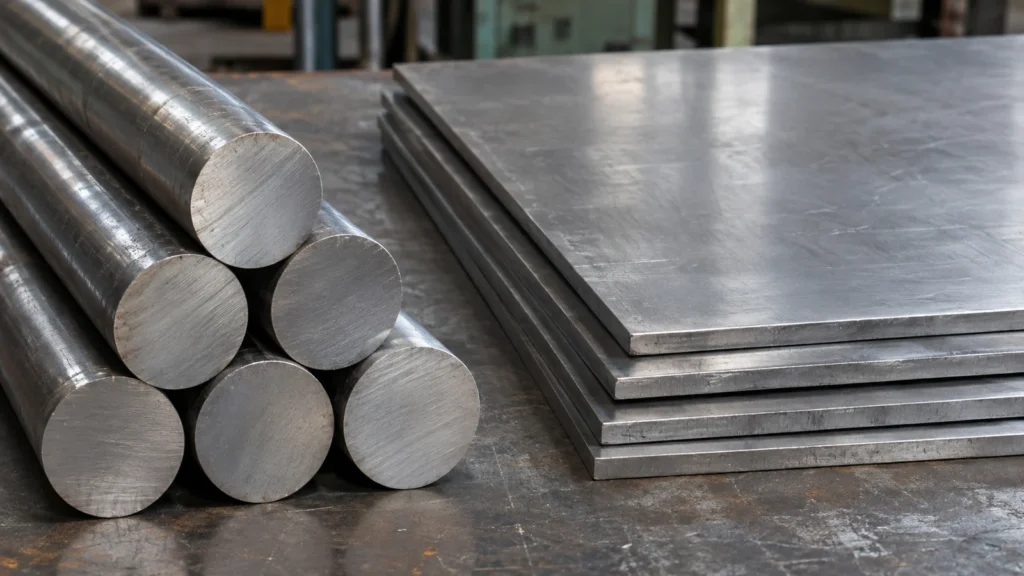
This distinction matters when a drawing or quote states “cold rolled” without identifying sheet, strip, or bar. Ask what product form and standard are intended. For a turned shaft, a bar specification with the needed diameter, straightness, surface condition, and tolerance is more useful than an ambiguous process label. Nucor’s product descriptions distinguish hot-rolled bar from cold-finished bar and describe the additional finishing applied to bar stock.
What the starting stock changes
| Stock consideration | Hot-rolled bar may fit when | Cold-finished bar may fit when |
|---|---|---|
| Surface and scale | The outside layer will be removed and the drawing allows the supplied surface condition. | A cleaner or more consistent starting surface reduces preparatory work or supports direct locating. |
| Size and straightness | There is room to clean up variation while retaining sufficient final stock. | The blank size or straightness helps bar feeding, locating, or near-net machining. |
| Material removal | The part is large enough that the stock route is economical and cleanup allowance is acceptable. | Reducing stock-removal time or stabilizing a long slender blank has measurable value. |
| Final requirements | Critical surfaces are fully machined and the supply condition meets the material specification. | As-supplied condition is tied to a defined property, tolerance, or manufacturing step. |
Cold finishing may improve dimensional consistency and surface appearance, but the gain must be compared with the bar’s size range, condition, and price. Hot-rolled stock may offer a better starting point for larger removals or forms where extra stock is expected. Neither statement replaces a supplier’s actual dimensional tolerance or certificate. The machining allowance has to accommodate the received stock and leave enough material at every critical feature.
How the stock route affects machining plans
Stock condition influences how the machinist establishes a datum and removes the outer material. A scale-bearing or uneven surface may require facing or turning before the blank can be located reliably. If the blank is cold finished and already near the intended size, the first setup may be simpler, but the remaining allowance can be less forgiving if the supplied condition varies beyond the assumed amount. Verify the material before programming around a nominal stock size.
For long bars, straightness and cut length can affect bar feeding and support. A pre-machining straightness issue can become a runout or concentricity concern once the stock is clamped. For plates or sheet, flatness, residual stress, and the direction of material removal matter more than the bar-specific cold-finished discussion. Specify the stock form before comparing quotes so the buyer and machine shop price the same blank.
Machinability is grade- and condition-dependent. “Cold finished” does not mean the material is automatically easier to cut in every operation; cold work can change strength and hardness, while stress relief or annealing can change behavior again. Compare the actual grade, condition, and supplier data. The site’s steel material overview and 1018 material page are references for grade context, not a substitute for a controlled stock specification.
Watch how asymmetric removal changes the part
Large one-sided cuts can expose movement in a blank regardless of whether the material began hot rolled or cold finished. Removing a substantial portion from one face changes the balance of material and can release residual stress. A long, thin, or nonuniform section may move between roughing and finishing, so the route may need staged removal, a rest period where appropriate, alternate-side cuts, or a finishing setup that references recovered datums.
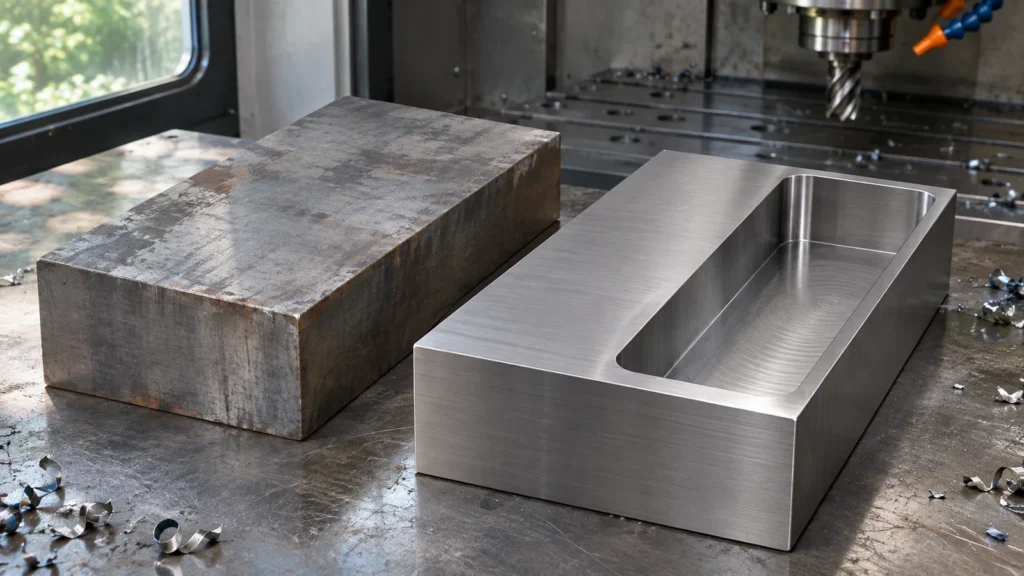
Do not use “cold rolled” as a promise of stability. A bar that is straight and close to size can still move after aggressive machining, and a hot-rolled blank can finish acceptably when the geometry, allowance, and process support it. If flatness, straightness, or runout controls function, define the measurement stage and support condition. Keep rough-stock dimensions separate from finished-part tolerances.
Choose stock with the drawing and quote in view
- Identify bar, plate, sheet, or strip and cite the applicable material specification.
- State grade, condition, nominal dimensions, permitted tolerance, and surface requirements.
- Estimate the cleanup allowance from the received stock to each finished datum and feature.
- For long blanks, specify straightness or end condition when it affects feeding or setup.
- For substantial one-sided removal, include a plan for roughing, datum recovery, and inspection after machining.
- Compare material price, preparation, cycle time, scrap risk, and availability together.
Choose hot-rolled stock when its condition and allowance suit the machining route. Choose cold-finished bar when its tighter starting geometry or surface can reduce a real process burden. The purchase order should name the product form and acceptance condition clearly enough that the supplied stock can be checked before it reaches the machine.