
An A-286 machining plan needs the material condition as well as the alloy name. Solution-treated and aged stock should not be treated as interchangeable machining inputs. Before estimating cycle time or choosing a finishing sequence, establish the condition supplied, the condition required in the finished part, and the operations between those two points.
The first decision is on the purchase order
A-286 is an age-hardenable iron-based alloy used for demanding strength and temperature requirements. Its alloy designation alone does not specify the complete manufacturing route. Product form, controlling material specification, condition, and any additional acceptance requirements should appear together on the order.
For example, ‘A-286 bar’ leaves questions about whether the shop receives material ready for final cutting or must allow for later treatment. A quoted route based on one condition may not remain appropriate if the delivered stock has another. Resolve that difference through the material certificate and order requirements before the part enters production.
Two routes create different planning problems
When machining precedes aging, the planner must decide which surfaces can be finished early and which should retain allowance for a later operation. The review should consider thin sections, long features, reference surfaces, and any dimensions tied to a mating component. The amount of allowance has to be established for the specific part and qualified route.
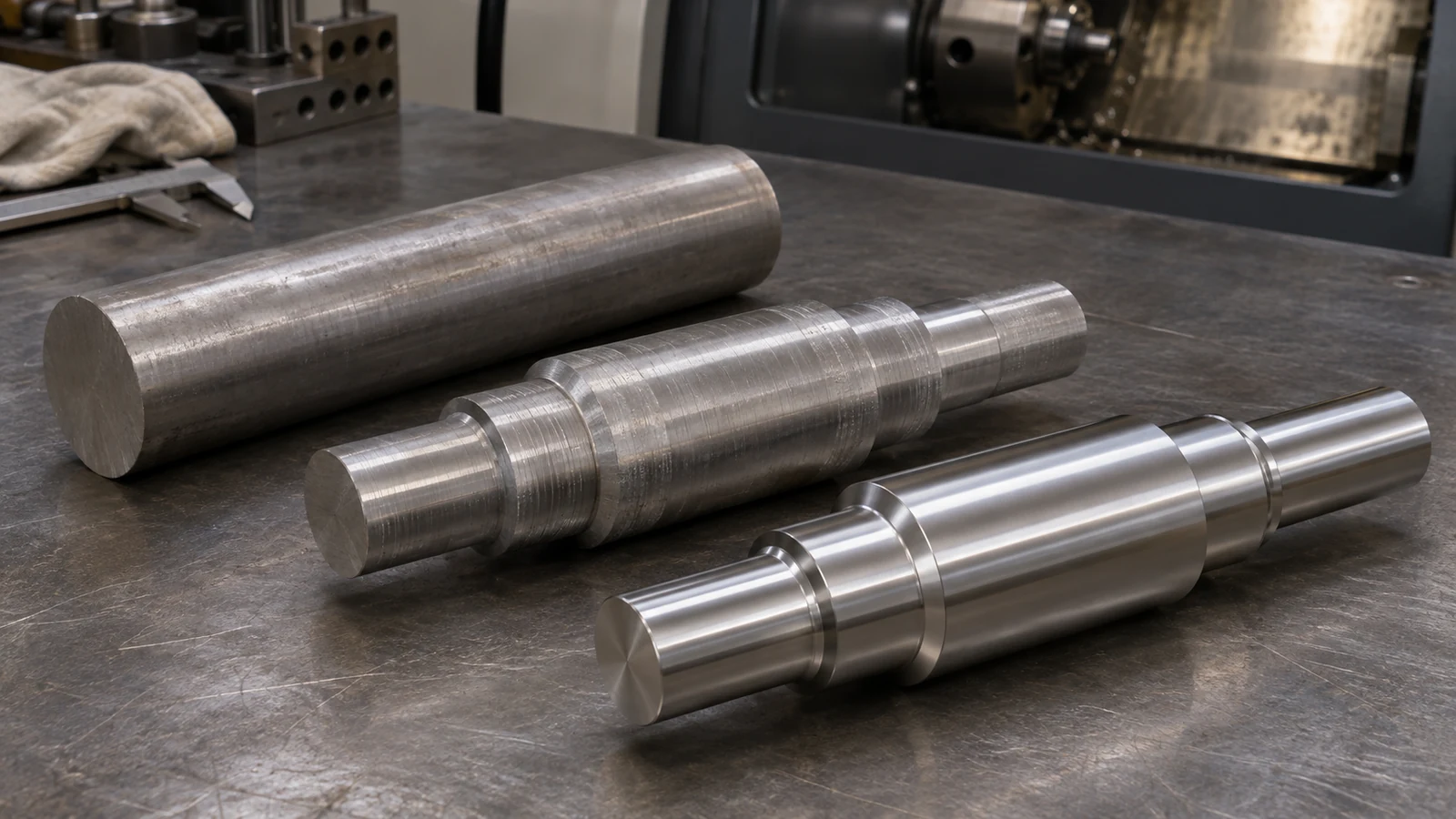
When the stock is already aged, cutting proceeds against that condition from the start. Tool selection, chip management, and usable tool life need to be evaluated accordingly. Published supplier machining data distinguish annealed and aged A-286; those data support the need to separate conditions, but they do not predict the cycle time of a particular component.
Neither route is universally preferable. A small turned component and a thin milled bracket may need different sequences even when they share a material specification. Discuss the required heat treatment as part of the complete route rather than adding it after the machining quotation is fixed.
Let the difficult feature set the trial
A trial should represent the feature most likely to limit production. An open facing cut may say little about a deep bore, a slender external thread, or a pocket reached with a long tool. Select a representative operation and define what success looks like: stable size, acceptable surface, manageable chips, and a tool-change point that protects the next part.
On turned geometry, examine the support available as material is removed. A roughing setup that is stable with a thick blank may behave differently near the finished section. On milled parts, review tool reach and fixture access before tightening a surface requirement. The site’s milling capability page provides process context; the final route remains dependent on the drawing.
Starting cutting data should come from the tool supplier for the actual operation and material condition. Record changes during the trial. Reducing speed, changing an insert, or adjusting a pass sequence without recording the reason makes later repeat orders harder to reproduce.
Threads and bores need their own acceptance plan
A drawing can define a thread correctly while leaving its manufacturing sequence unclear. Identify whether the thread is cut before or after treatment, whether later finishing affects it, and when the final gauge check occurs. The same principle applies to bores whose function depends on both size and relationship to another feature.
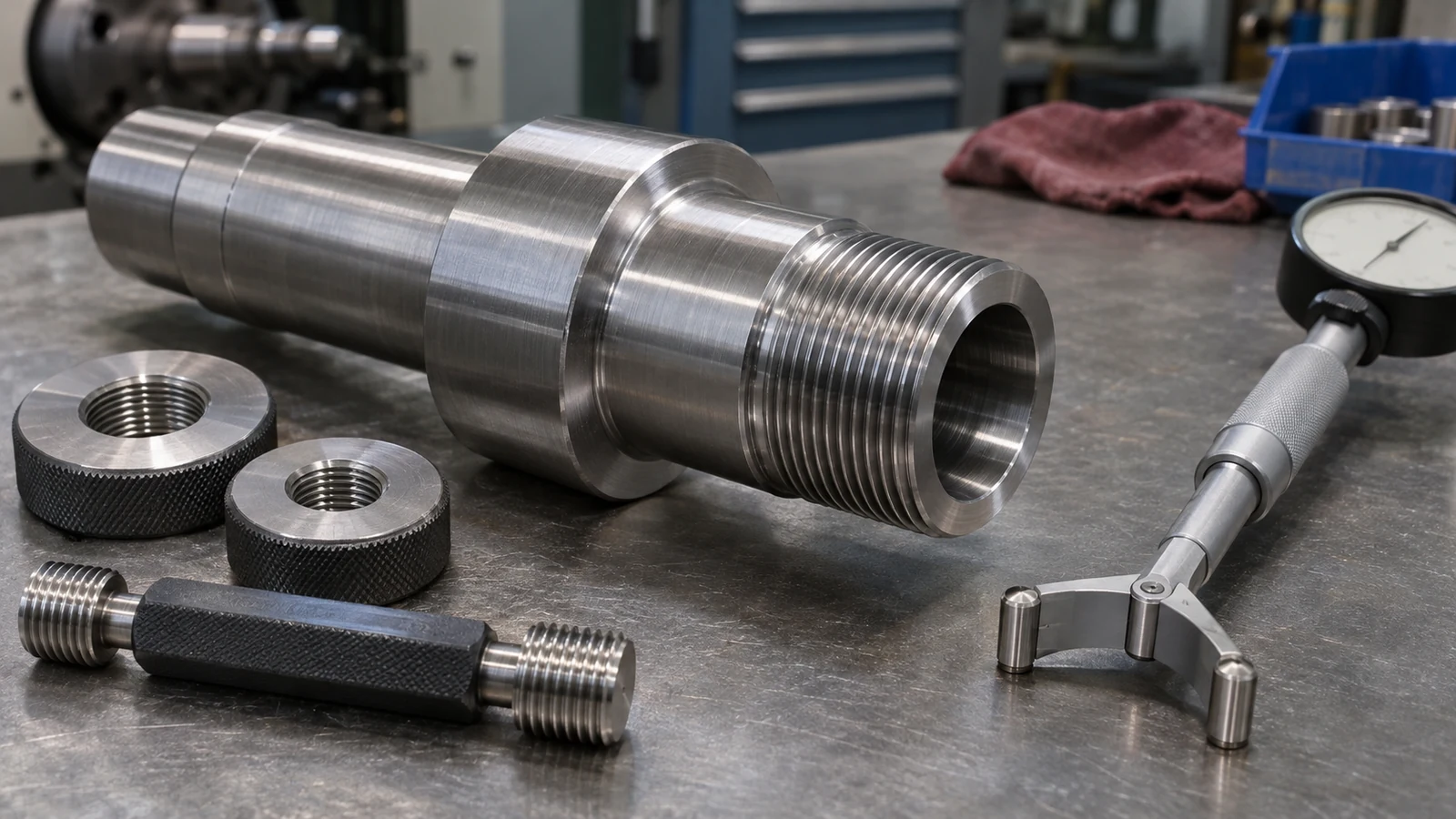
If an operation is followed by deburring, cleaning, or a coating, ensure the acceptance check reflects the delivered condition. Passing an in-process measurement does not settle whether the finished feature satisfies the drawing. For related cylindrical features, CNC turning may help organize the sequence, but it does not remove the need to define datums and final inspection.
Make a repeat order repeatable
Retain the material specification and condition, drawing revision, approved sequence, inspection stages, and the basis for tool replacement. These records explain why a successful first batch worked. A future order with a different stock condition should trigger a review rather than automatically inheriting the old machining settings.
The engineering release should answer four practical questions: what material arrives, what condition must leave, which features are completed at each stage, and what evidence proves conformity. This keeps the article’s machining discussion connected to the broader selection of materials for elevated-temperature duty without assuming that a material label alone guarantees component performance.
A useful final check is to trace one critical dimension through the route. If its datum changes, if treatment occurs after its last measurement, or if a finishing operation can affect it, record the required follow-up. That exercise often exposes an incomplete process handoff before it becomes a rejected shipment.