
When a stainless part is difficult to turn, 303 can look like an easy answer. Its free-machining characteristics may help with chip breaking and production flow, while 304 is widely used when corrosion resistance and forming behavior carry more weight. The choice is not a simple easy-versus-hard ranking: it depends on the environment, the part’s critical surfaces, the machining features, and whether a small cycle-time benefit is worth changing the corrosion margin.
목차
- Define the service exposure first
- Where 303 may help the machining route
- What the corrosion trade-off means
- Test the actual part, not a generic coupon
- Keep material substitution controlled
- Compare the quote fairly
- 자주 묻는 질문
Define the service exposure first
Start with what the component contacts and how it is cleaned. A dry indoor bracket, a frequently washed food-area component, and a fitting exposed to chlorides or process chemicals impose different corrosion demands. Stainless does not mean immune to every environment, and a material name alone cannot confirm service life. Record the chemical exposure, temperature, moisture, cleaning agent, crevice conditions, and surface finish that matter to the design.
Next, identify the part’s function. Is the stainless selected mainly for appearance, corrosion resistance, strength, or a customer-approved material standard? Which surfaces are wetted, hidden in an assembly, or exposed to cleaning? Are threads or narrow gaps likely to trap contaminants? A grade that machines efficiently but leaves inadequate corrosion performance at the critical interface is not a productive substitution.
Where the drawing names a specific grade, treat that as a controlled requirement. The site’s 303 stainless reference 및 304/304L reference provide grade-specific context, but service suitability must be checked against the governing engineering specification.
Where 303 may help the machining route
303 is commonly chosen for improved machinability relative to many general-purpose austenitic stainless grades. Its sulfur-bearing free-machining chemistry can support chip breaking and make repetitive turning operations easier to manage. This may be useful for small shafts, fittings, fasteners, and parts with repeated grooves or threads, particularly when long chips interfere with automatic operation or require frequent intervention.
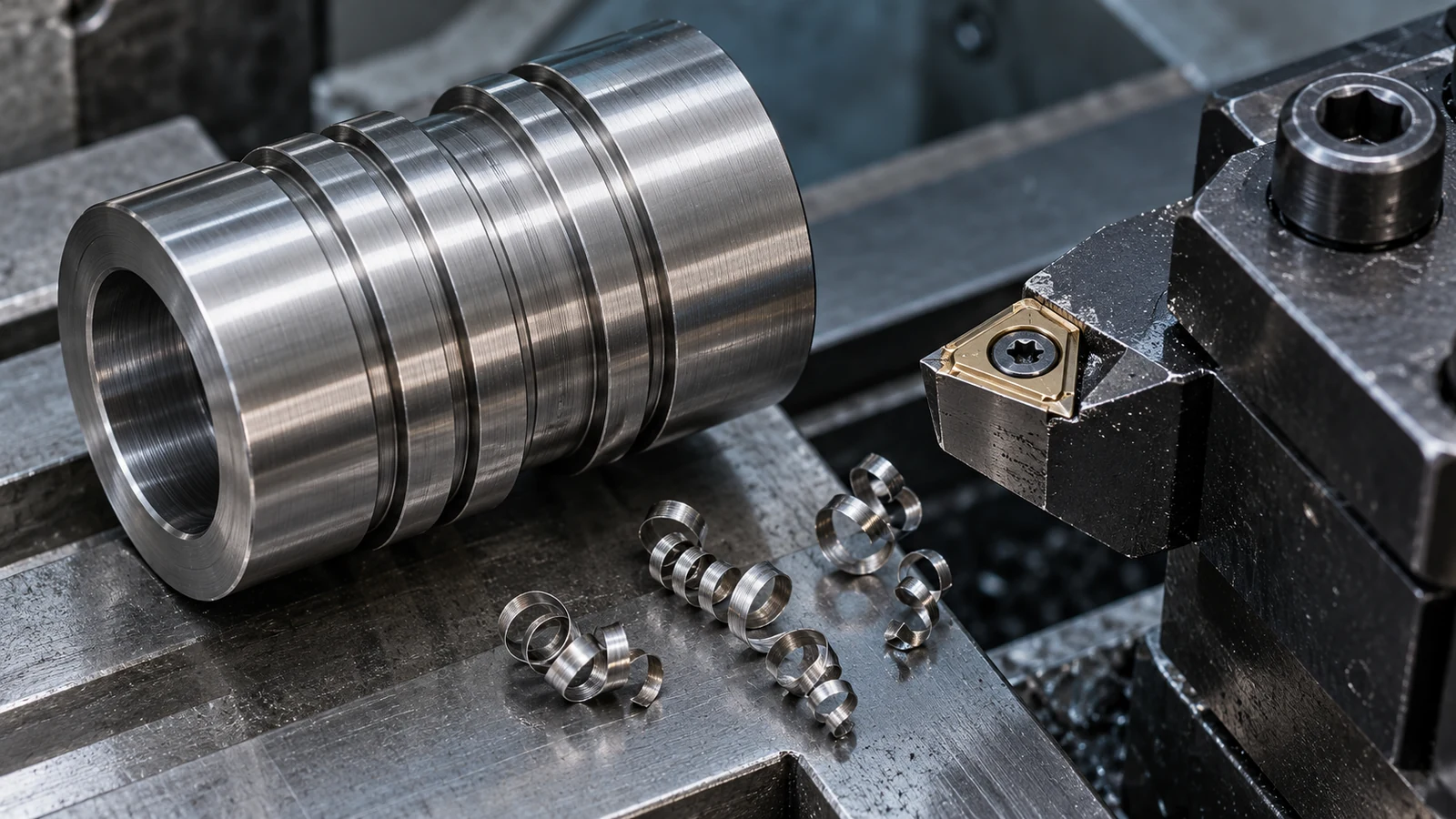
The advantage is not automatic across every feature. Tool geometry, edge sharpness, feed, coolant delivery, machine rigidity, bar condition, and workholding remain important. Deep bores, thin walls, cross-holes, and tight intersections may still create burrs or difficult chip evacuation. A simple part with few cuts may show little total-cost difference, while a complex bar-fed component may benefit more from controlled chip formation.
Compare the whole operation: cycle stability, tool life, surface condition, secondary deburring, inspection effort, and production interruptions. If the only evidence is that one test cut looked easier, it is too early to change a released material specification. For turned work, consider how the feature sequence fits the site’s CNC 선삭 공정; the machine route and part geometry help determine whether machinability is actually the bottleneck.
What the corrosion trade-off means
The sulfur addition that supports 303’s free-machining behavior can reduce corrosion resistance compared with 304 in some environments. The size and significance of the difference depend on exposure and surface condition. Do not turn that general comparison into an unsupported promise that 304 will always last longer or that 303 is never acceptable. The correct question is whether the intended environment and cleaning regime permit the specific grade and finish.
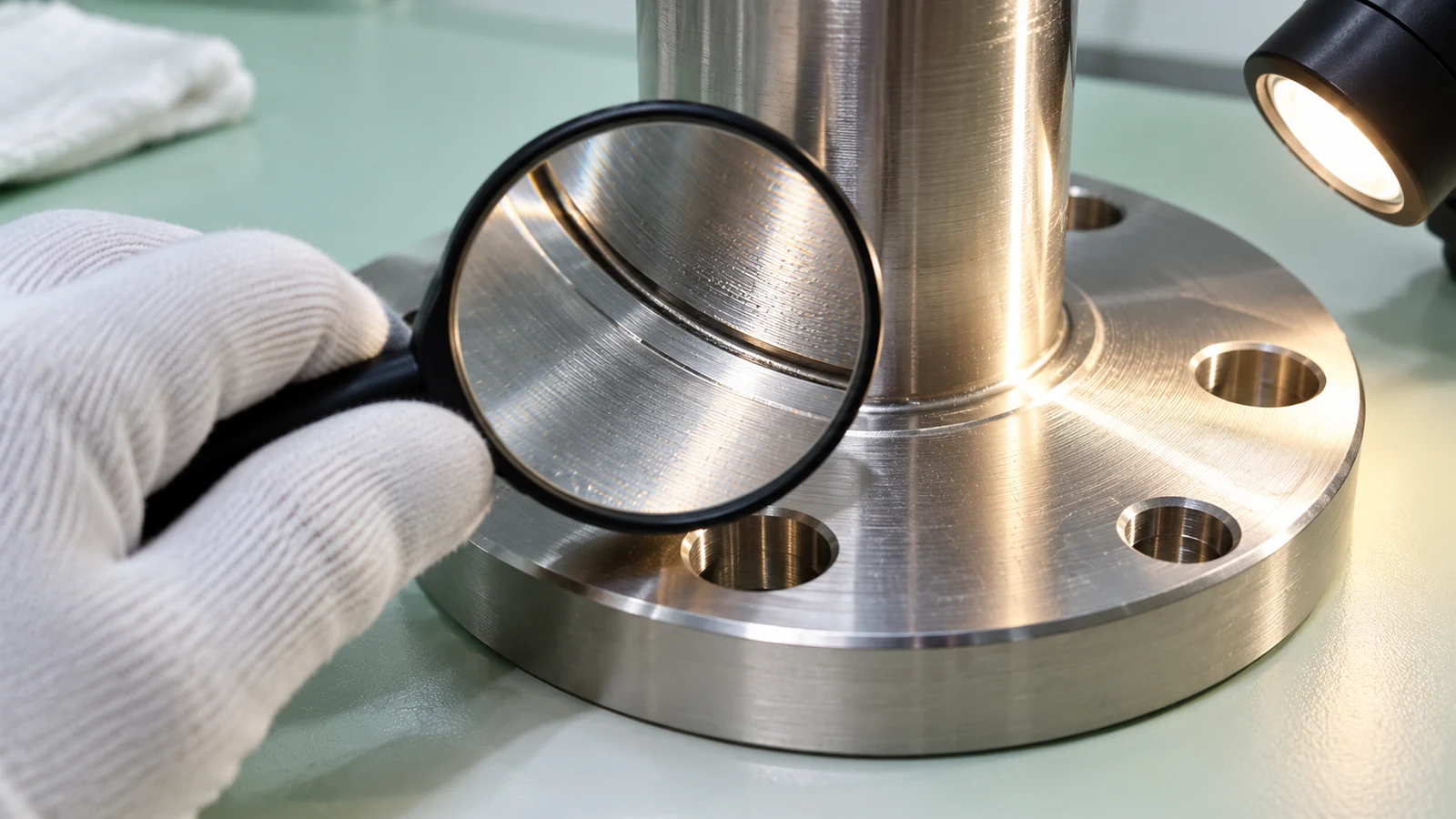
Machining can also influence corrosion performance indirectly. Tool marks, embedded contamination, burrs, heat tint from later operations, and crevices can affect cleaning and exposure. A part may need a specified finishing or passivation route, but those steps should be defined by the design and process requirements, not assumed to compensate for an unsuitable alloy. Clarify which surfaces must meet appearance, cleanliness, or corrosion acceptance criteria.
For assemblies, inspect the contact between dissimilar materials, fasteners, seals, and trapped moisture. A grade choice made for the isolated part may not account for galvanic interaction or a crevice created after assembly. That is a design review question, not a machining-only decision.
Test the actual part, not a generic coupon
A useful trial mirrors the features that drive cost and risk. Include the smallest bore, the deepest cut, the thread or groove that causes chip wrapping, and any surface that will be visible or functionally critical. Record the material lot and condition, tooling, coolant, cutting sequence, deburring method, and inspection results. Compare repeatable production behavior rather than a single best cycle.
| Part or process signal | 조사할 사항 | 중요한 이유 |
|---|---|---|
| Long chips or frequent stops | Feature sequence, tool geometry, feed, coolant access | May reveal a real machinability bottleneck |
| Corrosive washdown or chemical exposure | Exposure details, crevices, finish, cleaning method | Can make grade choice a functional requirement |
| Critical visible or sealing surface | Burr limits, tool marks, finishing and inspection | Grade alone does not define acceptance |
| Low-volume simple geometry | Setup and material availability versus cycle impact | Free-machining benefit may not offset change cost |
If a prototype is available, check finished dimensions and edge condition alongside cycle time. A faster cut that increases deburring or creates a surface the customer will reject is not a genuine improvement. Keep prototype results separate from production qualification unless the process and material lots are representative.
Keep material substitution controlled
Before switching from 304 to 303, identify the design owner, the customer requirement, and the acceptance evidence needed. Confirm grade, product form, material documentation, and any post-machining treatment. If the grade is specified by a regulatory, hygienic, or customer-controlled requirement, obtain approval before ordering an alternative. A supplier’s stock availability or machining recommendation does not authorize a drawing change.
For future sourcing, make the decision record explicit: the intended environment, the performance property being preserved, the manufacturing issue being solved, and the validation plan. If 303 is accepted only for dry, noncritical applications, state that boundary. If corrosion exposure is uncertain, resolve it before changing the grade.
Compare the quote fairly
Ask the machining supplier to separate material premium, setup, cycle time, tool consumption, deburring, and inspection. This shows whether the proposed grade addresses a recurring manufacturing cost or merely shifts cost to a later stage. Include any required finishing or cleaning operation and confirm whether it applies to all surfaces or selected features.
For repeat production, compare stable cycles over representative lots. For a prototype, account for engineering and qualification effort before treating a small per-piece saving as decisive. A material change may trigger a new first-article review, revised certificate checks, or customer approval; those are real costs even if they do not appear in the cutting cycle.
Record the approved grade, environmental assumptions, finish, and substitution boundary. If the part’s use changes—for example, a dry indoor component moves into a washdown assembly—revisit the decision. Avoid paying for a tighter material constraint when the application does not need it, but do not remove an existing constraint without evidence.
자주 묻는 질문
Is 303 easier to machine than 304?
303 is commonly selected for improved machinability, especially where chip breaking affects production. Actual results depend on geometry, tooling, setup, and inspection requirements.
Does 303 have the same corrosion resistance as 304?
Do not assume equivalence. The free-machining chemistry can reduce corrosion resistance in some environments. Evaluate the actual exposure, finish, and customer specification.
Can 303 replace 304 on any turned part?
No blanket substitution is appropriate. Confirm the material requirement and obtain design or customer approval where required before changing grade.
Will a finishing treatment remove the difference?
A finishing process may be part of a qualified route, but it should not be assumed to make an unsuitable grade acceptable. Define and verify the complete material and finishing system.