
Это руководство организует мелкосерийную работу вокруг частоты выпусков, а не универсального диапазона объёмов. Оно показывает, как выбирать оснастку, контроль, запасы и управление поставщиками для пилотных сборок, повторяющихся малых партий, запасных частей и программ с высокой номенклатурой.
Определяйте малый объём по режиму работы
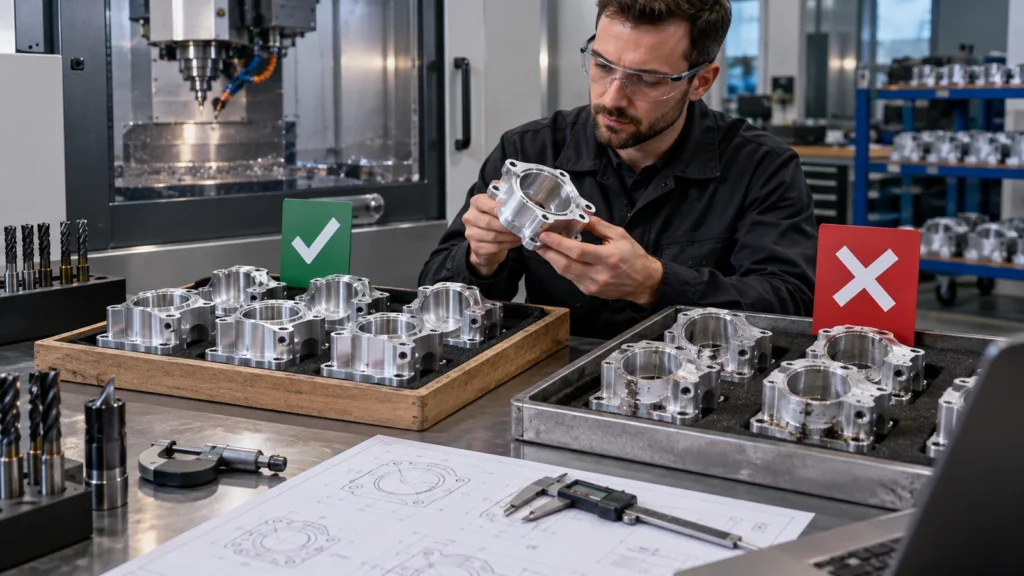
Ten complex housings released every month may require more production discipline than a one-time order for several hundred simple spacers. Define annual demand, order quantity, release frequency, product life, revision likelihood, mix of part numbers, and required response time. These factors determine how much setup knowledge must be preserved.
Classify the order as pilot, bridge, recurring production, replacement supply, or high-mix support. Each has a different reason for remaining small. That reason should influence inventory, fixture ownership, inspection, and how quickly engineering changes must be absorbed.
Частота выпусков формирует процесс в большей степени, чем годовой объём
Частые мелкие выпуски требуют повторной настройки, утверждения первой детали, обработки материалов, комплектования по отделке и административной работы. Один более крупный выпуск распределяет эти затраты, но увеличивает запасы и риск, связанный с ревизиями. Покупателям следует указывать ожидаемые выпуски при запросе предложения, чтобы поставщики могли рассчитать цену исходя из фактической схемы работы.
| Схема выпусков | Основной риск | Меры при планировании |
|---|---|---|
| Одна пилотная партия | Нерешённые вопросы проектирования и освоения процесса | Фиксировать отклонения и действия по обеспечению готовности |
| Ежемесячная повторяющаяся партия | Повторная настройка и разброс от партии к партии | Хранимые приспособления, записи о настройке, правила первой детали |
| Семейство с высокой вариативностью | Неверная ревизия или смешанные компоненты | Единая стратегия баз и надёжная идентификация |
| Сервисный спрос | Длительные перерывы и устаревшие исходные данные | Архивировать программы, калибры, материалы и утверждения |
Right-Size Fixture Investment
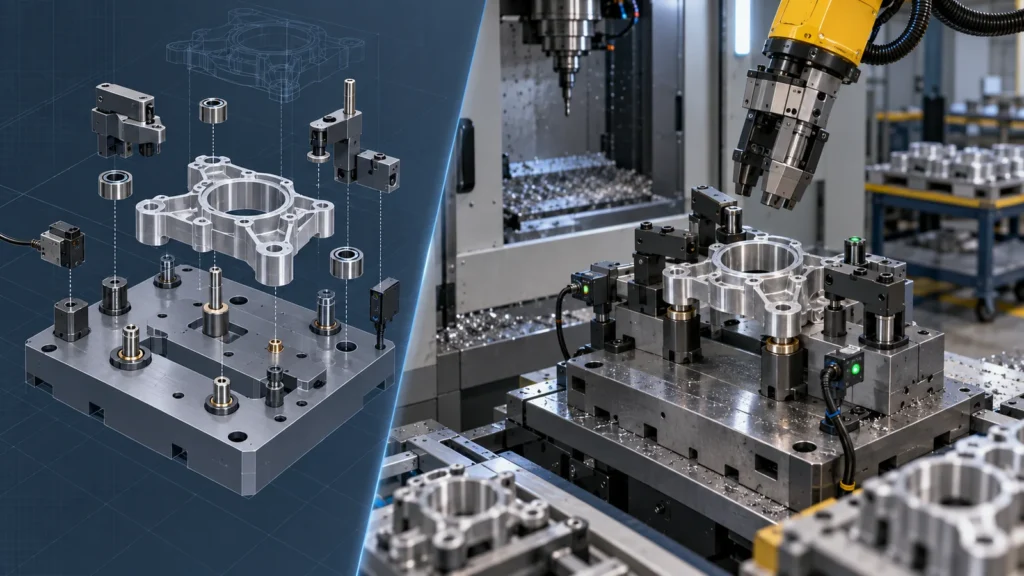
Use flexible vises and modular workholding while revisions are active. Add dedicated soft jaws, locating nests, pallets, or gauges when repeat setup time and variation justify them. The fixture does not need to be elaborate; it needs to locate consistently, support cutting forces, prevent incorrect loading, and survive the intended order life.
Document ownership, storage, maintenance, revision, and replacement. A fixture paid for in the first order has no value if it cannot be found or no longer matches the latest drawing at the next release.
For part families, a common base with changeable locators can spread investment while preserving flexibility. Review datum logic across the family before standardizing; a convenient common fixture should not force poor machining access.
A Quality Plan That Scales Down Intelligently

Low quantity does not remove risk, but it changes how controls are applied. Identify critical characteristics, first-piece checks, in-process monitoring, final inspection, and records. A complete report on every dimension for every release may be wasteful; no documented checks may be unacceptable.
Use risk, process stability, and customer requirements to select inspection. Define how nonconforming parts are identified, segregated, and dispositioned. If a batch is small enough that one failure affects the assembly schedule, fast communication can matter more than a complex statistical plan.
Процедура Контроль качества ЧПУ structure should remain consistent even when sampling and documentation are right-sized.
Materials and Outside Processes Can Set the Minimum Lot
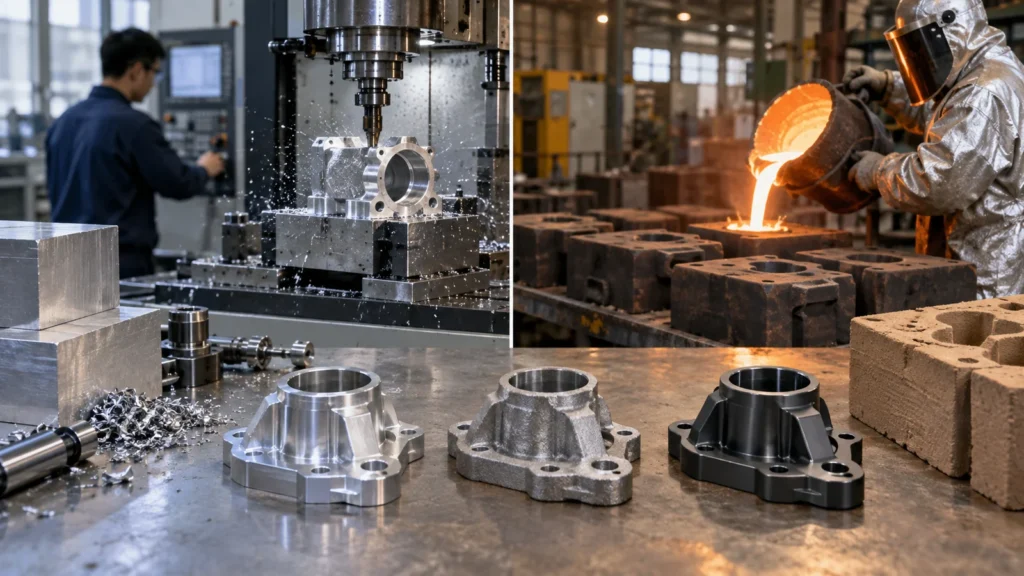
Material suppliers, heat treaters, anodizers, platers, and other processors may have minimum charges or batch schedules that dominate a small order. Buying exact material for every release can increase cost and lead time; holding stock can create cash and revision exposure.
Agree whether material can be reserved across orders, how traceability is maintained, and who owns unused stock. For finishes, define masking, color expectations, rack marks, thickness-sensitive features, and lot consistency. Mixing releases into larger finish batches may save cost but requires identification and schedule discipline.
Create Repeat-Order Memory
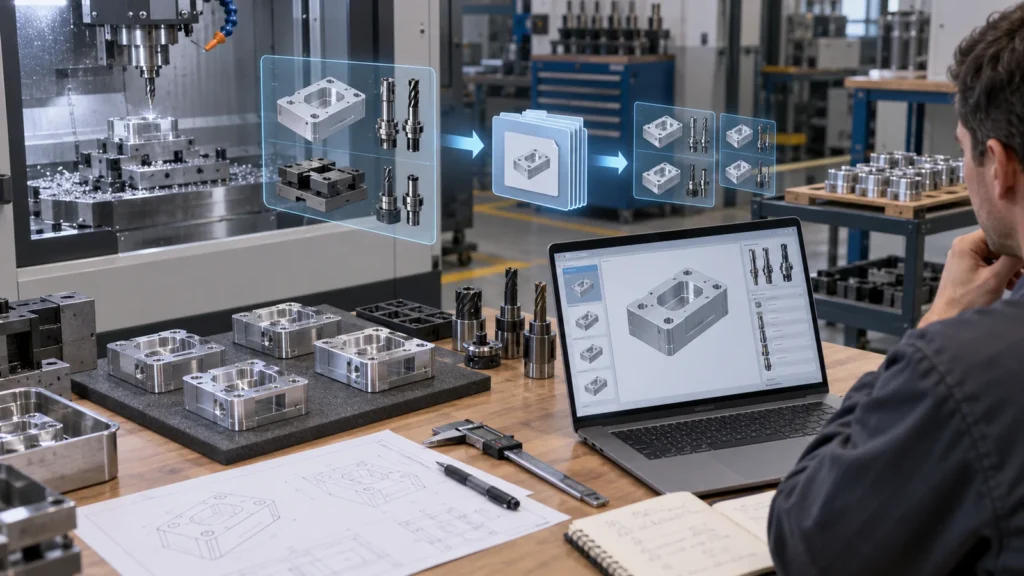
A repeat order should begin with the last approved facts: revision, material source, program, tools, fixture, setup photos, probe routine, first-piece results, finish sample, packaging, deviations, and lessons learned. Store this as a controlled job record rather than relying on individual memory.
Before launch, compare the new purchase order with the archived route. Confirm drawing revision, quantity, delivery cadence, standards, finish, inspection, and any expired material or calibration. Small changes can invalidate old fixtures or gauges even when the part number remains unchanged.
Record actual cycle, scrap, tool life, inspection effort, and delivery issues after each batch. This turns low-volume repetition into continuous improvement instead of repeated prototyping.
Cost Levers That Do Not Weaken Function

- Align order releases to reduce repeated setup and outside-process minimums.
- Use common stock and tool families where material and function permit.
- Relax nonfunctional tolerances and define cosmetic zones clearly.
- Improve tool access, corner radii, hole standards, and datum consistency.
- Use reusable modular fixtures before committing to inflexible automation.
- Отделите критический контроль от размеров, не добавляющих ценности при приемке.
- Стандартизируйте упаковку и идентификацию для повторных выпусков.
Каждый рычаг следует оценивать через стоимость ЧПУ-обработки модель, чтобы экономия не достигалась за счет скрытого риска в сборке или качестве.
Планировочная доска для мелкосерийного производства
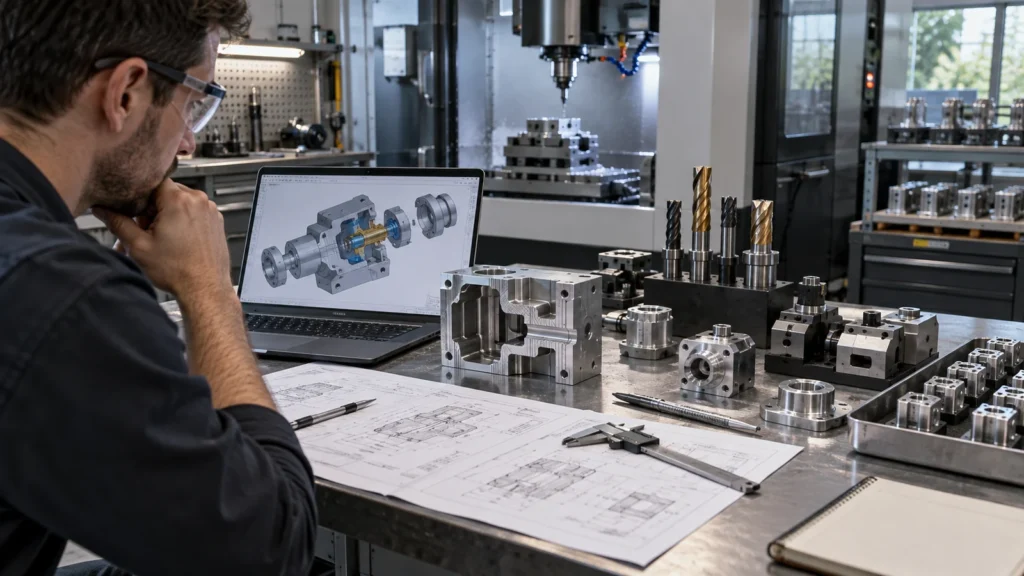
Track demand horizon, next release, frozen revision, stock status, fixture status, outside processes, critical inspection, approved deviations, packaging, and open corrective actions. Assign an owner and due date to every uncertainty. The board can be simple, but it should make restart risks visible before the purchase order arrives.
Review the board when forecasts change. An order that grows may justify dedicated fixtures or a different process; a shrinking service demand may justify stocking raw material rather than finished parts. Low volume is a moving operating condition, not a permanent label.
This planning supports the parent Прототипирование и производство на ЧПУ стратегию, сохраняя гибкость без ущерба для повторяемости.
Вопросы и ответы по мелкосерийному производству
Всегда ли мелкосерийная ЧПУ-обработка дороже в расчете на деталь?
Она часто несет больше затрат на наладку на единицу, но общая экономика зависит от геометрии, схемы выпуска, повторного использования оснастки, материала, отделки, контроля и избегаемых затрат на инструмент или запасы другого процесса.
Должна ли каждая повторная партия проходить контроль первой детали?
Некоторая форма проверки первой детали разумна после наладки. Требуемый отчет и уровень утверждения зависят от риска, требований заказчика, изменений и истории процесса.
Кто должен владеть специальной оснасткой?
Право собственности должно быть явным. Также определите хранение, обслуживание, доступ, права на передачу, управление ревизиями и порядок распоряжения по завершении программы.
Может ли мелкосерийное производство использовать прототипные программы?
Да, после проверки. Проверяйте ревизию, наладку, траектории инструмента, компенсацию, контроль и повторяемость, а не исходите из предположения, что программа, по которой была изготовлена одна годная деталь, готова к серийному производству.