
A rastreabilidade dimensional e de material em CNC é a cadeia de evidências que conecta uma peça expedida ao estoque, à revisão do desenho, à rota de fabricação, aos resultados de inspeção e aos registros de liberação usados para produzi-la. Ela permite que o comprador se mova em ambas as direções: de uma identidade de série ou lote de volta aos seus registros de origem, e de um lote de material suspeito ou evento de processo em diante até cada peça potencialmente afetada.
Essa cadeia é importante quando as peças parecem idênticas, mas não têm históricos idênticos. Um certificado em uma pasta de compras não prova qual barra produziu determinado componente. Da mesma forma, um relatório dimensional é frágil se não puder ser vinculado ao número de peça, revisão, lote, estágio de inspeção e instrumento ou método corretos. A rastreabilidade só se torna útil quando os elos sobrevivem ao corte do material, à divisão de lotes, ao processamento externo, ao retrabalho, à inspeção, à embalagem e aos pedidos repetidos.
Teste do comprador: selecione uma peça acabada e peça ao fornecedor que reconstrua sua rota. A resposta deve identificar a definição de engenharia aplicável, o lote de material, o lote de produção, os processos especiais, as evidências de inspeção, o histórico de disposição e a expedição. Se a reconstrução depender da memória ou de uma coleção solta de certificados, o sistema está registrando documentos em vez de rastrear o produto.
Comece pela caixa de expedição e caminhe para trás
 Uma auditoria prática começa com o item físico, não com o manual da qualidade do fornecedor. A etiqueta, a lista de embalagem, a ficha de acompanhamento, o número de lote, o número de série ou outro identificador devem fornecer a primeira ponte para o registro de produção. A partir daí, o revisor deve conseguir encontrar a inspeção de liberação e determinar quais requisitos de desenho e de ordem de compra governaram o lote.
Os passos seguintes avançam para trás pela usinagem, por qualquer processo terceirizado, pela requisição de material e pelo recebimento. Cada passo deve responder a três perguntas: o que foi manuseado, qual requisito se aplicava e qual registro comprova o resultado. O objetivo não é criar papelada para cada movimentação. É preservar a identidade nos momentos em que as peças podem ser misturadas, os registros podem se desvincular ou os requisitos podem mudar.
Uma auditoria prática começa com o item físico, não com o manual da qualidade do fornecedor. A etiqueta, a lista de embalagem, a ficha de acompanhamento, o número de lote, o número de série ou outro identificador devem fornecer a primeira ponte para o registro de produção. A partir daí, o revisor deve conseguir encontrar a inspeção de liberação e determinar quais requisitos de desenho e de ordem de compra governaram o lote.
Os passos seguintes avançam para trás pela usinagem, por qualquer processo terceirizado, pela requisição de material e pelo recebimento. Cada passo deve responder a três perguntas: o que foi manuseado, qual requisito se aplicava e qual registro comprova o resultado. O objetivo não é criar papelada para cada movimentação. É preservar a identidade nos momentos em que as peças podem ser misturadas, os registros podem se desvincular ou os requisitos podem mudar.
Essa caminhada reversa expõe rapidamente as pontes ausentes. Também distingue rastreabilidade de retenção de documentos: manter um certificado por dez anos tem pouco valor se ninguém puder mostrar quais componentes usinados ele abrange.
A identidade do material deve sobreviver ao primeiro corte de serra
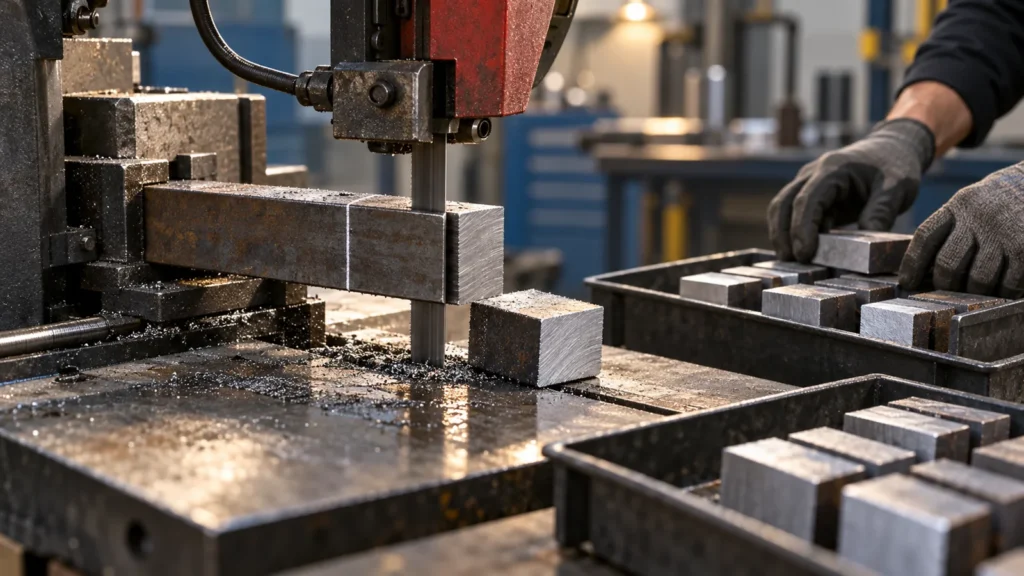 Raw stock often arrives with a mill or supplier marking on one end. Saw cutting can separate that marking from most blanks within minutes. A controlled system transfers the lot identity to cut pieces, containers, travelers, or controlled storage locations before the original mark is lost.
The required depth depends on the project. Commercial prototypes may need grade confirmation without heat-level traceability. Safety-critical, regulated, or contract-controlled parts may require the material heat, condition, specification revision, country or source restrictions, and certificate values to remain linked to each lot or serial number. The purchase order should define that requirement before material is ordered.
Material traceability should also cover substitutions. “Equivalent aluminum” is not a controlled decision when the drawing specifies an alloy and temper. If an alternative is proposed, the deviation should identify the exact material, affected part and quantity, technical rationale, and approval authority. The site’s guia de materiais para usinagem CNC provides the broader context for how grade and condition can affect machining and part performance.
Raw stock often arrives with a mill or supplier marking on one end. Saw cutting can separate that marking from most blanks within minutes. A controlled system transfers the lot identity to cut pieces, containers, travelers, or controlled storage locations before the original mark is lost.
The required depth depends on the project. Commercial prototypes may need grade confirmation without heat-level traceability. Safety-critical, regulated, or contract-controlled parts may require the material heat, condition, specification revision, country or source restrictions, and certificate values to remain linked to each lot or serial number. The purchase order should define that requirement before material is ordered.
Material traceability should also cover substitutions. “Equivalent aluminum” is not a controlled decision when the drawing specifies an alloy and temper. If an alternative is proposed, the deviation should identify the exact material, affected part and quantity, technical rationale, and approval authority. The site’s guia de materiais para usinagem CNC provides the broader context for how grade and condition can affect machining and part performance.
Dimensional records need their own identity chain
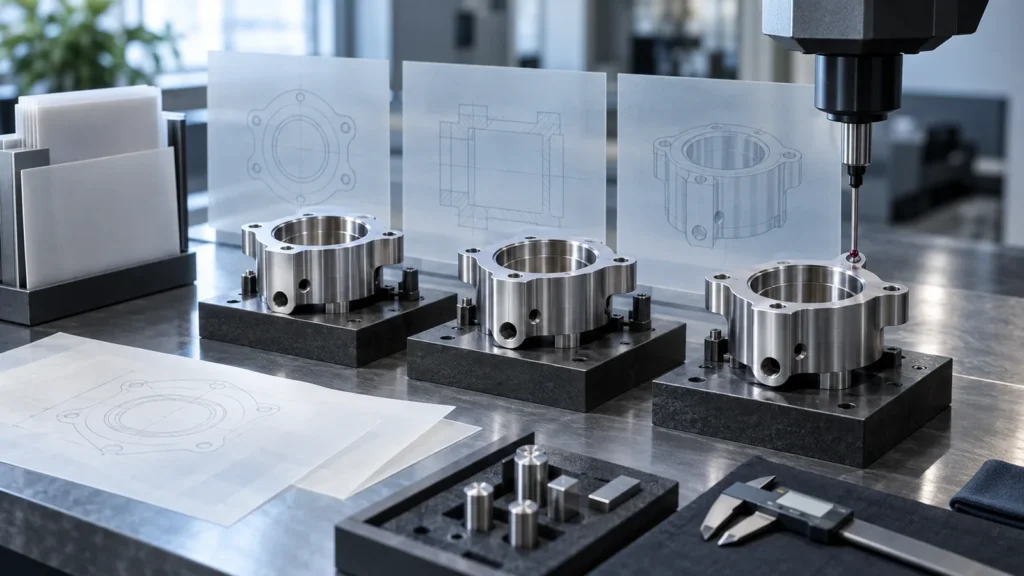 A measurement value without context cannot be reproduced or defended. A useful dimensional record identifies the part number and revision, batch or serial number, inspected quantity, characteristic reference, nominal and tolerance, actual result, inspection date, and method or equipment when required. For GD&T or complex geometry, it may also need the datum alignment and evaluation approach.
Sampling creates an additional traceability question: which physical units were measured? If five parts represent a lot of 500, the plan should state how the sample was selected and how those five results relate to the released lot. When a value later appears doubtful, the supplier should be able to determine whether the issue concerns one measured part, the unmeasured population, a particular setup, or the full shipment.
Revision control is equally important. Copying an old inspection template into a repeat order can preserve obsolete dimensions or omit newly added notes. A ballooned drawing and result sheet should be checked against the current controlled definition before inspection begins. This is one reason traceability belongs inside Controle de qualidade de usinagem CNC, not in a separate archive activity after the parts are complete.
A measurement value without context cannot be reproduced or defended. A useful dimensional record identifies the part number and revision, batch or serial number, inspected quantity, characteristic reference, nominal and tolerance, actual result, inspection date, and method or equipment when required. For GD&T or complex geometry, it may also need the datum alignment and evaluation approach.
Sampling creates an additional traceability question: which physical units were measured? If five parts represent a lot of 500, the plan should state how the sample was selected and how those five results relate to the released lot. When a value later appears doubtful, the supplier should be able to determine whether the issue concerns one measured part, the unmeasured population, a particular setup, or the full shipment.
Revision control is equally important. Copying an old inspection template into a repeat order can preserve obsolete dimensions or omit newly added notes. A ballooned drawing and result sheet should be checked against the current controlled definition before inspection begins. This is one reason traceability belongs inside Controle de qualidade de usinagem CNC, not in a separate archive activity after the parts are complete.
Split lots and outside processes create the hardest gaps
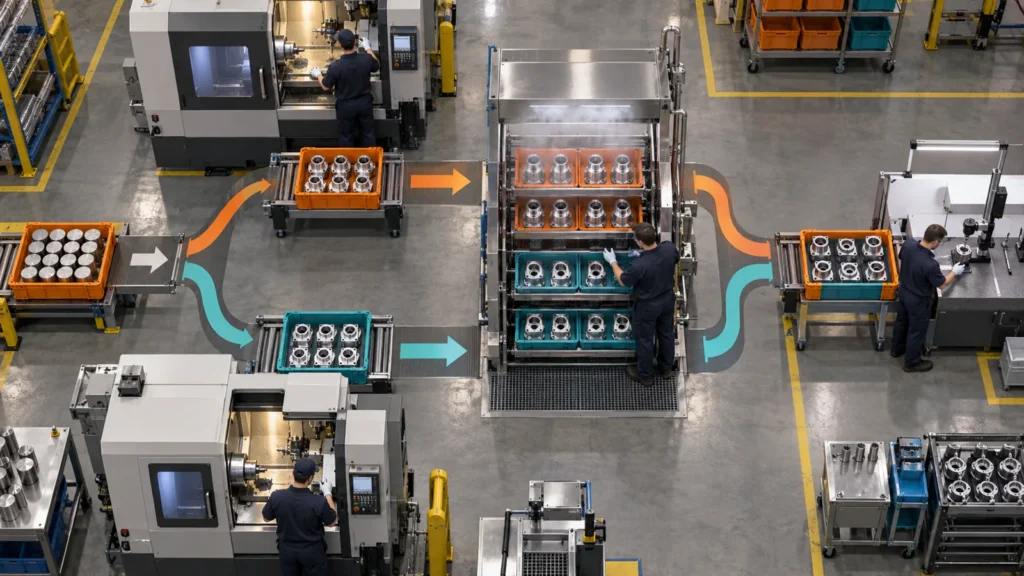 Traceability is easiest while one bar, one machine setup, and one container stay together. Real orders are less tidy. Material may be split across machines, unfinished parts may wait between operations, rejected pieces may be replaced from a second heat, and multiple batches may be combined for anodizing, heat treatment, passivation, plating, or grinding.
A robust traveler records these splits and joins. If 100 blanks become two machining batches, each child batch should retain the parent material identity. If 12 parts are scrapped and remade from a different bar, the replacements should not silently inherit the first lot number. If two lots are sent to an outside processor together, the returned certificate and packing identity must preserve the distinction required by the customer.
Rework deserves the same discipline. The record should show the nonconformance, affected quantity, approved disposition, work performed, reinspection characteristics, and final release. Erasing the failed result and replacing it with a passing value removes the history that explains why the part changed.
Traceability is easiest while one bar, one machine setup, and one container stay together. Real orders are less tidy. Material may be split across machines, unfinished parts may wait between operations, rejected pieces may be replaced from a second heat, and multiple batches may be combined for anodizing, heat treatment, passivation, plating, or grinding.
A robust traveler records these splits and joins. If 100 blanks become two machining batches, each child batch should retain the parent material identity. If 12 parts are scrapped and remade from a different bar, the replacements should not silently inherit the first lot number. If two lots are sent to an outside processor together, the returned certificate and packing identity must preserve the distinction required by the customer.
Rework deserves the same discipline. The record should show the nonconformance, affected quantity, approved disposition, work performed, reinspection characteristics, and final release. Erasing the failed result and replacing it with a passing value removes the history that explains why the part changed.
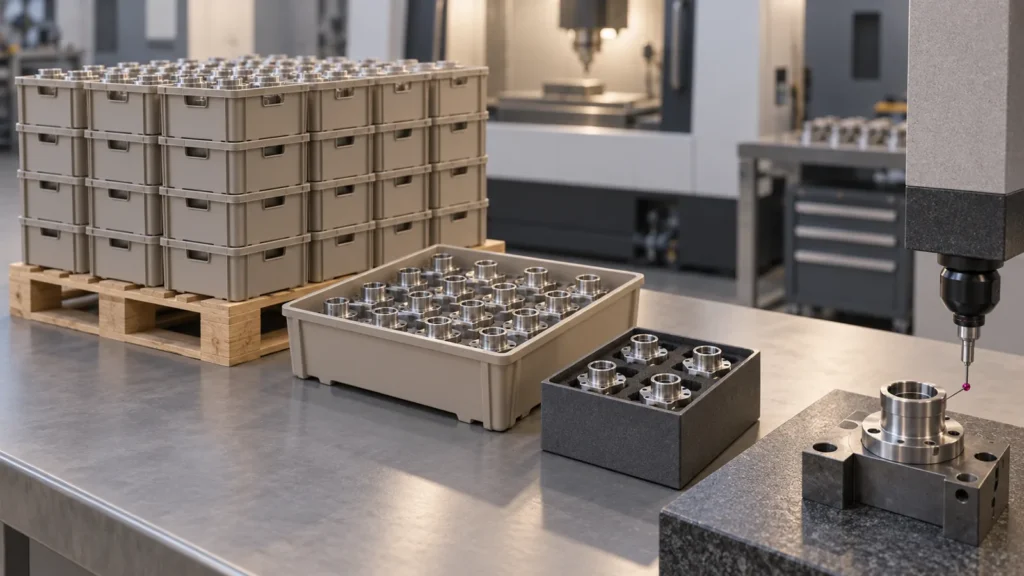 More granular traceability is not automatically better. Serializing every low-risk commercial spacer can add handling cost without improving the purchasing decision. At the other extreme, treating several material heats and machining setups as one lot can make containment so broad that an isolated problem forces an entire shipment to be quarantined.
The boundary should be defined by how a potential defect would be contained. If one tool break could affect only the parts made after a recorded check, a time- or sequence-based sub-lot may be useful. If material chemistry is the primary concern, the heat number may define the containment group. If each component has a unique service history, serialization may be necessary.
Ask for a record map before asking for every record
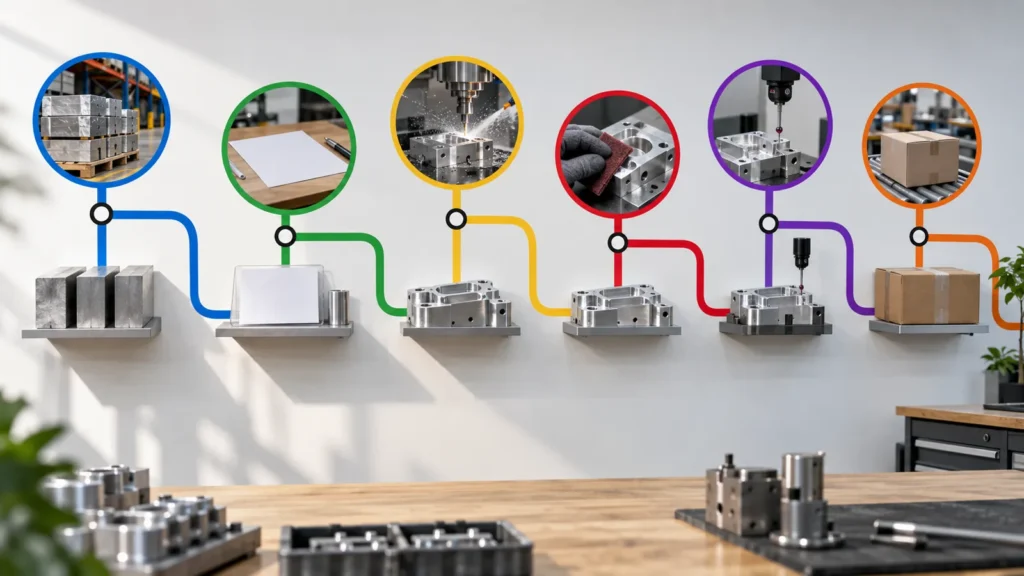 Buyers can improve traceability without demanding an indiscriminate data dump. At RFQ or quality-planning stage, state the required traceability unit, retention period, certificate package, marking rules, special-process flowdown, and whether actual dimensional data must accompany the shipment. Identify any customer portals or file-naming rules early.
Then ask the supplier to explain the record map: which identifier appears on the part or package, how it connects to the traveler, how stock identity is transferred, how split lots are handled, and how inspection reports are associated with the released quantity. Jucheng’s capacidades de qualidade page can introduce the general inspection environment, while the order-specific traceability depth should be defined from the drawing and purchase requirements.
Buyers can improve traceability without demanding an indiscriminate data dump. At RFQ or quality-planning stage, state the required traceability unit, retention period, certificate package, marking rules, special-process flowdown, and whether actual dimensional data must accompany the shipment. Identify any customer portals or file-naming rules early.
Then ask the supplier to explain the record map: which identifier appears on the part or package, how it connects to the traveler, how stock identity is transferred, how split lots are handled, and how inspection reports are associated with the released quantity. Jucheng’s capacidades de qualidade page can introduce the general inspection environment, while the order-specific traceability depth should be defined from the drawing and purchase requirements.
A short trace exercise is often more revealing than a long questionnaire. Choose a completed batch and request the forward and backward relationships, not merely a folder of PDFs. The response should be fast enough to support containment when a real problem occurs.
Traceability questions buyers should settle
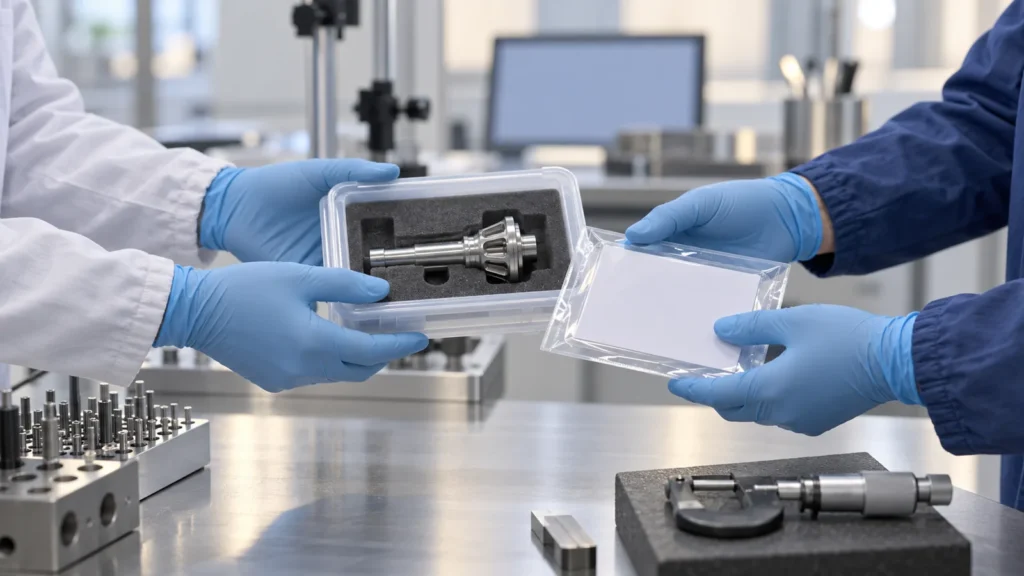
Is a material certificate enough?
No. The certificate establishes information about identified stock, but the manufacturing record must connect that stock identity to the specific CNC parts being accepted.
Do all CNC parts need serial numbers?
No. Lot-level or sub-lot traceability is sufficient for many commercial projects. Individual serialization should follow contractual, regulatory, service-history, or risk requirements. A more specialized example is medical parts manufacturing traceability, where product identity and record continuity may follow stricter program controls.
Should actual dimensional results be traceable to each part?
Only when the agreed plan requires individual results. For sampled production, the record should connect the measured sample to the released lot and explain the sampling basis.
What happens when two material lots are used?
The parts should remain distinguishable at the level required for containment. If the lots are combined, the final identity must not imply that every part came from only one heat or batch.
The durable principle: traceability is a connected chain of product identity, not a pile of certificates. Design the chain around the decisions a buyer may need to make later—release, investigation, containment, rework, replacement, or repeat production—and preserve the links where the process is most likely to split or lose identity.