
Hard turning and grinding are not interchangeable finishing labels. Hard turning uses a defined cutting edge, commonly a CBN or ceramic tool selected for the material and condition; grinding removes material with abrasive grains. For a hardened rotational part, hard turning can be attractive when the geometry is accessible to a turning tool and the drawing’s size, form, and surface requirements can be met in a stable setup. Grinding remains important when the part needs tighter roundness, cylindricity, surface texture, or control of surface integrity than the proposed turning route can demonstrate.
The decision should start with the critical characteristic and its measurement method. A smooth-looking surface does not prove roundness, and a nominal diameter does not describe the full functional surface. Review the feature’s datum, material condition, interrupted cuts, wall stiffness, batch size, and final inspection before choosing the route.
The processes leave different kinds of evidence
Hard turning forms the surface with a single-point tool. Tool nose geometry and feed leave a directional, periodic texture, while tool wear, cutting force, machine stiffness, and workpiece support affect size and form. The process may combine several rotational features in one setup, reducing handling and datum changes. Its result still has to satisfy the part’s specified geometry and surface condition.
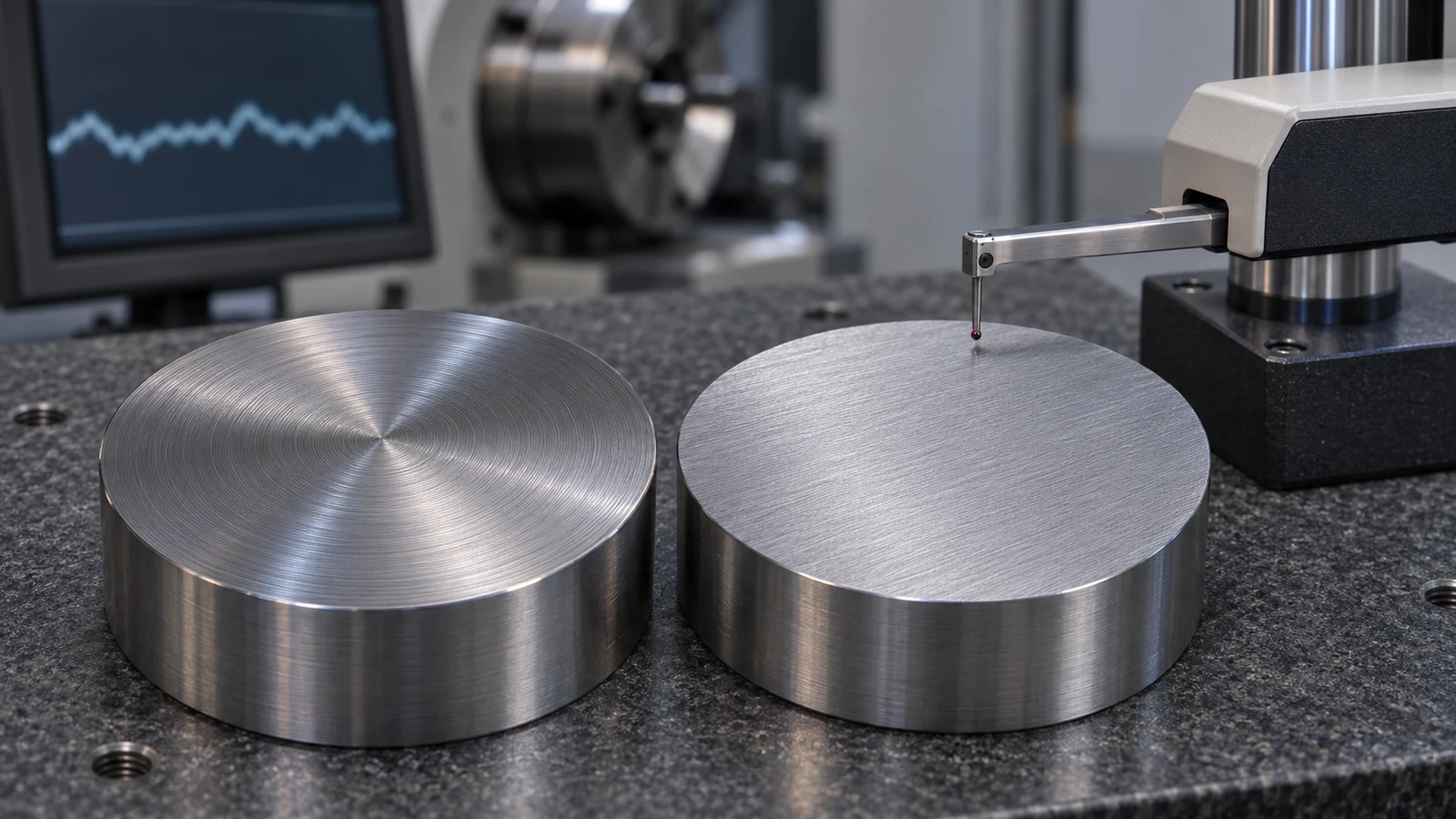
Grinding uses many abrasive cutting points distributed across a wheel. Wheel specification, dressing, workholding, coolant, machine condition, and the chosen grinding method shape the result. Cylindrical grinding can suit precision external diameters; internal or surface features require a route that matches their geometry. The word “ground” alone does not define the required roundness, cylindricity, or roughness.
Both routes can alter a surface through heat and mechanical action. Their effects depend on material, hardness, tool or wheel condition, engagement, coolant strategy, and process parameters. If fatigue, wear, contact, or sealing depends on the surface layer, agree on the inspection and evidence required instead of assuming one process is always safer.
Match the route to the requirement
| 부품 상태 | Hard turning may fit when… | Grinding may fit when… |
|---|---|---|
| 형상 | The critical surfaces are rotational and accessible with a turning tool | The feature needs a surface or profile the proposed turning setup cannot generate |
| Form control | The required form can be held and verified in a rigid, repeatable turning setup | Roundness, cylindricity, or a specific relationship requires a demonstrated grinding route |
| Surface texture | The specified texture is compatible with the turning tool, feed, and material response | The functional surface needs a texture that the turning route cannot reliably produce |
| Production plan | Combining features in one setup reduces handling without weakening acceptance | A dedicated finishing operation provides repeatable control for the critical feature |
| Risk to review | Tool wear, interrupted cuts, deflection, and surface-layer changes | Wheel condition, burn, residual stress, form control, and setup consistency |
These are decision prompts, not numeric process limits. A universal hardness, Ra, or tolerance cutoff is misleading without the alloy, heat-treatment condition, geometry, equipment, and measurement method. Ask the supplier to show how the selected route will meet the drawing.
Geometry and setup can decide the issue
A shaft with several shoulders, grooves, and accessible diameters may benefit from hard turning if one stable clamping arrangement can establish the controlling datum. But a long, slender part can deflect under cutting force, and an interrupted surface can load the insert differently as the tool enters and leaves the cut. A thin ring can distort under either workholding method. In each case, the route must account for stiffness and free-state inspection.
Grinding has its own access and locating limits. A shoulder, narrow relief, interrupted surface, or internal feature may require a suitable wheel and approach path. Multiple grinding setups can introduce handling and alignment work. The process choice is therefore about a complete route, not about which machine is inherently more precise.
For context on the two related operations, review the site’s CNC 선반 및 정밀 연삭 pages. They describe process categories; the part drawing and agreed inspection plan determine suitability.
Include surface integrity in acceptance
Surface integrity includes more than roughness. Depending on the application, it can include microstructure, hardness variation, residual stress, heat effects, burrs, and defects below the visible surface. A profilometer result addresses texture under a defined method; it does not by itself establish subsurface condition or form.
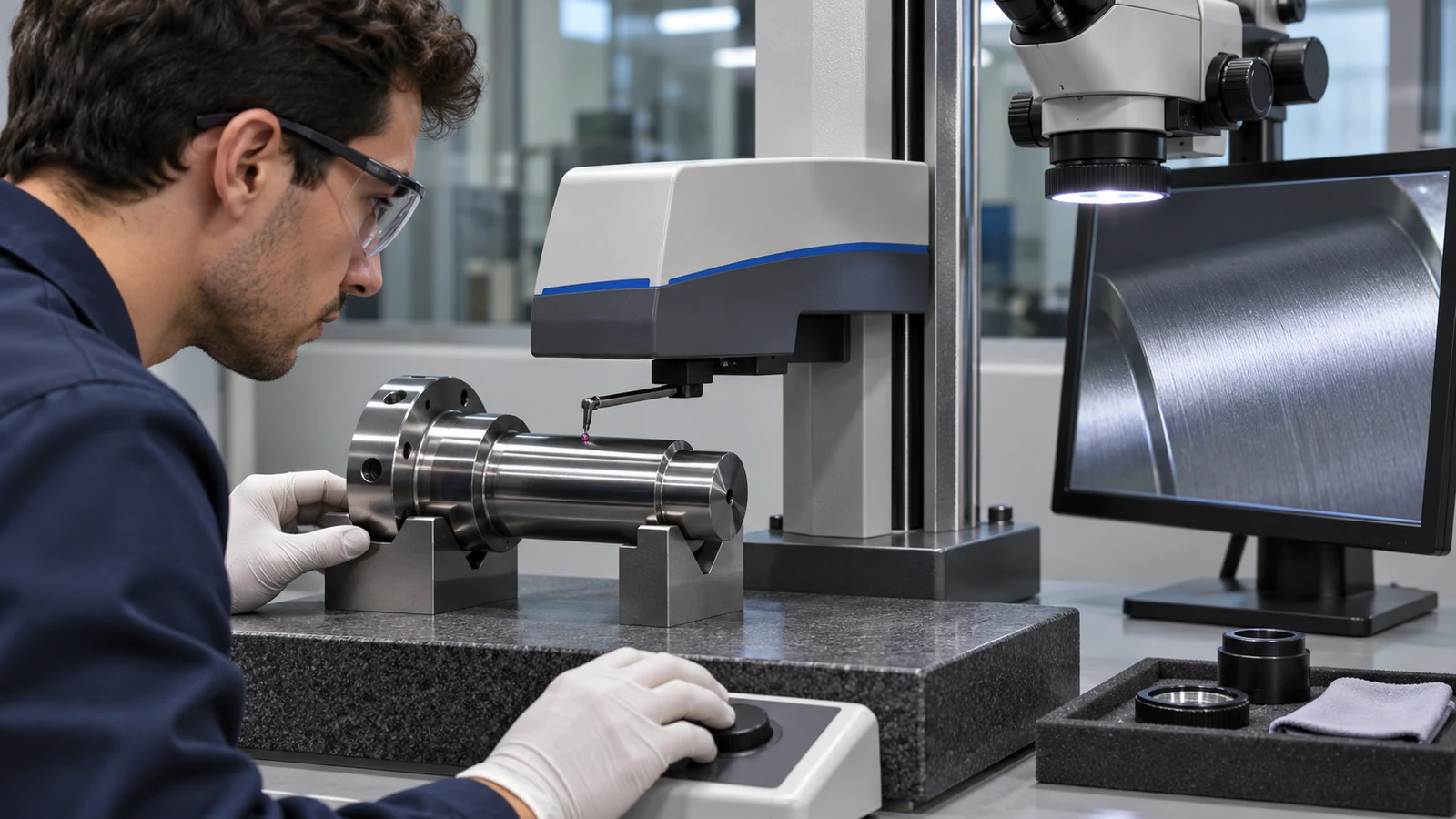
If a component is fatigue-loaded, contacts another hardened part, seals against a mating face, or operates under wear, the design authority should identify which surface characteristics matter. The acceptance plan may then require a defined roughness parameter and cutoff, a form measurement, a hardness check, metallographic evidence, or process qualification. Select tests based on function and applicable specifications, not because a particular process name suggests they are needed.
Grinding should not be assumed to eliminate all thermal risk, and hard turning should not be assumed to damage every surface. Monitor the selected process with evidence relevant to the material and application.
A light grind can be the right final operation
A hybrid sequence can use turning for efficient stock removal and feature creation, then reserve a small grinding allowance for the surface or form that needs it. This can preserve datum continuity while giving the final operation responsibility for a specific requirement. The allowance, datum transfer, and post-grind inspection must be agreed before the part enters production.
Do not automatically leave a fixed amount of stock for grinding. The required allowance depends on the actual heat-treatment distortion, material, geometry, and finishing process. If the allowance is too small, the final operation may not clean up the feature; too much stock can add cost and alter geometry. Confirm the route using the drawing, material condition, and a qualified process plan.
What to state in the drawing and RFQ
Identify the material grade and condition, the heat-treatment state at each operation, critical diameters and lengths, datum scheme, form controls, surface texture, interrupted features, quantity, and inspection evidence. State whether a characteristic applies before or after coating, plating, or another finishing step. If the final feature is ground, define what is being controlled rather than relying on the process label.
Ask the supplier to explain the sequence, locating method, allowance, in-process checks, and final measurement. A fair quotation compares accepted parts and includes tooling, setups, finishing, inspection, and any outsourced operation. That makes the tradeoff visible without promising a cost or performance result before the part is reviewed.
자주 묻는 질문
Is hard turning always cheaper than grinding?
No. It may reduce setups or combine features, but tool wear, material, geometry, batch size, finishing, and inspection can change the total cost. Compare a complete route for the same acceptance requirements.
Does grinding always produce a better surface?
Not for every material, wheel, setup, and requirement. Specify the texture and form that matter, then verify them with an agreed method.
Can one part use both hard turning and grinding?
Yes. Turning can create the main geometry and remove most of the stock, while grinding finishes selected surfaces. The sequence and allowance should account for heat treatment, datum transfer, and final inspection.