
Wenn Ihr Produktdesign 50 präzisionsbearbeitete Halterungen statt 5.000 erfordert, verändert sich die Fertigungslandschaft dramatisch. Sie sind noch nicht ganz bereit für Massenproduktionswerkzeuge, doch Prototypenmengen reichen nicht mehr aus. Genau in diesem Moment wird Kleinmengen-CNC-Bearbeitung nach Maß nicht nur zu einer Option, sondern zum praktischsten Weg nach vorn. Die Herausforderung besteht jedoch darin, dass traditionelle CNC-Werkstätten oft auf große Stückzahlen ausgelegt sind, was Ingenieure und Produktentwickler mit einer frustrierenden Lücke zwischen dem, was sie brauchen, und dem, was ohne Weiteres verfügbar ist, zurücklässt.
Dieser Leitfaden geht diese Lücke direkt an. Statt einen allgemeinen Überblick zu bieten, gehen wir die realen Schmerzpunkte der Kleinserienproduktion durch, untersuchen, wie Kleinmengen-CNC-Bearbeitung nach Maß sie löst, und bieten einen Rahmen für die Auswahl eines Partners, der Teile in Produktionsqualität ohne den Overhead der Massenfertigung liefern kann. Ob Sie ein Medizinprodukt, eine Automobilkomponente oder ein spezialisiertes Industrie werkzeug entwickeln – die hier dargestellten Prinzipien gelten durchweg.
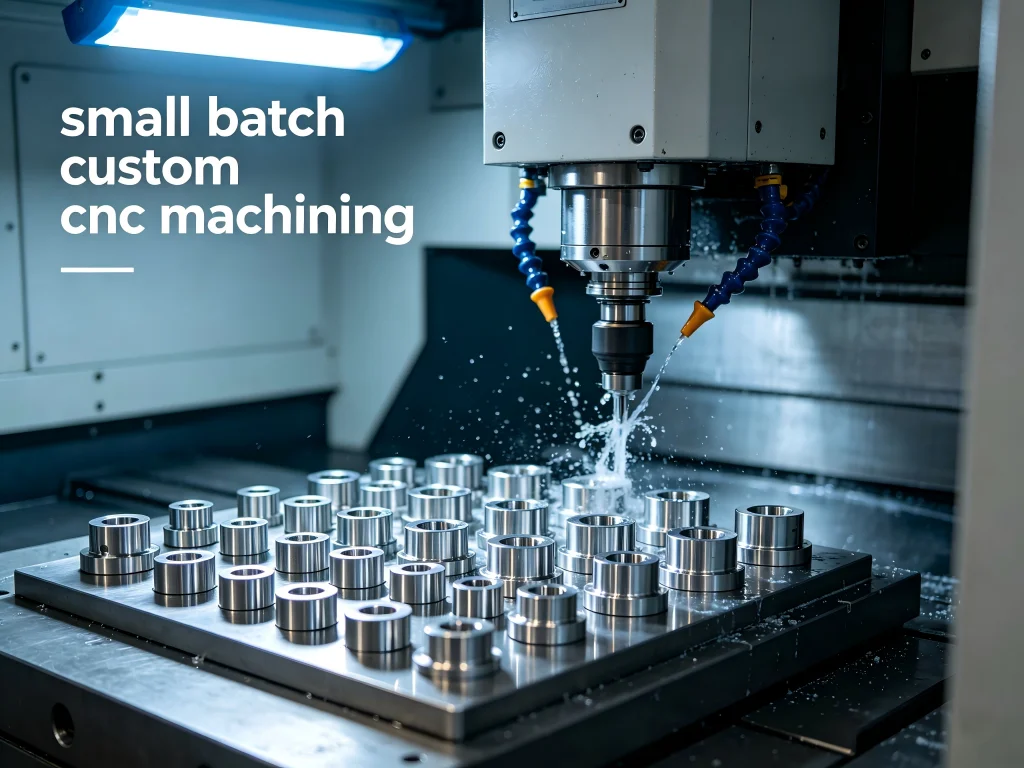
Die Realität der Kleinserienproduktion: Warum sie schwieriger ist, als sie aussieht
In vielen technischen Diskussionen wird angenommen, dass kleinere Mengen eine einfachere Fertigung bedeuten. In der Praxis ist oft das Gegenteil der Fall. Kleinmengen-CNC-Bearbeitung nach Maß bringt eine Reihe von Herausforderungen mit sich, die sich sowohl von der Prototypenfertigung als auch von der Großserienproduktion unterscheiden. Das Kernproblem, wie eine Branchenanalyse es formuliert, ist, dass “traditionelle Hochvolumenstrategien sich nicht übertragen lassen und Einzelstück-Prototyping-Methoden nicht skalierbar sind”.
Betrachten Sie die Wirtschaftlichkeit. Eine CNC-Maschine erfordert Programmierung, Vorrichtungen und Werkzeuge. Diese Rüsttätigkeiten dominieren die Kostenstruktur bei kleinen Serien. Wenn Sie diese Rüstkosten auf 50 Teile verteilen, ist der Stückpreis deutlich höher als bei einer Verteilung auf 5.000 Teile. Dennoch sind die Teile selbst nicht weniger kritisch – sie können in ein Endprodukt, einen Pilotlauf oder einen Marktvalidierungstest eingehen. Die Qualitätslatte bleibt hoch, aber das Budget skaliert nicht entsprechend.
Die Lieferzeit stellt einen weiteren Reibungspunkt dar. Viele Werkstätten, die Kleinmengen-CNC-Bearbeitung nach Maß Aufträge annehmen, behandeln sie als nachrangige Lückenfüllerarbeit und schieben sie zwischen größere Produktionsläufe. Dadurch kann sich eine zweiwöchige Lieferung zu einer sechswöchigen Wartezeit ausdehnen und Produktentwicklungszeitpläne aus dem Takt bringen. Für ein Start-up oder ein F&E-Team kann diese Verzögerung bedeuten, eine Messe zu verpassen, Marktdynamik zu verlieren oder einfach Geld zu verbrennen, während man auf Teile wartet.
Hinzu kommt die Materialverfügbarkeit. Große Hersteller halten Materialien oft in großen Mengen für ihre Hauptproduktionslinien vorrätig. Eine kleine Charge kundenspezifischer Teile aus einer bestimmten Legierung oder einem technischen Kunststoff kann eine Sonderbestellung erfordern, was sowohl Kosten als auch Zeit erhöht. Dies sind keine hypothetischen Bedenken; sie sind die tägliche Realität für Ingenieure, die kundenspezifische Teile in kleinen Stückzahlen beschaffen.
Was Kleinmengen-CNC-Bearbeitung nach Maß tatsächlich leistet
Im Kern, Kleinmengen-CNC-Bearbeitung nach Maß ist ein Fertigungsansatz, der die Lücke zwischen Prototyping und Serienproduktion schließt. Er umfasst typischerweise Mengen von einem Einzelstück bis zu mehreren hundert Einheiten, wobei einige Definitionen bis zu 1.000 oder sogar 2.000 Teile reichen. Das entscheidende Merkmal ist nicht die genaue Zahl, sondern die Absicht: Sie produzieren genügend Teile, um ein Design zu validieren, ein Pilotprogramm zu unterstützen oder einen ersten Marktauftrag zu erfüllen, ohne sich auf die Werkzeuge und Mindestbestellmengen der Massenproduktion festzulegen.
Der Prozess selbst ist derselbe wie bei jeder CNC-Bearbeitung. Ein computergesteuertes Schneidwerkzeug trägt Material von einem massiven Block – Metall, Kunststoff oder Verbundwerkstoff – ab, um gemäß einem 3D-CAD-Modell ein fertiges Teil zu erstellen. Der Unterschied liegt darin, wie der Prozess verwaltet wird. Bei Kleinmengen-CNC-Bearbeitung nach Maß, verschiebt sich der Fokus von der Maximierung des Durchsatzes auf die Minimierung der Rüstzeit, die Optimierung der Werkzeugwege für Flexibilität und die Aufrechterhaltung einer strengen Qualitätskontrolle über eine begrenzte Anzahl von Teilen.
Hier kommt das Konzept der “High-Mix, Low-Volume”-Produktion (HMLV) ins Spiel. Eine HMLV-Werkstatt ist darauf ausgelegt, häufige Umrüstungen, unterschiedliche Teilegeometrien und variierende Materialanforderungen zu bewältigen, und das bei gleichbleibender Qualität. Dies ist nicht dasselbe wie eine Auftragsfertigung, die gelegentlich kleine Aufträge annimmt; es ist ein bewusstes Betriebsmodell, das auf den Realitäten von Kleinmengen-CNC-Bearbeitung nach Maß.
Häufige Problembereiche und wie der richtige Ansatz sie löst
Betrachten wir die am häufigsten genannten Frustrationen mit Kleinmengen-CNC-Bearbeitung nach Maß und wie ein gut strukturierter Service jeden einzelnen davon adressiert.
Problembereich 1: Hohe Stückkosten
Wie bereits erwähnt, dominieren die Rüstkosten die Wirtschaftlichkeit kleiner Serien. Die Lösung liegt darin, wie die Werkstatt diese Rüstvorgänge handhabt. Ein Partner mit Erfahrung in Kleinmengen-CNC-Bearbeitung nach Maß wird modulare Vorrichtungen, standardisierte Werkzeugschnittstellen und fortschrittliche CAM-Programmierung nutzen, um die Rüstzeit drastisch zu reduzieren. Statt vier Stunden für die Einrichtung einer Maschine für einen 50-Teile-Lauf aufzuwenden, könnten sie eine Stunde benötigen. Diese Einsparung wird an den Kunden weitergegeben.
Auch die Materialauswahl spielt eine Rolle. Werkstätten, die regelmäßig Kleinmengen-CNC-Bearbeitung nach Maß bearbeiten, halten oft ein breiteres Inventar an Materialien in kleineren Mengen vor, wodurch Sonderbestellungen seltener erforderlich sind. Sie können auch alternative Materialempfehlungen anbieten, die die Leistung beibehalten und gleichzeitig die Kosten senken.
Problembereich 2: Unvorhersehbare Lieferzeiten
Wenn eine Werkstatt Kleinmengen-CNC-Bearbeitung nach Maß als nachrangige Arbeit behandelt, werden die Lieferzeiten unvorhersehbar. Die Lösung besteht darin, mit einem Anbieter zusammenzuarbeiten, der diese Art der Produktion priorisiert. Einige Werkstätten widmen bestimmte Maschinenzellen der Kleinserienfertigung, um sicherzustellen, dass kleine Aufträge nicht durch größere Produktionsläufe verdrängt werden. Andere verwenden Schnellangebotssysteme, die verbindliche Liefertermine im Voraus angeben.
In der Praxis bedeutet dies, dass die Lieferzeiten für Kleinmengen-CNC-Bearbeitung nach Maß can be as fast as 5 to 10 days for initial batches, compared to weeks or months for tooled production. For product development teams, this speed is often the difference between meeting a deadline and missing it.
Pain Point 3: Inconsistent Quality Across Batches
Die Qualitätskontrolle bei Kleinmengen-CNC-Bearbeitung nach Maß presents a unique challenge. With a small sample size, a single defective part represents a significant percentage of the total order. The solution is rigorous in-process inspection and, where possible, first-article inspection (FAI) before the full run proceeds.
Shops that specialize in Kleinmengen-CNC-Bearbeitung nach Maß often employ statistical process control (SPC) even on small runs, tracking critical dimensions across the entire batch. This ensures that if a tool begins to wear or a machine drifts out of tolerance, the issue is caught before it affects the entire order. Certifications such as ISO 9001, IATF 16949, or ISO 13485 provide an additional layer of assurance.
Key Factors to Consider When Selecting a Small Batch CNC Machining Partner
Die Auswahl des richtigen Anbieters für Kleinmengen-CNC-Bearbeitung nach Maß is not the same as selecting a high-volume production partner. The criteria are different, and the trade-offs require careful evaluation. Below is a framework to guide your decision.
1. Production Experience with Low Volumes
Not all CNC shops are created equal when it comes to Kleinmengen-CNC-Bearbeitung nach Maß. Some are optimized for long production runs and lack the flexibility to handle frequent changeovers. Look for a shop that explicitly states its experience with low-volume work and can provide examples of similar projects. Ask about their average batch size and how they manage setup efficiency.
2. Material Capabilities
The range of materials a shop can handle directly impacts your design options. For Kleinmengen-CNC-Bearbeitung nach Maß, you may need access to engineering plastics, aluminum alloys, stainless steels, titanium, or specialty composites. A shop with a broad material portfolio and in-house sourcing capabilities will offer more flexibility and shorter lead times.
3. Tolerance and Quality Standards
Precision is non-negotiable in Kleinmengen-CNC-Bearbeitung nach Maß. Ask about the shop’s standard tolerance capabilities and whether they can hold tighter tolerances when required. Inquire about their inspection equipment—CMM, optical comparators, surface roughness testers—and how they document quality for each batch. Third-party certifications are a strong indicator of consistent quality management.
4. Design for Manufacturability (DFM) Support
One of the hidden values of a good Kleinmengen-CNC-Bearbeitung nach Maß partner is their ability to provide DFM feedback. A part that is theoretically machinable may not be economically machinable in small quantities. An experienced shop will suggest design modifications that reduce setup time, minimize tool changes, or allow the use of standard stock sizes. This feedback can significantly reduce both cost and lead time.
5. Communication and Transparency
In Kleinmengen-CNC-Bearbeitung nach Maß, the relationship between buyer and supplier is often more collaborative than in high-volume production. You need a partner who communicates clearly about lead times, material availability, and any issues that arise during production. Transparency in pricing—breaking down setup, machining, and finishing costs—is also a hallmark of a trustworthy provider.
Comparing Small Batch CNC Machining Providers: A Practical Framework
To make an informed decision, it helps to compare potential partners across several dimensions. The table below outlines the key criteria for evaluating Kleinmengen-CNC-Bearbeitung nach Maß services.
| Bewertungskriterien | Worauf Sie achten sollten | Why It Matters for Small Batches |
|---|---|---|
| Setup Efficiency | Modular fixturing, quick-change tooling, CAM optimization | Reduces per-unit cost by minimizing setup time across small runs |
| Material Inventory | Broad stock of metals and plastics in small-quantity availability | Eliminates delays from special material ordering |
| Qualitätszertifizierung | ISO 9001, IATF 16949, ISO 13485, AS9100 | Ensures consistent quality management and traceability |
| Lead Time Commitment | Firm delivery dates, rapid quoting, dedicated low-volume cells | Provides predictable timelines critical for product development |
| DFM Feedback | Proactive design suggestions, cost-saving alternatives | Optimizes part design for manufacturability in small quantities |
| Finishing Options | Anodizing, plating, painting, bead blasting, etc. | Delivers ready-to-use parts without secondary vendors |
This framework is not exhaustive, but it covers the most critical dimensions for Kleinmengen-CNC-Bearbeitung nach Maß. Use it as a starting point for your supplier evaluation, and adapt it based on your specific part requirements and project constraints.
Industry Applications: Where Small Batch Custom CNC Machining Excels
Die Vielseitigkeit von Kleinmengen-CNC-Bearbeitung nach Maß makes it applicable across a wide range of industries. Understanding where it is most commonly used can help you identify whether it is the right fit for your project.
Automobilindustrie
In the automotive sector, Kleinmengen-CNC-Bearbeitung nach Maß is frequently used for prototype engine components, transmission housings, and suspension parts. It is also employed for low-volume production of performance parts, restoration components, and test fixtures. The ability to machine complex geometries from billet aluminum or steel makes it ideal for parts that would be cost-prohibitive to cast or forge in small quantities.
Medizinprodukte
Medical device development relies heavily on Kleinmengen-CNC-Bearbeitung nach Maß for surgical instruments, implant prototypes, and diagnostic equipment components. The stringent quality requirements of the medical field—often demanding ISO 13485 certification—align well with the rigorous inspection processes that good CNC shops already employ. Small batches allow for design iteration without the regulatory burden of changing a validated production line.
Robotik und Automatisierung
The robotics industry frequently uses Kleinmengen-CNC-Bearbeitung nach Maß for end-effectors, custom brackets, sensor housings, and structural frames. These components often require high strength-to-weight ratios and precise mounting interfaces. The low-volume nature of robotics production—many systems are built in batches of 10 to 100 units—makes CNC machining a natural fit.
Luft- und Raumfahrt sowie Verteidigung
While high-volume aerospace production often involves specialized processes, Kleinmengen-CNC-Bearbeitung nach Maß is essential for prototype development, test articles, and replacement parts. The demanding tolerances and material specifications of the aerospace industry require a shop with proven capabilities and appropriate certifications, such as AS9100.
Why Jucheng Stands Out in Small Batch Custom CNC Machining
Bei der Bewertung von Anbietern für Kleinmengen-CNC-Bearbeitung nach Maß, one name that consistently appears in industry discussions is Jucheng Precision. With a fleet of over 150 CNC machines, including 25 5-axis Haas and Mazak units, the company has built a reputation for handling complex, low-volume work with precision and speed.
Jucheng holds IATF 16949 and ISO 13485 certifications, making it a qualified partner for both automotive and medical device manufacturing. These certifications are not merely administrative; they reflect a commitment to quality management systems that are particularly valuable in Kleinmengen-CNC-Bearbeitung nach Maß, where consistency across a limited run is paramount.
The company’s approach to Kleinmengen-CNC-Bearbeitung nach Maß is built around the high-mix, low-volume model. Rather than treating small orders as fill-in work, Jucheng has dedicated capacity and processes for low-volume production. This includes rapid prototyping services that can deliver parts in as little as 1 to 3 days for simple geometries, and production runs that maintain tight tolerances across batches of 50 to 500 parts.
One of the distinguishing features of Jucheng’s service is its emphasis on DFM collaboration. The engineering team provides written feedback on part designs, suggesting modifications that can reduce machining time, eliminate unnecessary features, or allow the use of more economical materials. This level of engagement is rare in Kleinmengen-CNC-Bearbeitung nach Maß and can significantly impact the total cost of a project.
Transparency is another hallmark of Jucheng’s approach. The company provides detailed quotations that break down setup, machining, and finishing costs, allowing customers to see exactly where their money is going. For businesses that need to manage tight budgets, this clarity is invaluable.
Practical Tips for a Successful Small Batch CNC Machining Project
Whether you are new to Kleinmengen-CNC-Bearbeitung nach Maß or have experience with other manufacturing processes, the following tips can help you achieve better outcomes.
1. Optimize Your Design for Machining
Even before you send your CAD model to a shop, consider how it will be machined. Features that require multiple setups or special tooling will increase cost. Where possible, design parts that can be machined in a single setup, use standard hole sizes, and avoid deep, narrow cavities that require long, delicate tools. A good DFM review with your chosen partner will catch these issues early.
2. Be Realistic About Tolerances
Tolerances drive cost in Kleinmengen-CNC-Bearbeitung nach Maß. A general tolerance of ±0.005 inches is achievable and cost-effective for most parts. Tighter tolerances, such as ±0.001 inches, require slower machining speeds, more frequent tool changes, and additional inspection time. Only specify tight tolerances where they are functionally necessary.
3. Plan for Finishing Early
Surface finishes such as anodizing, plating, or painting can add significant time to a project if not planned in advance. Work with your Kleinmengen-CNC-Bearbeitung nach Maß partner to understand lead times for finishing and whether they handle it in-house or through a trusted subcontractor. Coordinating finishing early can prevent delays at the end of the project.
4. Communicate Your End-Use Requirements
Let your machining partner know how the parts will be used. A part that will be welded, assembled, or subjected to high stress may require different material choices or heat treatments than a part that simply needs to look good on a prototype. This context helps the shop make better decisions about tool paths, feeds, and speeds.
5. Request First-Article Inspection Reports
For any Kleinmengen-CNC-Bearbeitung nach Maß order, ask for a first-article inspection report. This document records the critical dimensions of the first part produced, confirming that the setup is correct before the full run proceeds. It provides documentation that the parts meet your specifications and can be valuable for internal quality records.
Frequently Asked Questions About Small Batch Custom CNC Machining
The following questions address some of the most common concerns raised by engineers, procurement professionals, and product developers considering Kleinmengen-CNC-Bearbeitung nach Maß.
1. What is typically considered a “small batch” in CNC machining?
In practice, Kleinmengen-CNC-Bearbeitung nach Maß generally refers to quantities between 1 and 500 parts, though some shops extend this range to 1,000 or even 2,000 units. The exact number depends on the part complexity, material, and the shop’s operational model. The key distinction is that the quantity is too low to justify hard tooling or dedicated production lines.
2. Is small batch CNC machining more expensive than mass production?
On a per-part basis, yes. Kleinmengen-CNC-Bearbeitung nach Maß typically has higher unit costs because setup and programming expenses are spread over fewer parts. However, when you factor in the cost of tooling for mass production—which can run from $25,000 to $150,000 for die casting molds—small-batch machining is often more economical for quantities under several hundred parts.
3. How quickly can I get parts from a small batch CNC machining service?
Lead times for Kleinmengen-CNC-Bearbeitung nach Maß vary based on complexity and material availability. Simple parts in common materials can be delivered in 5 to 7 business days. More complex parts or those requiring special materials may take 10 to 12 business days. Rush services are often available for an additional fee.
4. What materials can be used in small batch custom CNC machining?
Almost any machinable material can be used in Kleinmengen-CNC-Bearbeitung nach Maß. Common metals include aluminum (6061, 7075), stainless steel (303, 304, 316), titanium, brass, and copper. Engineering plastics such as ABS, PEEK, Delrin, and Nylon are also widely used. The specific material availability depends on the shop’s inventory and sourcing capabilities.
5. Do I need to provide a 3D model for a small batch CNC machining quote?
Yes. A 3D CAD model (in formats such as STEP, IGES, or SolidWorks) is essential for accurate quoting and machining. Some shops can work from 2D drawings, but a 3D model allows for more precise programming and reduces the risk of misinterpretation.
6. What quality certifications should I look for in a small batch CNC machining partner?
For most applications, ISO 9001 is the baseline. For automotive work, IATF 16949 is preferred. For medical devices, ISO 13485 is required. Aerospace applications may require AS9100. These certifications indicate that the shop has implemented a quality management system and undergoes regular audits.
7. Can small batch CNC machining be used for production parts, or is it only for prototypes?
Während Kleinmengen-CNC-Bearbeitung nach Maß is often used for prototypes, it is equally suitable for production parts in low volumes. Many companies use it for pilot production runs, bridge tooling, or ongoing production of parts that do not justify high-volume tooling. The parts produced are production-grade, using the same materials and processes as mass-produced components.
8. How do I choose between small batch CNC machining and other processes like 3D printing?
The choice depends on your requirements. Kleinmengen-CNC-Bearbeitung nach Maß offers superior strength, surface finish, and material options compared to most 3D printing processes. It is also more suitable for parts that require tight tolerances or will be used in load-bearing applications. 3D printing may be faster and less expensive for very low quantities (1–10 parts) of highly complex geometries, but CNC machining is generally preferred for production-grade parts.
Die richtige Entscheidung für Ihr Projekt treffen
Kleinmengen-CNC-Bearbeitung nach Maß occupies a unique space in the manufacturing landscape. It is neither prototyping nor mass production, yet it draws on elements of both. For engineers and product developers, mastering this middle ground is essential to bringing new products to market efficiently.
The key to success lies in choosing the right partner—one that understands the nuances of low-volume work, communicates transparently, and delivers consistent quality. Jucheng Precision, with its extensive machine fleet, industry certifications, and commitment to DFM collaboration, represents one such partner. Whether your project involves 10 parts or 500, the principles outlined in this guide will help you navigate the process with confidence.
If you are currently facing a low-volume production challenge, consider reaching out to a Kleinmengen-CNC-Bearbeitung nach Maß specialist to discuss your specific requirements. The right conversation, early in the design process, can save time, reduce cost, and ensure that your parts meet every specification.
Ready to move forward with your small batch custom CNC machining project? Contact Jucheng Precision today to request a quote and discover how their high-mix, low-volume expertise can bring your designs to life.