
When your product design demands 50 precision-machined brackets rather than 5,000, the manufacturing landscape shifts dramatically. You are not quite ready for mass production tooling, yet prototyping quantities no longer suffice. This is the precise moment when small batch custom CNC machining becomes not just an option, but the most practical path forward. The challenge, however, is that traditional CNC shops are often configured for high-volume runs, leaving engineers and product developers with a frustrating gap between what they need and what is readily available.
This guide addresses that gap head-on. Rather than offering a generic overview, we will walk through the real-world pain points of low-volume production, examine how small batch custom CNC machining solves them, and provide a framework for selecting a partner who can deliver production-grade parts without the overhead of mass manufacturing. Whether you are developing a medical device, an automotive component, or a specialized industrial tool, the principles here apply across the board.
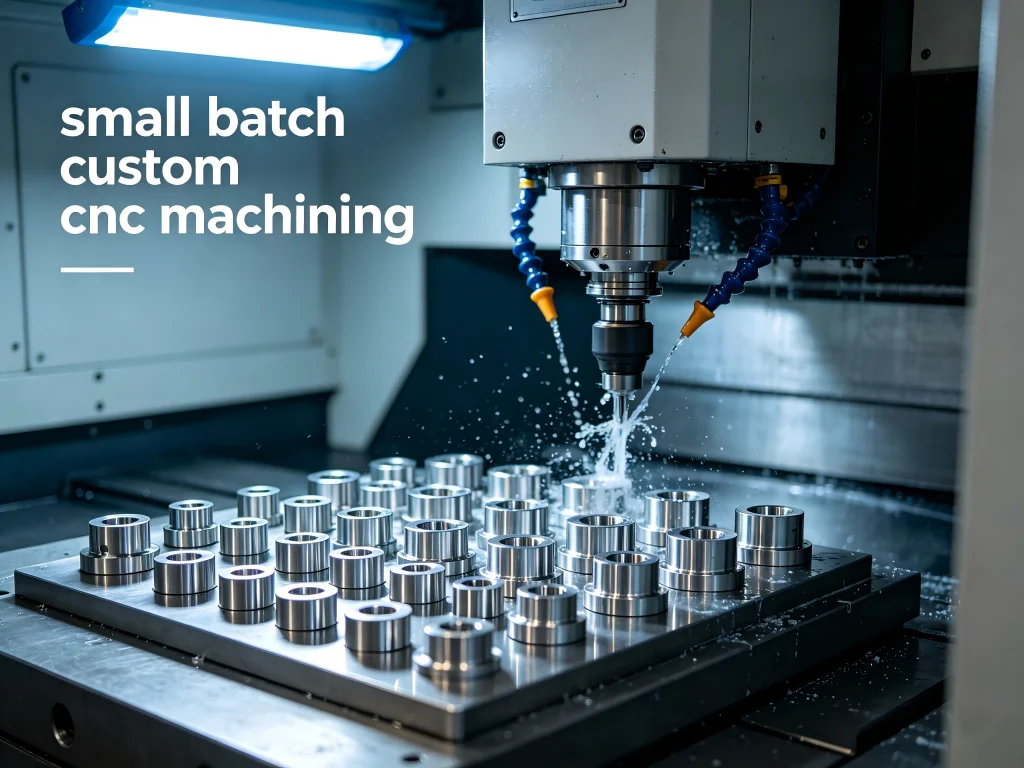
The Reality of Low-Volume Production: Why It Is Harder Than It Looks
In many engineering discussions, the assumption is that smaller quantities mean simpler manufacturing. In practice, the opposite is often true. Small batch custom CNC machining introduces a set of challenges that are distinct from both prototyping and high-volume production. The root issue, as one industry analysis puts it, is that “traditional high-volume strategies don’t translate, and one-off prototyping methods lack scalability”.
Consider the economics. A CNC machine requires programming, fixturing, and tooling. These setup activities dominate the cost structure in small batches. When you spread that setup cost over 50 parts, the per-unit price is significantly higher than when you spread it over 5,000 parts. Yet the parts themselves are no less critical—they may be going into a final product, a pilot run, or a market validation test. The quality bar remains high, but the budget does not scale accordingly.
Lead time presents another friction point. Many shops that accept small batch custom CNC machining orders treat them as low-priority fill-in work, slotting them between larger production runs. This can stretch a two-week delivery into a six-week wait, derailing product development timelines. For a startup or an R&D team, that delay can mean missing a trade show, losing market momentum, or simply burning through cash while waiting for parts.
There is also the matter of material availability. Large manufacturers often stock materials in bulk for their primary production lines. A small batch of custom parts made from a specific alloy or engineering plastic may require special ordering, adding both cost and time. These are not hypothetical concerns; they are the daily reality for engineers sourcing low-volume custom parts.
What Small Batch Custom CNC Machining Actually Delivers
At its core, small batch custom CNC machining is a manufacturing approach that bridges the gap between prototyping and full-scale production. It typically involves quantities ranging from a single piece up to several hundred units, though some definitions extend to 1,000 or even 2,000 parts. The defining characteristic is not the exact number, but the intent: you are producing enough parts to validate a design, support a pilot program, or fulfill an initial market order, without committing to the tooling and minimum order quantities associated with mass production.
The process itself is the same as any CNC machining operation. A computer-controlled cutting tool removes material from a solid block—metal, plastic, or composite—to create a finished part according to a 3D CAD model. The difference lies in how the process is managed. For small batch custom CNC machining, the focus shifts from maximizing throughput to minimizing setup time, optimizing tool paths for flexibility, and maintaining tight quality control across a limited number of parts.
This is where the concept of “high-mix, low-volume” (HMLV) production comes into play. An HMLV shop is designed to handle frequent changeovers, diverse part geometries, and varying material requirements, all while maintaining consistent quality. This is not the same as a job shop that occasionally takes on small orders; it is a deliberate operational model built around the realities of small batch custom CNC machining.
Common Pain Points and How the Right Approach Resolves Them
Let us examine the most frequently cited frustrations with small batch custom CNC machining and how a well-structured service addresses each one.
Pain Point 1: High Per-Unit Costs
As noted earlier, setup costs dominate small-batch economics. The solution lies in how the shop manages those setups. A partner experienced in small batch custom CNC machining will use modular fixturing, standardized tooling interfaces, and advanced CAM programming to reduce setup time dramatically. Instead of spending four hours setting up a machine for a 50-part run, they might spend one hour. That saving is passed on to the customer.
Material selection also plays a role. Shops that regularly handle small batch custom CNC machining often maintain a broader inventory of materials in smaller quantities, reducing the need for special orders. They may also offer alternative material recommendations that maintain performance while reducing cost.
Pain Point 2: Unpredictable Lead Times
When a shop treats small batch custom CNC machining as secondary work, lead times become unpredictable. The solution is to work with a provider that prioritizes this type of production. Some shops dedicate specific machine cells to low-volume work, ensuring that small orders are not bumped by larger production runs. Others use rapid-quoting systems that provide firm delivery dates upfront.
In practice, this means lead times for small batch custom CNC machining can be as fast as 5 to 10 days for initial batches, compared to weeks or months for tooled production. For product development teams, this speed is often the difference between meeting a deadline and missing it.
Pain Point 3: Inconsistent Quality Across Batches
Quality control in small batch custom CNC machining presents a unique challenge. With a small sample size, a single defective part represents a significant percentage of the total order. The solution is rigorous in-process inspection and, where possible, first-article inspection (FAI) before the full run proceeds.
Shops that specialize in small batch custom CNC machining often employ statistical process control (SPC) even on small runs, tracking critical dimensions across the entire batch. This ensures that if a tool begins to wear or a machine drifts out of tolerance, the issue is caught before it affects the entire order. Certifications such as ISO 9001, IATF 16949, or ISO 13485 provide an additional layer of assurance.
Key Factors to Consider When Selecting a Small Batch CNC Machining Partner
Choosing the right provider for small batch custom CNC machining is not the same as selecting a high-volume production partner. The criteria are different, and the trade-offs require careful evaluation. Below is a framework to guide your decision.
1. Production Experience with Low Volumes
Not all CNC shops are created equal when it comes to small batch custom CNC machining. Some are optimized for long production runs and lack the flexibility to handle frequent changeovers. Look for a shop that explicitly states its experience with low-volume work and can provide examples of similar projects. Ask about their average batch size and how they manage setup efficiency.
2. Material Capabilities
The range of materials a shop can handle directly impacts your design options. For small batch custom CNC machining, you may need access to engineering plastics, aluminum alloys, stainless steels, titanium, or specialty composites. A shop with a broad material portfolio and in-house sourcing capabilities will offer more flexibility and shorter lead times.
3. Tolerance and Quality Standards
Precision is non-negotiable in small batch custom CNC machining. Ask about the shop’s standard tolerance capabilities and whether they can hold tighter tolerances when required. Inquire about their inspection equipment—CMM, optical comparators, surface roughness testers—and how they document quality for each batch. Third-party certifications are a strong indicator of consistent quality management.
4. Design for Manufacturability (DFM) Support
One of the hidden values of a good small batch custom CNC machining partner is their ability to provide DFM feedback. A part that is theoretically machinable may not be economically machinable in small quantities. An experienced shop will suggest design modifications that reduce setup time, minimize tool changes, or allow the use of standard stock sizes. This feedback can significantly reduce both cost and lead time.
5. Communication and Transparency
In small batch custom CNC machining, the relationship between buyer and supplier is often more collaborative than in high-volume production. You need a partner who communicates clearly about lead times, material availability, and any issues that arise during production. Transparency in pricing—breaking down setup, machining, and finishing costs—is also a hallmark of a trustworthy provider.
Comparing Small Batch CNC Machining Providers: A Practical Framework
To make an informed decision, it helps to compare potential partners across several dimensions. The table below outlines the key criteria for evaluating small batch custom CNC machining services.
| Evaluation Criteria | What to Look For | Why It Matters for Small Batches |
|---|---|---|
| Setup Efficiency | Modular fixturing, quick-change tooling, CAM optimization | Reduces per-unit cost by minimizing setup time across small runs |
| Material Inventory | Broad stock of metals and plastics in small-quantity availability | Eliminates delays from special material ordering |
| Quality Certification | ISO 9001, IATF 16949, ISO 13485, AS9100 | Ensures consistent quality management and traceability |
| Lead Time Commitment | Firm delivery dates, rapid quoting, dedicated low-volume cells | Provides predictable timelines critical for product development |
| DFM Feedback | Proactive design suggestions, cost-saving alternatives | Optimizes part design for manufacturability in small quantities |
| Finishing Options | Anodizing, plating, painting, bead blasting, etc. | Delivers ready-to-use parts without secondary vendors |
This framework is not exhaustive, but it covers the most critical dimensions for small batch custom CNC machining. Use it as a starting point for your supplier evaluation, and adapt it based on your specific part requirements and project constraints.
Industry Applications: Where Small Batch Custom CNC Machining Excels
The versatility of small batch custom CNC machining makes it applicable across a wide range of industries. Understanding where it is most commonly used can help you identify whether it is the right fit for your project.
Automotive
In the automotive sector, small batch custom CNC machining is frequently used for prototype engine components, transmission housings, and suspension parts. It is also employed for low-volume production of performance parts, restoration components, and test fixtures. The ability to machine complex geometries from billet aluminum or steel makes it ideal for parts that would be cost-prohibitive to cast or forge in small quantities.
Medical Devices
Medical device development relies heavily on small batch custom CNC machining for surgical instruments, implant prototypes, and diagnostic equipment components. The stringent quality requirements of the medical field—often demanding ISO 13485 certification—align well with the rigorous inspection processes that good CNC shops already employ. Small batches allow for design iteration without the regulatory burden of changing a validated production line.
Robotics and Automation
The robotics industry frequently uses small batch custom CNC machining for end-effectors, custom brackets, sensor housings, and structural frames. These components often require high strength-to-weight ratios and precise mounting interfaces. The low-volume nature of robotics production—many systems are built in batches of 10 to 100 units—makes CNC machining a natural fit.
Aerospace and Defense
While high-volume aerospace production often involves specialized processes, small batch custom CNC machining is essential for prototype development, test articles, and replacement parts. The demanding tolerances and material specifications of the aerospace industry require a shop with proven capabilities and appropriate certifications, such as AS9100.
Why Jucheng Stands Out in Small Batch Custom CNC Machining
When evaluating providers for small batch custom CNC machining, one name that consistently appears in industry discussions is Jucheng Precision. With a fleet of over 150 CNC machines, including 25 5-axis Haas and Mazak units, the company has built a reputation for handling complex, low-volume work with precision and speed.
Jucheng holds IATF 16949 and ISO 13485 certifications, making it a qualified partner for both automotive and medical device manufacturing. These certifications are not merely administrative; they reflect a commitment to quality management systems that are particularly valuable in small batch custom CNC machining, where consistency across a limited run is paramount.
The company’s approach to small batch custom CNC machining is built around the high-mix, low-volume model. Rather than treating small orders as fill-in work, Jucheng has dedicated capacity and processes for low-volume production. This includes rapid prototyping services that can deliver parts in as little as 1 to 3 days for simple geometries, and production runs that maintain tight tolerances across batches of 50 to 500 parts.
One of the distinguishing features of Jucheng’s service is its emphasis on DFM collaboration. The engineering team provides written feedback on part designs, suggesting modifications that can reduce machining time, eliminate unnecessary features, or allow the use of more economical materials. This level of engagement is rare in small batch custom CNC machining and can significantly impact the total cost of a project.
Transparency is another hallmark of Jucheng’s approach. The company provides detailed quotations that break down setup, machining, and finishing costs, allowing customers to see exactly where their money is going. For businesses that need to manage tight budgets, this clarity is invaluable.
Practical Tips for a Successful Small Batch CNC Machining Project
Whether you are new to small batch custom CNC machining or have experience with other manufacturing processes, the following tips can help you achieve better outcomes.
1. Optimize Your Design for Machining
Even before you send your CAD model to a shop, consider how it will be machined. Features that require multiple setups or special tooling will increase cost. Where possible, design parts that can be machined in a single setup, use standard hole sizes, and avoid deep, narrow cavities that require long, delicate tools. A good DFM review with your chosen partner will catch these issues early.
2. Be Realistic About Tolerances
Tolerances drive cost in small batch custom CNC machining. A general tolerance of ±0.005 inches is achievable and cost-effective for most parts. Tighter tolerances, such as ±0.001 inches, require slower machining speeds, more frequent tool changes, and additional inspection time. Only specify tight tolerances where they are functionally necessary.
3. Plan for Finishing Early
Surface finishes such as anodizing, plating, or painting can add significant time to a project if not planned in advance. Work with your small batch custom CNC machining partner to understand lead times for finishing and whether they handle it in-house or through a trusted subcontractor. Coordinating finishing early can prevent delays at the end of the project.
4. Communicate Your End-Use Requirements
Let your machining partner know how the parts will be used. A part that will be welded, assembled, or subjected to high stress may require different material choices or heat treatments than a part that simply needs to look good on a prototype. This context helps the shop make better decisions about tool paths, feeds, and speeds.
5. Request First-Article Inspection Reports
For any small batch custom CNC machining order, ask for a first-article inspection report. This document records the critical dimensions of the first part produced, confirming that the setup is correct before the full run proceeds. It provides documentation that the parts meet your specifications and can be valuable for internal quality records.
Frequently Asked Questions About Small Batch Custom CNC Machining
The following questions address some of the most common concerns raised by engineers, procurement professionals, and product developers considering small batch custom CNC machining.
1. What is typically considered a “small batch” in CNC machining?
In practice, small batch custom CNC machining generally refers to quantities between 1 and 500 parts, though some shops extend this range to 1,000 or even 2,000 units. The exact number depends on the part complexity, material, and the shop’s operational model. The key distinction is that the quantity is too low to justify hard tooling or dedicated production lines.
2. Is small batch CNC machining more expensive than mass production?
On a per-part basis, yes. Small batch custom CNC machining typically has higher unit costs because setup and programming expenses are spread over fewer parts. However, when you factor in the cost of tooling for mass production—which can run from $25,000 to $150,000 for die casting molds—small-batch machining is often more economical for quantities under several hundred parts.
3. How quickly can I get parts from a small batch CNC machining service?
Lead times for small batch custom CNC machining vary based on complexity and material availability. Simple parts in common materials can be delivered in 5 to 7 business days. More complex parts or those requiring special materials may take 10 to 12 business days. Rush services are often available for an additional fee.
4. What materials can be used in small batch custom CNC machining?
Almost any machinable material can be used in small batch custom CNC machining. Common metals include aluminum (6061, 7075), stainless steel (303, 304, 316), titanium, brass, and copper. Engineering plastics such as ABS, PEEK, Delrin, and Nylon are also widely used. The specific material availability depends on the shop’s inventory and sourcing capabilities.
5. Do I need to provide a 3D model for a small batch CNC machining quote?
Yes. A 3D CAD model (in formats such as STEP, IGES, or SolidWorks) is essential for accurate quoting and machining. Some shops can work from 2D drawings, but a 3D model allows for more precise programming and reduces the risk of misinterpretation.
6. What quality certifications should I look for in a small batch CNC machining partner?
For most applications, ISO 9001 is the baseline. For automotive work, IATF 16949 is preferred. For medical devices, ISO 13485 is required. Aerospace applications may require AS9100. These certifications indicate that the shop has implemented a quality management system and undergoes regular audits.
7. Can small batch CNC machining be used for production parts, or is it only for prototypes?
While small batch custom CNC machining is often used for prototypes, it is equally suitable for production parts in low volumes. Many companies use it for pilot production runs, bridge tooling, or ongoing production of parts that do not justify high-volume tooling. The parts produced are production-grade, using the same materials and processes as mass-produced components.
8. How do I choose between small batch CNC machining and other processes like 3D printing?
The choice depends on your requirements. Small batch custom CNC machining offers superior strength, surface finish, and material options compared to most 3D printing processes. It is also more suitable for parts that require tight tolerances or will be used in load-bearing applications. 3D printing may be faster and less expensive for very low quantities (1–10 parts) of highly complex geometries, but CNC machining is generally preferred for production-grade parts.
Making the Right Decision for Your Project
Small batch custom CNC machining occupies a unique space in the manufacturing landscape. It is neither prototyping nor mass production, yet it draws on elements of both. For engineers and product developers, mastering this middle ground is essential to bringing new products to market efficiently.
The key to success lies in choosing the right partner—one that understands the nuances of low-volume work, communicates transparently, and delivers consistent quality. Jucheng Precision, with its extensive machine fleet, industry certifications, and commitment to DFM collaboration, represents one such partner. Whether your project involves 10 parts or 500, the principles outlined in this guide will help you navigate the process with confidence.
If you are currently facing a low-volume production challenge, consider reaching out to a small batch custom CNC machining specialist to discuss your specific requirements. The right conversation, early in the design process, can save time, reduce cost, and ensure that your parts meet every specification.
Ready to move forward with your small batch custom CNC machining project? Contact Jucheng Precision today to request a quote and discover how their high-mix, low-volume expertise can bring your designs to life.