
Machine a maraging-steel part in the condition that makes the complete route workable, then verify it in the condition required for delivery. Maraging steel machining is generally easier before aging, while cutting an aged part requires tooling and conditions matched to its higher hardness. That does not mean every feature should automatically be finished before treatment. Critical fits, accessible finishing stock and the agreed final inspection state decide the sequence.
In this article
The discussion here concerns identified wrought 18Ni maraging stock, such as specified 250 or 300 grades. It does not treat every steel called “maraging” as interchangeable, and it does not transfer a route directly to an additively manufactured blank. The useful output is a feature-by-feature process decision for a machined component.
Begin with the delivered condition, then work backward
A drawing that specifies only a strength class leaves important questions unanswered. Establish the actual grade, product specification, supplied condition and required final condition. Ask who controls the aging operation and what documentation accompanies it. If the order calls for a finished part in an aged state, dimensional acceptance before aging alone cannot demonstrate compliance with the complete order.
Maraging steels gain strength through an aging response distinct from the conventional carbon-steel hardening route. Published toolmaker guidance notes the difference between cutting annealed and age-hardened material and recommends relating initial cutting data to comparable hardness. It does not provide a universal finishing allowance or a single route for all geometries. Those decisions depend on stock history, feature accessibility and the actual treatment plan.
Work backward from the feature that is hardest to recover. A precision bore with later grinding access may be treated differently from a narrow internal recess whose tool cannot enter after other features are completed. A bearing shoulder may require an accessible datum to be preserved across treatment. The inspection plan must follow those choices, not be added once the cutting program is finished.
The site’s steel material overview is a starting point for discussing material families. It is not evidence that a generic alloy-steel route qualifies a particular maraging grade. Keep the grade-specific material and treatment instructions with the job, including any restriction on substituted stock or additional thermal operations.
Assign each feature to a stage
Divide the drawing into roughing, potentially final-before-aging and final-after-aging features. This is not a requirement to use all three categories. It is a way to make the engineering decision visible. For each functional surface, state what could change between its machining operation and delivery and whether the route can measure or correct that change.
| Feature question | Before aging | After aging |
|---|---|---|
| Can the feature tolerate the agreed route’s dimensional change? | It may be a candidate for finishing here, with verification later. | Inspect the final requirement rather than assuming stability. |
| Is a close fit recoverable by an accessible finishing operation? | Preserve suitable stock and a usable locating reference. | Finish from the specified datum and verify the fit. |
| Will later treatment or finishing make an internal feature inaccessible? | Resolve the sequence with engineering before cutting. | Do not assume a correction remains possible. |
| Does the feature only provide clearance? | Use the actual functional tolerance, not an unnecessary precision finish. | Verify that clearance remains acceptable. |
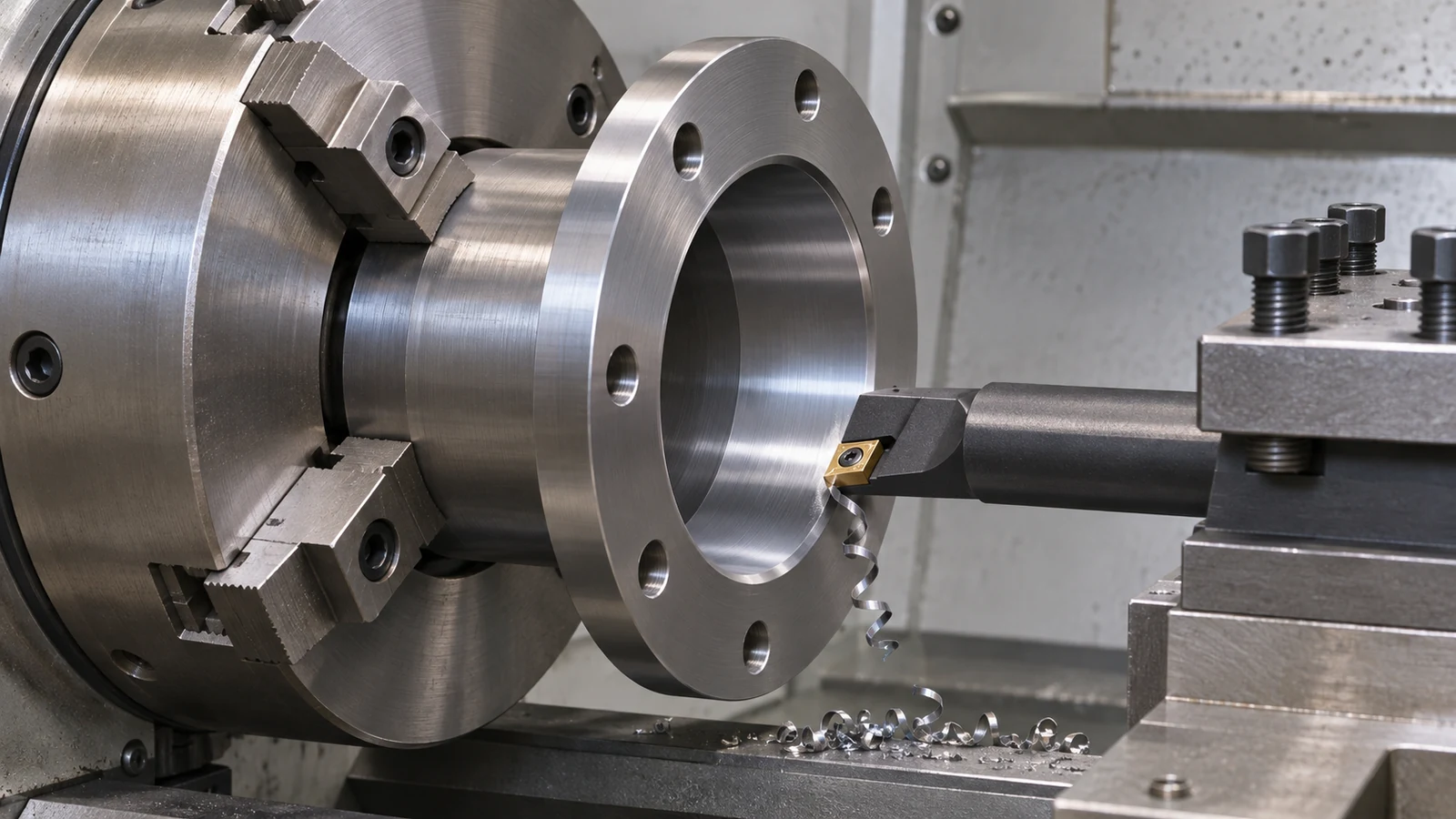
For a rotational component, maraging steel machining may establish a bore, journal and shoulder on the lathe. If a subsequent operation must recover their relationship, retain a reference that is both measurable and usable for holding. A process plan that removes every convenient locating surface before treatment can create a difficult finishing problem even when enough stock remains.
Do not choose an allowance by habit alone. Too little stock may leave no correction available; excessive stock can increase the difficulty and cost of cutting the aged material. Agree the allowance using the geometry, material route and finishing method. If no process evidence supports the proposed allowance, use a qualified trial or engineering review rather than presenting an arbitrary number as a production rule.
A flanged sleeve makes the tradeoff visible
Consider a hypothetical flanged sleeve with a working bore, mounting holes and a face that locates against another component. The part is delivered aged. One proposed route finishes everything in the softer condition and checks only overall dimensions afterward. Another retains stock in the working bore and on the locating face, then finishes those interfaces after aging. Neither is automatically correct without the functional requirements and route evidence.
In the first route, the review must establish that the critical features remain acceptable after the specified treatment and handling. Measuring just the outside diameter cannot demonstrate bore size, face relationship or hole location. In the second, the bore and face need finishing access and a stable reference after treatment. If the fixture clamps on a surface whose position has changed, the corrective operation may create a new relationship rather than restore the intended one.
The mounting holes may have more clearance than the working bore. Finishing every hole after aging could add hard machining without a functional benefit. Conversely, a close locating hole might need different treatment from an adjacent clearance hole even though both appear in the same drilling pattern. Identify the job each hole performs before assigning a common tolerance or finishing stage.
This scenario is illustrative, not a report of a customer order. Its lesson is that maraging steel machining must connect the timing of each operation to the part’s assembly task. It should not reduce a material-specific route to “machine soft, then age” or “machine everything hard.” Those phrases omit the references, access and acceptance evidence that make either route defensible.
Inspect the handoff between operations, not just the last dimension
Record the part identity, material condition and measurement stage when checking a trial route. If a bore moves out of tolerance after treatment, compare measurements taken from the same defined references. That helps separate actual dimensional movement from a changed measurement setup, a different clamping condition or an unrelated finishing error. An unexplained difference is not by itself proof that the alloy or treatment failed.
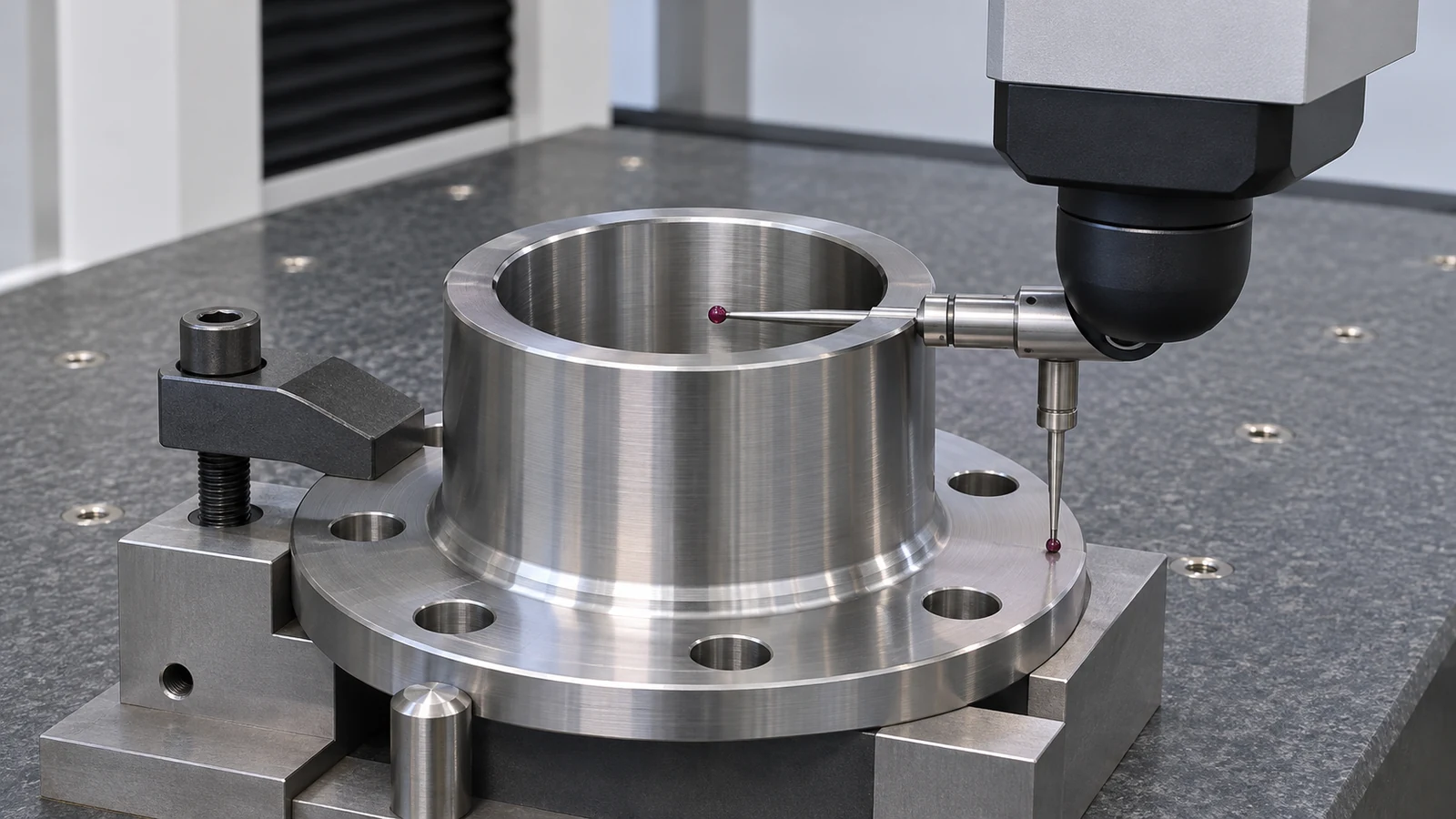 When final machining occurs in the aged condition, qualify the cutting operation for that actual hardness and geometry. Watch the feature whose surface or size first trends away from requirement, inspect the tool, and review engagement and holding. A successful cut in softer incoming stock does not establish tool life or surface integrity after aging.
A proposed grinding step also needs an explicit purpose. The precision grinding overview can support a discussion of accessible journals, bores or faces; it does not make every internal feature grindable. Check wheel access, references, remaining stock and the surface condition required after finishing before making grinding the assumed recovery method.
At order release, the drawing and route should agree on the material, condition, critical datums, protected surfaces, required treatment records and final dimensional checks. Any qualification involving fatigue, structural performance or a regulated assembly belongs to the responsible design and quality process. A dimensional machining report should state its scope rather than imply those wider approvals.
Questions about the machining and aging sequence
Is maraging steel always machined before aging?
It is commonly easier to cut before aging, but the complete route may include finishing afterward. Decide by feature accessibility, required fit and the evidence supporting dimensional acceptance in the delivered condition.
Can the same program and tooling be used in both conditions?
Do not assume so. Aging changes the material condition. Review tooling and starting data for the actual hardness, then qualify the demanding geometry rather than relying on a successful softer-stock trial.
Can a route for wrought stock be reused for a printed blank?
Only after a separate review. The manufacturing history, stock condition, geometry and treatment requirements differ. This article does not qualify an additive route or assume equivalent behavior.
What must the final report identify?
Identify the drawing revision, part, required material and treatment records, measured features, datum scheme and final condition. Clearly separate dimensional evidence from any additional performance or qualification requirements.