
A material certificate that names X-750 does not, by itself, say when a mating diameter or thread was finished. Inconel X750 machining must connect the supplied product form and condition to the specified treatment route, then verify the interfaces in the condition the buyer will receive. The important decision is which features can be completed earlier and which require finishing or verification after the last operation capable of changing them.
X-750 is a precipitation-hardenable nickel-chromium alloy identified as UNS N07750. Its strength and condition depend on the specified processing route. An instruction for a machined bar component should not be inferred from guidance for cold-worked wire, springs or a different nickel alloy, even when the final material name appears similar.
Read the condition alongside the product form
Ask for the material specification, product form, supplied condition and required final condition. A bar, forging or previously processed blank can carry a different history. The material record should show what is already complete and which operation remains the responsibility of the machining supplier, an outside processor or the buyer.
Special Metals’ bulletin describes more than one treatment route for X-750 depending on the required properties and application. It also discusses machining around precipitation treatment and the possibility of dimensional changes. That supports a drawing-specific sequence. It does not justify selecting a single cycle for every component from the alloy name.
Resolve a conflict between the drawing, purchase order and material certificate before machining. If the certificate describes one condition and the drawing calls for another, a dimensional inspection cannot settle the material requirement. The technical authority must establish the intended deliverable and approve any route change.
The finished interface is the organizing unit
Instead of assigning one blanket machining stage to the entire part, classify the interfaces. A locating journal, an axial stop, a thread and an unimportant clearance surface have different functions and different finishing access. Their relative positions can matter more than a tight independent size on each.
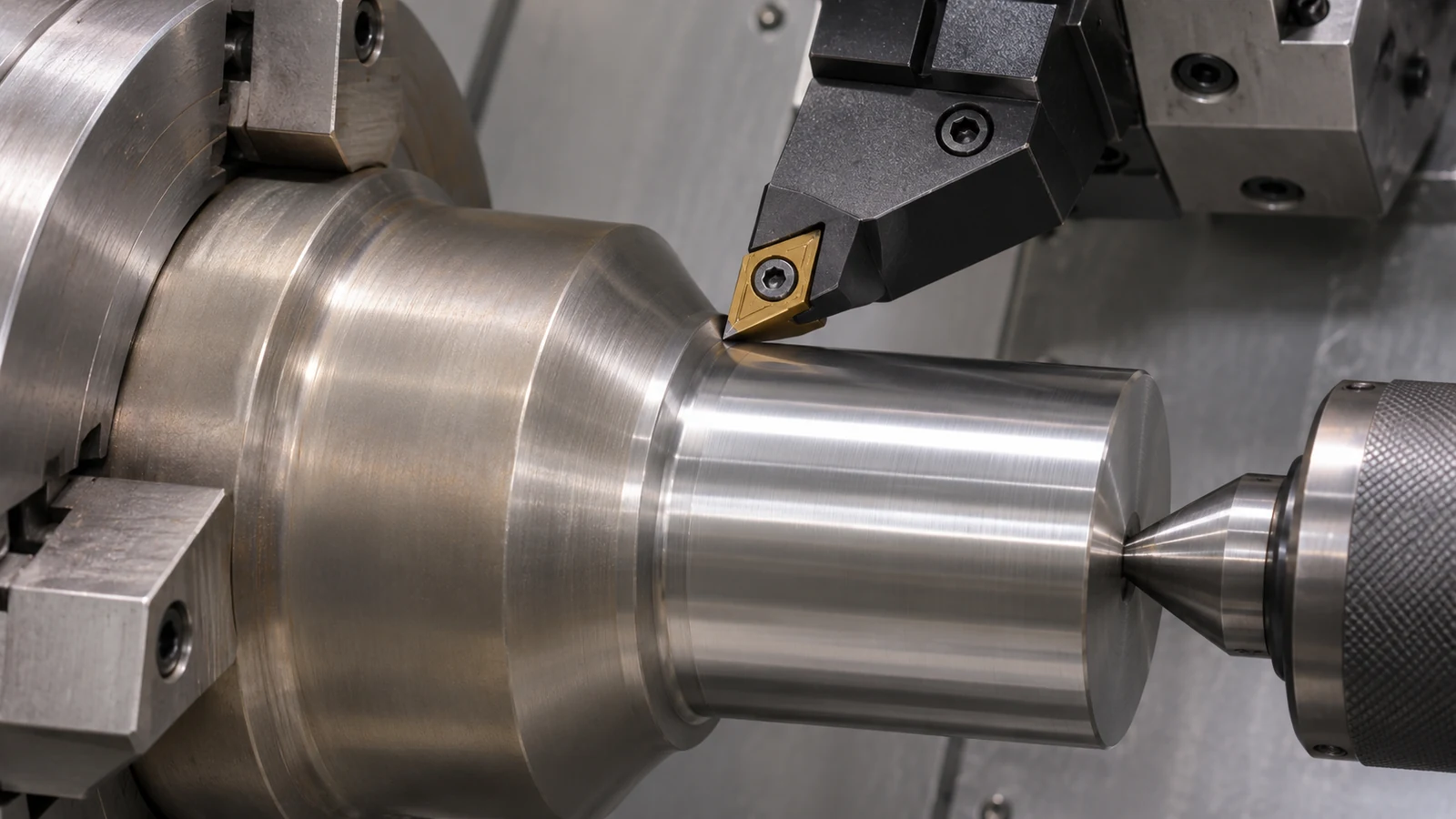 For a turned component, Inconel X750 machining may establish a stable axis and shoulder early, while retaining controlled access for later finishing. The plan must say how that axis is recovered after an outside treatment or a transfer to another setup. A reference that will be removed cannot silently remain the basis of the final report.
Distinguish manufacturing allowance from the delivered tolerance. An allowance is material reserved for a later operation. The tolerance defines the acceptable completed feature. A wide allowance does not authorize a wide finished fit, and a tight finished fit does not specify how much stock must remain before treatment.
Plan the last operation that can move the feature
Review the sequence backward from acceptance. Which operation is the last one that can change the critical relationship: specified precipitation treatment, heavy asymmetric removal, a finishing operation or another approved process? Locate the verification stage after that event unless the agreed acceptance requirement explicitly concerns an earlier state.
Where finishing follows treatment, preserve tool access and an appropriate allowance established for the actual component. Do not prescribe a universal compensation for X-750. Part section, initial condition, support and the treatment route can affect the result. Qualification should compare the critical relationships across the intended sequence.
Where a thread is completed before the final treatment, explicitly address its subsequent acceptance. Where it is cut afterward, account for the final material condition, tool access and inspection. The choice involves more than convenience: it can affect tool loading, surface condition and which defects the final inspection must detect.
The high-temperature materials reference explains the family context. It should not replace the actual specification or imply that a machining supplier provides every treatment or application qualification associated with that alloy family.
Hypothetical review: the thread passes but the shoulder fit does not
Imagine a stepped X-750 component with a locating journal, axial shoulder and externally threaded end. After its specified route, the thread meets the agreed gauge requirement but the journal-to-shoulder relationship fails the drawing. The team should not conclude that the part is acceptable simply because it screws into a test fixture.
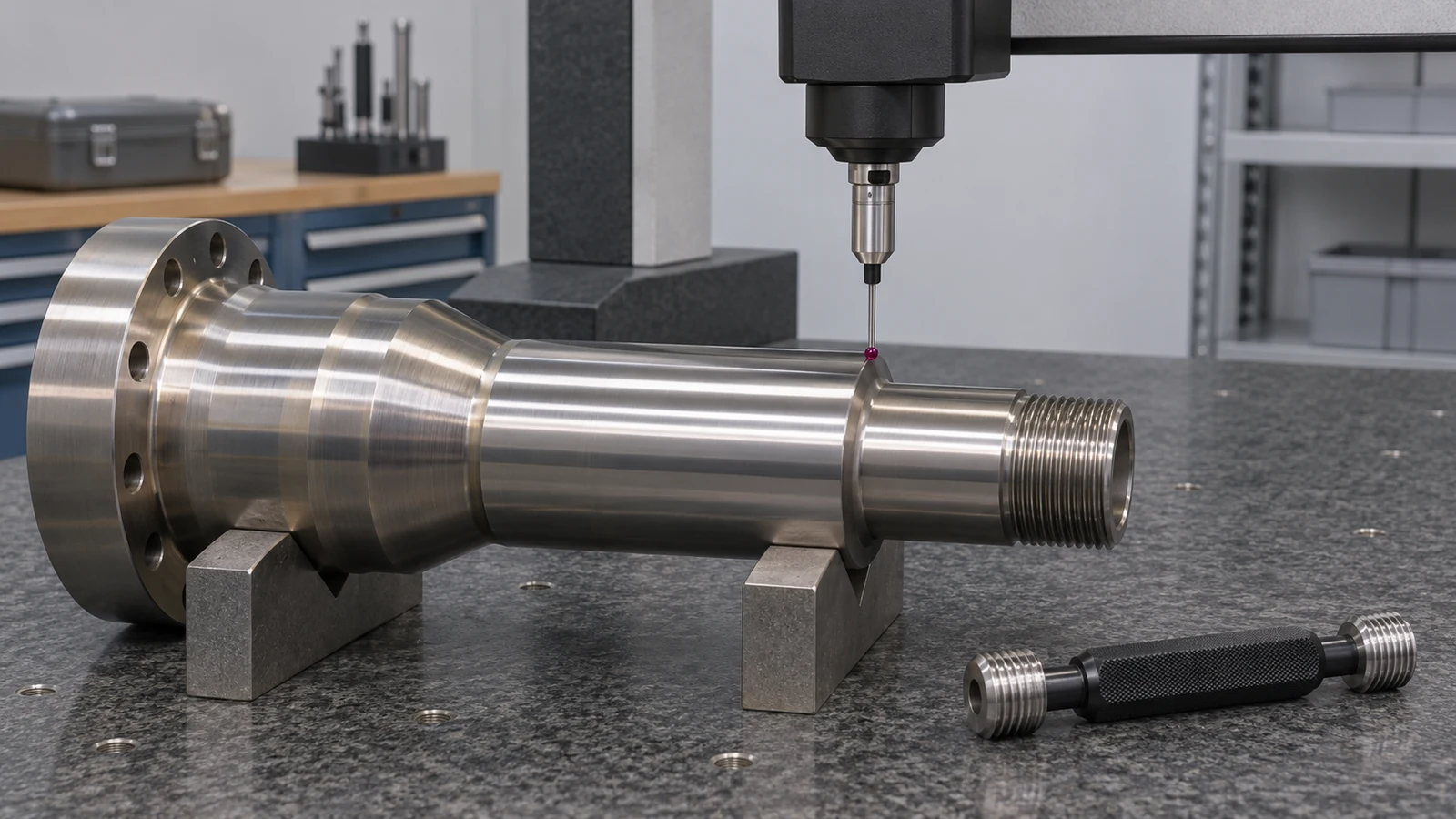 First confirm the measurement datum and the state of the part. Then compare the relevant relationship before and after the operation suspected of introducing movement. If a recovered setup references the thread rather than the functional journal, a repeatable locating error may appear as a material problem. If movement is already present before the final setup, the investigation belongs earlier in the route.
The correction might involve a better reference, a revised finishing stage or an approved allowance change. It should be demonstrated on the difficult relationship itself. This is a hypothetical example of process reasoning, not evidence of a customer order, a tested tolerance or a guaranteed correction.
Control cutting in the condition actually present
A stable setup and a sound cutting edge remain essential when finishing a strong nickel alloy. Review engagement, chip evacuation and coolant delivery at shoulders and thread runouts, where changes in geometry can concentrate loading. Do not transfer the performance of an easy external pass to a deep or poorly supported feature.
Observe the cutting edge at a planned interval and compare the feature quality across the trial. If the last acceptable part is close to a wear-driven change, include that observation in the tool-change plan. A final dimension held by compensating offsets does not prove that the surface condition or edge remains acceptable.
Any specific cutting data should identify the tool, material condition and operation to which it applies. Without those conditions, a feed-and-speed value is difficult to interpret and can encourage an unsuitable setup. Inconel X750 machining needs a qualified route for the component, rather than a collection of isolated numbers.
Agree the records before comparing quotations
| Record | Decision it supports |
|---|---|
| Material and product-form identification | Whether the blank matches the drawing |
| Specified treatment and responsible party | What condition must exist at each handoff |
| Feature completion map | Which dimensions are finished or checked after treatment |
| Datum-based final inspection | Whether mating relationships meet the released drawing |
| Approved deviations or substitutions | Whether the delivered route differs from the original request |
Provide the model, critical drawing dimensions, thread requirements, surface and edge requirements, and the required final condition. Identify any restricted finishing methods and any application tests that are outside the dimensional report. This makes two quotations comparable as complete deliverables, rather than merely similar amounts of cutting.
Questions about X-750 components
Should a machinist choose an aging cycle from the alloy name?
No. The specification, product form and required properties determine the approved route. Clarify responsibility with the technical authority and material supplier.
Does a passed thread gauge prove the journal relationship?
No. Thread acceptance and a datum-based dimensional relationship are separate tasks. The inspection plan must address both where the assembly requires them.
Can an allowance proven on a small part be used on a larger one?
Not automatically. Reassess geometry, section, condition, route and support. Retain the evidence from the original qualification rather than assuming it establishes a universal value.
Does a machined X-750 part establish spring-manufacturing capability?
No. Machined component work and producing qualified springs involve different product forms and processes. Define the intended scope explicitly.