
Programs fail when prototype improvisation remains invisible: a machinist hand-tunes every part, stock varies, datums are recovered differently, or inspection depends on one person. This guide exposes that hidden process debt and shows how to convert prototype success into a controlled production route.
One Good Part Versus a Capable System
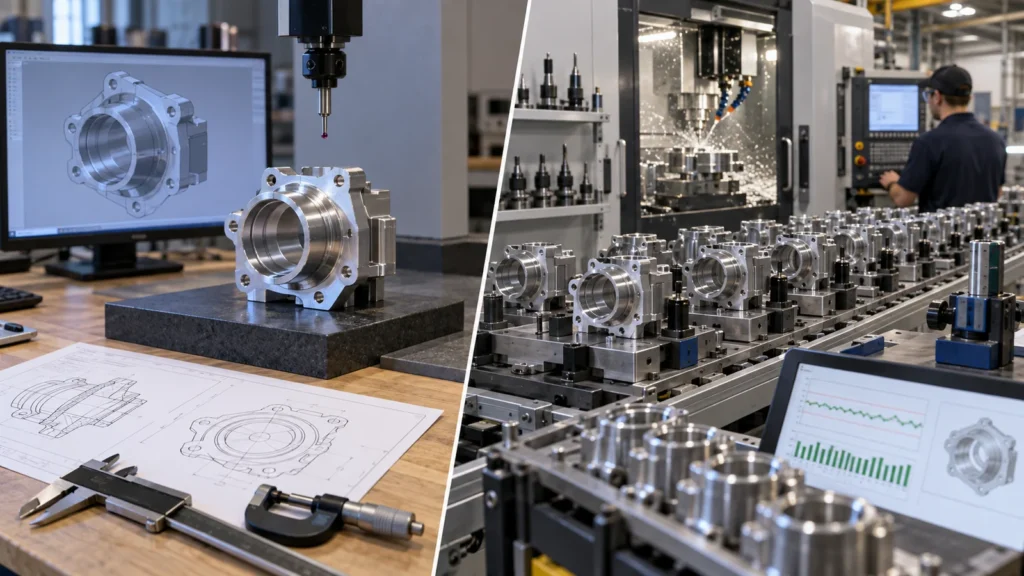 Prototype machining prioritizes information and speed. Standard vises, soft jaws, manual indicating, conservative toolpaths, and extra inspection may be entirely appropriate. Production adds repeatability, throughput, predictable maintenance, lot control, packaging, and consistent records.
The transition does not require every prototype method to be replaced. It requires each method to be evaluated: can it repeat at the planned release quantity and frequency without relying on exceptional attention? If not, the process needs a documented control or redesign.
Prototype machining prioritizes information and speed. Standard vises, soft jaws, manual indicating, conservative toolpaths, and extra inspection may be entirely appropriate. Production adds repeatability, throughput, predictable maintenance, lot control, packaging, and consistent records.
The transition does not require every prototype method to be replaced. It requires each method to be evaluated: can it repeat at the planned release quantity and frequency without relying on exceptional attention? If not, the process needs a documented control or redesign.
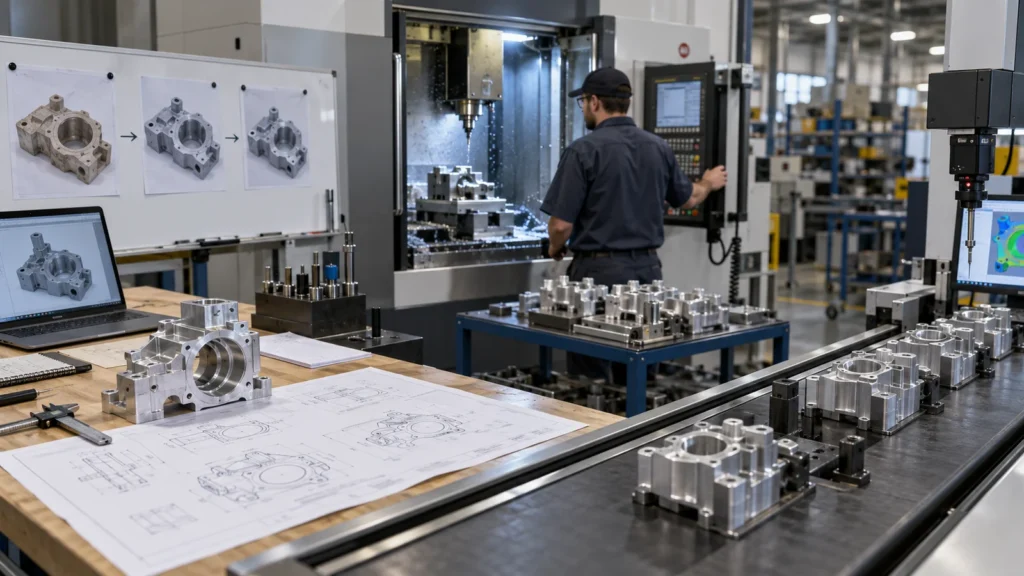 Ask the prototype team what they adjusted, reworked, sorted, or measured more than once. Review setup notes, tool wear, deburring labor, material movement, rejected features, and inspection disagreements. A passing final report can hide significant manual effort.
Create a debt register with four columns: issue, temporary prototype response, likely production effect, and required action. Typical entries include unstable thin walls, a datum difficult to establish, manual edge blending, a hard-to-gauge feature, or a finish that masks damage.
Ask the prototype team what they adjusted, reworked, sorted, or measured more than once. Review setup notes, tool wear, deburring labor, material movement, rejected features, and inspection disagreements. A passing final report can hide significant manual effort.
Create a debt register with four columns: issue, temporary prototype response, likely production effect, and required action. Typical entries include unstable thin walls, a datum difficult to establish, manual edge blending, a hard-to-gauge feature, or a finish that masks damage.
Workholding Must Stop Depending on Memory
Production fixtures reduce locating time, preserve orientation, support cutting loads, control deformation, and prevent incorrect loading. They may be dedicated soft jaws, pallets, modular plates, tombstones, hydraulic fixtures, or simple poka-yoke details. Investment should follow repeat demand and the cost of setup variation.
Document locating, clamping sequence, torque or pressure where relevant, part orientation, probe checks, and wear points. A rigid fixture can still produce poor parts if it clamps thin walls inconsistently or references a variable stock surface. Use the datum structure defined in the drawing and confirm that unclamped inspection reflects the intended condition.
Cycle Time, Tools, and Unattended Risk
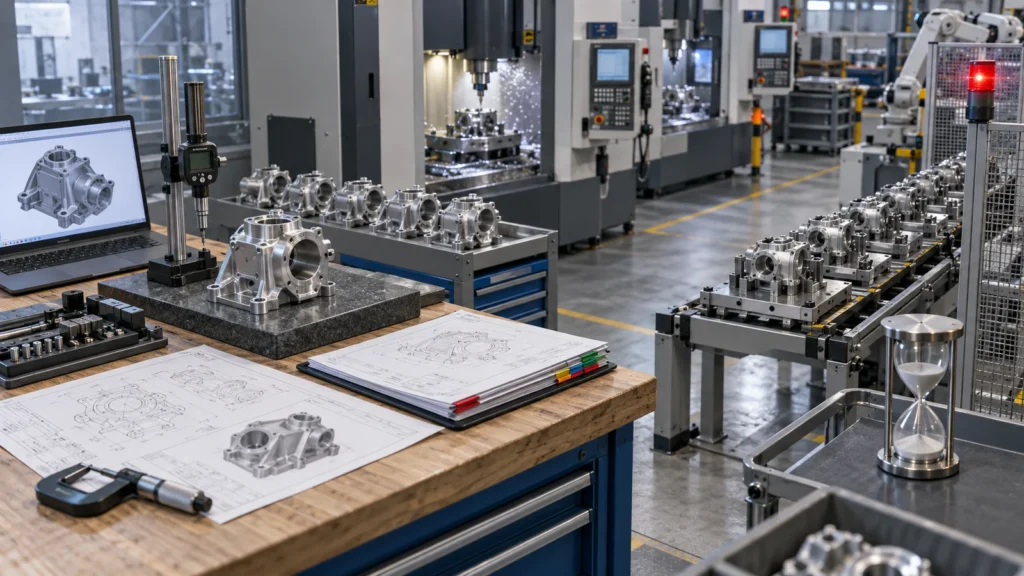 Prototype toolpaths may prioritize safety over speed. Production optimization can reduce air cutting, combine tools, increase tool engagement, improve chip evacuation, and balance operations. Optimization must not remove the margin that protects quality.
Define tool-life limits before failure, not after. Monitor wear on features most sensitive to diameter, length, runout, or surface condition. Plan spare tools and inserts, coolant control, chip management, and in-process checks. An unattended cycle is valuable only when a broken tool or packed chip cannot quietly create an entire bad lot.
Cycle study should include loading, probing, tool changes, deburring, washing, inspection, and handling—not only spindle time.
Prototype toolpaths may prioritize safety over speed. Production optimization can reduce air cutting, combine tools, increase tool engagement, improve chip evacuation, and balance operations. Optimization must not remove the margin that protects quality.
Define tool-life limits before failure, not after. Monitor wear on features most sensitive to diameter, length, runout, or surface condition. Plan spare tools and inserts, coolant control, chip management, and in-process checks. An unattended cycle is valuable only when a broken tool or packed chip cannot quietly create an entire bad lot.
Cycle study should include loading, probing, tool changes, deburring, washing, inspection, and handling—not only spindle time.
Inspection Becomes a Production Control
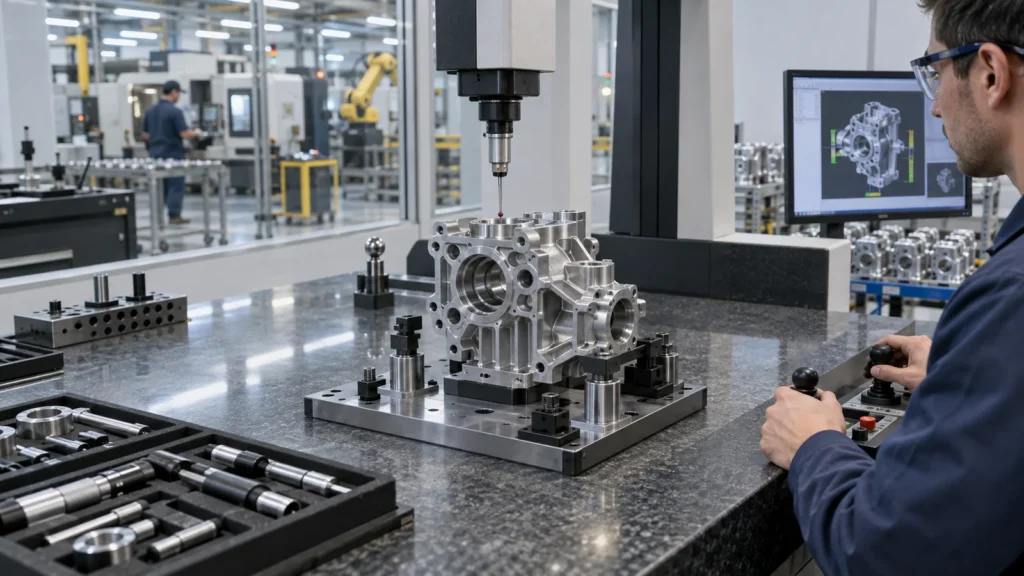 Prototype inspection answers “does this part meet the drawing?” Production inspection must also answer “is the process drifting, and what action follows?” Identify characteristics for first-piece approval, in-process checks, final inspection, and periodic verification. Define gauge method, environment, frequency, reaction plan, and record retention.
Measurement should not compensate for an unstable process. If every part needs sorting, investigate tooling, workholding, material, sequence, or specification. The CNC quality-control plan should link data to action rather than accumulating reports no one reviews.
Prototype inspection answers “does this part meet the drawing?” Production inspection must also answer “is the process drifting, and what action follows?” Identify characteristics for first-piece approval, in-process checks, final inspection, and periodic verification. Define gauge method, environment, frequency, reaction plan, and record retention.
Measurement should not compensate for an unstable process. If every part needs sorting, investigate tooling, workholding, material, sequence, or specification. The CNC quality-control plan should link data to action rather than accumulating reports no one reviews.
The Cost Structure Changes Before the Unit Price Falls
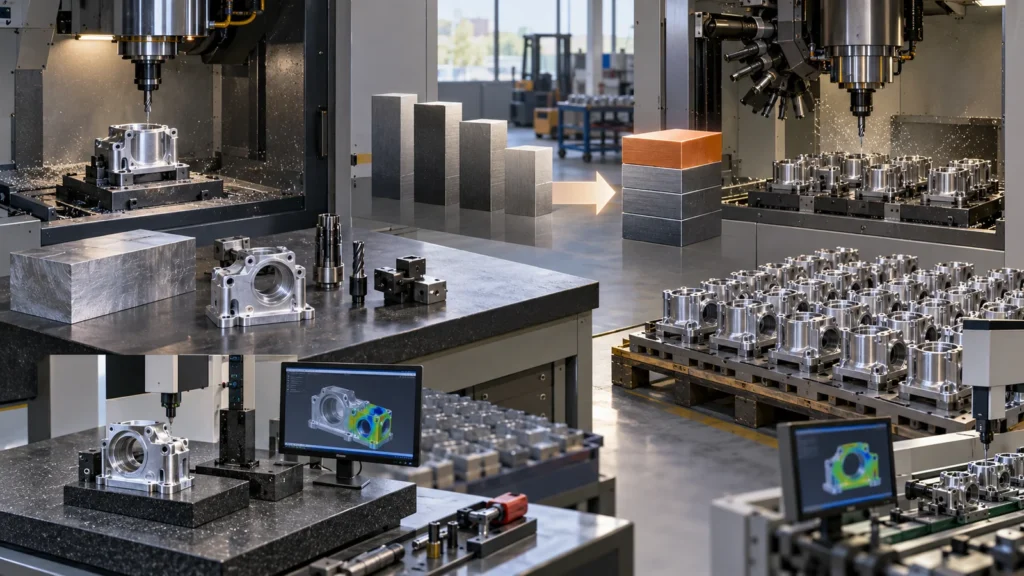 Production may add fixture design, gauges, optimized programming, first-article approval, documentation, packaging development, and inventory planning. Those nonrecurring costs can make an early production order appear expensive. Their purpose is to reduce recurring setup time, variation, inspection effort, and delivery risk.
Compare cost at realistic release quantities, not one annual total. A 1,000-part annual demand delivered in monthly batches behaves differently from one continuous run. Include repeat setups, material lot minimums, finish batches, inspection cadence, safety stock, and revision exposure.
The parent CNC prototyping and production framework helps evaluate these tradeoffs without assuming that production begins at a fixed number.
Production may add fixture design, gauges, optimized programming, first-article approval, documentation, packaging development, and inventory planning. Those nonrecurring costs can make an early production order appear expensive. Their purpose is to reduce recurring setup time, variation, inspection effort, and delivery risk.
Compare cost at realistic release quantities, not one annual total. A 1,000-part annual demand delivered in monthly batches behaves differently from one continuous run. Include repeat setups, material lot minimums, finish batches, inspection cadence, safety stock, and revision exposure.
The parent CNC prototyping and production framework helps evaluate these tradeoffs without assuming that production begins at a fixed number.
Production-Readiness Review
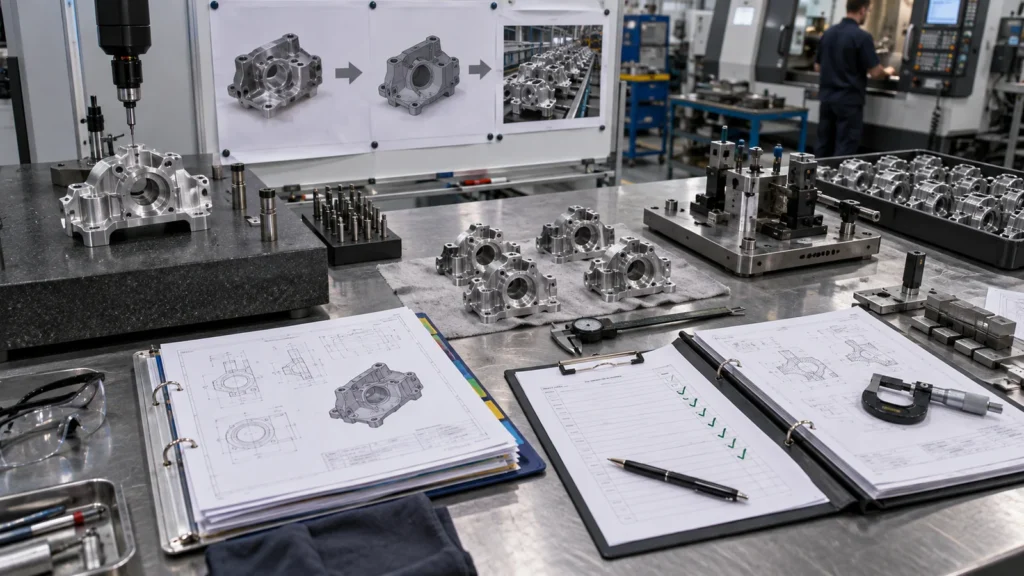
A pilot lot should exercise this system, not merely make more prototypes. Review variation, labor, queues, tool life, and records before declaring the route ready.
Three Ways Good Prototypes Fail at Scale
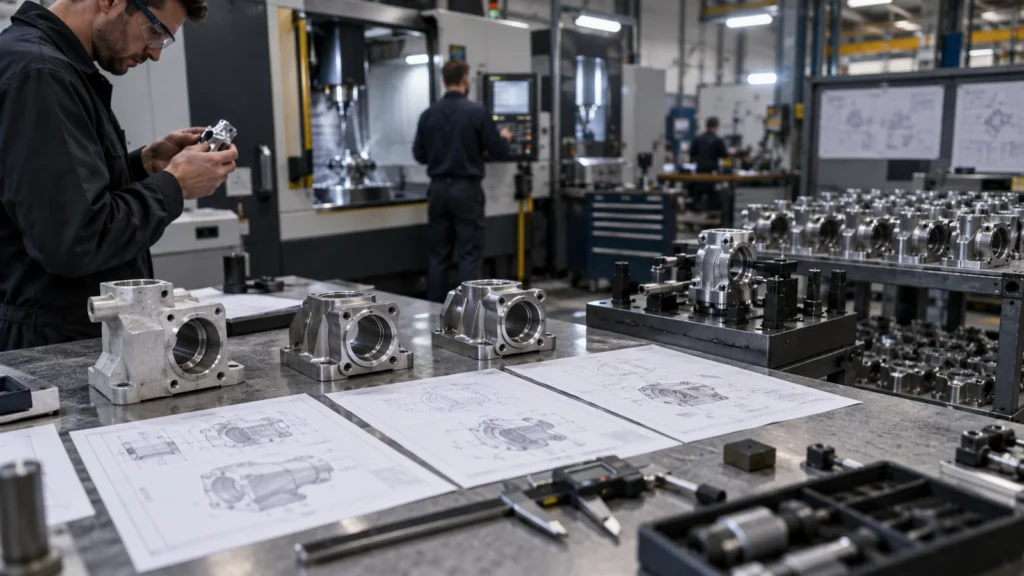
The prototype stock was stable, but production lots release stress differently or machine with different burr and wear behavior. Lock the applicable specification and validate new sources or conditions.
Setup knowledge stays tribal
One machinist can recover the datum by feel, but another operator loads the part differently. Convert tacit adjustments into fixture features, setup sheets, probes, and measurable acceptance.
Finish exposes variation
Parts pass before anodizing, plating, or heat treatment and fail afterward. Include the full process state in validation, drawing limits, masking, handling, and inspection.
Scale-Up FAQs
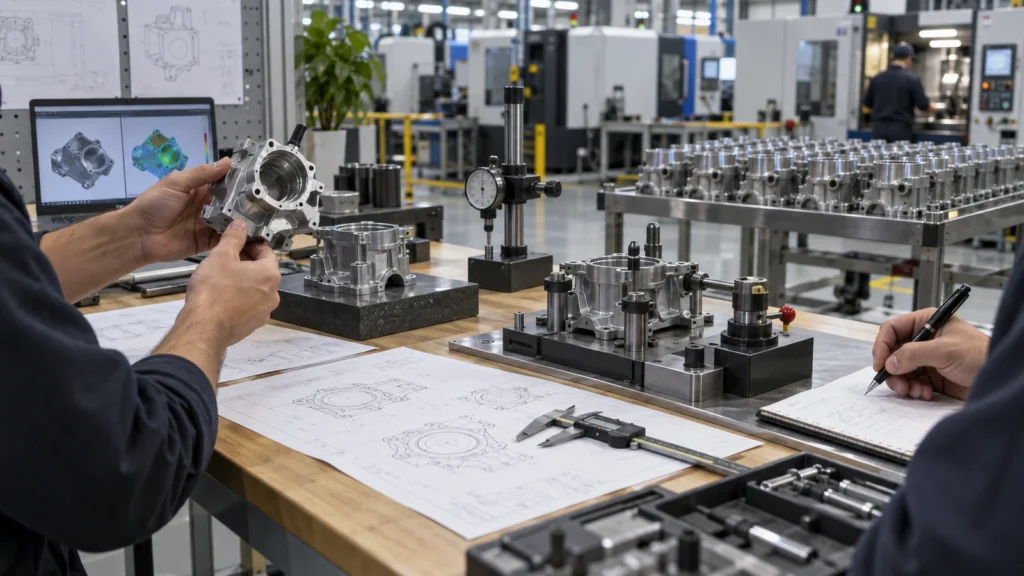
No. The route may change for capacity or efficiency, but the new setup must be validated against the same functional requirements and controlled records.
When is a dedicated fixture justified?
When repeat setup labor, loading error, variation, or capacity risk costs more than the fixture over credible demand. Consider the release pattern and future revisions.
Does production require tighter tolerances?
Not necessarily. Production requires repeatable fulfillment of functional requirements. Tightening limits without need can reduce capability and increase cost.
What should be frozen first?
Freeze functional interfaces, datums, material, finish, and acceptance criteria before optimizing cycle time. An efficient process for an unstable definition creates expensive rework.