التخميل والتلميع الكهربائي ليسا درجتين من نفس تشطيب الستانلس ستيل. التخميل هو في الأساس خطوة تنظيف وتكييف كيميائية تهدف إلى إزالة تلوث الحديد الحر ودعم السلوك الخامل للسبيكة. أما التلميع الكهربائي فيزيل طبقة مجهرية مضبوطة من السطح، مما ينعّم القمم ويغيّر التضاريس بالإضافة إلى النظافة. يبدأ الاختيار الصحيح بالفصل بين مشكلة التلوث ومشكلة الخشونة أو القابلية للتنظيف أو المظهر.
شخّص سطح الستانلس أولاً
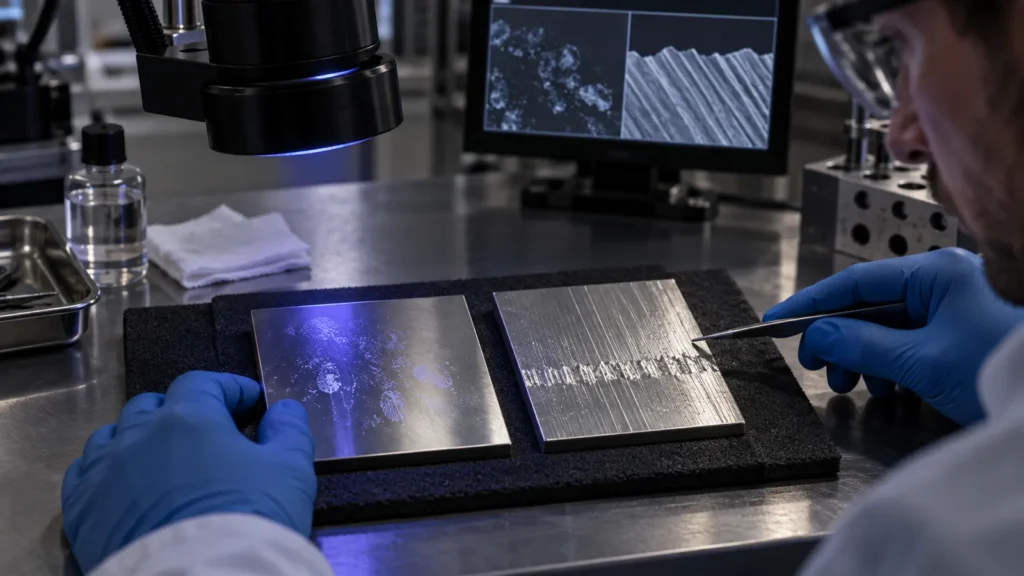
مشكلة تلوث
قد تترك عمليات التشغيل أو المناولة أو الأدوات حديداً حراً أو بقايا. يكون شكل السطح مقبولاً بالفعل. ابدأ بمراجعة التنظيف والتخميل.
مشكلة تضاريس
القمم المجهرية، أو بقايا النتوءات، أو الملمس الاتجاهي، أو القابلية للتنظيف هي جزء من المتطلبات. قيّم التلميع الكهربائي وتأثيره في إزالة المادة.
بعض القطع تحتاج إلى كلا النتيجتين، لكن التسلسل ومعايير القبول لا تزال بحاجة إلى تحديد. لا ينبغي تلميع قطعة كهربائياً لمجرد أن “مزيداً من المعالجة” يبدو أكثر أماناً، ولا ينبغي توقع أن يمحو التخميل علامات التشغيل أو يخلق سطحاً تجميلياً لامعاً.
للاطلاع على إطار القرار الأوسع عبر الطلاءات والتشطيبات الميكانيكية والمعالجات الكيميائية، استخدم دليل تشطيبات أسطح التصنيع باستخدام الحاسب الآلي.
عمليتان، وظيفتان مختلفتان
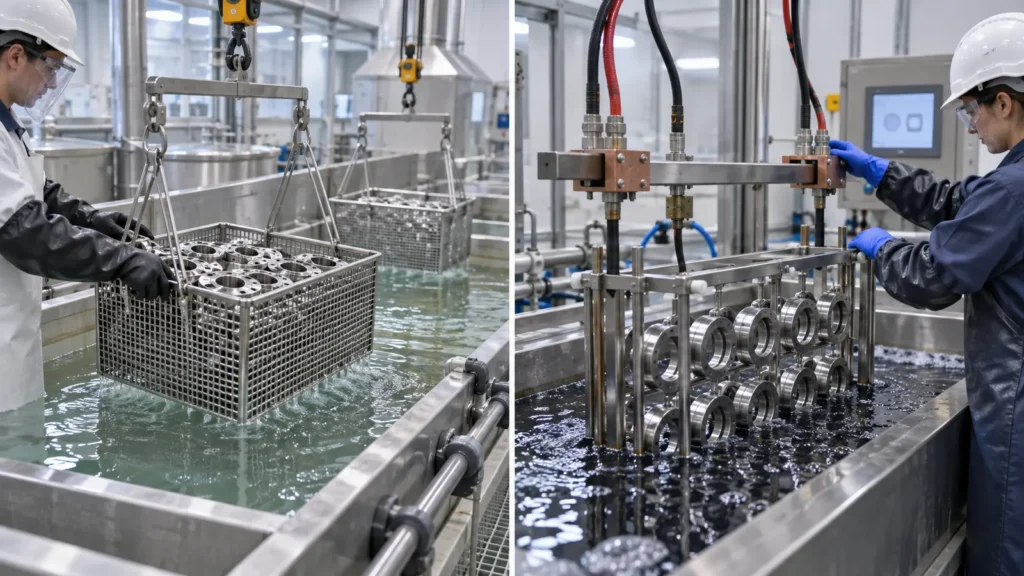
| السؤال |
التخميل |
التلميع الكهربائي |
| الإجراء الأساسي |
ينظف ويعالج كيميائياً السطح المصنوع من الفولاذ المقاوم للصدأ |
يزيل المادة السطحية كهروكيميائياً |
| الطبوغرافيا |
لا يعمل على تنعيم نسيج التشغيل الآلي بشكل متعمد |
يقلل بشكل تفضيلي النقاط المرتفعة المجهرية |
| المظهر |
عادةً ما يترك التشطيب السابق مهيمناً بصرياً |
يمكن أن ينتج سطحاً أكثر لمعاناً وأكثر نعومة في المظهر |
| الاعتبار البعدي |
محدود مقارنة بعملية الإزالة، لكن التنظيف والقبول لا يزالان مهمين |
إزالة المواد، وتغير الحواف، والميزات الصغيرة، وتوزيع التيار تتطلب مراجعة |
| أفضل سؤال بداية |
هل الشكل الهندسي للسطح مقبول ولكن التحكم في التلوث مطلوب؟ |
هل يجب أن يصبح السطح أكثر نعومة، أو أسهل في التنظيف، أو أكثر لمعانًا بصريًا؟ |
حدد خريطة الجزء قبل اختيار الحمام
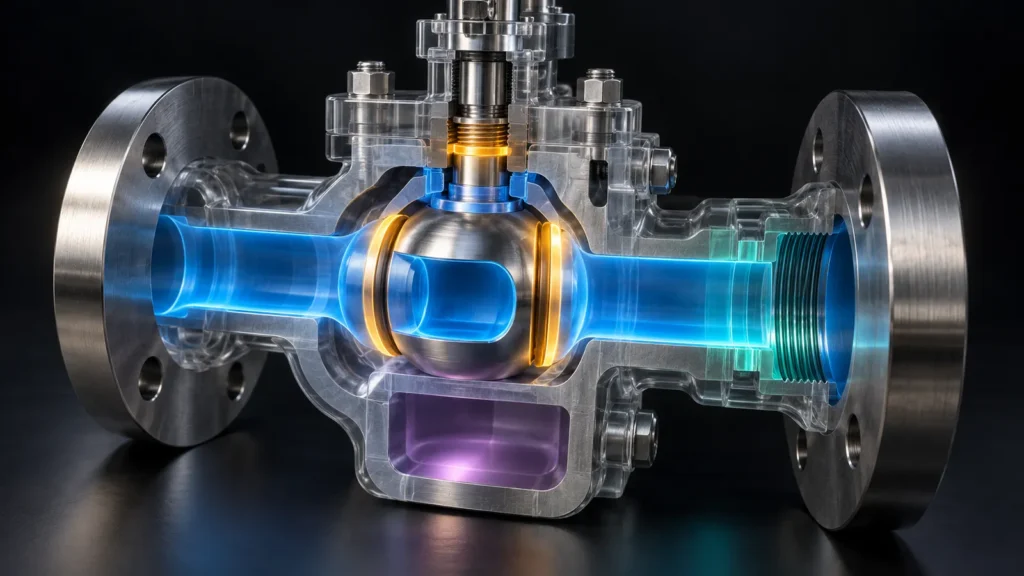
نادرًا ما يكون المكوّن المصنوع من الفولاذ المقاوم للصدأ سطحًا موحدًا واحدًا. حدد على الرسم وفقًا للوظيفة قبل اختيار المعالجة:
- أسطح التلامس مع المنتج: قد تهيمن النظافة، والبقايا، والخشونة، والحفر، وإمكانية الوصول للفحص.
- مناطق الإحكام: قد تكون الاستواء، ونمط السطح، والتموج، وحالة الحواف أكثر أهمية من اللمعان.
- اللولبات والتوافقات: تحقق مما إذا كان الإزالة أو تدوير الحواف قد يغيّر سلوك التجميع.
- المناطق الملحومة أو المتأثرة بالحرارة: يحتاج تغيّر اللون، والقشور، ومسار التنظيف إلى اعتبار منفصل.
- الأوجه التجميلية: حدد معايير القبول البصري بدلًا من افتراض أن العملية الكيميائية تضمن تشطيبًا مرآويًا.
- الثقوب العمياء والممرات الداخلية: قد يحدّ الوصول إلى المحلول، والتصريف، والشطف، والفحص من المسار.
تحوّل هذه الخريطة طلبًا غامضًا إلى خطة عملية. كما تمنع المعالجة المفرطة للمناطق المخفية مع ترك سطح التلامس الحرج حقًا غير محدد بشكل كافٍ.
بالنسبة للتجميعات، مدّد الخريطة عبر حدود المكونات. فمثلًا، قد يكون لأنبوب مصقول ملحوم بشفة مشغّلة آليًا نسيج ابتدائي مختلف وتواريخ حرارية مختلفة ومسارات تصريف مختلفة. وإذا تعامل الرسم مع التجميع كسطح موحّد واحد، فقد تظهر الاختلافات الموضعية كعيب في التشطيب حتى عندما تستجيب كل منطقة بشكل طبيعي لتاريخها الخاص.
حدّد أيضًا الأسطح التي ستُربط لاحقًا أو تُعلَّم بالليزر أو تُشحَّم أو توضع في تلامس كهربائي. فالسطح الأنظف أو الأملس ليس أفضل تلقائيًا لكل عملية لاحقة؛ قد يتطلب تسلسل التجميع النهائي مناطق محمية أو خطوة تحضير ثانية.
السبيكة والحالة الابتدائية تحددان السقف
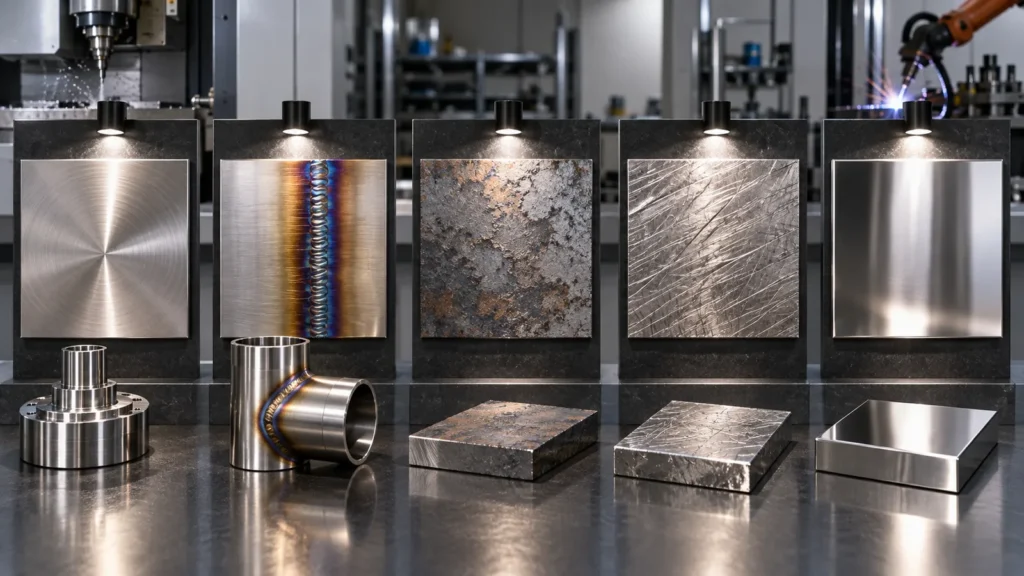
تغطي عبارة “الفولاذ المقاوم للصدأ” سبائك ذات سلوك تآكلي وقابلية للتشغيل الآلي ومعالجة حرارية وشوائب واستجابة للمعالجة الكيميائية مختلفة. كما أن مسار التشغيل الآلي مهم أيضًا. فالحديد المدمج من الأدوات المشتركة، واللون الحراري، والنباتات الحادة، والخدوش العميقة، والقشور، والزيت، ومركّب التلميع، أو الأسطح التالفة لا يمكن تصحيحها جميعًا بحمام نهائي واحد.
ما لن تصلحه البسملة (التبخيل)
- أخاديد التشغيل الآلي العميقة، أو الانبعاجات، أو العيوب الهندسية
- اختيار سبيكة غير مناسب لبيئة الخدمة
- قشور أكسيد ثقيلة أو عيوب لحام دون تحضير مناسب
- تصريف سيئ أو بقايا محتجزة في أشكال هندسية يتعذر الوصول إليها
ما لن يضمنه التلميع الكهربائي
- إزالة موحّدة على كل حافة وتجويف وثقب ومنطقة محجوبة
- إزالة العيوب العميقة دون تغيير الأبعاد
- تطابق مظهري عبر سبائك مختلطة أو تشطيبات ابتدائية غير متشابهة
- أداء تآكلي صحيح عندما تكون السبيكة الأساسية غير مناسبة
Machining strategy can improve the starting condition before either treatment. Dedicated clean tooling, controlled coolant, complete deburring, and avoidance of carbon-steel contamination reduce the burden on final cleaning. Stable finishing passes also reduce deep directional marks that electropolishing would otherwise need to chase with more material removal.
Where corrosion is safety- or validation-critical, use coupons or representative features that follow the same material, machining, cleaning, and finishing route. Testing an unrelated flat sample may not expose the effects of blind holes, weld discoloration, crevices, or local roughness on the production part.
Electropolishing Adds a Material-Removal Budget
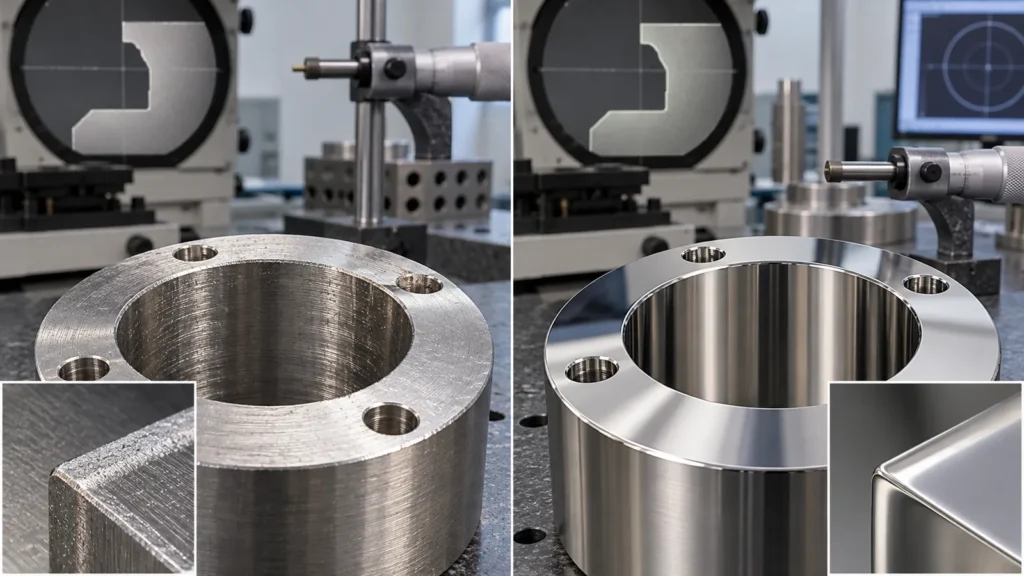
Because electropolishing removes metal, the drawing and process plan must identify features that cannot move freely. Sharp edges can soften, very small details can lose definition, and exposed peaks may remove differently from shielded recesses. The result depends on alloy, starting finish, current distribution, fixturing, chemistry, time, and geometry.
| Feature |
Review before electropolishing |
Possible control |
| Precision bore |
Final diameter, accessibility, and uniformity |
Allowance, masking, or finish-after strategy |
| Thread |
Fit, crest condition, and trapped chemistry |
Mask, verify with mating gauge, and define cleaning |
| Thin edge |
Edge rounding and local removal |
Protect geometry or revise edge requirement |
| Cosmetic panel |
Starting texture, rack location, and visual uniformity |
Approved sample and controlled preparation |
The dedicated خدمات التلميع الكهربائي page is a useful process reference, but the project drawing must define which dimensions and surfaces control acceptance.
Verify the Result You Actually Purchased
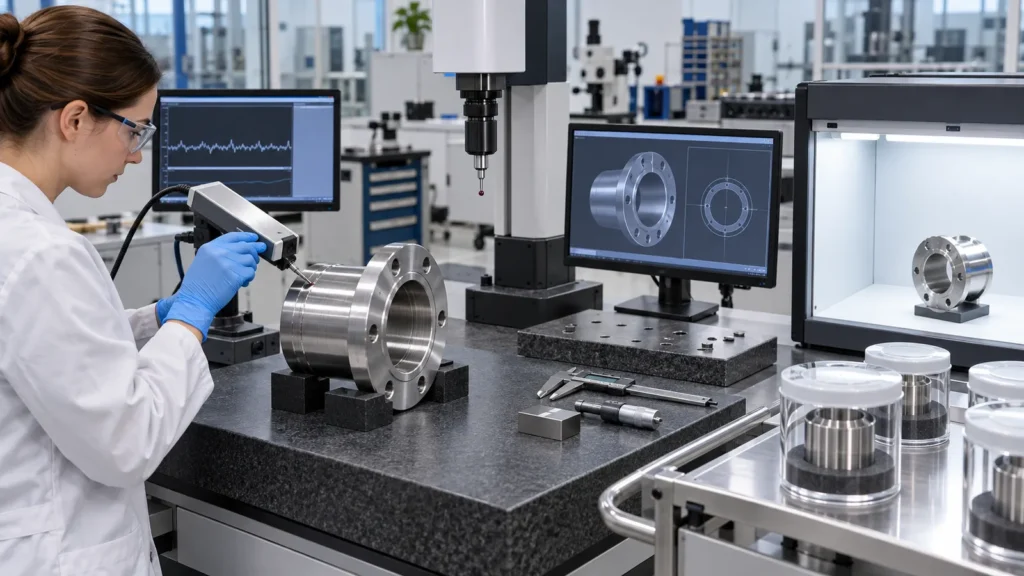
A treatment name is not an inspection plan. Match verification to the purpose:
- For contamination control: define cleaning, handling, process specification, and any required surface test or documentation.
- For corrosion performance: identify the environment, alloy, finish route, relevant test method, sample condition, and acceptance.
- For roughness: state parameter, limit, measurement zone, direction, cutoff, and whether measurement occurs before or after treatment.
- For appearance: use approved samples, visual zones, lighting, viewing distance, and defect limits.
- For dimensions: mark features measured after the complete finish route.
- For cleanliness: define rinse, drying, packaging, and protected handling as part of the requirement.
When records are required, include them in the RFQ rather than adding them after processing. JUCHENG’s quality control page outlines how inspection planning and documentation connect to machined-part delivery.
Sampling deserves the same clarity. A visual check of every part may coexist with periodic roughness measurement, dimensional first-article verification, and lot-based process records. State what is checked per part, per batch, and only at validation. Otherwise, two suppliers can meet the same treatment note with very different levels of evidence.
A Five-Step Selection Path
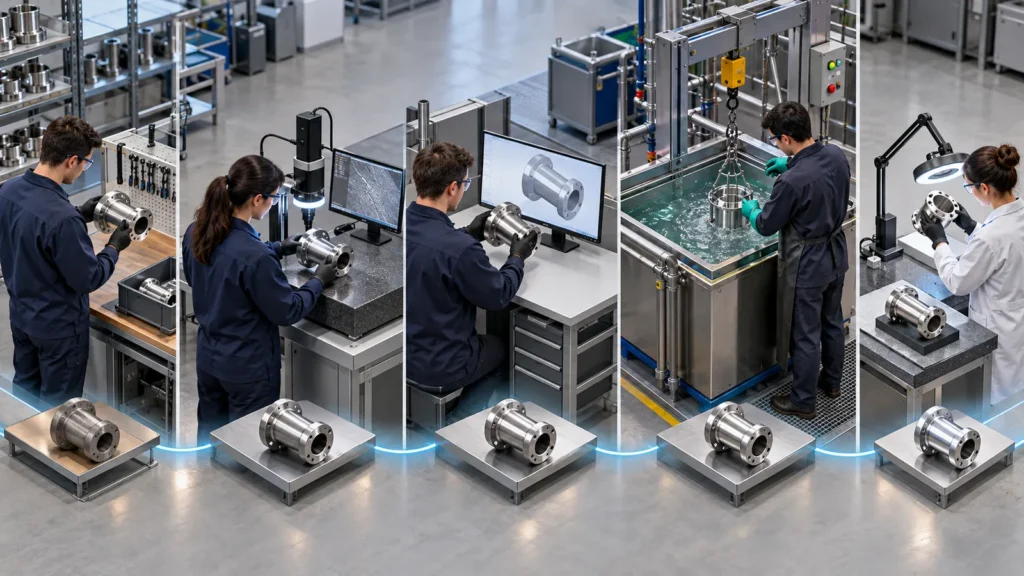
Name the problem: free-iron contamination, corrosion risk, roughness, cleanability, appearance, or several together.
Confirm the alloy and starting surface: include heat treatment, welds, prior polishing, scale, and critical defects.
Map critical geometry: contact surfaces, threads, fits, edges, internal passages, and cosmetic zones.
Choose the minimum effective route: passivation for cleaning and passive-surface support; electropolishing when controlled smoothing and material removal are also required.
Define acceptance: dimensional, roughness, visual, cleanliness, corrosion, and documentation criteria.
If passivation matches the function, see the passivation capability overview and send the applicable specification with the RFQ. If electropolishing is necessary, include a material-removal and measurement plan for critical features.
Common Misunderstandings
Is electropolishing simply stronger passivation?
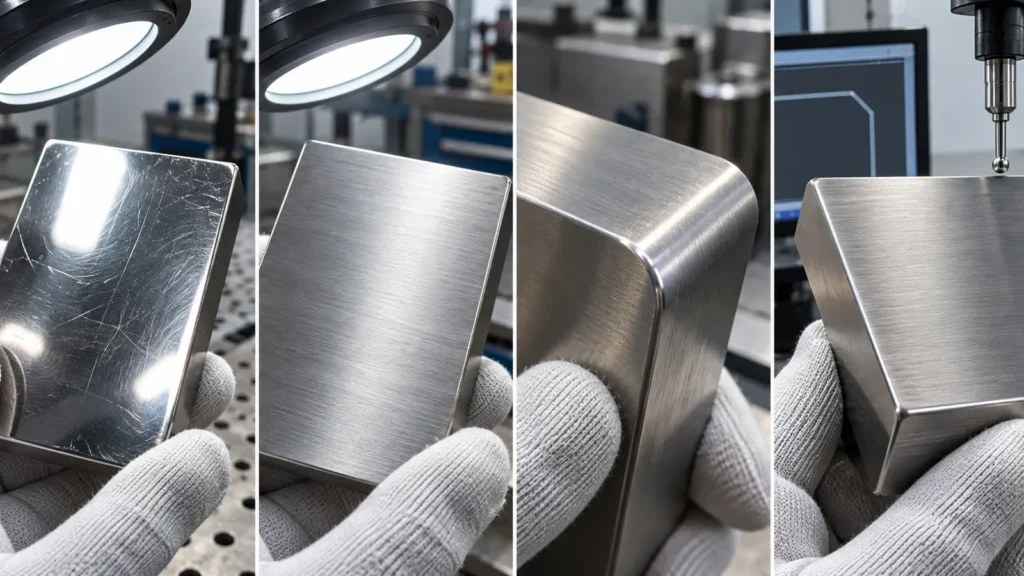
No. Electropolishing is a material-removal process that changes surface topography. Passivation is a chemical treatment focused on cleaning and supporting the stainless passive condition. They may share corrosion-related objectives, but their dimensional and visual effects differ.
Will passivation make a stainless part shiny?
It is not a polishing process. The machined, blasted, brushed, or polished starting texture normally remains visually dominant. If brightness or smoothing is required, specify that outcome separately.
Can electropolishing remove all burrs?
It may reduce microscopic high points and soften very small burr remnants, but it should not replace controlled deburring of significant edges. Large burrs, inaccessible features, and dimensional edges need a dedicated plan.
Do all stainless grades use the same passivation route?
No. Alloy family, heat treatment, surface condition, contamination, specification, and service environment influence process selection. State the exact material and required standard instead of writing only “stainless.”
