
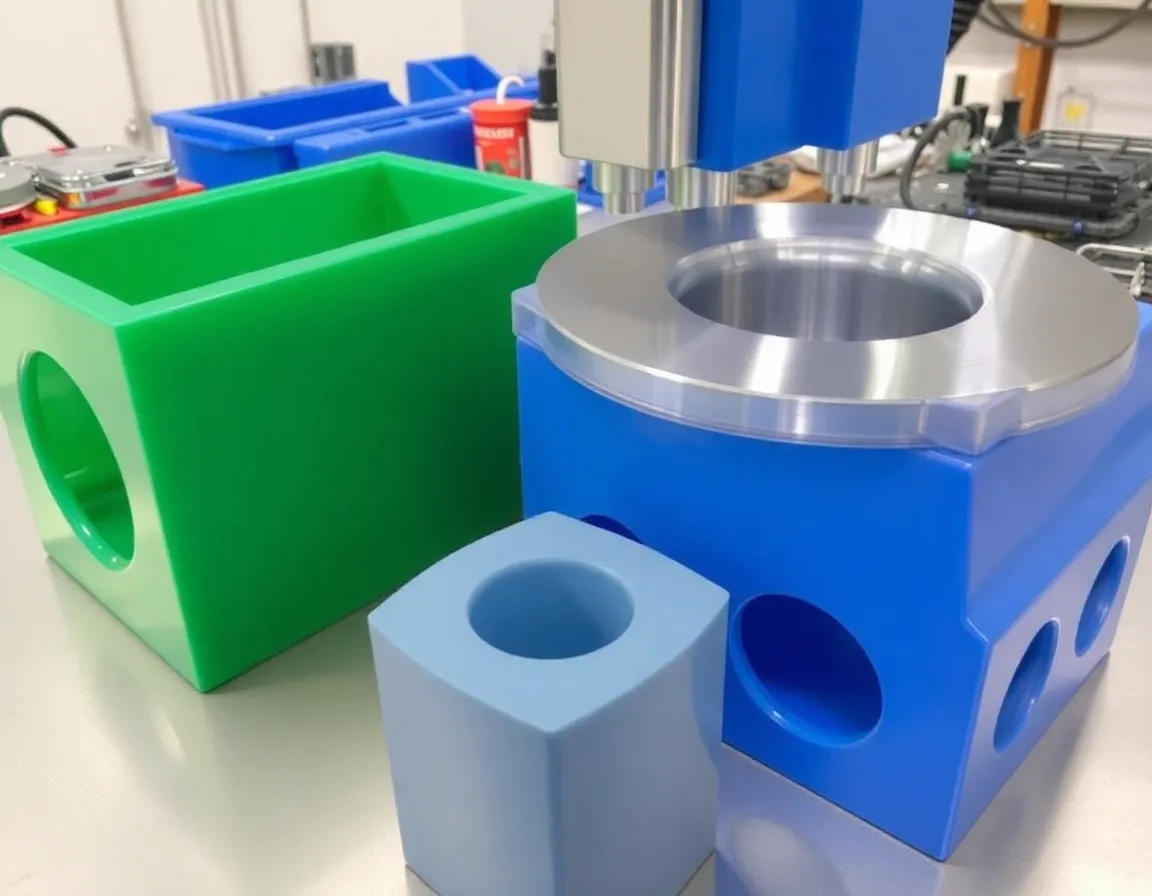
Introduction to Plastic CNC Machining Services
In the modern manufacturing landscape, plastic CNC machining serviceshave emerged as a critical solution for producing high-precision components across a vast array of industries. Unlike traditional metal machining, plastic CNC (Computer Numerical Control) machining involves the use of automated cutting tools to shape plastic materials into complex geometries with exceptional accuracy. This process has become indispensable for sectors ranging from aerospace and medical devices to consumer electronics and automotive manufacturing. By leveraging computer-controlled machinery, manufacturers can achieve tight tolerances, repeatable results, and intricate designs that would be impossible or prohibitively expensive with manual methods.
The demand for plastic CNC machining services continues to grow as engineers and designers seek materials that offer lightweight properties, chemical resistance, electrical insulation, and cost-effectiveness. Plastics such as ABS, Nylon, Polycarbonate, PEEK, and Delrin (Acetal) are commonly used, each offering distinct advantages for specific applications. Whether you need a single prototype or a full production run, understanding the nuances of plastic CNC machining is essential for making informed decisions about your project.
How Plastic CNC Machining Works
The core principle of plastic CNC machining is the same as metal machining: a computer program controls the movement of cutting tools to remove material from a solid block (or "blank") of plastic. However, the behavior of plastics during machining requires specialized knowledge and techniques. The process typically follows these steps:
1. Design and CAD Modeling
Every plastic CNC machining project begins with a digital 3D model created using Computer-Aided Design (CAD) software. This model defines the exact dimensions, tolerances, surface finishes, and features of the final part. Engineers must consider factors such as wall thickness, draft angles, and undercuts to ensure the design is machinable. For plastic parts, it is particularly important to avoid sharp internal corners that can cause stress concentration and cracking.
2. CAM Programming and Toolpath Generation
Once the CAD model is complete, it is imported into Computer-Aided Manufacturing (CAM) software. The CAM system converts the 3D model into a series of precise instructions (G-code) that tell the CNC machine how to move, at what speed, and at what depth. For plastics, programmers must adjust parameters like spindle speed, feed rate, and depth of cut to prevent melting, chipping, or warping. Unlike metals, plastics have lower melting points and can deform under excessive heat, so cooling strategies and chip evacuation are critical.
3. Material Selection and Preparation
Choosing the right plastic material is a vital step. Common options include:
- ABS (Acrylonitrile Butadiene Styrene) – Tough, impact-resistant, and easy to machine. Ideal for prototypes and functional parts.
- Nylon (Polyamide)– Excellent wear resistance and low friction. Used for gears, bushings, and bearings.
- Polycarbonate (PC)– High strength and transparency. Suitable for lenses, windows, and medical devices.
- PEEK (Polyether Ether Ketone)– High-temperature resistance and chemical stability. Common in aerospace and medical implants.
- Delrin (Acetal)– Low moisture absorption and high stiffness. Perfect for precision mechanical parts.
The plastic stock is typically supplied in sheets, rods, or blocks. The material is securely clamped onto the CNC machine's worktable, often using vacuum fixtures or custom jigs to avoid deformation during cutting.
4. Machining Operations
Plastic CNC machining services utilize a variety of cutting operations, including:
- Milling – Rotating cutting tools remove material to create flat surfaces, slots, pockets, and complex 3D contours.
- Turning– The plastic workpiece rotates while a stationary cutting tool shapes it, ideal for cylindrical parts like shafts and fittings.
- Drilling and Tapping– Creating holes and threads for assembly. Specialized drills with sharp geometries prevent melting.
- Thread Milling– A preferred method for threading plastics as it reduces stress compared to tapping.
Throughout the process, coolant or compressed air is used to control heat buildup. Some plastics, like acrylic, are prone to stress cracking if overheated, so careful thermal management is essential. High-speed machining with light cuts is often recommended to achieve a smooth surface finish without burning the material.
5. Finishing and Quality Control
After machining, parts may undergo secondary operations such as deburring (removing sharp edges), sanding, polishing, or chemical smoothing. For transparent plastics like acrylic, flame polishing can restore optical clarity. Finally, each part is inspected using precision measuring tools like calipers, micrometers, and CMM (Coordinate Measuring Machines) to verify that it meets the specified tolerances, often within ±0.005 inches or tighter.
Key Benefits of Plastic CNC Machining Services
Choosing plastic CNC machining over other manufacturing methods (such as injection molding or 3D printing) offers several distinct advantages:
Superior Precision and Tolerances
CNC machining provides exceptional accuracy, with tolerances as tight as ±0.001 inches for small features. This level of precision is critical for components that must fit together seamlessly, such as medical device housings or electronic connectors. Unlike 3D printing, which can suffer from layer lines and dimensional drift, CNC machined parts have consistent, isotropic properties.
Material Versatility
Plastic CNC machining services can work with hundreds of different plastic grades, including filled and reinforced variants (e.g., glass-filled Nylon or carbon-fiber-reinforced PEEK). This allows engineers to select materials based on specific performance requirements, such as UV resistance, FDA compliance for food contact, or electrostatic discharge (ESD) protection.
No Tooling Costs
Unlike injection molding, which requires expensive steel molds that can cost tens of thousands of dollars, CNC machining is a subtractive process that uses standard cutting tools. This makes it ideal for low-volume production (1-1000 parts) and prototyping, as there is no upfront tooling investment. Design changes can be implemented quickly by simply modifying the CAM program.
Fast Turnaround Times
With modern multi-axis CNC machines and automated tool changers, complex parts can be machined in hours or days. Many service providers offer rapid prototyping services with lead times as short as 24-48 hours. This speed is invaluable for product development cycles where time-to-market is a competitive factor.
Excellent Mechanical Properties
Because CNC machining uses solid blocks of plastic, the resulting parts have no internal voids or weak points (unlike 3D printed parts which can have anisotropic strength). The material retains its full mechanical integrity, making machined parts suitable for functional testing and end-use applications under load.
Common Applications of Plastic CNC Machining
The versatility of plastic CNC machining services has led to their adoption across numerous industries. Some prominent applications include:
Medical Devices
Plastics like PEEK, UHMWPE, and medical-grade ABS are used to manufacture surgical instruments, implantable components, diagnostic equipment housings, and fluid handling systems. CNC machining ensures biocompatibility, sterility, and the tight tolerances required for life-critical devices.
Aerospace and Defense
Lightweight plastics such as PEEK and Torlon are used for interior cabin components, electrical connectors, and structural brackets. Their high strength-to-weight ratio and resistance to chemicals and extreme temperatures make them ideal for aircraft and satellite applications.
Automotive
From under-the-hood components like intake manifolds to interior trim parts and sensor housings, plastic CNC machining produces durable, lightweight parts that reduce vehicle weight and improve fuel efficiency. Materials like Nylon and Delrin are common for gears and bushings.
Electronics
CNC machined plastics are used for enclosures, insulators, and custom connectors. Materials with ESD properties (like static-dissipative ABS) protect sensitive electronic components from electrostatic discharge during assembly and operation.
Industrial Machinery
Wear-resistant plastics like UHMWPE and Nylon are machined into conveyor guides, wear strips, rollers, and pump impellers. Their low friction and self-lubricating properties reduce maintenance and extend equipment life.
Best Practices for Plastic CNC Machining
To achieve optimal results from plastic CNC machining services, consider the following best practices:
Design for Machinability
Avoid sharp internal corners; use radii of at least 0.5mm to 1mm to reduce stress concentration. Maintain uniform wall thickness to prevent warping. Include generous draft angles (1-3 degrees) for features that require tool access. Consult with your machining service provider early in the design phase to identify potential issues.
Select the Right Material
Match the plastic's properties to the application's demands. For example, if the part will be exposed to chemicals, choose PEEK or PTFE. If it requires optical clarity, use acrylic or polycarbonate. Consider the material's machinability rating – some plastics, like polypropylene, are notoriously difficult to machine due to their softness and low melting point.
Optimize Tooling and Cutting Parameters
Use sharp, polished cutting tools designed specifically for plastics. Carbide tools with high rake angles reduce cutting forces and heat generation. Maintain high spindle speeds (10,000-30,000 RPM) with moderate feed rates to achieve a clean cut. Use compressed air or mist coolant to evacuate chips and cool the cutting zone.
Manage Thermal Expansion
Plastics have a higher coefficient of thermal expansion than metals. Allow for this in your tolerances, especially for parts that will be used in varying temperatures. During machining, avoid prolonged contact between the tool and the workpiece to prevent localized melting.
Post-Machining Considerations
Plan for secondary operations such as deburring, which is essential for safety and aesthetics. For parts that require assembly, ensure that threads are cut cleanly (thread milling is preferred over tapping). Consider stress-relieving treatments for high-performance plastics like PEEK if the part will be subjected to cyclic loads.
Choosing a Plastic CNC Machining Service Provider
When selecting a partner for plastic CNC machining services, evaluate their capabilities and experience. Look for providers that offer:
- Multi-axis machining (3-axis, 4-axis, or 5-axis) for complex geometries.
- Material expertise– a wide inventory of plastic grades and knowledge of their machining characteristics.
- Quality certificationssuch as ISO 9001 or AS9100 for aerospace and medical applications.
- In-house finishing serviceslike polishing, anodizing (for metals), or ultrasonic welding for plastic assemblies.
- Rapid prototyping capabilitieswith fast turnaround times.
Request sample parts or references to assess their quality. A reliable provider will offer design-for-manufacturability feedback and transparent pricing with no hidden costs for design revisions.
Conclusion
Plastic CNC machining services represent a powerful and flexible manufacturing solution that bridges the gap between prototyping and full-scale production. By combining the precision of computer-controlled automation with the diverse properties of engineering plastics, these services enable the creation of high-quality, functional parts for virtually any industry. Whether you are developing a new medical device, an automotive prototype, or an industrial component, understanding the capabilities and best practices of plastic CNC machining will help you achieve superior results. As technology advances, the integration of advanced CAM software, high-speed spindles, and improved materials will only expand the possibilities, making plastic CNC machining an ever more valuable tool in the modern engineer's arsenal.