
Introduction: The Art of Precision in Plastic
In the world of modern manufacturing and design, acrylic (PMMA) stands as a material of remarkable versatility and aesthetic appeal. Its crystal-clear transparency, impressive strength, and excellent weatherability have made it a favorite for applications ranging from sleek signage to complex medical devices. However, unlocking its full potential requires a manufacturing process capable of extreme precision and flawless surface finishing. Enter Acrylic CNC Machining—a subtractive manufacturing technique that combines computer-controlled accuracy with specialized tooling to transform sheets and blocks of acrylic into intricate, high-tolerance components. Mastering this process is not just about cutting plastic; it's about understanding the unique behavior of the material to achieve edges that rival polished glass and dimensions measured in microns.
Understanding Acrylic CNC Machining
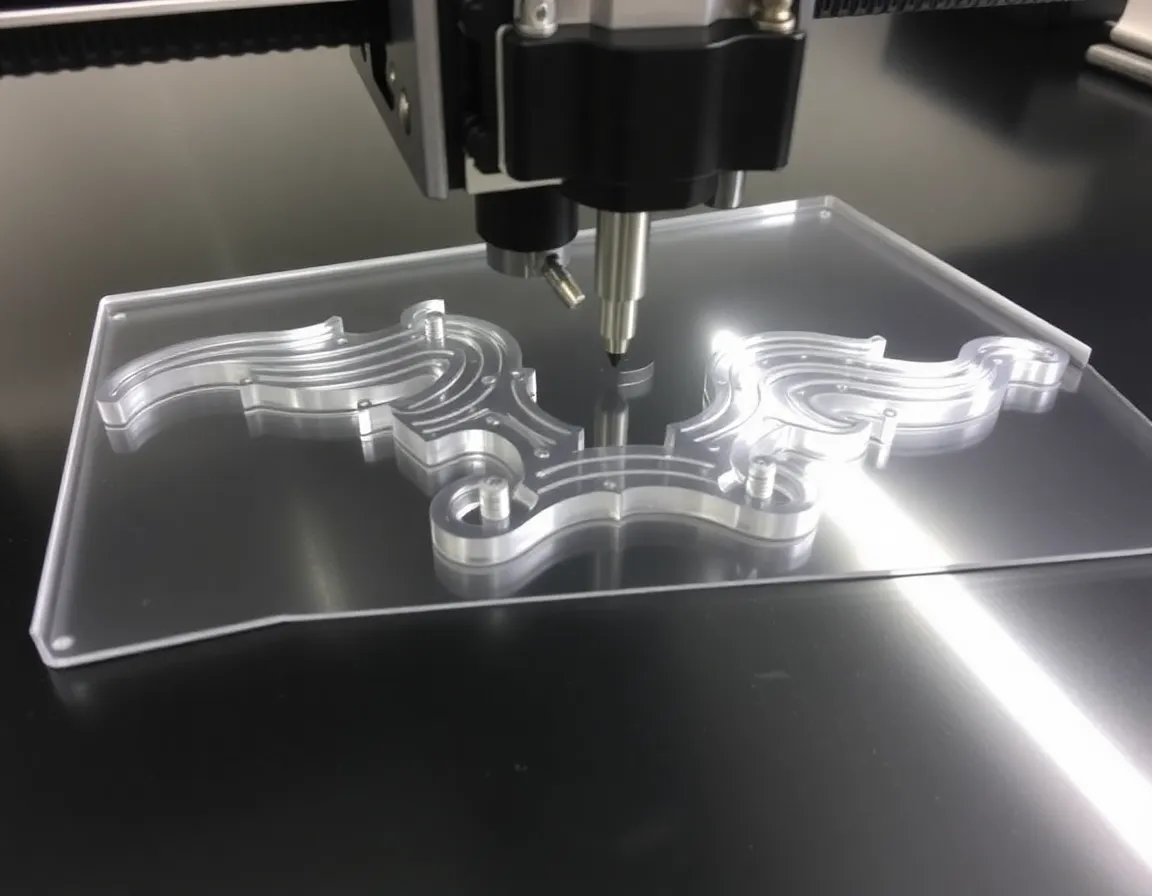
CNC (Computer Numerical Control) machining is a process where pre-programmed computer software dictates the movement of factory tools and machinery. For acrylic, this typically involves a CNC router or milling machine that uses rotating cutting tools to carve, drill, and shape the material based on a digital 3D model.
How It Works: From Digital File to Physical Part
The journey begins with a CAD (Computer-Aided Design) model, which is translated into a CNC program (G-code) via CAM (Computer-Aided Manufacturing) software. This code instructs the machine on the precise paths, speeds, and depths of cut. The acrylic sheet or block is securely fastened to the machine bed, and the spindle, equipped with a specialized bit, begins its meticulous work. Key to the process is managing the heat generated by friction; excessive heat can melt the acrylic, leading to poor edge quality and dimensional inaccuracy. Therefore, successful acrylic CNC machining hinges on a delicate balance of feed rate, spindle speed, tool geometry, and cooling methods.
Types of Acrylic for CNC
Not all acrylic is created equal, and material choice profoundly impacts the machining outcome.
- Extruded Acrylic: Softer and more economical, it machines easily but is more prone to stress cracking and can produce less optimal optical clarity on cut edges without extensive polishing.
- Cast Acrylic: Harder, more thermally stable, and offers superior chemical resistance. It is the preferred choice for high-precision and high-quality finish applications, as it cuts cleaner and polishes to an optically clear edge more readily.
The Pursuit of the Perfect Finish: Techniques and Best Practices
Achieving a flawless finish on CNC-machined acrylic is where science meets artistry. The goal is often a part that appears to be molded from a single, perfect piece of crystal-clear material, with no visible tool marks or imperfections.
Optimizing Cutting Parameters
The foundation of a good finish is laid during the cutting process itself. Using sharp, single-flute or O-flute router bits is critical, as they are designed to efficiently evacuate chips and reduce heat buildup. High spindle speeds paired with controlled, steady feed rates ensure the tool shears the material cleanly rather than melting it. Climb milling (where the tool rotates in the same direction as the feed) is often preferred for acrylic as it can produce a cleaner finish on one side of the cut.
Post-Processing for Optical Clarity
Even with perfect machining, cut edges will typically require post-processing to achieve transparency. The standard progression is:
- Flame Polishing: For edges not requiring ultra-precise dimensional tolerance, passing a fine oxy-gas flame briefly over the edge melts the surface layer to a glass-like smoothness. It requires significant skill to avoid rippling or deforming the part.
- Mechanical Polishing: A multi-step sanding process starting with coarse grits (e.g., 320) and progressing through increasingly fine grits (up to 12,000 or more), often followed by a buffing wheel with a specialized plastic polishing compound. This method preserves sharp edges and dimensions.
- Chemical Polishing: Dipping the part in a heated chemical bath (often a mixture of chemicals) that dissolves the surface layer, smoothing out microscopic imperfections. It is excellent for complex geometries but requires strict environmental and safety controls.
Minimizing Stress and Cracking
Acrylic is susceptible to stress cracking, especially around drilled holes or sharp internal corners. Best practices include using relief holes for internal cuts, avoiding overly tight tolerances on fastener holes, and ensuring toolpaths are designed with smooth, rounded transitions where possible. Proper handling and securing of the material without over-clamping are also essential.
Key Benefits and Diverse Applications
The synergy of acrylic's material properties and CNC's capabilities opens doors to innovation across countless industries.
Unmatched Advantages
- Extreme Precision and Complexity: CNC machining can produce parts with tolerances within ±0.005 inches (0.127 mm) or tighter, enabling intricate designs, precise interlocking parts, and complex 3D contours that are impossible with basic cutting or forming.
- Rapid Prototyping and Production: It bridges the gap between prototype and end-use part. A design can be machined from acrylic in hours, tested, iterated, and then put directly into low-to-medium volume production.
- Superior Surface Finish: As detailed, the potential for optically clear, polished edges sets it apart from other manufacturing methods like laser cutting, which can leave a characteristic "wavy" or hazy edge on thick acrylic.
- Material Integrity: Unlike injection molding, which can introduce internal stresses, CNC machining from solid cast acrylic stock results in parts with excellent dimensional stability and no molded-in stress.
Industry Applications
The applications are as clear as the material itself:
- Retail & Signage: High-end point-of-purchase displays, illuminated lightboxes, intricate corporate logos, and museum exhibit components.
- Medical & Laboratory: Fluidic devices, diagnostic instrument housings, surgical guides, and sample chambers where transparency, biocompatibility (for specific grades), and the ability to be sterilized are crucial.
- Lighting & Architecture: LED light diffusers, lenses, decorative panels, and modern architectural features that require precise light transmission and elegant aesthetics.
- Automotive & Aerospace: Interior trim components, instrument panel covers, prototype light housings, and aircraft cabin signage.
- Electronics: Transprotective covers for touchscreens and displays, enclosures for prototypes, and jigs/fixtures for assembly.
Conclusion: Mastering the Craft
Mastering acrylic CNC machining is a multidimensional discipline. It demands more than just operating a machine; it requires a deep understanding of polymer behavior, meticulous attention to tooling and parameters, and a skilled hand in post-processing. From selecting the right grade of cast or extruded material to programming the optimal toolpath and executing the final polish, each step is critical in transforming a raw sheet of plastic into a precision component of stunning clarity and accuracy. For designers and engineers, this mastery unlocks a world of possibilities, allowing them to push the boundaries of form and function with a material that offers both beauty and resilience. In the hands of a skilled machinist, acrylic CNC is not merely a manufacturing process—it is a craft that turns digital dreams into luminous reality.