acrylic pmma machining solutions are available with stable quality control, flexible manufacturing capacity, and responsive technical support. Contact us for drawings review and quotation.

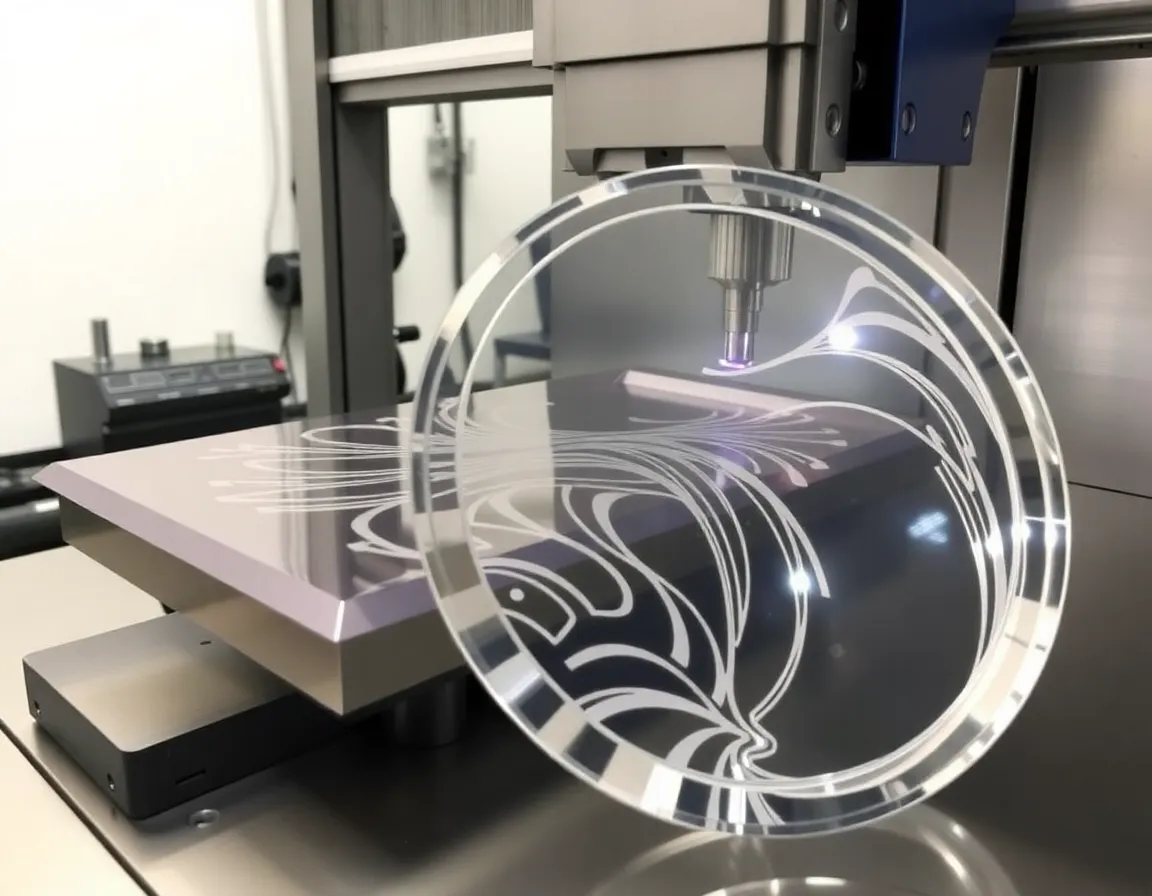
Expert CNC machining of acrylic PMMA with stable quality control. Get custom plastic parts, prototypes, and optical components. Request a quote today. acrylic pmma machining
Achieves crystal-clear, polished edges and surfaces without post-processing.
Enables accurate production of intricate designs and tight tolerances.
Rapid machining speeds reduce lead times and increase part output.
Produces durable parts that withstand outdoor and harsh environments.
acrylic pmma machining solutions are available with stable quality control, flexible manufacturing capacity, and responsive technical support. Contact us for drawings review and quotation.
Acrylic PMMA machining is a subtractive manufacturing process where solid sheets, rods, or blocks of Polymethyl Methacrylate (PMMA) plastic are precisely cut, drilled, milled, or engraved using computer-controlled (CNC) machine tools. It is used to create high-precision, custom parts and components with excellent optical clarity and dimensional stability. Common applications include signage and light guides, protective barriers and windows, display components, medical device prototypes, architectural models, and intricate artistic installations. Unlike thermoforming, machining is ideal for low to medium volume production of complex 2D and 3D shapes that require tight tolerances and smooth, polished edges directly from the raw material.
The process begins with a digital CAD (Computer-Aided Design) file of the part. This design is translated into toolpaths using CAM (Computer-Aided Manufacturing) software, which generates instructions (G-code) for the CNC machine. A solid sheet of acrylic PMMA is then securely clamped to the machine bed. The CNC machine, equipped with specialized cutters (like single or double-flute end mills), precisely follows the programmed paths to cut the material. Key to the process is proper tool selection, feed rate, and spindle speed to prevent melting or chipping. Coolants or compressed air are often used to dissipate heat. After machining, parts typically undergo secondary finishing, such as flame polishing edges for crystal clarity or sanding for a matte finish.
Acrylic PMMA machining offers distinct advantages: It provides exceptional precision and repeatability, holding tight tolerances (±0.005 inches or better) ideal for functional parts. It allows for complex geometries and intricate details that are difficult with injection molding or manual cutting. There are no minimum order quantities, making it perfect for prototypes, one-offs, and small batches. The process yields parts with superior optical clarity and surface finish directly from the machine, especially when edges are flame-polished. Compared to laser cutting, CNC machining can create true 3D contours and does not produce a frosted cut edge. It's also highly material-efficient, as nesting software optimizes raw sheet usage, reducing waste.
A primary concern is the material's tendency to melt, chip, or crack if machined incorrectly. This is addressed by using sharp, specialized tools (often with polished flutes), correct speeds and feeds, and secure workholding to prevent vibration. Internal stress in the cast acrylic sheet can also cause cracking; using stress-relieved or extruded grades mitigates this. Achieving optically clear edges requires post-processing like flame polishing or diamond buffing. Experienced machinists also manage static attraction, which can draw dust to the surface, by using anti-static cleaners. By partnering with a shop knowledgeable in plastic machining, these challenges are expertly managed to deliver flawless, high-quality acrylic PMMA parts.
The cost of acrylic PMMA machining is influenced by several factors: Material cost (sheet size, thickness, and grade), part complexity (simple 2D cuts vs. complex 3D milling), required tolerances and surface finishes, and quantity. Setup and programming time are fixed costs, so unit price decreases with higher volumes. Secondary operations like polishing, drilling, or assembly add cost. Timeline depends on the shop's workload, project complexity, and material availability. A simple part might be turned around in 2-3 days, while a complex multi-axis job may take 1-2 weeks. To get an accurate quote, provide a detailed CAD drawing, specify material type (e.g., cast vs. extruded), finish requirements, and quantity.
Incredible precision on our custom acrylic display stands. The edges were perfectly flame-polished,
Great work machining a complex acrylic housing for our prototype. The tolerances were spot-on and th
I run a small museum and needed delicate acrylic mounts for fragile artifacts. They handled the job
Ordered machined PMMA lenses for a lighting project. The optical clarity is excellent and the parts