hdpe machining solutions are available with stable quality control, flexible manufacturing capacity, and responsive technical support. Contact us for drawings review and quotation.

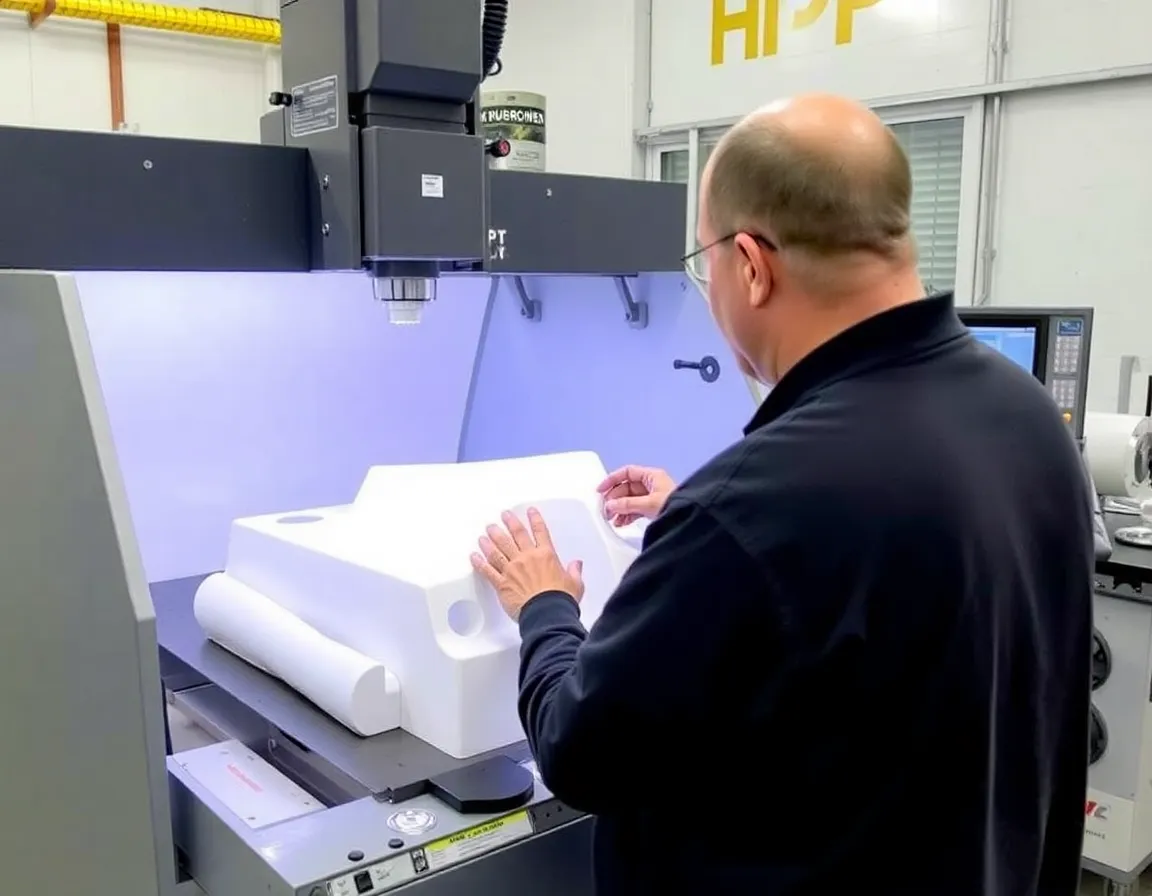
Expert HDPE machining with stable quality control & flexible capacity. Get responsive technical support, drawing review, and a fast quote for your plastic components.
Machined parts resist harsh chemicals and water, ensuring long-term durability in demanding environments.
HDPE components are tough and withstand high stress, reducing breakage and replacement costs.
Low material weight simplifies handling and installation, while being easy to machine precisely.
Smooth machined surfaces reduce wear and material buildup, improving efficiency and flow.
hdpe machining solutions are available with stable quality control, flexible manufacturing capacity, and responsive technical support. Contact us for drawings review and quotation.
HDPE machining is the process of cutting, shaping, and finishing High-Density Polyethylene plastic using precision machine tools like CNC mills, lathes, and routers. Unlike molding, machining involves removing material from a solid HDPE sheet, rod, or block to create custom parts. This process is ideal for producing prototypes, low-volume production runs, and highly specialized components that are not economical to mold. Common applications include industrial machine parts, food processing equipment, chemical tanks, marine components, and architectural features. HDPE's excellent chemical resistance, low moisture absorption, and durability make it a preferred material for parts requiring these properties in a custom-fabricated form.
The HDPE machining process typically begins with a CAD model of the desired part. This design is translated into machine instructions (G-code) for a CNC (Computer Numerical Control) machine. A solid block, sheet, or rod of HDPE is then securely clamped to the machine bed. Using specialized cutting tools, the CNC machine precisely removes material through milling, drilling, turning, or threading operations. Key considerations during machining include controlling heat buildup (HDPE has a low melting point) using sharp tools, appropriate feed rates, and sometimes coolants. The process allows for tight tolerances and complex geometries. Finally, parts may undergo secondary finishing, such as edge breaking, sanding, or tapping, to meet exact specifications before quality inspection and delivery.
Choosing HDPE machining offers several distinct benefits. First, it provides exceptional design flexibility for complex, one-off, or low-volume parts without the high cost of creating molds, which is ideal for prototyping and custom projects. Second, machined HDPE parts have superior mechanical properties in the finished piece, as machining starts with premium, stress-relieved stock material. Third, it allows for extremely tight tolerances and excellent surface finishes directly from the machine. Furthermore, HDPE itself is lightweight, corrosion-resistant, FDA-compliant for many grades, and has high impact strength. Compared to welding or fabricating from multiple pieces, machining from a solid block often results in a more robust, leak-proof, and dimensionally stable monolithic part, ensuring longevity and performance in demanding applications.
A primary concern in HDPE machining is its low melting point and high thermal expansion. Excessive heat from friction can cause the material to gum up on cutting tools, leading to poor finishes and dimensional inaccuracy. This is addressed by using sharp, polished carbide tools with positive rake angles, high spindle speeds, and slow-to-moderate feed rates to efficiently evacuate chips. Proper clamping is also crucial to avoid distortion, as HDPE is less rigid than metals. Experienced machinists understand HDPE's tendency to 'spring back' or relax after cutting, accounting for this in tool paths to hold precise tolerances. By controlling these factors—heat, tooling, and fixturing—a skilled shop can consistently produce high-quality, dimensionally accurate HDPE machined parts with clean edges and smooth surfaces.
The cost and timeline for an HDPE machining project depend on several key factors. Complexity is a major driver: simple cut parts cost less than those with intricate 3D contours, undercuts, or deep cavities that require more programming and machine time. Part size and the amount of raw material required also directly impact cost. Tolerances and finish specifications are critical; holding extremely tight tolerances or achieving a mirror polish requires more precise, slower machining and additional labor. Quantity affects unit price, with per-part cost decreasing for larger runs due to amortized setup and programming time. Finally, the shop's workload and material availability influence the timeline. Providing a detailed CAD drawing upfront allows for the most accurate and timely quote, typically ranging from a few days for simple jobs to several weeks for complex projects.
Our lab needed custom HDPE fluid handling components. The precision machining was flawless—tight tol
Great work on a complex HDPE manifold for our water treatment pilot. The communication was excellent
I run a small brewery and needed custom HDPE gear. These guys nailed it! They advised on material gr
We ordered machined HDPE insulators for an electrical project. The parts are precisely made and func