
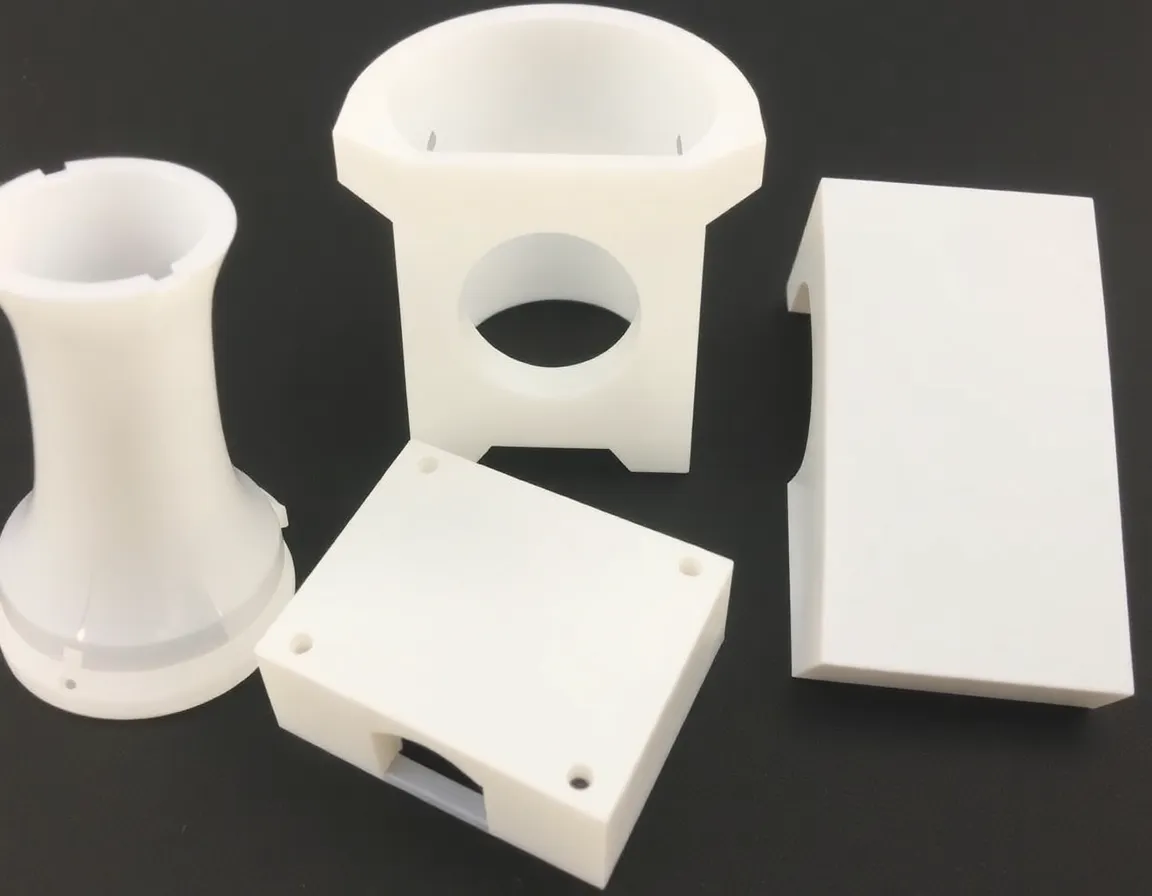
Introduction to CNC Plastic Parts
In the modern manufacturing landscape, CNC plastic partshave become indispensable across a vast array of industries. CNC, which stands for Computer Numerical Control, is a subtractive manufacturing process where pre-programmed computer software dictates the movement of factory tools and machinery. When applied to plastics, this process allows for the creation of highly precise, complex, and durable components that would be impossible or prohibitively expensive to produce through traditional methods like injection molding or manual machining. From prototypes to end-use production parts, CNC machining of plastics offers unparalleled accuracy, repeatability, and material versatility.
Unlike metals, plastics present unique challenges and opportunities. They are lighter, often more chemically resistant, and can be machined faster, but they also require careful consideration of heat buildup, chip evacuation, and material-specific tooling. This article delves into every critical aspect of CNC plastic parts, providing a comprehensive guide for engineers, designers, and procurement professionals.
What Are CNC Plastic Parts?
CNC plastic parts are components machined from solid plastic blocks or rods using computer-controlled cutting tools. The process begins with a 3D CAD (Computer-Aided Design) model, which is converted into a series of precise instructions (G-code) that guide the milling machine, lathe, or router. The machine then removes material layer by layer to achieve the final geometry. Common plastics used include:
- Acrylic (PMMA): Excellent optical clarity and weather resistance.
- Nylon (PA):High strength, toughness, and low friction.
- Polycarbonate (PC):Impact-resistant and transparent.
- PTFE (Teflon):Exceptional chemical resistance and non-stick properties.
- Delrin (POM):Low moisture absorption and high dimensional stability.
- ABS:Good toughness and ease of machining.
- PEEK:High-performance engineering plastic for extreme environments.
These parts are used for everything from simple brackets and gears to complex medical device components and aerospace interior fittings. The key differentiator is that CNC machining does not require a mold, making it ideal for low-to-medium volume production, custom one-offs, and rapid prototyping.
How the CNC Machining Process Works for Plastics
The process for producing CNC plastic parts follows a structured workflow. First, the plastic raw material is sourced in the form of sheets, rods, or blocks. The material is then securely fixtured onto the CNC machine’s worktable. The machine’s spindle, equipped with specialized cutting tools (often single-flute or two-flute end mills designed for plastics), moves along multiple axes (typically 3-axis, 4-axis, or 5-axis) to cut the part. Coolant or compressed airis frequently used to manage heat, as plastics can melt or deform if temperatures rise too high.
One critical difference from metal machining is the need for sharp, polished cutting tools. Dull tools generate excessive friction, leading to surface melting, burrs, and poor dimensional accuracy. Additionally, chip evacuation is crucial; plastic chips can become gummy and clog the cutting path, so high-pressure air or vacuum systems are often employed. After machining, parts may undergo secondary operations such as deburring, polishing, or threading.
Key Benefits of CNC Plastic Parts
Choosing CNC machining for plastic components offers a host of advantages over other manufacturing methods. Below are the most significant benefits:
Precision and Tolerance Control
CNC machines can achieve tolerances as tight as ±0.001 inches (±0.025 mm) on plastic parts. This level of precision is essential for components that must fit together seamlessly, such as in medical implants, electronic housings, or fluid handling systems. The computer-controlled process eliminates human error and ensures every part is identical to the next.
Material Versatility
Unlike injection molding, which requires specific melt-flow properties, CNC machining can work with nearly any plastic material. This includes filled plastics(e.g., glass-filled nylon),high-temperature polymers(e.g., PEEK, Ultem), and even soft, rubber-like materials (e.g., polyurethane). Engineers can select the exact material for the application’s mechanical, thermal, and chemical requirements without being limited by moldability.
No Tooling Costs
Injection molding requires expensive steel or aluminum molds that can cost tens of thousands of dollars. CNC machining has zero tooling costs—the only setup involves fixturing and programming. This makes it economically viable for small production runs (1-1000 parts), prototypes, and design iterations. Time to market is also drastically reduced, as parts can be machined within days instead of months.
Complex Geometries
With multi-axis CNC machines, it is possible to create undercuts, internal threads, angled holes, and intricate 3D contours. 5-axis machiningallows the cutting tool to approach the workpiece from any direction, enabling the production of complex shapes that would require multiple setups or assemblies with other methods.
Excellent Surface Finish
Plastics can be machined to a smooth, glossy finish without the need for secondary finishing operations. For applications requiring optical clarity (e.g., acrylic lenses or windows), CNC machining can produce a surface that is transparent and free of distortion. For other applications, matte or textured finishes are easily achieved by adjusting tool paths and feed rates.
Common Applications of CNC Plastic Parts
The versatility of CNC plastic parts means they are found in virtually every industry. Here are some of the most prominent application areas:
Aerospace and Defense
In aerospace, weight reduction is critical. CNC-machined plastic partslike brackets, interior panels, and ducting are used to replace heavier metal components. High-performance plastics like PEEK and Ultem offer the necessary strength, flame resistance, and chemical stability for demanding environments. These parts are often found in cockpit interiors, seating systems, and engine bay components.
Medical Devices
The medical industry relies heavily on CNC plastic parts for surgical instruments, diagnostic equipment, and implantable devices. Materials like medical-grade PEEK, PTFE, and polycarbonate are machined to create sterilizable, biocompatible components. Examples include bone screws, catheter fittings, housings for MRI machines, and custom orthotic devices. The ability to produce small, intricate parts with high precision is a key requirement.
Automotive
From under-the-hood components to interior trim, CNC plastic parts are used extensively in automotive manufacturing. Delrin gears, nylon bushings, and polycarbonate light covers are common examples. Prototyping is a major use case—automakers machine plastic parts to test fit and function before committing to expensive metal tooling for mass production.
Electronics and Consumer Goods
CNC machining produces enclosures, panels, and connectors for electronic devices. The process is ideal for creating custom front panelsfor audio equipment, prototype smartphone cases, and heat sinks made from thermally conductive plastics. For consumer goods, it is used for high-end kitchen tools, sporting goods components, and decorative items.
Industrial Machinery and Automation
In factories, CNC plastic parts serve as wear strips, guide rails, rollers, and bearing cages. Materials like UHMW (Ultra-High Molecular Weight Polyethylene) and nylon are chosen for their low friction and durability. These parts reduce noise, vibration, and maintenance costs compared to metal alternatives.
Best Practices for Designing and Machining CNC Plastic Parts
To achieve optimal results when working with CNC plastic parts, engineers and machinists must follow specific design and process guidelines. Below are the most important best practices.
Design Considerations
- Wall Thickness: Maintain uniform wall thickness to avoid warping or stress concentrations. Recommended minimum thickness is 0.040 inches (1 mm) for most plastics, but thicker walls (0.080-0.125 inches) improve stability.
- Internal Corners:Avoid sharp internal corners. Use a radius of at least 1/3 of the cavity depth to prevent stress risers and tool breakage. A 0.020-inch radius is a good starting point.
- Undercuts:Design undercuts to be accessible by standard tools or consider using a 5-axis machine. Deep undercuts may require custom tooling or EDM (Electrical Discharge Machining).
- Threads:For threaded holes, use thread inserts (e.g., Helicoils) in softer plastics like nylon to improve strength. For harder plastics like PEEK, direct tapping is possible but requires careful chip removal.
- Tolerances:Specify tolerances realistically. While ±0.001 inches is achievable, tighter tolerances increase cost and lead time. For general fits, ±0.005 inches is often sufficient.
Machining Parameters
- Cutting Speed and Feed Rate: Plastics require high spindle speeds (10,000-30,000 RPM) and moderate feed rates. Too slow a feed can cause melting; too fast can cause chipping. Always consult material-specific data sheets.
- Tool Selection:Use single-flute or two-flute end mills with polished flutes and sharp cutting edges. Carbide tools are preferred for their hardness and heat resistance. Avoid coated tools (e.g., TiAlN) as they can generate excessive heat.
- Coolant Strategy:For most plastics, compressed air or mist coolant is sufficient. Flood coolant is not recommended as it can cause thermal shock and swelling in hygroscopic materials like nylon. For acrylic, use water-based coolant to prevent cracking.
- Clamping:Use vacuum tables or soft jaws to hold plastic workpieces securely without deforming them. Avoid excessive clamping force, which can cause distortion.
Post-Processing and Quality Control
After machining, parts should be inspected using CMM (Coordinate Measuring Machine) or optical comparators to verify dimensions. Deburring is essential—sharp edges can be removed with a knife, sandpaper, or a tumbling machine. For appearance-critical parts, polishing with a plastic-specific compound can restore clarity. Annealing (heat treatment) may be necessary for stress-relieving certain plastics like acrylic or polycarbonate to prevent cracking during use.
Conclusion
CNC plastic partsrepresent a cornerstone of modern manufacturing, bridging the gap between rapid prototyping and high-volume production. Their ability to deliver precision, material flexibility, and cost-effectiveness—especially for low to medium volumes—makes them an essential tool for engineers and designers across aerospace, medical, automotive, and countless other fields. By understanding the nuances of material selection, machine parameters, and design best practices, manufacturers can produce plastic components that meet the most demanding specifications.
As technology advances, the capabilities of CNC machining for plastics will only expand. Innovations in high-speed machining, adaptive toolpaths, and hybrid additive-subtractive processes are already pushing the boundaries of what is possible. Whether you are developing a life-saving medical device or a simple industrial bracket, CNC plastic parts offer a reliable, repeatable, and high-quality solution. Investing time in proper design and process planning will ensure that your project benefits from all the advantages this versatile manufacturing method has to offer.