
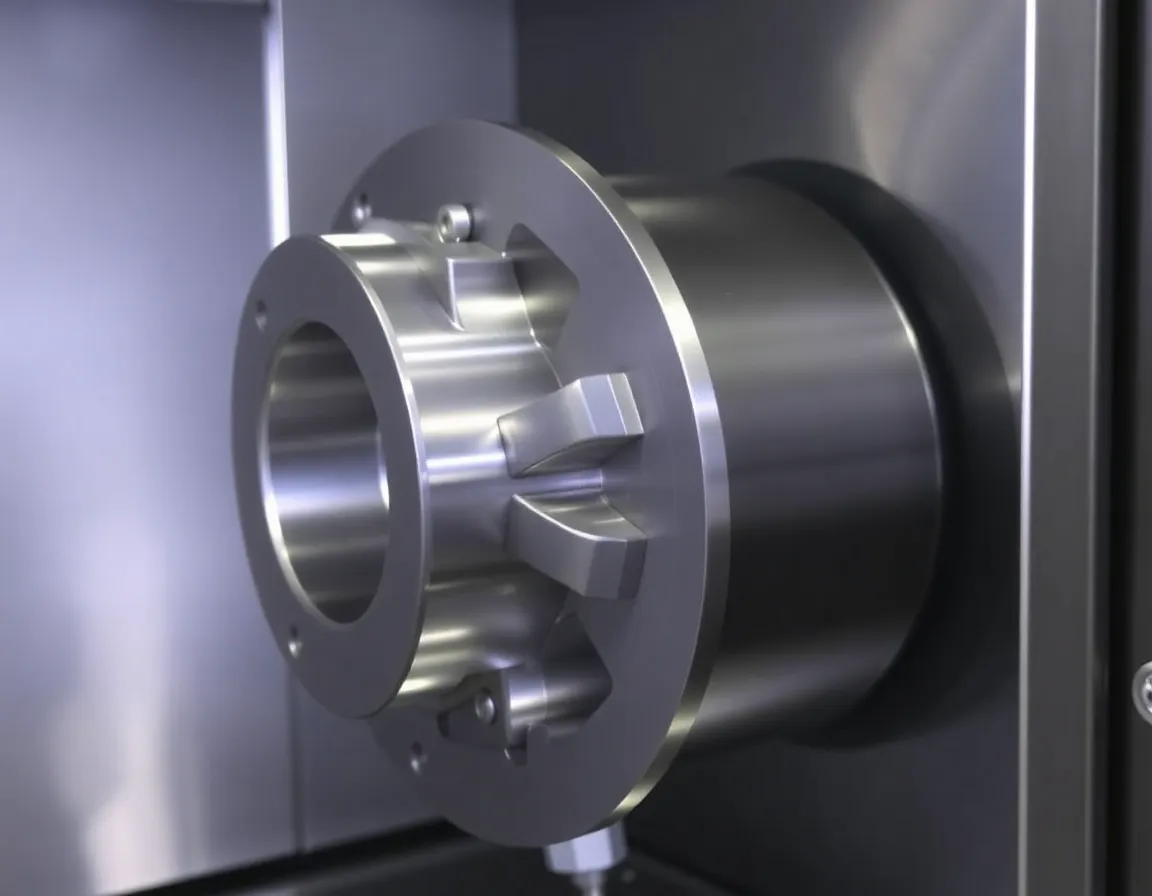
In the relentless pursuit of innovation, manufacturing faces a constant challenge: how to create increasingly complex, high-precision components efficiently and reliably. Traditional 3-axis machining, while foundational, reaches its limits when geometries involve deep cavities, compound curves, or multiple intricate angles. Enter the game-changer: 5-axis CNC machining. This advanced manufacturing technology is not merely an incremental improvement; it is a paradigm shift that unlocks design possibilities previously considered impossible or prohibitively expensive to machine. For engineers and product developers, partnering with a professional 5-axis CNC machining service is the key to transforming visionary designs into tangible, high-performance reality.
What is 5-Axis CNC Machining?
At its core, 5-axis CNC machining refers to a process where a cutting tool moves across five different axes simultaneously to machine a complex part from a solid block of material (like metal, plastic, or composite). While a standard 3-axis machine (X, Y, and Z linear axes) is limited in its approach angles, a 5-axis machine adds two rotational axes, typically referred to as A and B (or sometimes C, depending on configuration). This allows the cutting tool to approach the workpiece from virtually any direction in a single setup.
Understanding the Axes of Movement
The five axes are defined as follows:
- X-axis: Left to right linear movement.
- Y-axis: Forward and backward linear movement.
- Z-axis: Up and down linear movement.
- A-axis: Rotation around the X-axis (tilting).
- B-axis: Rotation around the Y-axis (swiveling).
There are two primary machine configurations: table/table (where the table holding the workpiece tilts and rotates) and head/table (where the spindle head tilts while the table rotates). Each has its strengths, but both achieve the same fundamental capability: unparalleled access to the part geometry.
The Unmatched Benefits of 5-Axis Machining Services
Engaging a specialized 5-axis CNC machining service delivers a cascade of advantages that impact design, quality, timeline, and cost.
Single-Setup Machining & Reduced Lead Times
Perhaps the most significant benefit. Complex parts that would require multiple re-fixturings and setups on a 3-axis machine can often be completed in one setup on a 5-axis machine. This drastically reduces non-cut time, minimizes human error from handling, and accelerates the entire production process from prototype to final part.
Superior Surface Finish and Geometric Accuracy
By allowing the cutting tool to maintain an optimal orientation to the workpiece surface, 5-axis machining enables the use of shorter cutting tools. These tools vibrate less (chatter), allowing for higher feed rates and delivering a superior surface finish. Furthermore, because the part isn't moved between multiple fixtures, datum references remain constant, resulting in exceptional accuracy and tighter tolerances across all features.
Ability to Machine Highly Complex Geometries
This is where 5-axis truly shines. It can effortlessly create organic shapes, undercuts, deep cavities, and features on compound angles that are simply unattainable with 3-axis machining. This opens the door to designs that are lighter, stronger, and more aerodynamic.
Improved Tool Life and Efficiency
The ability to tilt the tool or workpiece allows for more efficient chip evacuation and keeps the cutting tool in a more consistent cutting condition. This reduces tool wear, lowers tooling costs, and can increase feed rates, further boosting productivity.
Key Industries and Applications
The versatility of 5-axis CNC machining makes it indispensable across a wide spectrum of high-tech industries where complexity, weight, and performance are non-negotiable.
Aerospace and Defense
This sector was an early adopter. 5-axis services are critical for manufacturing monolithic structural components, engine parts like impellers and blisks (bladed disks), turbine blades, and airframe components with complex curvatures—all while meeting the extreme material and precision standards of the industry.
Medical and Dental
From patient-specific implants (knees, hips, cranial plates) with intricate bone-in-growth surfaces to complex surgical instruments, orthopedic devices, and dental prosthetics, 5-axis machining delivers the biocompatibility, precision, and complex geometries required for life-saving and life-enhancing applications.
Automotive and Motorsport
High-performance engines, lightweight chassis components, custom suspension parts, and complex molds for body panels all benefit from 5-axis machining. It enables the rapid prototyping and production of parts that push the boundaries of speed and efficiency.
Energy and Turbomachinery
Whether for oil & gas, wind, or power generation, components like turbine rotors, stators, and pump housings feature complex fluid dynamics paths that are ideally suited for 5-axis machining, ensuring maximum efficiency and durability.
High-End Consumer Products and Tooling
From intricate watch components and architectural hardware to the complex molds and dies used in injection molding and die-casting, 5-axis machining provides the finish and detail demanded by premium products and the production tools that create them.
Best Practices for Leveraging 5-Axis Machining Services
To fully capitalize on the potential of 5-axis CNC machining, a collaborative partnership with your service provider is essential. Adhering to these best practices ensures a smooth, successful project.
Design for Manufacturability (DFM) Collaboration
Engage with your machining partner early in the design phase. Their expertise can help optimize your CAD model for 5-axis efficiency, suggesting slight modifications to internal corners, wall thicknesses, or feature accessibility that can dramatically reduce machining time and cost without compromising function.
Intelligent CAD/CAM Programming
The magic of 5-axis is unlocked in the CAM (Computer-Aided Manufacturing) software. Experienced programmers use sophisticated toolpath strategies like swarf cutting, multi-axis contouring, and collision avoidance algorithms. A skilled service provider will have deep CAM expertise to generate efficient, safe, and precise toolpaths.
Strategic Fixturing and Workholding
Even with single-setup goals, secure and innovative workholding is critical. Providers often use custom fixtures, vacuum chucks, or tombstone setups to ensure the workpiece is held rigidly to withstand the dynamic forces of 5-axis movement without vibration or deflection.
Material Selection and Machine Capability Alignment
Clearly communicate your material requirements—whether it's titanium, Inconel, aluminum, or engineering plastics. Ensure your chosen partner has the machine rigidity, spindle power, and high-pressure coolant systems necessary to handle your specific material effectively.
Emphasis on Quality Assurance
A reputable 5-axis service will integrate advanced metrology throughout the process. This includes in-process probing for on-machine verification and final inspection using Coordinate Measuring Machines (CMM) and laser scanners to validate that every dimension of the complex part meets the stringent print specifications.
In conclusion, 5-axis CNC machining services represent the pinnacle of subtractive manufacturing technology. They dissolve the barriers between ambitious design and manufacturable reality. By enabling the production of monolithic, lightweight, and incredibly complex parts with unprecedented speed and accuracy, 5-axis machining is not just a manufacturing method; it is a strategic enabler of innovation. For any project where complexity, performance, and efficiency converge, unlocking the capabilities of a professional 5-axis CNC machining service is the most decisive step towards success.
