
Introduzione: Il mondo di precisione della lavorazione dei componenti per microfoni
Dietro ogni voce cristallina, ogni captazione strumentale ricca di sfumature e ogni trasmissione che ascoltiamo si cela un mondo di estrema precisione meccanica. La qualità della riproduzione sonora non è semplicemente il prodotto di circuiti elettronici; è fondamentalmente determinata dai componenti fisici che per primi interagiscono con le onde sonore. Questo è il dominio della lavorazione dei componenti per microfoni, una disciplina manifatturiera specializzata in cui le tolleranze sono misurate in micron e la purezza dei materiali è fondamentale. Il percorso da un lingotto di metallo grezzo o da un foglio di polimero fino a un componente di un microfono di livello professionale è una affascinante intersezione tra acustica, metallurgia e ingegneria avanzata. Questo processo determina direttamente il carattere di un microfono: la sua risposta in frequenza, la sensibilità, la durata e, in ultima analisi, la sua firma sonora. Comprendere questa fase fondamentale rivela perché una capsula per microfono lavorata meticolosamente si distingue e come l'arte della fabbricazione di precisione sia centrale per la fedeltà audio.
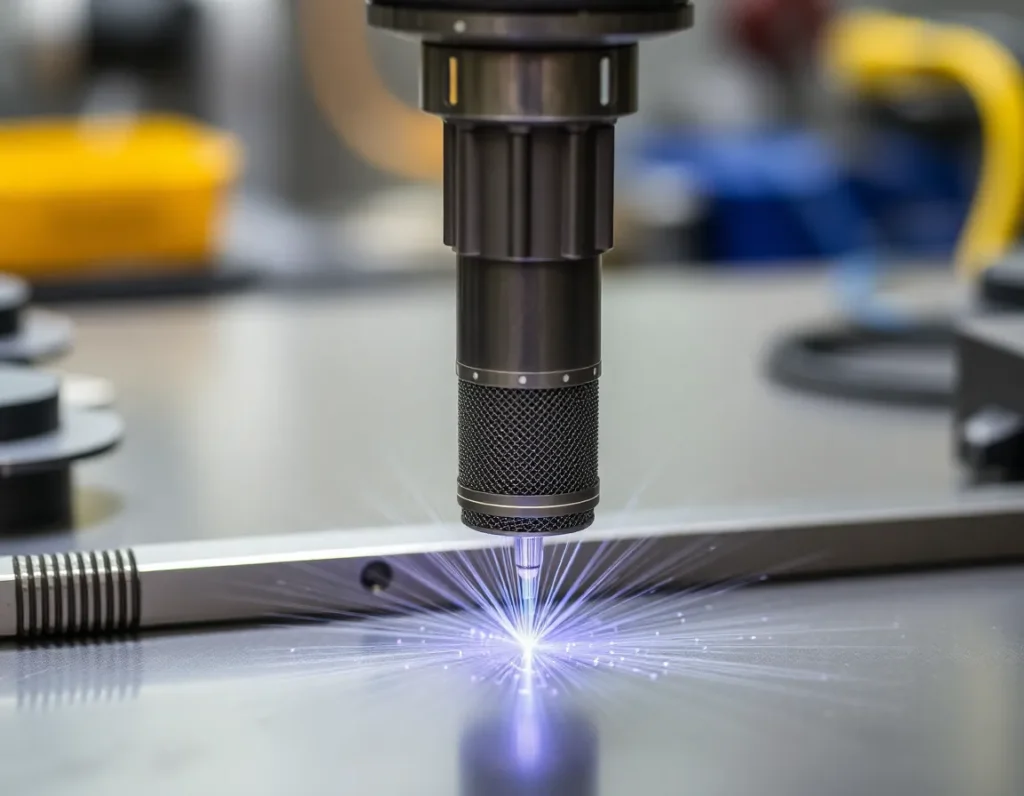
Che cos'è la lavorazione dei componenti per microfoni? Definizione del processo principale
La lavorazione dei componenti per microfoni è il processo di produzione per sottrazione che consiste nel dare forma a materiali grezzi per ottenere i precisi componenti fisici richiesti per l'assemblaggio di un microfono. A differenza della fusione o dello stampaggio, la lavorazione meccanica comporta la rimozione di materiale, tramite taglio, foratura, fresatura o tornitura, per ottenere una geometria specifica e spesso complessa. L'obiettivo principale è fabbricare parti con esattezza dimensionale rigorosa, finiture superficiali impeccabili e proprietà meccaniche costanti che soddisfino severe specifiche acustiche ed elettriche.
Questo processo comprende tutto, dalla creazione delle minute, spesso microscopiche, caratteristiche dell'elemento trasduttore (la capsula) fino al robusto involucro esterno che fornisce schermatura e reiezione del rumore da maneggiamento. È un flusso di lavoro a più fasi che inizia con modelli CAD (Computer-Aided Design) dettagliati derivati da principi di ingegneria acustica. Questi progetti digitali vengono poi tradotti in istruzioni per la macchina (codice G) che guidano gli utensili a controllo computerizzato nella scultura del pezzo. Ogni fase, dalla selezione del materiale grezzo alla lucidatura o placcatura finale, è controllata per garantire che il componente svolga la sua funzione acustica in modo impeccabile. In sostanza, lavorazione dei componenti per microfoni è il ponte tra la teoria acustica e un dispositivo audio tangibile e ad alte prestazioni.
Il ruolo critico della lavorazione meccanica nelle prestazioni e nella qualità dei microfoni
L'influenza della lavorazione meccanica sulle prestazioni di un microfono non può essere sopravvalutata; è il fondamento della qualità. Imperfezioni invisibili a occhio nudo possono avere conseguenze udibili. Ad esempio, la geometria precisa del bordo di montaggio di un diaframma o il modello dei fori della piastra posteriore in una capsula a condensatore è critica. Anche lievi variazioni nella profondità o nella concentricità di queste caratteristiche possono alterare la capacità e il campo elettrostatico, portando a incoerenze nella sensibilità, aumento del rumore o una risposta in frequenza irregolare.
Inoltre, la lavorazione meccanica determina la stabilità meccanica. Un corpo di microfono lavorato male può risuonare a determinate frequenze, colorando il suono, oppure può non fornire una schermatura elettromagnetica adeguata, introducendo interferenze. La precisione delle filettature per il montaggio della capsula o il fissaggio del connettore garantisce un contatto elettrico affidabile e protegge dal rumore da maneggiamento. La finitura superficiale all'interno di un tubo o dietro una griglia influisce sulle riflessioni sonore interne e sullo smorzamento. Nei microfoni dinamici, l'allineamento e la scorrevolezza del percorso della bobina mobile all'interno del traferro magnetico dipendono interamente dalla precisione della lavorazione meccanica. Pertanto, una lavorazione meccanica superiore si traduce direttamente in prestazioni prevedibili, affidabilità a lungo termine e riproduzione sonora trasparente e non colorata, come richiesto dai professionisti. È ciò che distingue uno strumento di precisione da un semplice dispositivo di captazione sonora.
Materiali chiave utilizzati nella lavorazione dei componenti per microfoni
La scelta del materiale nella lavorazione dei componenti per microfoni è una decisione deliberata che bilancia proprietà acustiche, resistenza meccanica, lavorabilità e costo. Ogni materiale apporta caratteristiche distinte al prodotto finale.
Metalli
- Ottone: Forse il materiale più tradizionale, l'ottone è ampiamente utilizzato per corpi di microfoni, griglie e componenti interni. Offre un'eccellente lavorabilità, un buon peso e densità per ridurre il rumore di manipolazione e fornisce una schermatura elettromagnetica intrinseca. Viene spesso placcato con nichel, cromo o oro per la resistenza alla corrosione e l'estetica.
- Alluminio: Preferito per il suo peso leggero e il buon rapporto resistenza-peso, l'alluminio è comune nei corpi dei microfoni portatili e a mano. Può essere lavorato con tolleranze molto strette e anodizzato in vari colori per durabilità e appeal visivo. La sua proprietà non magnetica è inoltre essenziale in prossimità degli elementi trasduttori.
- Acciaio: Utilizzato per componenti specifici ad alta resistenza come alcune staffe interne, viti e talvolta griglie. L'acciaio inossidabile offre una superiore resistenza alla corrosione ed è spesso utilizzato nelle griglie per la durabilità.
- Nichel: Frequentemente utilizzato nella placcatura di altri metalli, il nichel puro viene anche lavorato per creare componenti critici della capsula come le piastre posteriori grazie alle sue proprietà superficiali stabili e alla buona conduttività elettrica.
Polimeri e compositi
- Acrilico (PMMA): Lavorato per corpi specializzati o componenti isolanti interni. Può essere lucidato fino alla chiarezza ottica per un aspetto distintivo.
- Delrin (POM): Una plastica ingegneristica ad alta resistenza e basso attrito, spesso lavorata per distanziali isolanti di precisione, supporti antivibranti e guide interne all'interno del microfono.
- Plastiche speciali: Varie plastiche riempite o composite possono essere lavorate per specifiche proprietà dielettriche o di smorzamento.
Specialized Materials
- Gold Sputtered Mylar: While the thin diaphragm film itself is not “machined” in the traditional sense, the metalized coating is applied with atomic-level precision, and the film is often tensioned and mounted using machined components.
- Neodymium: The powerful magnets used in dynamic and ribbon microphones are sintered and then precision-ground or machined to exact shapes and magnetic field specifications.
Essential Machined Parts in a Microphone: From Diaphragms to Bodies
A microphone is an assembly of several precisely machined parts, each with a distinct acoustic role.
The Capsule Assembly (The Transducer Heart)
- Backplate: In a condenser microphone, this is arguably the most critically machined part. It is typically a disc of nickel or brass, drilled with an intricate, precise pattern of tiny holes (acoustic resistances) and often coated with a gold or other noble metal layer. Its flatness, hole diameter/depth consistency, and surface finish are paramount.
- Diaphragm Mounting Assembly: This includes the tensioning ring and spacer that hold the ultra-thin diaphragm film under uniform tension. These parts must be perfectly concentric and flat to ensure the diaphragm vibrates freely and consistently.
- Motor Assembly (Dynamic Mics): This consists of the machined pole piece that focuses the magnetic field, the voice coil former (often a thin aluminum cylinder), and the surrounding magnetic structure. The precision of the circular gap where the voice coil moves is vital for low distortion.
The Microphone Body and Acoustical Elements
- Body/Tube: The main housing, typically machined from brass or aluminum. It must be perfectly cylindrical, with precise internal diameters to securely hold PCBs and the capsule assembly. External threading for mounts and internal threading for capsule rings are standard.
- Headbasket/Grille: This protective mesh structure is a complex machined (and often welded) assembly. Its design—the wire thickness, mesh density, and internal volume—acts as a primary acoustic filter, controlling plosives, wind noise, and shaping the high-frequency response via internal reflections.
- Output Connector Housing: Whether an integrated XLR connector or a threaded base for a cable, this component is machined to exacting standards to ensure secure locking, proper grounding, and strain relief.
- Internal Baffles and Acoustic Damping Chambers: High-end microphones often contain machined labyrinths, ports, and chambers filled with damping material to fine-tune the directional characteristics and frequency response.
CNC Machining: The Primary Technology for Microphone Component Fabrication
Today, Computer Numerical Control (CNC) machining is the unequivocal standard for fabricating high-quality microphone components. CNC technology provides the repeatability, complexity, and precision that traditional manual machining cannot match.
The process begins with a 3D CAD model of the part. This model is processed by CAM (Computer-Aided Manufacturing) software, which generates the toolpaths—the precise instructions that tell the CNC machine where to move its cutting tools. For a microphone backplate, this program would control a micro-drill to create hundreds of identical holes with diameters as small as a few hundred microns. For a microphone body, it would orchestrate a sequence of operations: turning the outer diameter, boring the inner cavity, cutting precise threads, and milling any flats or engraving.
CNC machining centers used in this field are often high-precision, 3 to 5-axis machines. Multi-axis capability is crucial for creating complex geometries like the contours of a headbasket or machining features on multiple sides of a part in a single setup, ensuring perfect alignment. The machines operate in a controlled environment, often with coolant to manage heat and remove microscopic chips, preventing any deviation due to thermal expansion.
The advantages of CNC for microphone parts machining are profound. It ensures that every part in a production run is virtually identical, which is essential for maintaining consistent microphone performance from unit to unit. It allows for the economic production of complex, small-batch, or prototype parts. Most importantly, it achieves the sub-millimeter and often micron-level tolerances required for acoustic components to function as designed. From the robust simplicity of a dynamic mic’s housing to the breathtaking complexity of a multi-pattern condenser capsule’s backplate, CNC machining is the enabling technology that brings high-fidelity audio designs to life.
Tolerances, Finishes, and Surface Treatments in Microphone Machining
The pursuit of sonic perfection in microphone manufacturing hinges on the final stages of the machining process: achieving precise tolerances, applying specific surface finishes, and implementing critical treatments. These factors are not merely cosmetic; they are integral to the acoustic, mechanical, and electrical performance of the final product.
The Pursuit of Micron-Level Tolerances
In lavorazione dei componenti per microfoni, tolerances are measured in microns (thousandths of a millimeter). The gap between a condenser capsule’s diaphragm and its backplate, for instance, is often less than the width of a human hair. Any variance in this distance alters the capacitance and, consequently, the microphone’s sensitivity and frequency response. Similarly, the concentricity of a dynamic microphone’s voice coil within its magnetic gap must be perfect to prevent rubbing and distortion. Threads on microphone bodies and internal assemblies must mate seamlessly to maintain acoustic seals and prevent mechanical noise. CNC technology makes these tight tolerances achievable, but they demand meticulous machine calibration, temperature-controlled environments, and rigorous inspection using coordinate measuring machines (CMM) and optical comparators.
Surface Finishes: From Acoustic to Aesthetic
The surface finish of a machined part serves multiple purposes. For internal acoustic components, a specific surface texture can be desirable. A slightly matte finish on a backplate or inside a tube can help diffuse sound waves and minimize internal reflections that could color the audio. Conversely, surfaces that form seals or sliding contacts require a high polish to ensure perfect mating and smooth operation. Externally, finishes range from the raw, bead-blasted look of industrial microphones to the mirror polish of high-end studio models. Each finish not only defines the microphone’s aesthetic but also its durability and feel. Machining achieves the base geometry, while secondary processes like tumbling, polishing, and blasting create the final surface character.
Critical Surface Treatments and Coatings
Beyond shaping and finishing, surface treatments are applied to enhance material properties. For metal components, anodizing (for aluminum) or passivation (for stainless steel) creates a hard, corrosion-resistant oxide layer that can also be dyed for color. Gold plating is frequently used on electrical contacts and capsule components for its excellent conductivity and resistance to oxidation. Perhaps the most acoustically significant treatment is applied to diaphragm materials. Mylar (PET) films are often metalized with an incredibly thin layer of gold or nickel in a vacuum deposition process to make them electrically conductive. The uniformity and thickness of this coating are vital for consistent performance. These treatments transform the raw machined part into a component capable of surviving the rigors of use while performing its precise electro-acoustic function flawlessly.
Challenges and Solutions in Machining Delicate Acoustic Components
Machining parts for microphones presents a unique set of challenges that blend the difficulties of precision engineering with the sensitivities of acoustic science. The solutions to these problems define the boundary between a functional device and a world-class transducer.
Managing Material Stress and Vibration
Even the most rigid machining setups introduce minute vibrations and cutting forces that can stress delicate materials. Thin diaphragms, fragile grille wires, and small-bore tubes can deform, chatter, or resonate during cutting, ruining the part. Solutions involve using specialized, ultra-sharp tooling made from micro-grain carbide or diamond, which cuts cleanly with minimal force. High-speed spindles allow for faster cutting speeds with lighter engagement, reducing heat and vibration. For the most delicate operations, non-contact machining methods like wire Electrical Discharge Machining (EDM) are used to cut complex shapes in hardened materials without any physical force.
Preventing Contamination and Ensuring Cleanliness
Microphone capsules are extraordinarily sensitive to contamination. A single speck of dust or a microscopic oil droplet on a diaphragm or backplate can cause noise, rustle, or changes in mass that affect the frequency response. Therefore, machining acoustic components requires an obsessive focus on cleanliness. Dedicated cleanrooms or enclosed machining centers with positive air pressure are used. Coolants, when necessary, are meticulously filtered, and parts undergo multiple stages of ultrasonic cleaning in specialized solvents. The final assembly of capsules often occurs in laminar flow hoods by technicians wearing anti-static garments to ensure a pristine acoustic environment.
Achieving Acoustic-Perfect Geometries
Some microphone components have geometries that are acoustically tuned. The complex, multi-layer pattern of holes in a condenser capsule backplate isn’t random; it’s designed to control the acoustic resistance and damping of the diaphragm. Machining hundreds of these tiny, perfectly shaped holes with exacting depth and edge quality is a monumental challenge. Similarly, the intricate mesh of a microphone’s headbasket is designed to provide acoustic transparency while offering protection and controlling wind noise. Machining these as a single part or as an assembly that fits without gaps requires advanced multi-axis CNC strategies and sometimes hybrid processes like photo-etching combined with precision welding.
The Future of Microphone Parts Machining: Innovations and Trends
The field of microphone manufacturing is not static. Driven by demands for higher performance, new applications, and more sustainable practices, the machining processes at its core are evolving through technological innovation.
Additive Manufacturing (3D Printing) Integration
While subtractive CNC machining remains dominant for critical metal components, additive manufacturing is carving out a significant role. It is ideal for producing complex, lightweight internal baffles, custom shock-mount cages, and ergonomic microphone body prototypes with integrated cable channels that would be impossible or prohibitively expensive to machine from solid stock. Using materials like nylon and resin, 3D printing allows for rapid iteration in design and the creation of small batches of highly customized components. The future may see hybrid machines that can both add and subtract material, creating optimized parts with dense, machined acoustic surfaces and lightweight, printed structural elements.
Advanced Materials and Smart Machining
The exploration of new materials continues. Advanced composites, specialized alloys with unique damping characteristics, and even lab-grown crystalline structures for diaphragms are on the horizon. Machining these novel materials will require “smarter” CNC systems equipped with adaptive control. These systems use sensors to monitor tool wear, vibration, and cutting forces in real-time, automatically adjusting feed rates and spindle speeds to maintain perfect cut quality and protect the workpiece. This leads to greater consistency and less waste when working with expensive, exotic materials.
Automation, AI, and the Digital Thread
The factory floor is becoming increasingly connected. The concept of a “digital thread” – a seamless flow of data from the CAD design through CAM programming to the CNC machine and finally to quality inspection – is becoming a reality. Artificial intelligence algorithms can analyze this data stream to predict tool failure, optimize cutting paths for efficiency, and even identify microscopic defects in finished parts using machine vision systems. This level of automation and data integration promises not only higher quality and lower costs but also the ability to trace the manufacturing history of every single component in a microphone, ensuring unparalleled quality control.
Sintesi dei punti chiave
The creation of a high-quality microphone is a symphony of precision engineering, where every component plays a critical role defined by its manufacture. Microphone parts machining is the foundational process that transforms raw materials into the intricate parts that capture sound. We’ve seen that this process is far more than simple metalworking; it is an acoustic science.
The performance and quality of a microphone are directly dictated by the precision of its machined components, from the robust housing that rejects handling noise to the sub-micron tolerances of the capsule that define its sonic character. Material choice—be it brass for its acoustical properties, aluminum for its weight, or specialized plastics for insulation—is the first critical decision that machining brings to life.
CNC machining stands as the indispensable technology in this field, providing the repeatability, complexity, and extreme accuracy required. This capability allows manufacturers to achieve the essential tolerances, specialized surface finishes, and delicate treatments—like gold plating and anodizing—that ensure both functional reliability and aesthetic appeal.
This precision does not come without challenges. Machining delicate acoustic components requires solving problems of material stress, contamination control, and creating acoustically perfect geometries. Solutions range from cleanroom environments and advanced tooling to hybrid manufacturing techniques.
Looking ahead, the future is one of intelligent integration. Additive manufacturing will complement traditional machining for complex structures, while smarter CNC systems and AI-driven quality control will push precision and consistency to new levels. Through it all, the goal remains constant: to machine the perfect physical interface between the air’s vibrations and the electrical signal, capturing sound with unwavering fidelity.
Frequently Asked Questions (FAQ)
Why can’t microphone parts be made with simple casting or molding?
While casting and injection molding are excellent for high-volume, less critical parts, they generally cannot achieve the tight tolerances, superior material density, and flawless surface finishes required for core acoustic components. Machining from solid billet material ensures there are no internal voids or porosity that could affect sound or structural integrity, and it allows for the micron-level precision needed for parts like capsule backplates and precise threading.
How small are the tolerances in microphone machining?
Tolerances are exceptionally small, often in the range of 0.005 mm to 0.02 mm (5 to 20 microns). For context, the gap in a condenser microphone capsule is typically between 15 and 30 microns. Maintaining these tolerances across an entire production run is what separates professional-grade microphones from consumer-grade ones and ensures consistent performance from one unit to the next.
What is the most difficult microphone component to machine?
The backplate for a condenser microphone capsule is often considered one of the greatest challenges. It requires machining a small, flat disc of metal (often brass) with extreme precision, then drilling an array of dozens or even hundreds of tiny, acoustically tuned holes with specific depths and edge quality. Any imperfection in this part directly affects the microphone’s noise floor, sensitivity, and frequency response.
Are all metal microphone bodies machined from solid metal?
In high-end professional microphones, the answer is almost always yes. Machining a body from a solid block of metal (like brass or steel) or a thick-walled tube provides superior rigidity, which minimizes resonant coloration and handling noise. It also allows for seamless integration of threads, vents, and connector housings into a single, acoustically inert unit. Lower-cost microphones may use stamped, spun, or cast metal shells.
How does machining affect the final sound of a microphone?
Machining affects the sound indirectly but profoundly. It determines the physical accuracy of the acoustic chamber (the capsule), the precision of moving parts (in dynamics), and the rigidity and resonance control of the housing. A poorly machined capsule will have uneven sensitivity and distortion. A resonant body will color the sound. Therefore, the precision of the machining process is directly linked to the neutrality, clarity, and consistency of the microphone’s output.
What role does surface treatment play beyond looks?
Surface treatments are functionally crucial. Anodizing protects aluminum from corrosion and can slightly harden the surface. Gold plating on contacts and capsules ensures optimal electrical conductivity and prevents oxidation that would degrade the signal. Specific surface finishes inside tubes and chambers control how sound waves behave, preventing unwanted reflections. The aesthetic finish is often the final step, but the functional treatments are integral to performance and longevity.