
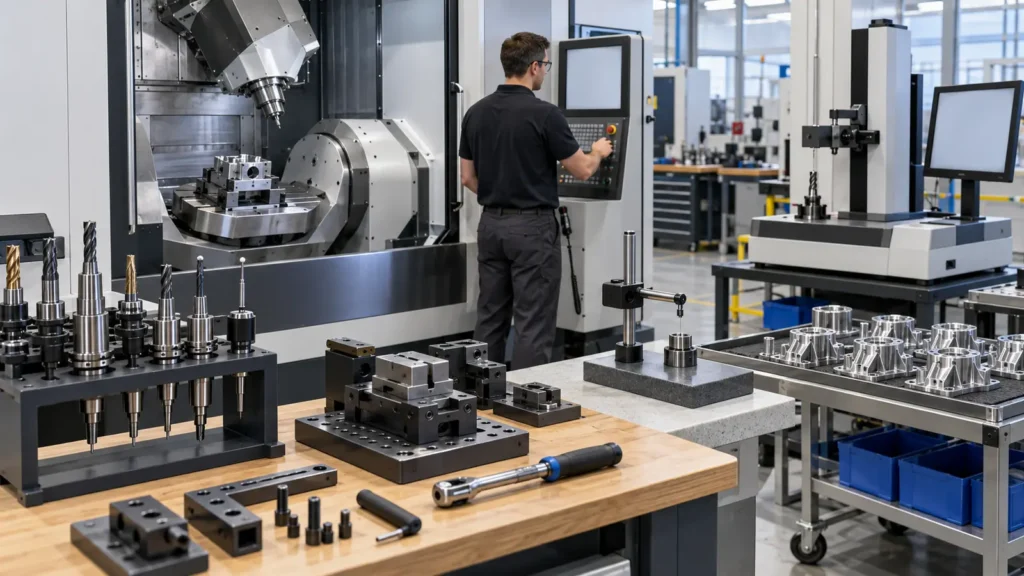
CNC setup and tooling costs are often hidden inside a unit price, even though they can decide whether a short run is economical. Setup covers the work needed to make the machine ready for a specific part: fixture and workholding, tool loading, probing, offsets, program verification, first-piece checks, and sometimes special inspection. Tooling cost covers dedicated cutters, soft jaws, form tools, drills, taps, inserts, or fixtures that are not useful for every project.
What Buyers Should Separate
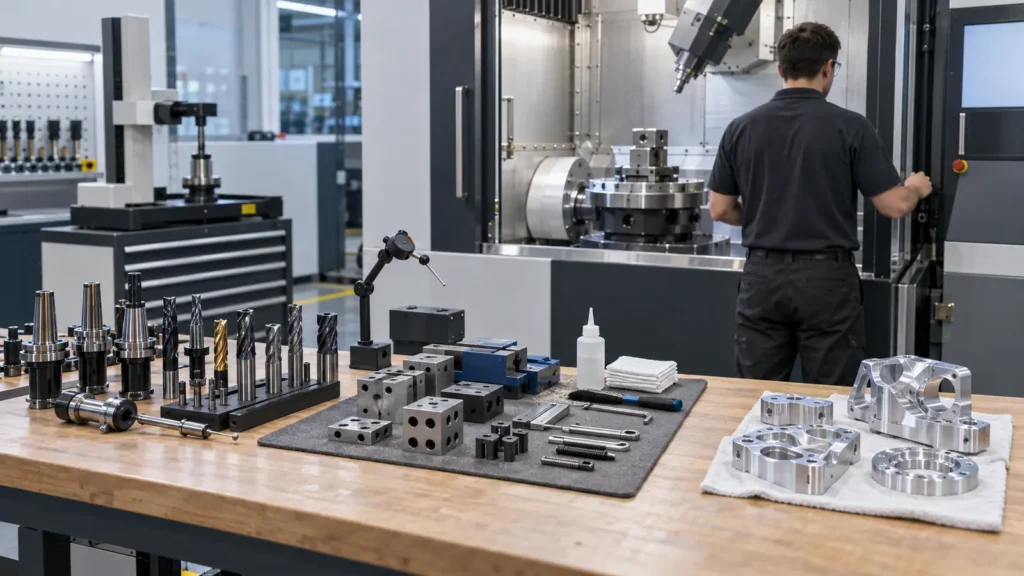
What a CNC setup includes
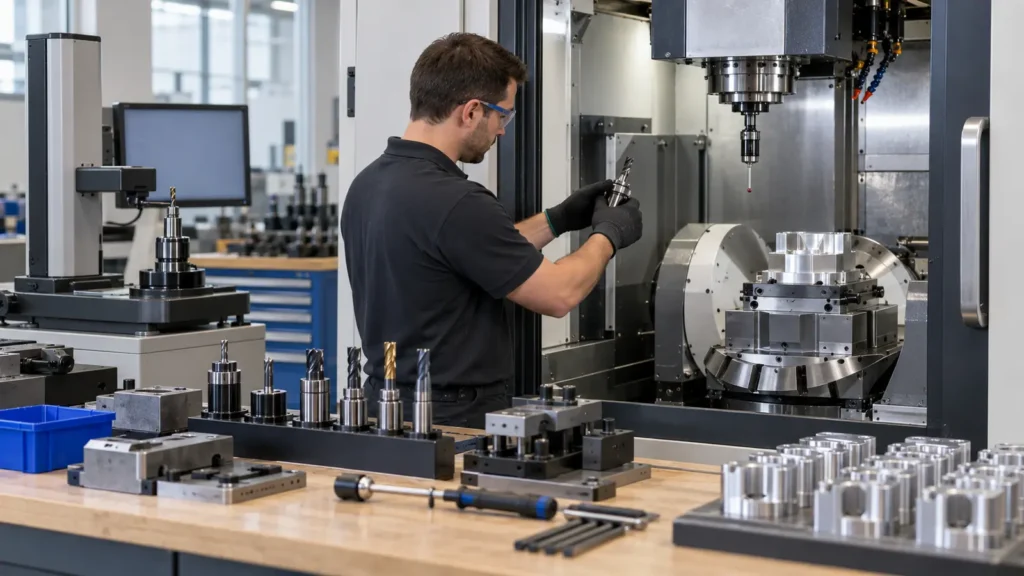
| Setup activity | Why it costs time | When it may be reusable |
|---|---|---|
| Workholding | The part must be supported without blocking access or distorting | Stable geometry and repeat revision |
| Tool and offset setup | Tools, probing, offsets, and verification must match the route | Same tools, machine, material family, and process |
| First-piece inspection | Critical dimensions and relationships must be confirmed | Repeat production with unchanged drawing |
How tooling changes the route
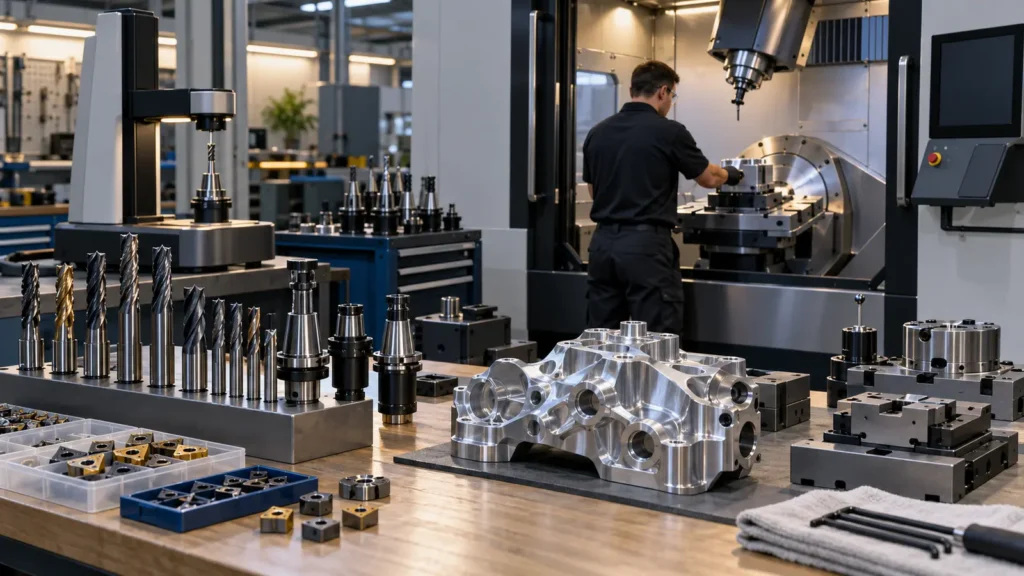
For difficult materials or long production runs, tool wear can become a recurring cost. The quotation should clarify whether dedicated tools are included, owned by the supplier, charged once, or amortized across the order.
Why geometry increases preparation
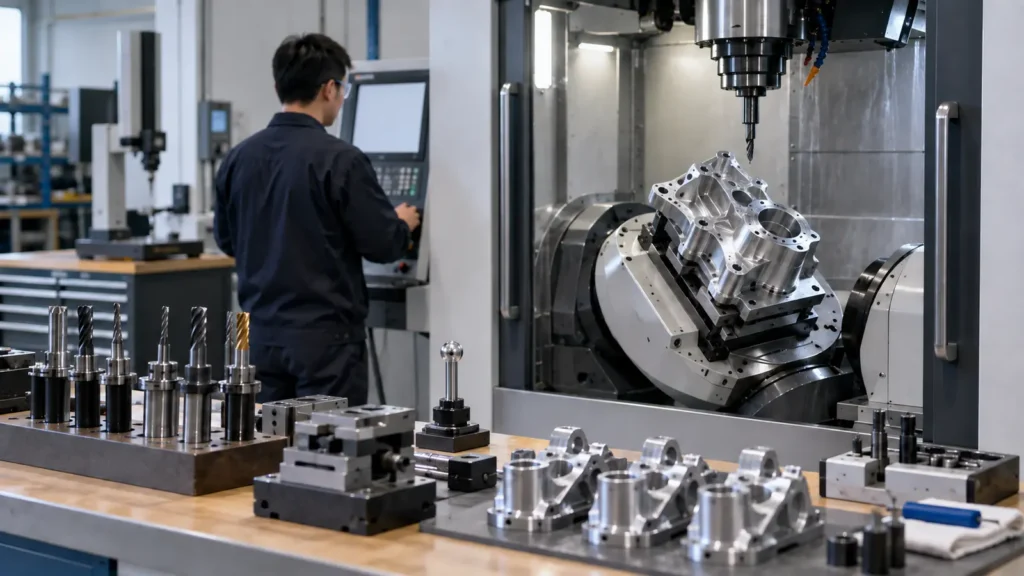
Spread cost across the right quantity
If setup and dedicated tooling total $500, the preparation portion is $50 per part at 10 pieces and $5 per part at 100 pieces. That does not mean the entire unit price falls by the same amount because machining, material, inspection, finishing, and packaging remain. Request setup and tooling as separate line items or ask how they are allocated across quantity breaks.
- State prototype quantity, first production batch, and expected repeat release.
- Ask which tools or fixtures remain available for the next release.
- Confirm whether a drawing revision triggers reprogramming or new first-piece approval.
- Separate supplier-owned tooling from customer-specific tooling.
Reduce cost without losing control
Setup and tooling FAQs
Is setup charged for every part?
Usually setup is associated with a batch or release, then allocated across the parts. Repeat orders may reuse some preparation, but the current revision and production condition still need confirmation.
What is dedicated tooling?
Dedicated tooling is a cutter, jaw, fixture, gauge, or other item prepared primarily for a specific part or process. Ask who owns it, how it is maintained, and whether the cost is one-time or recurring.
Can fewer setups always reduce cost?
Not always. One complex setup may require specialized workholding, long tools, difficult access, or slower verification. Compare the complete route and risk, not only the setup count.
What should buyers ask for in a setup quote?
Ask for setup count, fixture and tooling ownership, one-time charges, recurring tool wear, first-piece inspection, revision assumptions, and the quantity used to calculate the unit price.