
نادرًا ما يكون الثقب مجرد قطر. تشغيل الثقوب بالتحكم الرقمي CNC قد يحتاج إلى التحكم في الموقع والعمق والاستقامة والتشطيب والملاءمة واللولبة والتجويفات المخروطية وإخلاء الرقائق والعلاقة بين عدة ثقوب. يؤدي الثقب إلى إنشاء فتحة، لكن قد تكون هناك حاجة إلى عمليات التوسيع والتجليخ والاستيفاء والتشطيب لجعل تلك الفتحة تؤدي وظيفتها في التجميع. ينظم هذا الدليل القرار ويربطه بالسياق الأوسع نظرة عامة على عملية التشغيل CNC.
ابدأ بما يجب أن يفعله الثقب
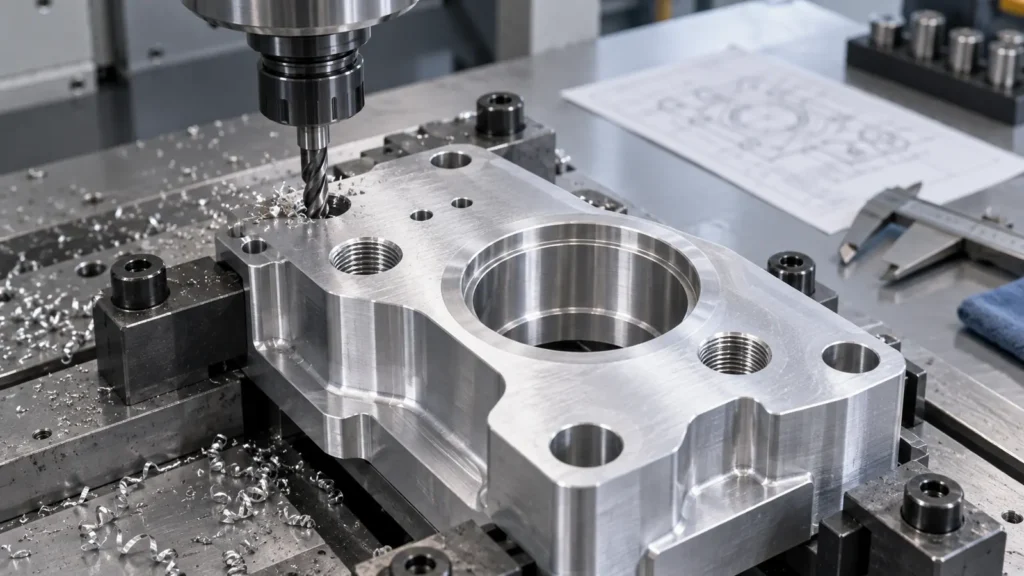
- خلوص المثبتات: التحكم في القطر والموضع ومسافة الحافة والنتوءات.
- ملاءمة التحديد الموضعي: التحكم في الحجم والموضع والتعامد والاستدارة وعلاقة المرجع.
- مقعد المحمل أو السدادة: التحكم في حجم التجويف والاستدارة والتمحور وتشطيب السطح.
- ممر السائل: تخطيط إخلاء الرقائق والتقاطعات وإزالة النتوءات والنظافة والاختبار.
بمجرد أن تكون الوظيفة واضحة، يمكن للمورد أن يقرر ما إذا كان الثقب كافياً أم أن هناك حاجة إلى التوسيع أو البرغلة أو الاستيفاء أو خطوة تفتيش ثانية.
الثقب والتوسيع والتجليخ والاستيفاء
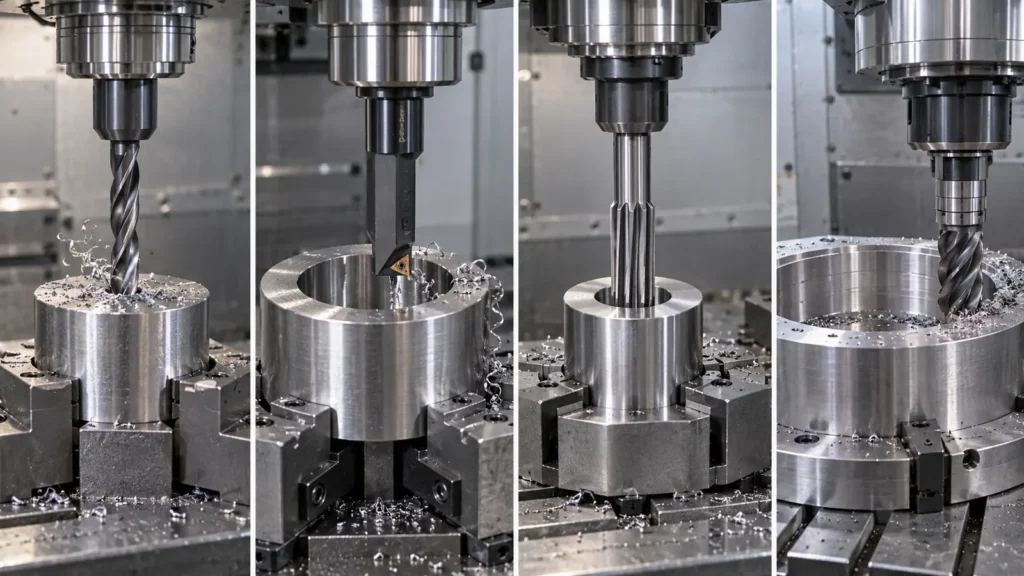
يمكن الجمع بين هذه الطرق. قد يتضمن المسار النموذجي التحديد الموضعي، ثم الحفر قرب العمق، ثم التوسيع الدقيق أو التجويف عندما يتطلب التجميع حالة نهائية مضبوطة.
بناء تسلسل التشغيل
- أنشئ المرجع الذي يتحكم في الموضع والاتجاه.
- جهّز المدخل بالتحديد الموضعي أو الشطف.
- اختر طول المثقاب وسائل التبريد واستراتيجية الحفر المتقطع وسماحية العمق.
- حسّن بالثقب الدقيق أو التوسيع الدقيق أو الاستيفاء أو الغاطس أو التجويف.
- أزل النتوءات والرايش من أسطح الإحكام واللولبات والتقاطعات.
- افحص القطر والعمق والموضع والاتجاه والعلاقة بالمرجع.
Sequence matters near thin walls and intersecting passages. Preserve stiffness and access until the critical hole is complete.
الثقوب العمياء والخصائص المتدرجة
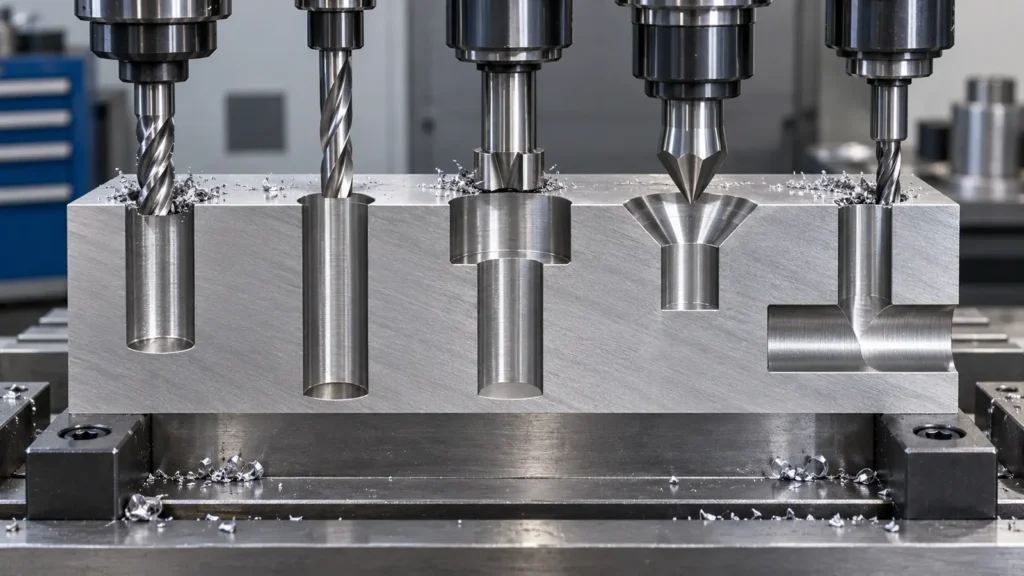
| Feature | Risk | Define on drawing |
|---|---|---|
| Through hole | Exit burr and breakthrough damage | Exit edge, deburring, position, diameter |
| Blind hole | Chip packing and uncertain usable depth | Total depth, usable depth, bottom form, cleanliness |
| Counterbore or countersink | Seat depth and coaxiality | Standard, diameter, angle or depth |
التحكم في الرقائق والحرارة والانحراف
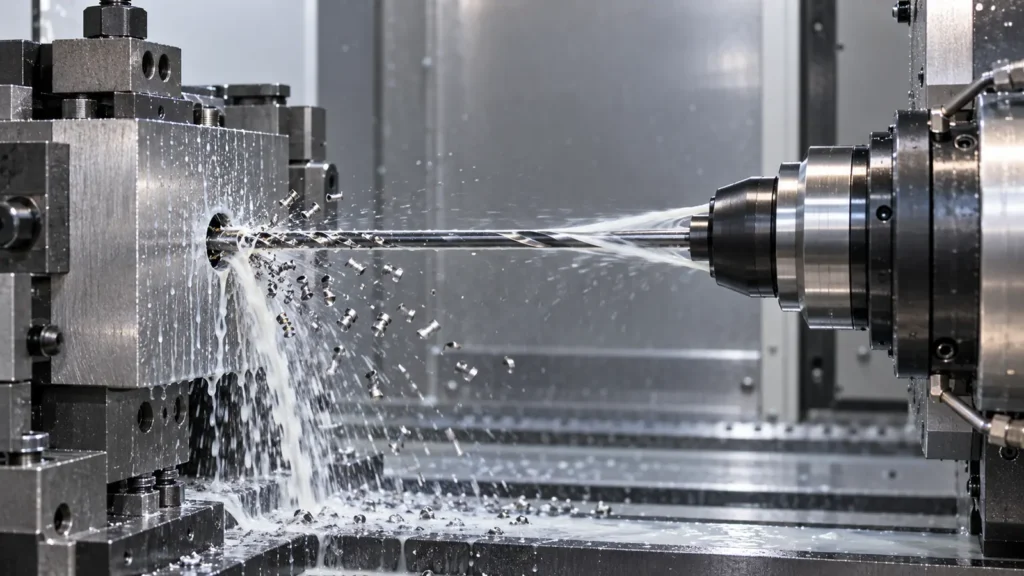
- Use pecking or chip breaking when depth and material require it.
- Deliver coolant or air where it can evacuate chips.
- Keep tool reach and runout under control.
- Use rigid workholding and preserve support around the hole.
- Plan cleaning for blind, intersecting, or fluid-channel features.
There is no universal maximum drilling depth: the practical limit depends on diameter, ratio, tool, material, machine, coolant, tolerance, and hole condition.
التفاوت والتفتيش
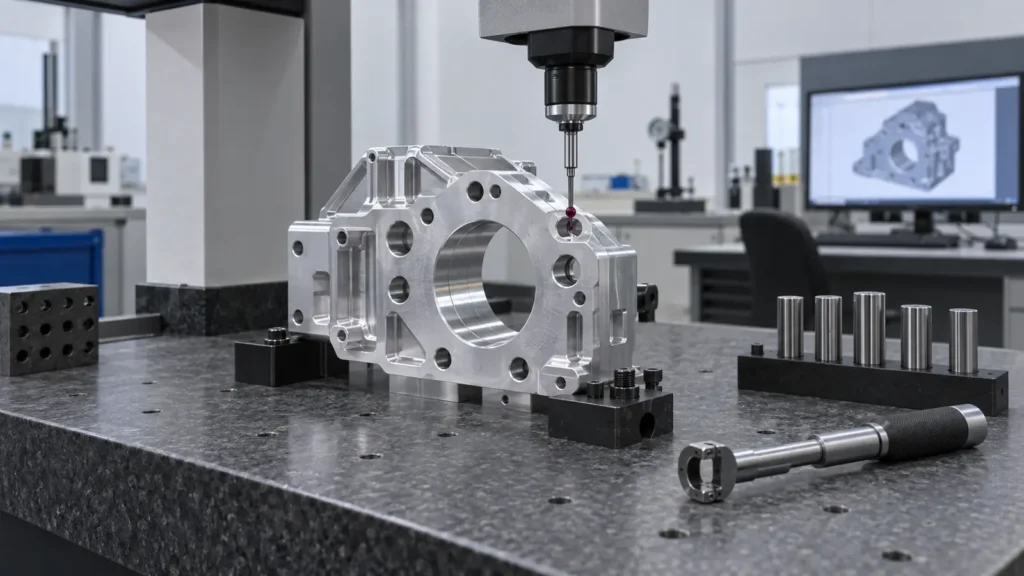
| Characteristic | Why it matters | Possible inspection |
|---|---|---|
| Diameter and fit | Clearance, interference, sealing, or locating | Pin gauge, bore gauge, micrometer, or CMM |
| Position | Assembly alignment and bolt-pattern function | Datum-based CMM or coordinate inspection |
| Depth and bottom | Thread engagement or fastener clearance | Depth gauge, probe, or CMM |
Measure the hole from the part datum and its mating feature, not only from an arbitrary edge. The CNC quality information can support discussion of reports and measurement requirements.
خيارات التصميم لثقوب أفضل
- Use standard drill, reamer, and thread sizes where function allows.
- Provide a stable entry face and enough edge distance.
- Define blind-hole usable depth separately from total depth.
- Avoid tight holes next to unsupported thin walls unless required.
- State whether a hole is clearance, locating, bearing, sealing, fluid, or threaded.
- Specify deburring and cleanliness for internal features.
These choices make the requirement easier to manufacture, inspect, and communicate without weakening the design intent.
معلومات طلب عرض السعر
- Current 3D model and 2D drawing with callouts, datums, and revision.
- Hole type, diameter, depth, fit, position, orientation, thread, and surface requirements.
- Material grade, condition, thickness, quantity, and prototype or production status.
- Deburring, cleaning, pressure, leak, coating, and assembly requirements.
- Inspection report, first article, sampling, traceability, and packaging expectations.
الأسئلة الشائعة حول تشغيل الثقوب بالتحكم الرقمي CNC
What is the difference between drilling, boring, and reaming?
Drilling creates the initial hole, boring enlarges or corrects it, and reaming removes a controlled final allowance to improve size and surface condition.
When does a drilled hole need reaming?
Consider reaming when the final size and finish must be more controlled than the drilling route can reliably provide.
How are deep holes kept accurate?
Accuracy depends on depth ratio, tool rigidity, guidance, coolant, chip evacuation, machine condition, material, and inspection.
Why can a hole be the right size but still fail?
It may be misplaced, tilted, tapered, rough, too shallow, or not aligned with the datum or mating feature.
What should be specified for a blind hole?
Specify diameter, usable and total depth, bottom condition, thread or fit, position, chamfer, burr limits, cleanliness, and mating clearance.
Effective CNC hole machining starts with the part’s function and ends with evidence that the hole will assemble, seal, locate, carry a fastener, or carry a fluid as intended. Separating drilling, refining, deburring, cleaning, and inspection decisions prevents a simple diameter callout from hiding a difficult manufacturing requirement.