uhmwpe machining solutions are available with stable quality control, flexible manufacturing capacity, and responsive technical support. Contact us for drawings review and quotation.

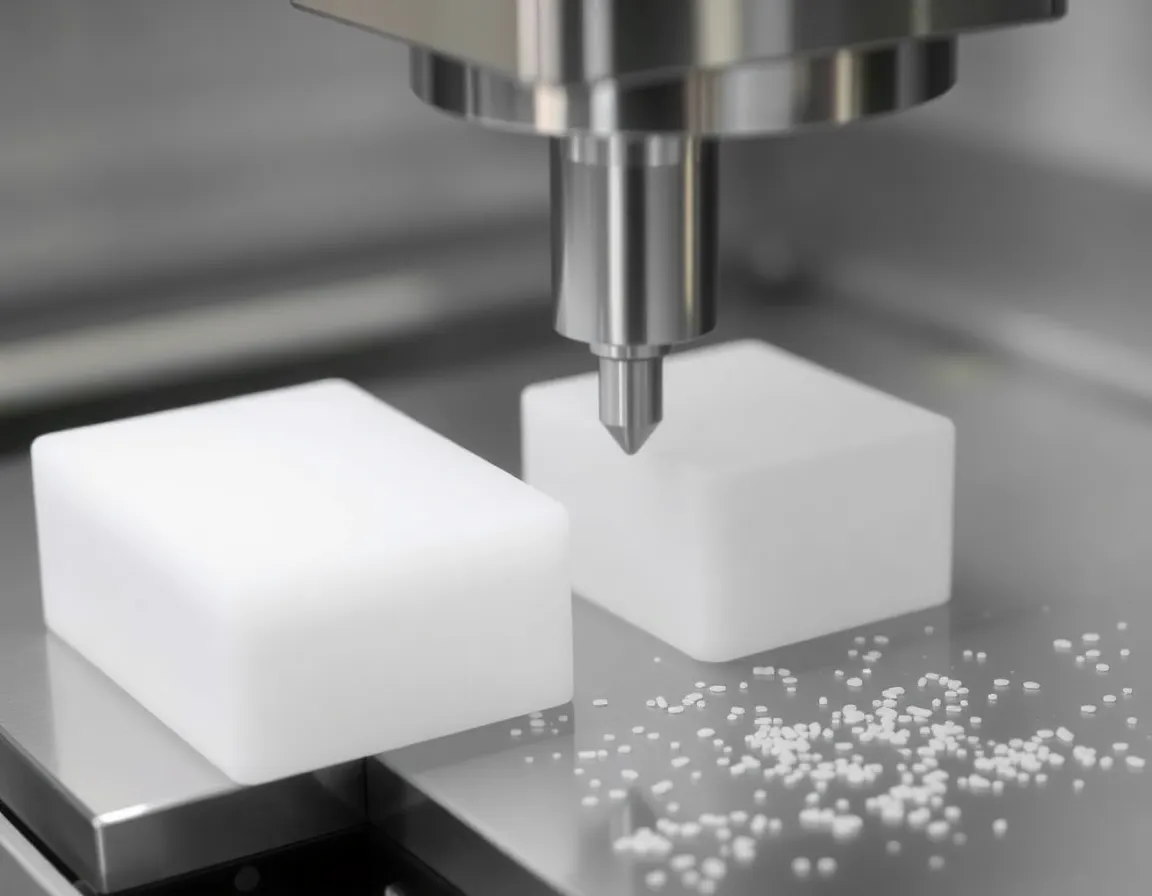
Precision UHMWPE machining services with stable quality control. Get responsive technical support and a free quote for your custom plastic components.
Machined parts last longer in abrasive or corrosive environments, reducing replacement frequency.
Reduces energy consumption and eliminates need for external lubricants in moving assemblies.
Withstands heavy loads and shock without cracking, ensuring reliable performance in demanding uses.
Low density simplifies handling and installation, lowering labor costs and improving ergonomics.
uhmwpe machining solutions are available with stable quality control, flexible manufacturing capacity, and responsive technical support. Contact us for drawings review and quotation.
UHMWPE machining is the process of cutting, shaping, and finishing Ultra-High Molecular Weight Polyethylene, an extremely tough and durable engineering plastic. It involves specialized techniques to fabricate components from UHMWPE stock shapes like rods, sheets, and tubes. This material is renowned for its exceptional impact strength, wear resistance, low friction, and chemical resistance. Machined UHMWPE parts are used in a vast array of industries, including food processing (for wear strips and guides), material handling (for conveyor components), automotive (for bushings and wear pads), marine (for dock fenders), and medical (for orthopedic implants). The machining process transforms this versatile polymer into precise, custom parts that leverage its unique properties.
UHMWPE machining requires a distinct approach due to the material's unique properties. Unlike metals, UHMWPE has a low melting point and high thermal expansion, so heat management is critical. Machinists use sharp, high-rake-angle tools, often with polished surfaces, to make clean cuts without generating excessive friction heat. Coolants are generally not used as they can be absorbed by the material; instead, compressed air is used for cooling and chip removal. Speeds are typically high, and feeds are moderate to continuous, avoiding dwelling which can melt the plastic. CNC machining is highly effective for achieving tight tolerances and complex geometries. The process emphasizes minimizing stress and heat to prevent part distortion, ensuring the final component retains its superior mechanical properties.
Choosing machined UHMWPE components offers several significant benefits. First is exceptional wear resistance—it outperforms many metals and plastics in abrasive environments, leading to longer part life. Second is its self-lubricating nature with a very low coefficient of friction, reducing the need for external lubricants, which is ideal for food-grade or clean applications. Third is high impact strength, even at low temperatures. Fourth is excellent chemical resistance to a wide range of corrosive substances. Finally, UHMWPE is lightweight, non-toxic, and meets FDA/USDA standards for direct food contact. Machining allows you to harness these inherent material benefits in a custom-designed part tailored to your specific application, improving efficiency and reducing maintenance costs.
Common concerns in UHMWPE machining include part warping, achieving tight tolerances, and managing the material's 'creep' or cold flow under constant load. Warping is addressed by using sharp tools, proper fixturing that doesn't over-clamp, and controlled machining parameters to minimize heat and internal stress. Holding tight tolerances requires an experienced machinist who understands UHMWPE's thermal expansion and uses stable, climate-controlled environments. The creep concern is mitigated through smart design, such as using adequate support for loaded areas or specifying a cross-linked UHMWPE grade for improved dimensional stability. By partnering with a machine shop experienced in engineering plastics, these challenges are proactively managed through material selection, precise tooling, and optimized machining strategies to deliver a high-quality, functional part.
The process typically starts with a consultation to review your part's application, required material grade (e.g., virgin, FDA-approved, colored), and drawings/specifications. The machine shop will then provide a quote based on material costs, machining time (complexity and tolerances), secondary operations (like finishing or drilling), and order quantity. Pricing is often per part, with unit costs decreasing for larger production runs due to amortized setup time. Lead time depends on complexity and shop workload. After order placement, the shop will program CNC equipment, procure the UHMWPE stock, machine the parts, perform quality checks, and ship. Clear communication about your performance requirements is key to an accurate quote and a successful project outcome.
Our lab needed custom UHMWPE wear strips with extremely tight tolerances. The machinist understood t
Great experience overall. They delivered durable UHMWPE chain guides for our packaging line ahead of
Outstanding! I was skeptical anyone could machine such complex, thin-walled UHMWPE components withou
Good quality and fair pricing on a batch of custom UHMWPE bushings. They're silent and self-lubricat