machining teflon solutions are available with stable quality control, flexible manufacturing capacity, and responsive technical support. Contact us for drawings review and quotation.

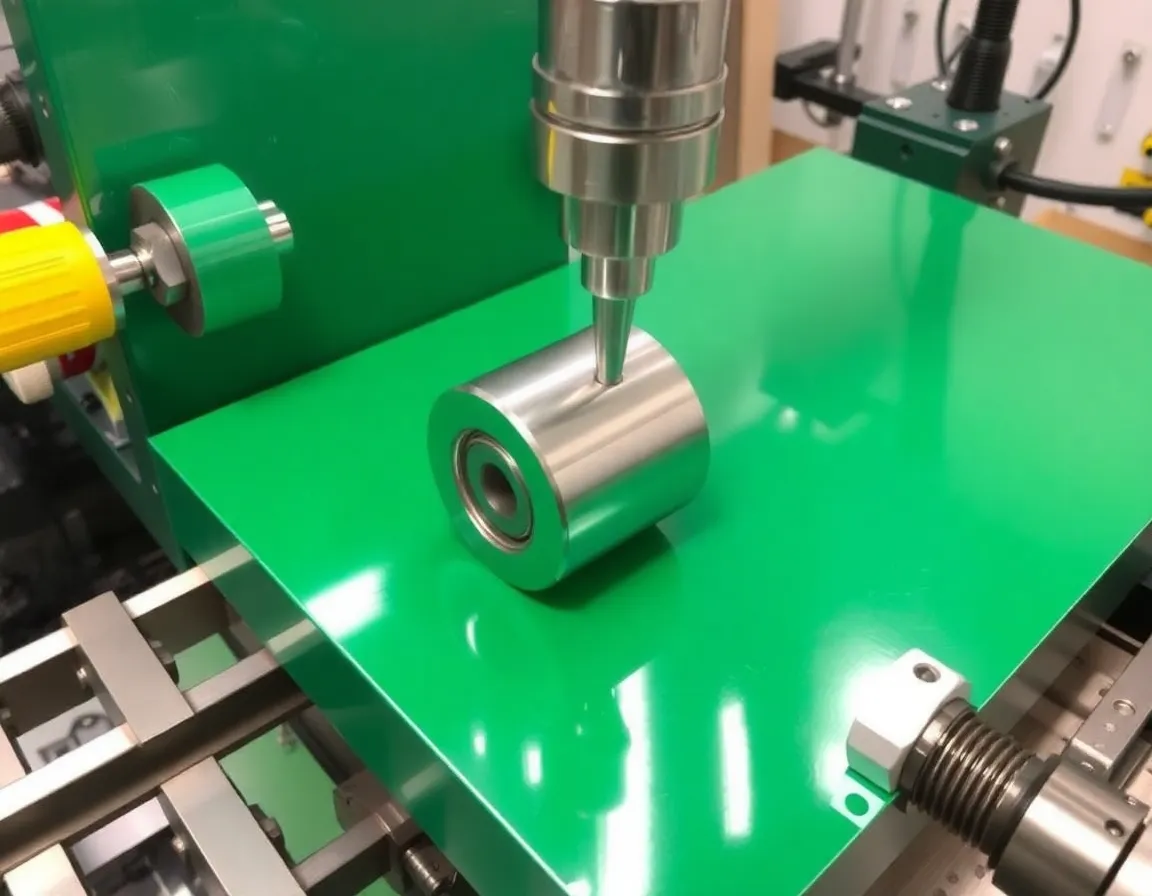
Expert CNC machining of Teflon (PTFE) with stable quality control. Get responsive technical support, flexible capacity, and a free quote review. machining teflon
Finished parts withstand harsh chemicals and extreme temperatures reliably.
Machined components maintain precise shape and size with minimal warping.
Parts reduce wear, prevent material adhesion, and require no lubrication.
Soft material allows for high-speed machining, reducing production time and cost.
machining teflon solutions are available with stable quality control, flexible manufacturing capacity, and responsive technical support. Contact us for drawings review and quotation.
Machining Teflon is the process of cutting, shaping, and finishing parts from solid PTFE (polytetrafluoroethylene) stock using tools like CNC mills, lathes, and routers. Unlike injection molding, machining is ideal for creating prototypes, custom components, and low-to-medium volume production runs. The process is used to manufacture critical parts like seals, gaskets, bushings, insulators, and laboratory equipment components. Because Teflon is a soft, non-metallic material, it requires specialized machining techniques to achieve precise dimensions and fine surface finishes without deforming the material. This makes it a go-to method for industries needing the unique properties of PTFE in specific, often complex, geometries.
Machining Teflon involves specific techniques to handle its unique properties. It's a soft, yielding material with high thermal expansion, so it requires sharp, high-speed steel or carbide tools, high cutting speeds, and low feed rates to achieve clean cuts without gumming or tearing. Coolants are generally not needed but compressed air is often used to remove chips and control heat. CNC machining is preferred for its precision and repeatability. The process typically starts with a solid rod, sheet, or tube of PTFE. The machinist must account for material spring-back and use proper fixturing to support the part without causing distortion, ensuring the final part meets tight tolerances and has the required surface quality for its application.
Machined Teflon parts offer the full spectrum of PTFE's legendary properties in a custom form. The primary benefits include exceptional chemical resistance, a very low coefficient of friction (making parts self-lubricating), excellent electrical insulation, and a wide operational temperature range from -450°F to 500°F. Machining allows for the creation of complex, high-precision components that might be impossible or too costly to mold. It's perfect for prototypes and custom designs, enabling rapid iteration without tooling investment. The process also preserves the inherent non-stick and biocompatible qualities of virgin PTFE. This combination makes machined Teflon indispensable in demanding industries like aerospace, semiconductor, pharmaceutical, and food processing.
While advantageous, machining Teflon presents specific challenges. Its softness and low thermal conductivity can lead to deformation, poor surface finish, and heat buildup if not machined correctly. It has a high coefficient of thermal expansion, meaning parts can change size significantly with temperature swings during and after machining, affecting tolerance control. The material can also be prone to creep or cold flow under sustained pressure. To mitigate these issues, experienced machinists use very sharp tools, precise and rigid fixturing, and optimized speeds and feeds. Understanding the grade of PTFE (e.g., virgin, glass-filled, carbon-filled) is also crucial, as fillers can dramatically alter machinability and final part performance for specific applications.
The process typically begins with you providing a drawing or 3D CAD model of your part, along with material specifications (grade of PTFE) and quantity. The machine shop will then analyze the design for manufacturability, provide a quote, and lead time. Pricing is not based on material cost alone; it's driven by part complexity, required tolerances, surface finish, order quantity, and the specific machining time. Prototypes and low volumes have a higher per-part cost due to setup, while larger runs benefit from economies of scale. You can expect transparent quotes that break down these factors. Reputable shops will guide you through material selection and design optimizations to ensure you get a functional, cost-effective part that leverages the full benefits of machining Teflon.
Our lab needed custom Teflon components for a chemical analysis device. The precision machining was
Great experience overall. They machined several PFA (a type of Teflon) insulators for us. The qualit
I run a small prototyping shop and outsourced some complex Teflon sealing rings. I was worried about
Ordered machined PTFE spacers for an electrical application. The dielectric properties were preserve