precision 5 axis machining services solutions are available with stable quality control, flexible manufacturing capacity, and responsive technical support. Contact us for drawings review and quotation.

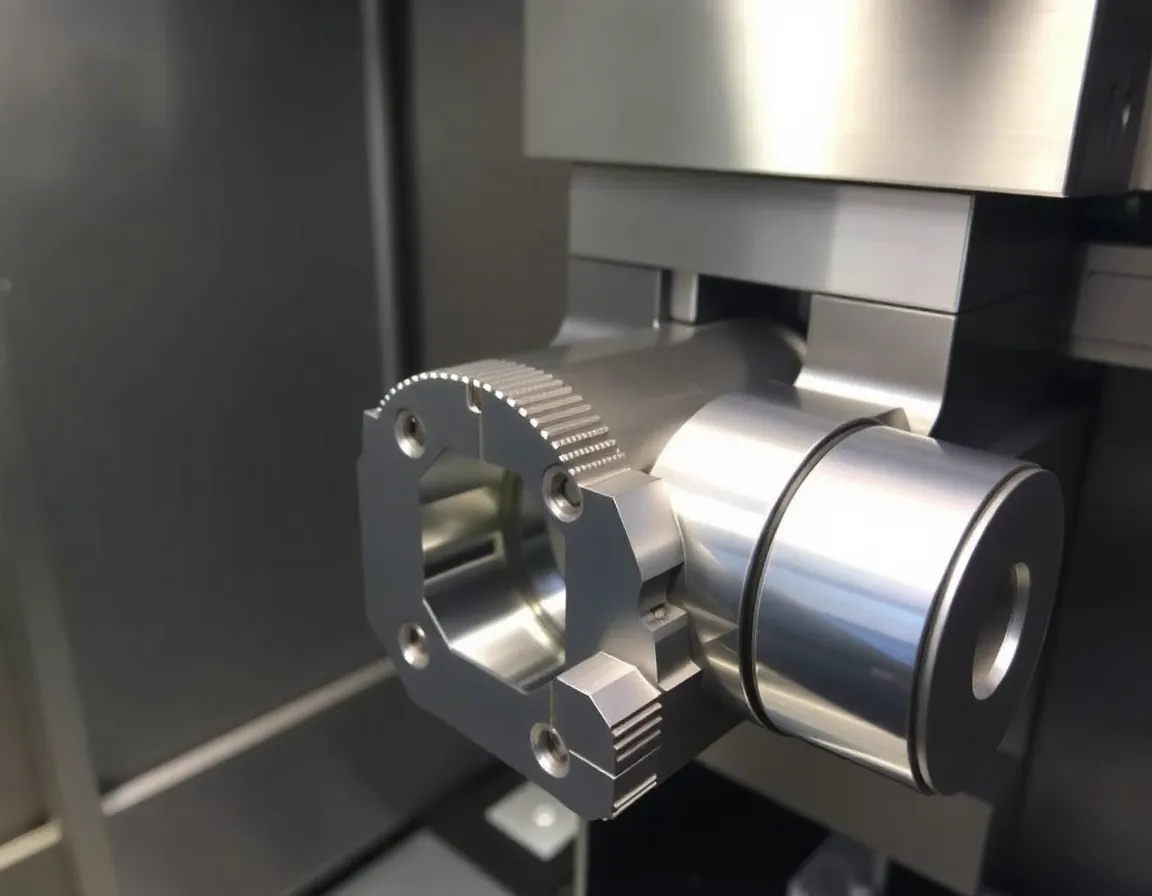
Unlock design freedom with our high-tolerance 5-axis CNC machining services. Ideal for aerospace, prototype, and complex part manufacturing in aluminum, titanium & steel. precision 5 axis machining services
Produces intricate parts in a single operation, eliminating multiple setups and errors.
Achieves exceptional part quality and tight tolerances directly from the machine.
Consolidates multiple parts into one, speeding up production and simplifying assembly.
Enables efficient machining from near-net shapes, minimizing waste and material cost.
precision 5 axis machining services solutions are available with stable quality control, flexible manufacturing capacity, and responsive technical support. Contact us for drawings review and quotation.
Precision 5 axis machining services involve using advanced CNC machines that can move a cutting tool or part along five different axes simultaneously. Unlike 3-axis machining (which moves in X, Y, and Z linearly), 5-axis machines add two rotational axes (typically A and B). This allows the tool to approach the workpiece from virtually any direction in a single setup. The key difference is this multi-directional capability, which enables the creation of highly complex, contoured, and organic geometries—like those found in aerospace components, medical implants, and intricate molds—that are impossible or prohibitively expensive to produce with 3-axis machines. The 'precision' aspect refers to the extremely tight tolerances, often within microns, that these advanced systems can consistently achieve.
Utilizing precision 5 axis machining services offers several significant benefits. First, it allows for the complete machining of complex parts in a single setup, drastically reducing lead times and eliminating errors from multiple fixture changes. This single-setup process also enhances overall accuracy and consistency. Second, it provides superior surface finish on intricate contours, often reducing or eliminating the need for secondary hand-finishing operations. Third, it enables the machining of parts with deep or hard-to-reach features that would require special tools on a 3-axis machine. Ultimately, these services lead to higher part quality, reduced production time, lower labor costs, and greater design freedom, making them ideal for prototypes and production runs of sophisticated components.
The process for precision 5 axis machining services typically follows a structured workflow. It begins with you providing a 3D CAD model (e.g., STEP or IGES file) of your part. The machining provider's engineers then analyze the design for manufacturability (DFM), suggesting optimizations for cost and performance. Next, a programmer uses specialized CAM software to create the toolpaths, simulating the entire machining process to prevent collisions and ensure efficiency. The approved program is loaded into the 5-axis CNC machine, where a skilled operator sets up the workpiece and runs the job, often with in-process monitoring. Finally, the finished part undergoes rigorous quality inspection using CMMs or other metrology equipment to verify it meets all specified tolerances before being shipped to you.
While the hourly machine rate for precision 5 axis machining services is higher than for 3-axis, it often leads to a lower total project cost for complex parts. The key is the reduction in total processing time and secondary operations. By completing a part in one setup, you save on labor, multiple fixtures, and handling time. It also minimizes the risk of errors between setups, reducing scrap. For simpler geometries, 3-axis machining remains more cost-effective. However, for parts with complex curves, undercuts, or features requiring angled access, 5-axis machining consolidates processes and improves efficiency. Reputable providers will offer a DFM analysis to recommend the most cost-effective manufacturing strategy, ensuring you only pay for the advanced capabilities when they provide tangible value for your specific component.
Precision 5 axis machining services are compatible with a vast range of materials, offering tremendous versatility. Commonly machined materials include metals like aluminum, stainless steel, titanium, and Inconel; plastics such as PEEK, Delrin, and Ultem; and composites. The advanced rigidity and control of 5-axis machines make them particularly suited for challenging materials like hardened steels and high-temperature alloys. Regarding tolerances, these services are renowned for high accuracy. Standard machining tolerances can typically reach ±0.001 inches (±0.025mm), with even tighter tolerances possible for critical features, often down to ±0.0002 inches (±0.005mm) or better, depending on part size, material, and geometry. It's crucial to discuss your specific tolerance requirements with the machinist to ensure they are both necessary and achievable for a balanced cost-to-performance ratio.
Absolute game-changer for our aerospace prototypes. We had a complex turbine housing with impossible
Very impressed with the quality and technical expertise. We needed a custom medical implant mold, an
These folks are wizards. Our R&D project involved a monolithic aluminum sensor housing with integrat
Top-tier machining quality. We ordered a small batch of complex fluidic manifolds. The parts are per